Parenting is an incredible journey, often described as one of life’s most challenging yet rewarding endeavors. It demands a delicate balance of nurturing and guiding, ensuring safety, fulfilling essential needs, and preparing children to navigate life’s inevitable transitions. Ultimately, the goal is to equip them with the tools and resilience needed to blossom into capable, confident adults ready to face the real world. This crucial mission of raising an independent, well-adjusted adult can feel daunting, but thankfully, valuable insights and strategies exist to make this path smoother and more effective for both parents and children.
The latest episode of the Healthy Family Project podcast dives deep into this vital topic, offering parents practical guidance on preparing their children for successful adulthood. We are honored to feature New York Times bestselling author, Julie Lythcott-Haims, who shares her profound wisdom in an honest and engaging conversation. Julie explores how intentional parenting styles can powerfully inspire independence, build self-confidence, and foster a sense of agency in children. Drawing from her extensive experience and research, she provides actionable tips and introduces a transformative 4-step process designed to gradually shift children from depending on parents for tasks to confidently accomplishing them independently.
Julie Lythcott-Haims’ journey into this vital discussion began several years ago while she observed the far-reaching effects of what she terms “overparenting” during her tenure at a prestigious university. Her observations revealed a troubling trend: highly accomplished students often lacked fundamental life skills and confidence, heavily relying on parental intervention for even basic tasks. This pivotal experience ignited her passion and inspired her to pen her groundbreaking, best-selling book, How to Raise an Adult: Break Free of the Overparenting Trap and Prepare Your Kid for Success. In our illuminating conversation with Julie, we gained invaluable insights on how to identify and break free from parenting habits that inadvertently foster overdependence and, conversely, contribute to anxiety in children. Her approach advocates for empowering children to build agency and self-reliance, ensuring their emotional well-being and readiness for life’s challenges.
Listen to the Full Episode: How to Raise an Adult
Don’t miss out on this enlightening discussion! Tune into the full podcast episode to hear Julie Lythcott-Haims’ expert advice directly. She delves into the nuances of fostering independence, navigating transitional phases, and empowering your children to become resilient adults. Her insights are invaluable for any parent seeking to build confidence and capability in their kids.
Key Topics and Timestamps: Insights on Raising Independent Kids
To help you navigate this comprehensive episode and revisit the topics that resonate most with your parenting journey, we’ve provided a detailed breakdown of the discussion. While we highly recommend listening to the entire episode for a full grasp of Julie’s wisdom, these timestamps allow you to jump to specific points of interest. Get ready to transform your parenting approach with these essential tips and strategies!
- 2:36 – A warm welcome to our esteemed guest, Julie Lythcott-Haims, and an introduction to her groundbreaking work.
- 3:52 – Julie shares the personal and professional inspiration behind writing her seminal book, How to Raise an Adult, detailing her observations and concerns about modern parenting trends.
- 6:52 – Practical, actionable advice for parents eager to avoid the pitfalls of “helicopter parenting” and instead encourage self-sufficiency, particularly with younger children.
- 12:20 – An in-depth explanation of Julie’s 4-Step Method for Empowering Children to take ownership of tasks and responsibilities, moving from dependence to independence.
- 15:26 – Essential tips to help parents confidently let go and support their children through crucial transitional phases, such as moving from elementary to middle school, or from high school to college.
- 22:40 – Identifying and capitalizing on everyday opportunities to create valuable teaching moments that build competence and resilience in children.
- 25:30 – A candid discussion and advice on navigating the often stressful “college admissions arms race” and fostering a healthier perspective on higher education.
- 30:43 – Exploring the critical relationship between overparenting behaviors and their negative impact on a child’s confidence, self-efficacy, and overall mental health.
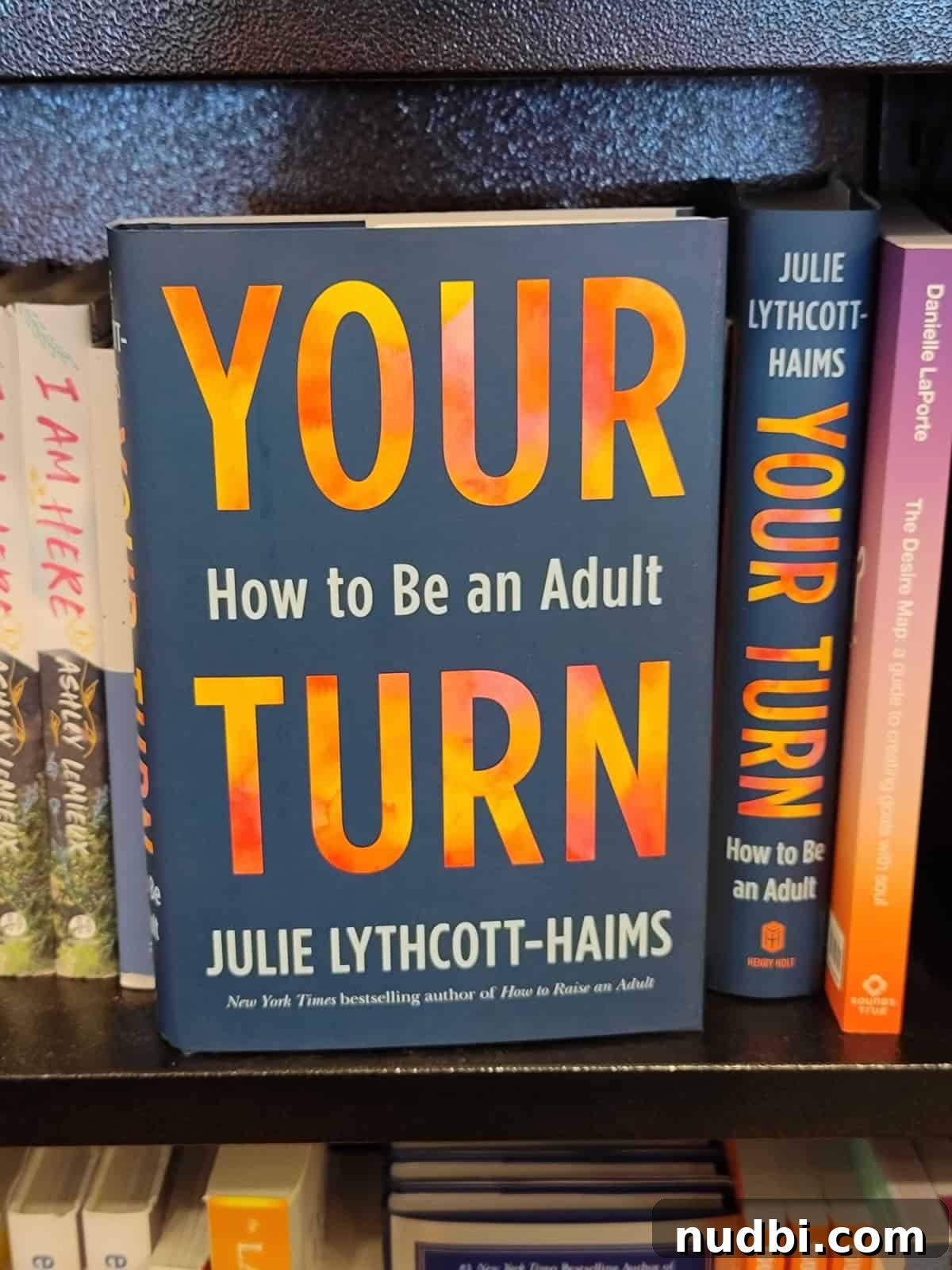
- 34:03 – An exciting glimpse into the inspiration and core messages behind Julie’s subsequent thought-provoking book, Your Turn: How to Be an Adult.
- 42:29 – Julie shares her personal definition of what constitutes a “healthy family,” emphasizing core values and practices.
Watch the Full Conversation!
Prefer to watch your podcasts? Catch the engaging video version of our discussion with Julie Lythcott-Haims. See her passion and conviction as she shares transformative insights on raising independent and confident children. Visual learners will especially appreciate this format, bringing an extra dimension to the valuable advice shared.
Meet Our Esteemed Guest: Julie Lythcott-Haims
Julie Lythcott-Haims is a beacon in the conversation about modern parenting and adult development. She is the distinguished New York Times bestselling author of How to Raise an Adult: Break Free of the Overparenting Trap and Prepare Your Kid for Success, a book that has profoundly influenced countless parents worldwide. Her critically acclaimed and award-winning prose poetry memoir, Real American, offers a powerful exploration of her experiences as a Black and biracial individual navigating predominantly white spaces. Her most recent work, Your Turn: How to Be an Adult, is an inspirational guide designed to help individuals of all ages embrace an authentic and fulfilling adulthood. Julie’s impressive academic background includes a BA from Stanford University, a JD from Harvard Law School, and an MFA from California College of the Arts. She currently resides in the vibrant Bay Area, sharing her home with her partner, their two intrepid young adult children, and her mother. Her diverse background and personal experiences deeply inform her compassionate yet direct approach to empowering families.
Further Resources and Relevant Links
To deepen your understanding and continue your journey toward raising capable, confident adults, explore these valuable resources related to Julie Lythcott-Haims’ work and the broader topic of child development and family well-being:
- Connect with Julie Lythcott-Haims on social media: Follow her insights and updates on Instagram and Facebook.
- Discover more about her work and access additional resources on her official website.
- Explore Julie’s influential books, available for purchase:
- Book 1:How to Raise an Adult (via Amazon affiliate link) – The essential guide to fostering independence.
- Book 2:Your Turn: How to be an Adult (via Amazon affiliate link) – An empowering guide for navigating adulthood.
- Gain insights into higher education with the Fiske Guide to Colleges, a trusted resource for finding the right fit.
- Watch Julie’s highly viewed TED Talk: “How to raise successful kids – without over-parenting”, which encapsulates her core philosophy.
- Access a concise summary of her Four Parenting Tips to Raise an Adult directly from her website.
- Research college options with resources like Niche.com’s Best Colleges in America.
- Consider the Fiske Guide to Colleges 2022 (via Amazon affiliate link) for updated information.
- Explore alternative perspectives on college fit with The Alumni Factor Campus DNA.
- Julie’s recommended reading list for parents seeking deeper knowledge:
- The Self-Driven Child – Empowering kids to find intrinsic motivation.
- Hunt, Gather, Parent – Drawing wisdom from global parenting styles.
- The Gift of Failure – Understanding the importance of allowing children to learn from mistakes.
Expand Your Knowledge: Other Healthy Family Project Podcast Episodes
Continue your journey towards a healthier, happier family by exploring more episodes from the Healthy Family Project podcast. We cover a wide range of topics designed to support parents in various aspects of family life, from nutrition to emotional well-being and financial literacy. Each episode is packed with expert advice and practical strategies.
- Episode 60: Teaching Kids to Prepare Healthy Snacks – Empower your children with culinary skills and healthy eating habits.
- Episode 35: Helping Kids Make Good Choices – Strategies for guiding children toward positive decision-making.
- Episode 25: Easing Testing Anxiety in Kids and Teens – Support your children in managing academic stress.
- Episode 31: Balancing Career & Family – Practical advice for navigating the demands of work and home life.
- Episode 42: Teaching Kids About Managing Money – Financial literacy tips for young minds.
- Episode 54: Family Dinner Conversation Starters – Foster meaningful connections around the dinner table.
Join Our Community: The Healthy Family Project Facebook Group
Become a part of our thriving online community! Join the Healthy Family Project Facebook group today. This dedicated space offers a supportive environment for parents and caregivers to connect, share experiences, and seek advice on all aspects of raising a healthy family. Whether you’re dealing with picky eaters, looking for creative ways to incorporate more fruits and vegetables, exploring family exercise routines, or discussing children’s mental health, our group is a welcoming forum for collective wisdom and encouragement. We invite all of you to join in and contribute to a vibrant, health-focused discussion!
Share Your Feedback: Listener Survey!
Your input is incredibly valuable to us! Thank you for your continued support of the Healthy Family Project Podcast. We are constantly striving to bring you the most relevant and helpful content, and your feedback is essential in this endeavor. Please take just 5 minutes to complete our listener survey and help us shape future episodes to better serve your needs. Access the survey here.
About the Healthy Family Project Podcast
The Healthy Family Project Podcast is your go-to source for engaging conversations on hot topics in the world of health, food, and family. We blend expert insights with a dose of fun, aiming to empower families to confidently embrace a fresh and healthy lifestyle. From nutrition tips to mental wellness strategies and practical parenting advice, our goal is to support you in creating a thriving home environment.
Look out for our new bi-weekly episodes, packed with actionable advice and inspiring stories. Don’t forget to subscribe on Apple Podcasts, Google Podcasts, Spotify, or your favorite podcasting platform. If you find an episode particularly helpful or enjoyable, please consider leaving a rating and comment to help us reach more families and build a healthier generation.
Are you an expert in health, food, or family topics? If you are interested in being a guest on the Healthy Family Project podcast and sharing your insights with our community, please contact [email protected] with your proposed topic idea for consideration. We look forward to collaborating with passionate individuals dedicated to family well-being.
Full Transcript for Episode 70: How to Raise an Adult
For your convenience, a full transcript of this enlightening episode is provided below. Please note that this transcript was generated by Otter.Ai and may contain minor misspellings or grammatical errors. It serves as a comprehensive text reference for the valuable discussion with Julie Lythcott-Haims.
00:09 – Introduction to Healthy Family Project and Today’s Special Episode
Welcome to the Healthy Family Project podcast by Produce for Kids, your source for discussions on health, food, and family topics with a touch of fun. I’m your host, Amanda. Today, I’m thrilled to introduce our guest host, my colleague Trish James, who will be speaking with Julie Lythcott-Haims, the celebrated author of Trish’s favorite book, How to Raise an Adult. Before we dive in, a few quick updates: Be sure to join our Healthy Family Project Facebook group by simply searching for us on Facebook – I’ll be happy to approve your request. We’ve been sharing fantastic summer content on our Instagram and website, healthyfamilyproject.com, including tips for cooking healthy, delicious meals without using your oven during hot weather, and creative ways to incorporate seasonal fruits and vegetables. Our weekly e-newsletter delivers all our content directly to your inbox; you can sign up in the show notes or on our website. Now, let me hand it over to Trish for today’s insightful episode.
01:27 – Trish James Introduces Julie Lythcott-Haims
Hello everyone, I’m Trish James, a team member at the Healthy Family Project. You might remember me from an October episode where we discussed food allergies and their impact on families. Today, I’m guest hosting for a very special reason: we have an extraordinary guest joining us to discuss a subject profoundly important to me. Amanda graciously passed the microphone. Today, we welcome Julie Lythcott-Haims. Julie is a firm believer in human potential and is deeply interested in understanding what hinders it. She is the New York Times bestselling author of the anti-helicopter parenting manifesto, How to Raise an Adult, which inspired a TED Talk boasting over 5 million views. Her second book, Real American, is a critically acclaimed and award-winning prose poetry memoir illustrating her experiences as a Black and biracial person in a predominantly white society. Her most recent book, Your Turn: How to Be an Adult, is an inspirational work aimed at helping individuals live more authentic adult lives. She resides in the San Francisco Bay Area with her partner of over 30 years, their two itinerant young adult children, and her mother. Please join me in giving a warm welcome to Julie Lythcott-Haims. Hi, Julie!
02:36 – Trish’s Personal Connection to Julie’s Work
Julie, I genuinely appreciate you joining us today. I first had the privilege of hearing you speak in 2017. My friend and I attended the Women’s Conference in Pennsylvania, and your presentation immediately compelled us to buy your book. At the time, my boys were quite young – my friend had a two or three-year-old – and it’s truly wonderful to speak with you today. I’m incredibly excited for your presence on our show, so thank you very much.
03:05 – Julie Recalls the Pennsylvania Women’s Conference and Book Launch
Trish, thank you so much for having me. Your memory makes me smile because I vividly recall that Pennsylvania Women’s Conference. It was October 2017, and my new book, my memoir on race, had just been released that very day – it was publication day! So, I was filled with excitement, immersed in that feeling of something new entering the world and hoping for its success. The Pennsylvania conferences for women are, of course, an amazing organization, and there was so much positive energy that day. I’m delighted you were there and that it resonated with you.
03:40 – The Inspiration Behind “How to Raise an Adult”
Yes, thank you. So, what truly inspired you to write How to Raise an Adult? You touch upon it a little in the book, but what was the core inspiration?
03:50 – Julie’s Observations at Stanford University
My inspiration for How to Raise an Adult stemmed from my role as a Dean at Stanford University. Over the late 90s and 2000s, I began observing a significant shift in childhood and parental involvement. We saw a noticeable increase in parents actively intervening on campus, essentially performing tasks or making decisions for their students. There was a clear lack of confidence that their children could manage basic life responsibilities, such as registering for classes, communicating concerns to faculty, resolving everyday problems, or navigating bureaucratic systems. These are the fundamental aspects of life that previous generations of college students managed, more or less successfully. It’s never about perfection, but life skills are learned by living life, not by having it constantly managed for you. This excessive handling deeply concerned me, especially as I also noticed students themselves lacking confidence in their abilities and often feeling relieved when parents stepped in. I began to wonder about the long-term implications: what would become of these “kids,” as it were, if they never truly learned to manage for themselves? What would this mean for society if an entire generation struggled to “hashtag adult,” a term that Millennials coined to describe this very challenge? My motivation truly came from a place of empathy for these young adults who, despite being highly academically accomplished, seemed “underbaked” when it came to their practical life navigation skills. That’s why I wrote that first book.
05:32 – The “Underbaked” Metaphor and Overcoming Helicopter Parenting
Exactly, and I love that term, “underbaked.” I often feel like I’m currently baking my own children; it’s a perfect metaphor. So, throughout the book, you address various age groups—from little ones to middle schoolers and then young adults transitioning from high school to college. When I first read your book, my big boys were little. I admit, I was definitely a helicopter parent, and at one point, I even wore that badge with pride. But then I began to realize it wasn’t working. I could see my boys trying to assert their independence, and I, in turn, tried to pull them even closer. You discuss how our fears drive this overparenting—fears of outside dangers, child abduction, or them getting hurt. You emphasize the importance of returning to a time when we, as children, were simply told, “Go outside, and we’ll see you at lunchtime.” Why is this autonomy so crucial? And what advice or tips can you offer parents who are striving to avoid helicopter parenting, especially when their children are young?
06:52 – Personal Revelation and the Importance of Long-Term Parenting
Absolutely. First, I want your listeners to understand that I am a parent myself; my kids are now 21 and 19. I observed a problem on my university campus, as I explained, and it wasn’t unique to Stanford—it was an American phenomenon seen by deans and faculty across various colleges nationwide. They, too, were witnessing parents who felt compelled to do things for their kids, even when their kids were capable. So, here I was, a Dean working with other people’s children, railing against over-involvement in college, only to come to a very mortifying realization some years later: I was also a helicopter parent. Despite my strong opinions when observing it in other people’s 18 and 20-year-olds, I was doing it with my own eight and ten-year-olds. My “aha!” moment arrived one day when I came home from work, sat down for dinner next to my ten-year-old, and without thinking, leaned over his plate and began cutting his meat. It’s perfectly natural, right? We want to be helpful, ensure safety, and be efficient. Of course, we, as adults, can cut the meat safely and quickly. We make it all happen because we’re the grown-ups. But that was my realization: “Oh my gosh, I won’t be able to let go of this kid with any confidence in his ability to do for himself when he leaves home at 18, because I’m still cutting the meat of a ten-year-old!”
I learned that every single life skill must be taught. Initially, we do it for them. But at some point, they need to do it themselves. The two crucial steps in between are where we teach them and then watch them, fostering confidence in both ourselves and them that they can master the task. So, I want your listeners to know that I am not an author pointing fingers at helicopter parents; rather, I’m largely pointing the finger at myself and saying, “Please learn from my mistakes, because I’ve witnessed the consequences.” Of course, we are afraid, and of course, we love our children. However, if you step back from the immediate need to ensure “everything is fine right now” and take a long-term perspective—realizing that one day you won’t be here—then your child needs to know that they’ve got it. They need to trust their judgment about crossing the street, behaving appropriately in public, navigating school or job bureaucracies, filling out forms, tracking deadlines, and apologizing for their own mistakes. We are metaphorically carrying them on our shoulders through life as if they are helpless infants. If you then expect to simply set someone down and they’ll suddenly be capable of all these things, you’re in for a rude awakening; they won’t be able to, and that responsibility falls to us.
It’s about that long-term vision. My job as a parent is to put myself out of a job, to take pride in that, not in doing everything for my kids. It’s not good parenting to drop everything and rush to school with forgotten homework or sporting equipment every time it happens, unless it’s an absolute emergency. Instead, it’s about saying, “Oh, sorry, buddy. That sucks, you know? How do you handle that bummer?” A ten-year-old can solve that. “I love you so much.” Instead of doing everything for them, we should delight in them constantly acquiring more and more skills, because that leads to competence, then confidence, which profoundly shores up their mental health with the belief, “I can do things; I can bounce back when things go badly.” We actually undermine their mental health by doing everything for them and meticulously paving a path free of bumps or blips. It’s really about avoiding a short-term perspective, where overparenting seems to “work,” and appreciating that long-term, it leads to disastrous outcomes.
11:43 – The Backpack Analogy and the 4-Step Method
Right, exactly. It’s so interesting, because here at Healthy Family Project, we work hard to encourage kids to get in the kitchen and participate in cooking. I was actually quite good at that; my kids were always involved. But when you talk about the backpack, every single time my kids forgot something, I’d run it to their school. And I’d get so mad, thinking, “Why? Why can’t you remember?” Well, it was because they didn’t have to!
12:10 – The “Do It For Them, Do It With Them, Watch Them, Let Them Do It” Framework
Exactly right, yep. Let me share that quick four-step method, because whether it’s crossing the street or making a meal, we aim to transition from doing it for them to them being able to do it independently. The steps that are often missed in between are crucial. So, first, we do it for them. Imagine your child learning to cross the street: initially, you carry them on your shoulder; they don’t have to think, they’re just carried. Step two, you do it *with* them. You stand at the curb, hold their hand, and announce, “Hey buddy, we’re going to start learning to practice crossing the street. This is a good time. Here’s how we do it.” You use your teaching voice, which is slow and compassionate. You talk about looking left, then right, then left again. You’re actively teaching your child where to look and how to wait until it’s safe. You repeat step two enough times—holding their hand, narrating out loud—until you can move to step three. At step three, you show up at the curb one day and say, “Hey, baby, hey kid,” or whatever language you use, “It’s your turn now. I’m still here, just in case. I want to hear you think it through. I want to hear you analyze whether it’s okay to cross.” You let go of their hand, knowing they’re not going to dart into the street because they’ve passed that point. You hear your little one say, “Okay, look left and right and left,” and you might need to interject, “Okay, slow down, I have to actually look and be sure.” You are teaching. None of this can happen if we are too busy to take the time to teach. Of course, it’s more efficient for you to snatch your kid up in your arms and carry them, but then they’ll never learn, right? Step three is repeated enough times that both you and they develop confidence. They know how to cross the street. That’s step four. That’s the four-step method. It’s also detailed on my website.
13:49 – Applying the 4-Step Method to Digital Communication and Transitional Phases
Yeah, that’s wonderful. I truly appreciate that. A lot of times, I will implement that here at home, especially as my kids get older and need to communicate with adults or engage in new situations. For instance, with Zoom and virtual school this past year, they had to build their confidence to communicate with teachers when they weren’t face-to-face. My husband and I did exactly as you described: we first guided them, saying, “Okay, this is what you do.” Then, the next time, we’d sit and watch them. Now, they communicate with their teachers independently, and we don’t even really need to get involved. That always makes us proud, even if it’s a little nerve-wracking because you don’t know exactly what they’re saying in the email. But yes, I really appreciate that step. My youngest is currently going into sixth grade. My husband, who teaches sixth grade, often says it’s a huge transitional year—they come in as elementary students and leave as middle schoolers, almost teenagers. As a mom, I find this the hardest time to let go, because I still picture him as an elementary student, even though his teachers recognize him as a middle schooler. Do you have any advice on how parents can gradually let go during this period, without being overly involved in every aspect of their day?
15:25 – The Walking and Biking Metaphor for Letting Go
So, my caveat here is that I’ve never been a middle school teacher; I was a college dean. I observed a problem at the college level and then tried to trace it backward to understand what childhood experiences would lead to capable college students. With that said, I’m certainly full of opinions! Here’s a visual metaphor I want every parent to hold onto, and I think it works exceptionally well for transitions: from elementary to middle school, middle to high school, and high school to beyond. Remember when your child was learning to walk, roughly around age one? They’d stand up, take those first steps, and what did they do? They failed, they fell down, they struggled, and then they got back up. And you didn’t try to intervene. You applauded, you didn’t get embarrassed, you didn’t yell, you didn’t try to “fix it” for them. To “fix it” for them would have been you on your knees behind your child, two fingers under the right armpit, two under the left, basically holding them up and nudging them forward so it appeared from the front that they were walking. But you wouldn’t have done that because intuitively, you know they aren’t walking—you are walking for them. If they fall, they’re sinking into your body; you’re propping them up. That’s helicopter parenting. They didn’t learn. When parents ask me, “How do I give my kid more independence? When do I start to let go?” I respond, “Why did you stop letting go?” Because that’s what you were capable of when they were learning to walk. Or picture them learning to ride a bike. You can hold onto that seat for only so long. You have to trust in the inherent human capacity to learn balance. They might fall, and that’s how they learn. Parenting inherently involves wincing; it comes with necessary bumps and scrapes. Obviously, you don’t want them to bike into a four-lane highway—your job is to set the context in which the skill can be learned safely. When your one-year-old learns to walk, you ensure there are no sharp, pointy glass objects they could fall on. You make sure the living room or family room where they’re learning is a relatively soft environment. When they fall—and they will fall, they need to fall—you make sure the environment won’t harm them. The delight a child feels when they pick themselves back up and keep going, the smile on their face, the strength in those little chubby thighs and core—that only develops when we let them.
Now, apply that to middle school. What skills should a middle schooler possess? I believe they should be able to get themselves to school. If you’re dropping them off, do not walk them into school any longer. Barring significant special needs, your job is done when you drop them off at the car. The child should be going into school on their own. The child is responsible for their backpack. If they forgot it, you smile and say, “I’m so sorry, buddy, I can’t bring it. What can you do to resolve the problem?” You encourage problem-solving. You empathize: “You know, that sounds like you’re frustrated.” It’s called empathize and empower. “I’m so sorry that happened. How do you think you’re going to handle it, buddy?” Perhaps the best way for them to handle it is a simple email to their teacher explaining, “I’m so sorry I left my backpack at home.” You don’t go to the teacher and say, “We were so busy this morning; we forgot our backpack.” It’s not “our” backpack when you mean your son, daughter, or child, right? Stop using “we.” Instead, say to your child, “Okay, you’re going to need to explain to your teacher what happened. I’m sure you know, I have confidence that you can handle this.” You say that with a smile, without acting alarmed, which conveys to the child, “My mom or my parent believes in me; I can do this.” It might be tough, but “I’m believed in, being rooted for.” That’s it. Then you might need to call a friend and say, “Oh my gosh, I’m a terrible mom.” But you’re actually teaching your child to do for themselves. Now, if this were a recital—the end of sixth or seventh grade, a big symphony performance—and the child left behind an instrument they’ve practiced for months, that’s not the day to say, “Too bad, so sad.” That’s the day to bring it. The same applies to waking your child up. There are parents still waking their college students up, Trish. That’s tough. You don’t want to be doing that for high school. They should be waking themselves up. If they can’t wake themselves up, that is a problem. It may mean they’re not getting enough sleep, which is also a problem.
20:09 – The Privilege of Rescuing Kids and Learning from Consequences
That’s a good point, one I hadn’t thought about.
20:12 – Setting Boundaries and Fostering Accountability
Okay, let’s not let the system undermine our kids’ sleep. Let’s not be our kids’ alarm clock. And let me make a point here: privileged families can often rescue their kids. Families with a parent who can drop everything to deliver a forgotten item are families of privilege. If you’re working class, your boss isn’t going to let you take time off for that. So, these practices, which frankly, schools should not allow, are privileging the already privileged. In the long term, poor and working-class kids often develop more grit and skills because they *have* to do more for themselves. So, in some ways, it balances out—the over-privileged kids can’t do anything for themselves. I’m rooting for everyone to have more accountability and responsibility; it actually feels good inside a child to know, “I took care of business, I handled it. It came from me; I feel good.” When we overwhelm them with our help, we undermine their sense of “I can,” and that leads to depression and anxiety. We’ve just absolutely got to pull back.
21:23 – The Expectation Trap: “I Was On Call For You”
Yeah, that’s a really interesting point you made. When my kids were younger, I started working from home, and I truly had the ability to stop what I was doing and run an item over, because it really wasn’t a big deal then. But what happened was, I started getting busier, or I’d have a meeting, and then I’d have to say, “No, I’m sorry, I can’t.” And it would become a crisis for them. I thought, “Oh no, I set this expectation that I was on call for you.” I’m not on call for you.
21:54 – Loving Boundaries: “I’m Not Your Concierge”
Right. And again, you’re not being mean, you’re not being obnoxious. This isn’t about being an authoritarian, mean parent. With a smile, you can say, “I’ve got a job, school is your job. You’ve got to take care of your responsibilities, I’ve got to take care of mine. I love you so much. If something goes wrong, I want you to think through how you’re going to figure it out.” And sometimes, “figuring it out” is simply a note of apology to the teacher, right?
22:19 – When to Intervene: True Emergencies vs. Life Lessons
That’s a great point. And I do like the idea that if it’s an emergency, or if it’s something truly extraordinary like a band recital, then yes, that’s when we’re going to help, because we are your parents, and we’re here to support you.
22:32 – The Nuance of Parental Support and Tough Love
We’re not going to abandon you; this isn’t about that. This is about teaching you. We have to step back enough so that you can learn the lessons of life. We’re there for that “just in case” so that you don’t drown or walk into traffic, and so on. If it is a habitual problem—they don’t wake themselves up, and you’re trying to instill that responsibility—you’ve got to be comfortable with the possibility that if they oversleep, they’re going to miss school. You have to let that happen. Now, in some communities, they can just walk to school and arrive late. In others, if they bike to school, or if they’re relying on you to drive them, you shouldn’t drop everything. You should say, “Okay, I’m in a meeting right now, or I can’t. You need to wake yourself up. You need to get up on time. Let me know if you need help setting an alarm more effectively.” This communicates that “we all matter here, and I’ve got things going on; I’m not your concierge.” However, if it’s a big test they’re sleeping through, like the day of the LSAT, and your child has overslept, that’s not the day to teach that lesson, because that would be a very cruel and damaging response.
23:48 – Navigating High School Transitions and the College Arms Race
Yes, I agree 100%. I’m mentally taking notes because my high schooler, especially with the transition from virtual school back to in-person classes, found it challenging. He could just walk downstairs in his pajamas for virtual school, but now he actually has to get up and be ready. It took a while, and I finally told him, “The bus leaves at 7:10, and if you’re not in the car, you are walking because I have things to do; I have to get to work.”
24:18 – Honoring Boundaries and Confidence in Their Learning
So, honor that boundary. It is hard, but it shouldn’t take more than a couple of times. It will be tough, but you have to tell yourself, “I know I’m doing the right thing; I’m teaching him to do for himself.” I mean, that is the most loving thing you can do.
24:33 – Debunking the Myth of Elite Colleges: Finding the Right Fit
Right, no, I’m 100% with you. So, when I first read this book four years ago, my kids were seven and eleven. I read it, but the college and high school sections didn’t quite resonate or stick with me as deeply then. However, now I have a freshman rising sophomore, and I reread the book a couple of weeks ago, and it’s like a new set of eyes. I’m seeing all of this stuff come to fruition regarding classes, transcripts, staying on the right path, and college tours. It’s very overwhelming. But in the book, you talk a lot about the “college arms race,” and it’s truly challenging. What advice do you have for parents like me? In theory, I understand and completely agree with everything you say about the college arms race and the selection process. But then you also see your child having to navigate a system that sometimes isn’t fair or can be genuinely challenging. How can you help me with this?
25:44 – Reframing College Success and Nurturing Strengths
So, college can be a great way to spend four years, though not everyone has to go. However, increasingly, a college degree is necessary for a decent job. What a high school degree was when I was growing up—I’m 53, so a lot has changed—a college degree is now. So, college is important, and many people will choose that option. A highly selective college, however, is not necessarily important. Many of us are overly stressed about our child getting into a particular brand-name school or a specific set of brand-name schools, often due to wildly overblown misinformation about what truly matters in life. Successful, happy people mostly didn’t attend brand-name schools; some didn’t attend college at all. So, I recommend reading Frank Bruni’s book, Where You Go Is Not Who You’ll Be, for reassurance about how success is about the individual, not the institution. It’s about who the kid is, wherever they end up.
Therefore, you want to nurture your high school student by encouraging them toward subjects that light them up. They are required to take certain courses, but hopefully, they find at least one, maybe several, that they love. It’s okay if they hate some others; they don’t have to be great at everything. I believe in strengthening your kids’ strengths. One of my children is a hyper-focused science kid. He took every single science class available at his school, including many electives, and paid very little attention to other subjects because those weren’t his passion. Don’t try to shape your child to look like some college dean wants them to look. Instead, help your child become their best version of themselves, to lean into the things they love, and to pursue more of those things. These are the truest indicators of who they are and what they might want to do with their lives. So, help your child become who they are, rather than manufacturing them to fit a particular college’s mold.
Family time is essential. Downtime is essential. Sleep is essential. So, their course of study should not minimize these other vital aspects of life. If your child is in a school district that feels toxic in these measures, you might need to have a soul-searching family conversation and ask, “Is this the right school for us? Are we all truly thriving and flourishing?” If there’s this much stress, if the system feels overly stressful, you might need to step outside that system. Or, you stand up against that system and declare, “These choices are not for us and our family. We’re opting for other things,” and have confidence that there is a college out there that will be delighted to have your child. Many exist! This nation alone has 3,000 public and private four-year universities and colleges. This means the top 5% accounts for 150 schools. If you find a book listing 200 or 225 schools, they are all in the top 10% of all American schools. And there are also great schools in Canada, the UK, and other countries, often more affordable. So, do your homework to find what would be a good fit for your child. Ultimately, your child needs to lead that process. If we drag our kids through the process when they’re not ready, that’s a sign they won’t thrive in college. Consider a gap year for your child to explore themselves, engage in meaningful work, and grow. Let them go to college when they are truly ready to engage with the process. There are better lists than US News. I recommend “Colleges That Change Lives,” “Alumni Factor,” and the “Fiske Guide to Colleges.” All of these resources will broaden your perspective on the possibilities. I encourage people to simply stop obsessing over all the elite, brand-name institutions. It truly gets in the way of finding the right fit for any particular child.
30:00 – The Pitfalls of “Pay to Play” Rankings and the Link to Mental Health
Right, exactly. And that’s so interesting, and I will link all those resources in the show notes. But one of the things you talked about in the book is how some of those rankings or publications are kind of “pay-to-play.” So you’re not really getting the full picture. You might be looking at a magazine listing the top 200 colleges, but it doesn’t necessarily mean anything for your student; it doesn’t mean it’s going to be a good fit, just because they’re on that top 200 list. Yep, absolutely. So, one of the things I will tell you, a part of the book that completely hooked me into your philosophy and what you were talking about, was when you made this correlation between overparenting—and you referenced it earlier in our conversation—and its negative impact on kids’ confidence. This, in turn, leads to depression and mental health issues in young adults, especially when they go to college and look around, thinking, “Oh, I can’t go to the drugstore by myself,” or “I don’t know how to do X, Y, and Z, but other people know how. What the heck’s wrong with me?” Can you talk a little bit about that—what you observed as a Dean?
31:20 – Agency, Self-Efficacy, and the Psychological Harm of Overparenting
Yes. So, my background is in law and higher education; I’m not a psychologist. But in writing How to Raise an Adult, I consulted the field of psychology for evidence of a correlation between being overparented, underprepared, and experiencing psychological difficulties. The evidence was indeed emerging, and I cite that research in the chapter titled “Psychologically Harmed.” What happens is when one person (person A) consistently over-handles tasks for another person (person B), person B is psychologically prevented from developing their own sense of existence, their own agency, or self-efficacy. These are related terms in psychology, as I understand them. We develop agency—a sense of “I can do things”—by actually doing things. By taking action and seeing a result, our psyche learns, “Okay, I’m here, I’m capable, I can make things happen.” If we are deprived of opportunities to develop agency and self-efficacy, if we don’t cultivate that healthy sense of “I can” and “I can cope when things don’t go my way,” it can lead to a feeling of helplessness. This helplessness then manifests as anxiety, sometimes extreme worry and fear of everything, and depression—a pervasive low mood. Research confirms this correlation between these specific parenting behaviors and higher rates of anxiety, depression, and lower executive function in children. We believe we are helping, and as I mentioned earlier, it often *appears* to help in the short term because we rescue them in that moment, we take care of it. But in the long term, we have truly failed them because they haven’t developed the mindset and, let alone, the practical skills that a healthy, functioning human needs to possess.
33:30 – “Your Turn: How to Be an Adult” and the Impact of 2020
Right, right. I will tell you that was the most important takeaway I had from the book, and it truly shaped how I moved forward with my parenting. Now, let’s turn the page to your new book, Your Turn: How to Be an Adult. I am loving it! I’m actually giving it away as graduation presents this year because it’s just awesome. And I love the PDFs that come along with it, so you can have conversations—it’s really great. I related so much when you said, you know, looking at some things happening and thinking, “I look around the room, and I’m like, ‘Who’s the adult?’ Oh, right. That’s me.” I think we can all relate to that. So, why did you write this book? What did you want people to know about adulting?
34:11 – Supporting Humans in Thriving: The Compassionate Voice of “Your Turn”
Yes. Because a generation—Millennials—has been saying for quite some time, “I don’t want to adult. I don’t know how to adult. It’s scary.” And I see the correlation between overparenting and young adults feeling, “I can’t; I don’t want to; it’s scary.” I’m not saying every young adult who’s struggling to launch was overparented, but certainly, some have been. So, this is me very compassionately saying, “Yep, I get it. You’re afraid, that’s valid. It seems daunting. Yep, I get it. And you know what, I think you can. I believe in you.” I want to be this older person, with this book, who’s turning around from my older vantage point and shining a warm light onto readers, illuminating what to think about, what to watch out for, what to keep in mind—all of that stuff. And so, this is me rooting for all of us to make our way, which is sort of my meta-thing, what I’m about: I’m trying to be here to support all humans in thriving. And young adults who don’t feel like they can effectively adult is a major problem, not just for that person but also systemically and societally. So, it’s a very blunt book; it’s very—
35:17 – The Broad Appeal of “Your Turn” Across Generations
It’s fantastic! I love the voice, and I actually listened to it, focusing on the voice and everything.
35:22 – A Mirror for All Stages of Adulthood
And what I’m loving, Trish, is that older people—while it’s primarily pitched for 18 to 34-year-olds—I’m hearing from people in their later 30s, 40s, 50s, 60s, even 70s, saying, “This book is also for me.” Yeah, that makes sense because there isn’t anything magical about adulting. It’s simply: you survived childhood, you’re an adult—boom. You transition from being more or less the responsibility of someone else to being more or less responsible for yourself. That’s the distinction. So, of course, everyone from 18, 20, 25, and onwards is in that space of being more or less responsible for themselves. And the book effectively acts as a mirror that shows each reader, at their particular age and stage, what they need to see about themselves.
36:07 – Timeless Wisdom and The Pandemic’s Influence
Yeah, that’s great, really great. You’re right, because I’m 42, and I was listening to it, and I thought, “Oh, some parts really,” you’re exactly right, “reflected back to me.” Like, “Oh, okay, maybe I need to take a look at this again.” But it’s truly a great book. I think it’s going to be—I really wish I had it 20 years ago, and I am not kidding you. I have them ordered, and they’re my graduation gifts this year. So, I think it’s really good and a really great topic. I’m a little curious: you wrote both of these books pre-2020 and pre-COVID. If you were going to rewrite anything, what would be different? How did the past year impact parenting? How did it impact adulting? What do you think the impact of 2020 had?
36:56 – Resilience as a Core Theme and Lessons from Adversity
I actually wrote the second book during the pandemic. Oh, okay, well, then there you go. I had only written a little bit of it, and then the pandemic hit. So, I finished that book during a pandemic; I wrote probably two-thirds of it during the pandemic. And so, I had to weave in references to it. It became this very meta thing—you’ll notice when you get to the later chapters on how to cope when, you know, what hits the fan, you’ll see me say, “I thought this chapter was going to be about death and disease, and now I’m writing it amid a pandemic, and I’m struggling, but I’m going to do my best to take care of myself and write this book,” which is, in many ways, an encapsulation of the advice in this chapter: how to cope, you sort of look after yourself, and you try to keep going. So, it got very meta.
I think resilience is really a core theme at the heart of both books. For parents, in How to Raise an Adult, you’ve got to back off enough so that your kids can experience some of life’s challenges, which strengthen them and make them resilient. And in Your Turn, in many chapters, I’m talking about how you basically handle and cope when, whether it’s a disaster or a disappointment. It’s about taking stock of what happened, learning from it, and keeping on going. So, in some ways, I think both of these books are really championing resilience. And I guess the one thing that I would say that probably isn’t in the book, because I didn’t yet know it when I had to stop writing—I finished writing the book in October 2020—is the lessons that we can take. I touch on a little bit of that in the book, but I would probably lean into that more and say, “Look, yes, this was a disaster. Yes, it was terrifying. Yes, many of us lost people, we lost income, we lost a sense of normalcy—all of that. Yes, bad things happen.” And what we need to do is look back on what we *did* manage well. Maybe we’re proud, like, “I finished this class; it was online, it was terrible, but I did it. I’m proud of myself.” Or, “I looked after my younger siblings because my parents were so busy; I feel good about that.” Or, “I managed to check in with my elderly relative because they were so isolated,” or whatever it is. You can say, “Despite this, or within this context of challenge, I took care of this, that, and the other.” That helps fortify us. It is us telling ourselves, “Hey, good job, actually. This was terrible, and we still managed to survive.” This prepares us for next time—in 2022, and 2025, whenever the next thing comes—because stuff will always go wrong. Life is chaotic; life is out of our control. We will then be able to say, “Oh, well, during the pandemic, you know what? I managed to do this,” and that will inform our future self on how to be strong in the face of the next challenge. We are literally laying down the pattern for our future resilience; we’re building blocks.
39:57 – The Gift of Self-Advocacy in Challenging Times
I love that. I do think, especially what I saw from my youngest, with virtual school, he had to be an advocate for himself. Because I was working, my husband was working, my other son was also online—we were all in our own spaces. And he had to be an advocate for himself. My husband and I were talking, and we said, “You know, that skill would have come eventually, but it certainly came quicker because it was one of the gifts of speaking up and getting through it.” And yes, this wasn’t fun, but guess what, we have to, you know, be resilient, just like you said. And I think that’s definitely one of the gifts of 2020 and COVID. Absolutely, for sure.
40:39 – Cutting Ourselves Slack: Systemic Failures vs. Individual Blame
Just one more thing: we need to give more slack. And that is, I think, another little insight I’d like to share: to be able to say, whether it’s a child, a teacher, a parent, or a co-worker, “You didn’t fail. It was a pandemic. It wasn’t your fault.” We experienced a lot of systemic failures. Many people are saying kids “lost a year,” or “lost a year and a half.” And some kids were actually lost due to systemic failures related to socioeconomic status. Poor folks, working-class folks, didn’t have Wi-Fi, didn’t have devices. I’m hearing so many—we’ve all been hearing about the kids who have been lost. Yes, but let us not put that on them. The system absolutely failed them, right? And then we say to those kids, “Let’s talk about what you *did* manage to do, even though school was a disaster for you.” Frame it as this systemic stuff happened. That wasn’t the failure of an individual or the failure of a family, but rather the failure of a system that had not predicted that we would all need to go online and do work and school online, that everyone in America needed Wi-Fi, right? Those things were not in place and are still not in place. And so, we need to cut ourselves slack as individuals when things well outside of our control go wrong. It’s not our fault. Right?
41:57 – The Importance of Unconditional Love and Chores in a Healthy Family
Right. Yeah, I like that a lot. And I think it’s, you know, just getting through it, dealing with all that, dealing with the complications, dealing with things not working, not having everything you need, not having all that stuff. You know, looking at it as, “Hey, I did it in spite of this,” or “I got through this in spite of this.” I think that’s important too. Very important. So, one last question before we leave, and this is the question we ask all of our guests: What does a healthy family look like to you?
42:34 – Julie’s Definition: Love, Contribution, and Growth
I draw a lot of my lessons from William Stixrud and Ned Johnson, who wrote The Self-Driven Child; from Mickalene I. O. Doucleff, who wrote Hunt, Gather, Parent; and Jessica Lahey, who wrote The Gift of Failure. These are other people in the parenting space for whom I have such high regard. To me, a healthy family is, first of all, one where there’s unconditional love, where everybody knows they’re loved. And they learn that because they’re spoken to in a loving, kind way. They’re not praised only when they get the right grades or scores, but they’re cherished for existing. Often, we parents are so focused on, “Oh, you did this! Oh, you did that! I love you so much; I’m so proud.” We need to be showing up in our kids’ lives saying, “Hey, how are you? It’s great to see you. How was your day?” Not, “How was your day? What happened on the science test?” But more like, “How was your day? How are you feeling? What’s good about today? Do you need help with anything?” Just this gentle kindness that is unconditional love. And so, that’s number one. When you have unconditional love, almost everything else works. And then, it’s one where everybody pitches in, everybody contributes. Chores build a sense of belonging to the family, as Mickalene Doucleff has written about; it builds a sense of family membership when kids are invited to participate in the work of the house, not just treated like little academic automatons who only need to work on their academics while we take care of all the busyness of life in the house. They need to be invited to cook, they need to be invited to clean, and participate in mending and fixing. This helps build a sense of belonging to the family. It then provides a sense of accountability and responsibility, which builds a work ethic that’s going to make them more successful out in the world of work and the world of college. And so, as I say in my TED Talk, it all boils down to chores and love. Everything else, in my view, is secondary.
44:34 – Connecting with Julie Lythcott-Haims and Final Thoughts
Wonderful, wonderful. Well, thank you, and you definitely convey that through your books too. So, I definitely appreciate that. Again, thank you so much for chatting with us today. I am so, just so happy to be able to talk to you. As I said, you certainly have made an impact on my family and many others, I am sure. As we close out, is there anything you can tell the listeners about where they can find you and where they can connect with you?
45:00 – Julie’s Social Media and Website
Absolutely, Trish, thanks. And thanks to everyone who’s listened. I’m on social at JLythcottHaims—that’s my first initial, last name, no hyphen, everywhere. If you’re on social, I’m probably there too—not TikTok yet, but maybe one day. My website is a great way to learn a little bit more about my work; that’s JulielythcottHaims.com, no hyphen. So, yeah, check out my work. I love to try to connect on social with folks who follow me. So please, please do that if you feel the urge to do so. I’ll be there.
45:31 – Trish’s Closing Remarks and Call to Action
Okay, wonderful. Thank you. And we will put those links again in the show notes, along with your website, your TED Talk, and also links to your books so that our listeners can go ahead and purchase them. Well, thank you so much, Julie. I really, really appreciate it, and have a great afternoon. Thanks, Trish!
45:48 – Podcast Outro and Community Invitation
You too! Thanks to everyone who joined us for today’s episode. I will be back as your host for the next episode. If you like the Healthy Family Project, please tell a friend and leave us a rating; it will only help our visibility so we can continue to create a healthier generation. You can find Healthy Family Project on Facebook, Twitter, Instagram, Pinterest, and YouTube. Be sure to subscribe. Talk soon!