
In an era often dominated by discussions of childhood obesity, many parents face a different, equally concerning challenge: helping an underweight child gain weight in a healthy, sustainable way. It’s a journey that requires careful attention to nutrition, focusing not just on calories, but on the quality of those calories to build a strong foundation for life.
My name is Estella Schnelle, and I am a Registered Dietitian and a busy mom. Nutrition is not just my profession; it’s a personal passion, especially when it comes to ensuring my own family and yours are thriving. Today, I’m excited to share my expertise and practical insights into healthy high-calorie foods designed specifically for underweight children. My goal is to equip you with the knowledge and confidence to support your child’s growth and development without resorting to empty calories.

It’s crucial to understand that not all calories are created equal. While foods high in fat and added sugars might temporarily increase weight, they lack the essential nutrients vital for a child’s overall health, cognitive development, and strong bone formation. Our focus will be on nutrient-dense foods that provide ample energy alongside vitamins, minerals, protein, and healthy fats – the building blocks for a healthy body and mind.

How Do I Know If My Child Is Underweight? Understanding Growth Charts and Pediatrician Guidance
One of the most common questions parents ask is how to accurately determine if their child is underweight. Generally, a child is considered underweight if their weight-for-height ratio falls below the 5th percentile on standard growth charts. These charts are essential tools used by pediatricians to track your child’s growth pattern over time, including height, weight, and head circumference.
Your child’s pediatrician consistently monitors these metrics during well-child visits. They are the best resource to interpret these charts and identify any significant deviations or declines in growth that might indicate an underweight status or other underlying issues. It’s important to discuss any concerns you have with your pediatrician, as they can offer personalized advice and rule out any medical conditions that might be contributing to a child being underweight. Remember, consistent communication with your healthcare provider is key to ensuring your child’s healthy development.
Initial Steps: Prioritizing Nutrient-Rich Meals and Snacks
If your child is identified as underweight, the primary goal is to increase their caloric intake through nutrient-rich foods, not empty calories. This approach ensures they are not only gaining weight but also receiving the essential vitamins, minerals, protein, and healthy fats necessary for optimal health. Here are some foundational tips to help you get started on this healthy weight gain journey:
- Timing is Key: Drink After Meals, Not During. It might seem counterintuitive, but allowing children to drink too much liquid, even water, during meals can fill their small stomachs quickly, leading them to feel full before consuming enough food. Milk and juice are often the bigger culprits; many toddlers and preschoolers consume so much throughout the day that their appetite for solid food at mealtime is significantly reduced. Encourage sips during the meal and offer the majority of beverages, especially milk or juice, after the meal has concluded. This ensures their hunger is directed towards nutrient-dense foods.
- Establish Consistent Meal and Snack Times. Children thrive on routine, and mealtime is no exception. Setting regular, predictable meal and snack times helps regulate their hunger cues and teaches them to anticipate food. This consistency can improve appetite and encourage better eating habits. Avoid constant grazing, as this can diminish hunger for larger, more balanced meals.
- Incorporate a Nutrient-Dense Snack Before Bedtime. A strategically timed bedtime snack can be incredibly beneficial. Focus on options rich in healthy fats and protein, which provide sustained energy and support tissue building and growth during sleep. Think a small bowl of full-fat yogurt with berries and granola, a banana with peanut butter, or a slice of whole-wheat toast with avocado. These choices offer valuable calories and nutrients without being overly stimulating.
- Get Creative with Guacamole: A Healthy Fat Powerhouse. Fresh guacamole is an excellent source of healthy monounsaturated fats, which are crucial for calorie intake and nutrient absorption. Don’t limit its use to just a dip! Spread it generously on sandwiches and wraps, mix it into scrambled eggs, or offer it as a creamy, flavorful dip with whole-grain crackers, carrot sticks, or bell pepper slices for an easy snack.
- Smoothies: A Calorie-Boosting Canvas. Smoothies are incredibly versatile and a fantastic way to pack in extra calories and nutrients. Make them more calorie-dense by using full-fat yogurts, adding a tablespoon or two of nut butters (like peanut or almond butter) or seeds (chia, flax), and incorporating favorite fruits. You can even sneak in a handful of spinach – the fruit often masks the flavor! Try a tasty peach pie smoothie for a delicious treat.
- Hummus and Bean Dips: Protein and Fiber Stars. Hummus and other bean-based dips (like black bean dip) are not only flavorful but also high in protein, healthy fats, and fiber. These nutrients contribute to satiety and provide sustained energy. Serve them with whole-wheat pita bread, vegetable sticks, or as a spread in wraps and sandwiches.
- Granola: A Crunchy Calorie Booster. Granola, especially varieties made with whole grains, nuts, and dried fruit, is a fantastic source of extra calories. Use it as a topping for full-fat yogurt or oatmeal, add it to homemade trail mix, or simply enjoy it as a crunchy snack on its own. Look for lower-sugar options or make your own to control ingredients.
- “Top It Off!” Strategies for Calorie Density. Think about how you can easily add extra calories and nutrients to existing meals. Sprinkle shredded cheese over steamed broccoli or pasta, spread peanut butter (or a nut-free alternative) on waffles, pancakes, or apple slices, or drizzle a little olive oil over salads, roasted vegetables, or soups. These simple additions can significantly increase the calorie count without adding much bulk.
The Power of Nutrient-Dense Foods for Optimal Growth
When selecting the best foods for an underweight child, our focus should always be on quality calories. This means prioritizing foods rich in protein, complex carbohydrates, healthy fats, and fiber. These macronutrients and micronutrients work synergistically to support not just weight gain, but also muscle development, bone health, brain function, and overall energy levels. It’s about building strong tissue, not just adding pounds.
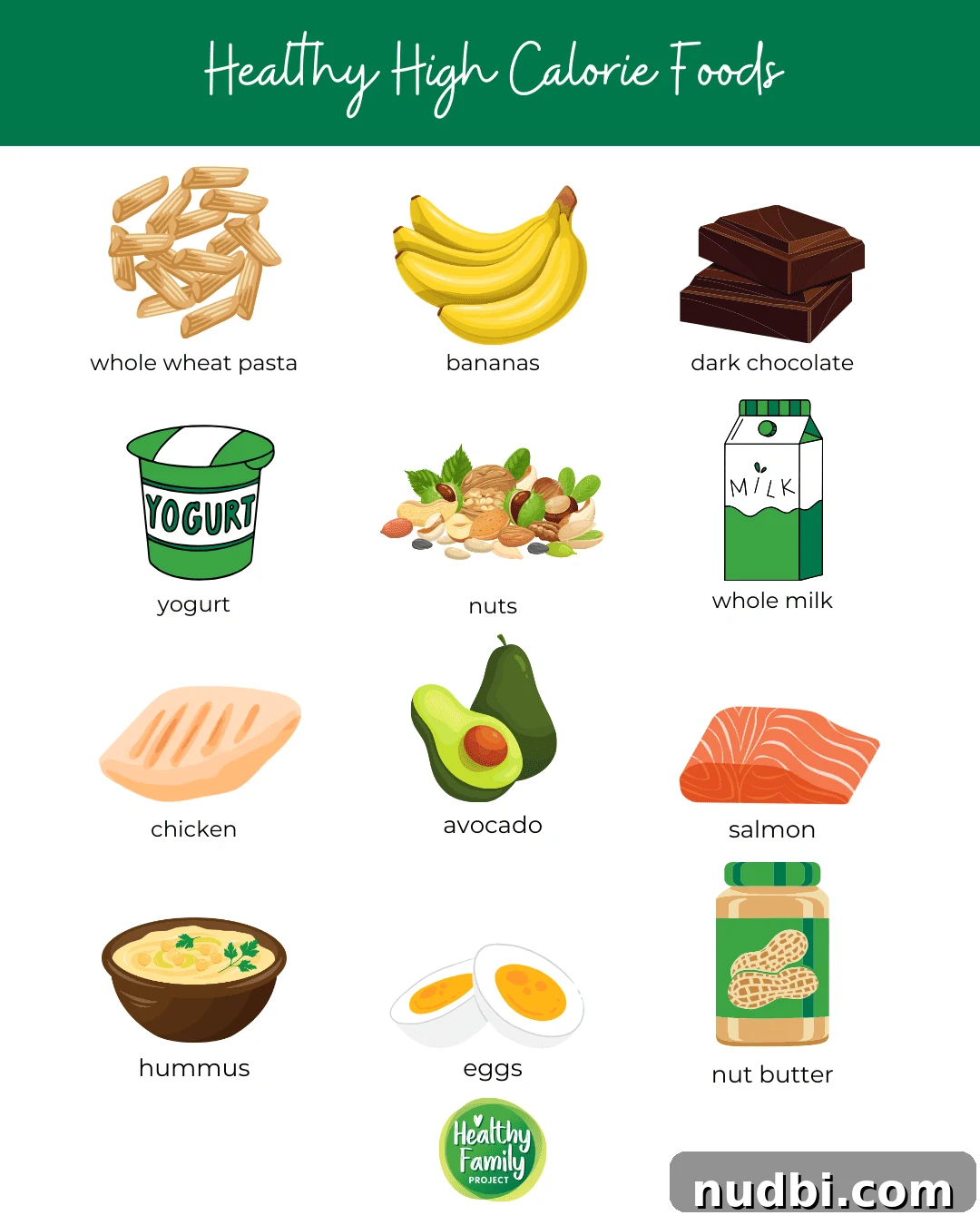
20 Healthy High-Calorie Foods For Underweight Kids: Detailed Recommendations
Here’s a comprehensive list of healthy, calorie-dense foods that are perfect for fueling your child’s healthy weight gain. For each, I’ll offer a brief explanation of its benefits and practical ways to include it in your child’s diet:
- Avocado: This creamy fruit is packed with healthy monounsaturated fats, fiber, and various vitamins. Mash it into guacamole, spread it on toast, dice it into salads, or blend it into smoothies for a smooth texture and caloric boost.
- Eggs: An excellent source of high-quality protein, healthy fats, and essential vitamins like B12 and D. Offer them scrambled, hard-boiled, in omelets, or as additions to fried rice for a versatile, nutrient-packed meal or snack.
- Peanut Butter and other Nut Butters (or Nut-Free Alternatives): Rich in protein and healthy fats, these butters are incredibly calorie-dense. Spread them on whole-wheat toast, apple slices, bananas, or blend into smoothies. For allergies, sunflower seed butter is a great alternative.
- Hummus: Made from chickpeas, tahini, and olive oil, hummus offers a fantastic combination of protein, healthy fats, and fiber. Serve it with pita bread, whole-grain crackers, or a variety of colorful vegetable sticks for dipping.
- Full-fat (Whole) Milk: Whole milk provides more calories and fat than lower-fat options, alongside essential calcium and vitamin D for bone health. Use it in cereals, smoothies, cooking, or as a beverage with meals (remembering to serve it *after* food to avoid filling up).
- Chicken: A lean source of protein vital for muscle growth and repair. Incorporate chicken into stir-fries, sandwiches, pasta dishes, or as grilled strips for a satisfying and nutritious component of any meal.
- Bananas: A convenient source of carbohydrates for energy, potassium, and fiber. Enjoy them fresh, sliced with nut butter, blended into smoothies, or baked into muffins and quick breads for a natural sweetness and calorie boost.
- Dark Chocolate: In moderation, dark chocolate (with higher cocoa content) can provide healthy fats, antioxidants, and a pleasant energy boost. It can be melted and drizzled over fruit, or offered as a small treat after meals.
- Yogurt (Full-fat): Full-fat yogurt offers protein, calcium, probiotics, and extra calories. Serve it with fruit, granola, or use it as a base for creamy sauces and dips. Parfaits are a fun way to layer in nutrients.
- Cheese: A calorie-dense food rich in protein, calcium, and fat. Shredded cheese can be added to almost anything – eggs, pasta, steamed vegetables, or served as slices with whole-grain crackers for a quick snack.
- Whole Wheat Bread: Provides complex carbohydrates for sustained energy, along with fiber. Use it for sandwiches with calorie-boosting fillings like avocado, nut butter, or cheese, or as toast with healthy spreads.
- Granola: As mentioned, granola (especially varieties with nuts, seeds, and dried fruit) is excellent for adding calories and fiber. Sprinkle it on yogurt, oatmeal, or mix it into trail mixes.
- Salmon: An oily fish rich in omega-3 fatty acids, which are crucial for brain development, and high-quality protein. Bake, grill, or pan-fry salmon and serve it with whole grains and vegetables.
- Whole Wheat Pasta: Offers complex carbohydrates for energy and fiber. Serve with creamy, nutrient-rich sauces made with olive oil, cheese, and vegetables, or with lean protein sources like chicken or ground beef.
- Beans (e.g., Black Beans, Kidney Beans): Legumes are fantastic sources of plant-based protein, fiber, and complex carbohydrates. Incorporate them into soups, stews, burritos, or make homemade bean burgers.
- Potatoes (Sweet and White): Excellent sources of complex carbohydrates, vitamins, and minerals. Roast them with olive oil, mash them with a little full-fat milk and butter, or make healthy oven-baked fries.
- Nuts (e.g., Almonds, Walnuts, Cashews): Packed with healthy fats, protein, and fiber. Offer chopped nuts in yogurt, oatmeal, or as part of a homemade trail mix for older children who can safely chew them. Always consider choking hazards for younger children.
- Tofu: A versatile plant-based protein source. Tofu can be scrambled, baked, stir-fried, or blended into smoothies, taking on the flavor of accompanying ingredients. It offers protein and healthy fats.
- Olive Oil: A healthy fat that can easily boost calorie content without adding bulk. Drizzle it over salads, cooked vegetables, pasta, or use it in marinades and dressings.
- Oats: Whole-grain oats provide complex carbohydrates and soluble fiber, offering sustained energy. Prepare oatmeal with full-fat milk, fruits, nuts, or seeds, or use oats in baking to add nutrition.
Making Mealtimes Enjoyable: Strategies for Picky Eaters
Getting an underweight child to eat more, especially nutrient-dense foods, can be a challenge, particularly with picky eaters. The key is patience, consistency, and making mealtimes a positive experience. Avoid pressuring your child, as this can create a negative association with food. Instead, offer a variety of healthy options, allow them to self-regulate their intake, and involve them in meal preparation where appropriate. Children are often more willing to try foods they helped prepare.
Consider creative presentations, like making food shapes, using colorful plates, or offering dips. Remember that it can take multiple exposures for a child to accept a new food. Continue to offer healthy choices consistently, and model healthy eating habits yourself. Focus on progress, not perfection, and celebrate small victories.
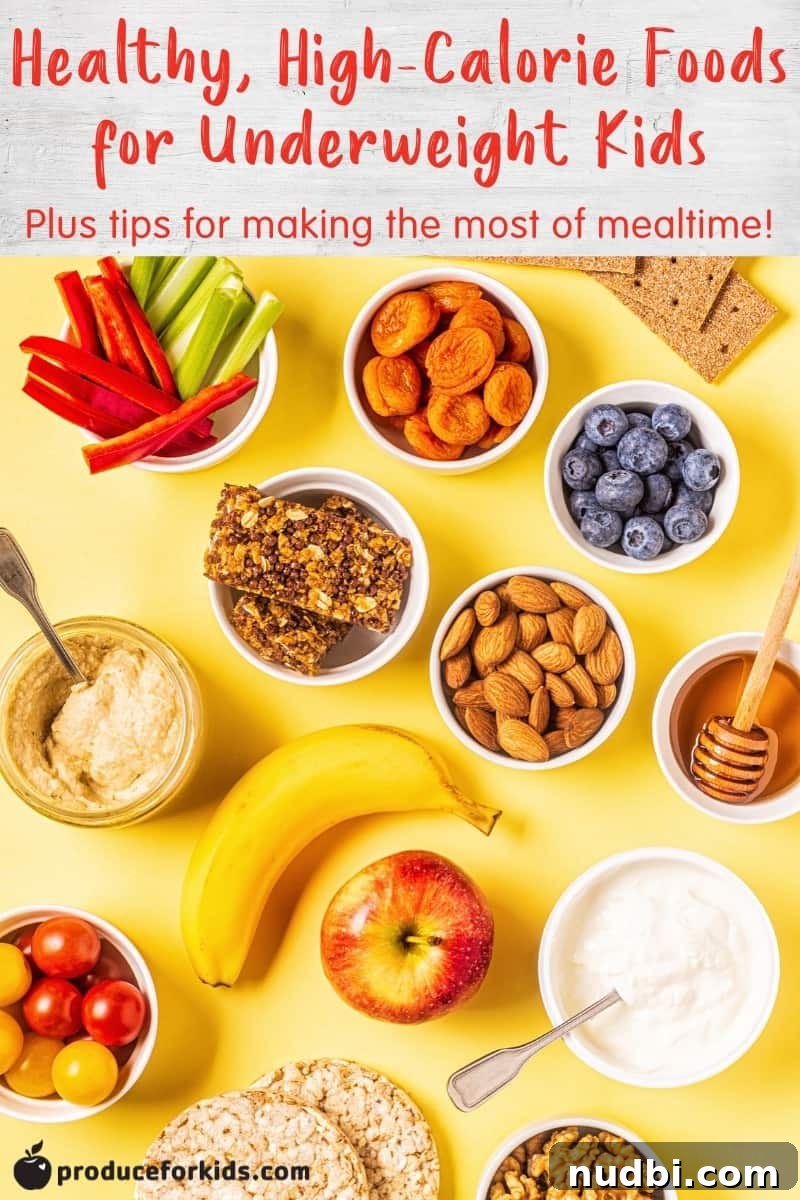
Helping underweight children achieve healthy weight gain doesn’t have to be a source of stress or anxiety. By focusing on nutrient-dense, high-calorie foods like those discussed – from versatile avocados and full-fat dairy to protein-rich meats and legumes – you can empower your child to build a strong, healthy foundation. Remember that every child’s growth journey is unique, and small, consistent changes in dietary habits can yield significant, positive results over time.
If you have ongoing concerns about your child’s weight or growth patterns, always consult your pediatrician. They can provide personalized guidance, conduct necessary assessments, and ensure a tailored approach to your child’s specific needs.
For even more practical tips, family-friendly recipes, and inspiration to nurture a healthy and happy family, I encourage you to explore our blog. Together, we can foster healthy habits that last a lifetime!