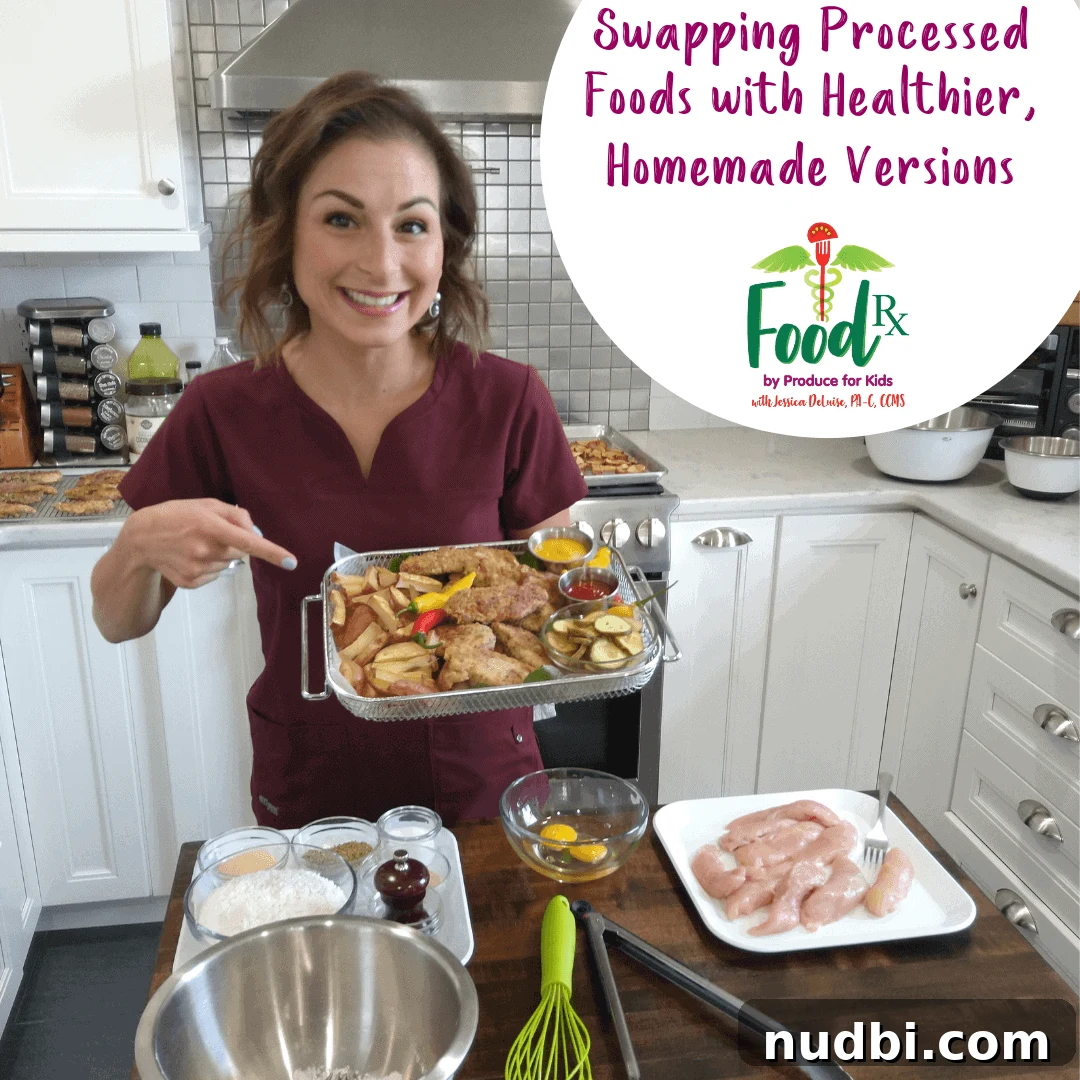
We are thrilled to unveil our enriching new series, Food Rx with Jessica DeLuise, PA-C, CCMS. As a dedicated physician assistant and culinary medicine specialist, Jessica brings invaluable expertise to the table, guiding families toward healthier eating habits. This monthly series is designed to illuminate the profound and often underestimated role food plays in our overall well-being. Each installment will not only delve into crucial nutritional topics but also feature delectable, kid-friendly recipes, making it easier than ever to integrate more fresh produce and whole foods into your family’s daily diet. Join us live on the Produce for Kids Instagram channel on the first Sunday of every month at 12 PM ET for an interactive and informative session!
Today, our focus is squarely on the pervasive issue of processed foods and the simple yet impactful ways families can transition from these convenient, often nutrient-poor options to wholesome, homemade alternatives. We’ll demonstrate this transformation with a family-favorite recipe: homemade baked chicken tenders. These tenders are not just a delicious meal; they’re a versatile solution for busy households. Prepare a batch on the weekend, and you’ll have a healthy addition for lunchboxes throughout the week or a quick, satisfying dinner when paired with your family’s favorite nutritious sides. Many processed foods, while appealing for their convenience, contain extensive ingredient lists often laden with preservatives, artificial flavors, and artificial colors. The good news? Many of these can be easily and healthily recreated in your own kitchen. Let’s explore how!
The Food Rx: Transform Your Plate with Wholesome Choices
Our prescription for a healthier family diet is clear and actionable: Replace highly processed chicken nuggets, often found in fast-food establishments and frozen aisles, with unprocessed, homemade baked chicken tenders. This simple swap is a powerful step towards reducing your family’s intake of unnecessary additives and increasing nutrient density.
Why Making the Switch Matters: Unpacking the Truth About Processed Foods
The ubiquity of chicken tenders and nuggets in fast-food chains, restaurants, and grocery store freezer sections makes them a go-to for many families. However, the convenience often comes at a significant nutritional cost. Many of these commercially prepared options contain a complex array of ingredients that, when consumed regularly, can contribute to adverse health effects. It’s crucial for consumers to understand that “not all nuggets are created equal,” making diligent label reading and ingredient research paramount. Most ingredient information is readily available online or directly on packaging.
As a foundational rule of thumb for evaluating any packaged food, simply turn over the package and scrutinize the ingredient list. Ask yourself two critical questions: First, can you pronounce every ingredient listed? If the list is filled with chemical names and unfamiliar terms, it’s generally an indicator that the product is highly processed and likely contains artificial components. Second, how many ingredients are there in total? A shorter, more transparent ingredient list typically signifies a less processed and healthier choice. Aim for foods with ingredients you recognize as whole, natural items.
Understanding “Ultra-Processed” Foods
The term “processed food” covers a wide spectrum, from minimally processed items like pre-cut vegetables to heavily “ultra-processed” foods like sugary cereals, instant noodles, and, indeed, many frozen chicken nuggets. Ultra-processed foods are typically formulations of ingredients, mostly industrial in origin, that contain little or no whole foods. They are often high in unhealthy fats, sugar, salt, and various additives, designed to be hyper-palatable, convenient, and have a long shelf life. Understanding this distinction is the first step in making informed choices for your family’s health.
Key Ingredients to Watch Out For and Avoid When Possible
To truly empower your family’s nutrition, it’s essential to become an educated consumer. Here are some of the most common problematic ingredients lurking in processed foods, along with their potential health implications and healthier alternatives:
1. Added Sugar
Beyond the obvious spoonfuls in coffee, added sugar hides in an astonishing number of processed foods, including seemingly savory items like bread, sauces, and, yes, even chicken nuggets. High intake of added sugars is a significant contributor to a range of health issues, including increased risk for mood fluctuations, chronic inflammation, dental cavities, obesity, and the development of type 2 diabetes. Furthermore, it can negatively impact gut health and energy levels. Sugar goes by many aliases on ingredient labels, such as high-fructose corn syrup, corn syrup solids, dextrose, maltose, sucrose, fruit juice concentrate, and syrup. Becoming adept at identifying these hidden sugars is vital. For a deeper dive into this topic, refer to our previous #FoodRx from July for more on added sugar!
2. Refined Grains and Refined Flour
Refined flour is a processed wheat product that has been stripped of its most nutritious components. During the refining process, the bran (fiber-rich outer layer) and germ (nutrient-rich embryo) are removed from the grain, leaving behind only the endosperm, which is primarily starch. This process significantly reduces the content of essential B vitamins, folate, iron, and crucial dietary fiber, resulting in a nutrient-poor product that offers little more than empty calories. The lack of fiber also means refined grains are quickly digested, leading to rapid blood sugar spikes. Instead of refined grains, always prioritize products made with whole grains, which retain all three parts of the grain. Look for ingredients like whole wheat, whole corn, brown rice, oats, barley, quinoa, sorghum, spelt, and rye. These provide sustained energy, support digestive health, and contribute vital nutrients to your diet.
3. Unhealthy Vegetable Oils and Trans Fats
Many vegetable oils commonly used in fast food items and processed snacks, such as soybean, corn, cottonseed, and sunflower oil, are often extracted using chemical solvents like hexane gas. This industrial process can introduce unwanted byproducts and degrade the quality of the oil. While these oils are cheap and stable for cooking at high temperatures, they are not a preferred fat source for children or adults due to their highly processed nature and often imbalanced Omega-6 to Omega-3 fatty acid ratio. An excessive intake of Omega-6 fatty acids relative to Omega-3s, which is common in Western diets rich in processed foods, can promote inflammation in the body. Instead, children and adults alike should focus on obtaining healthy fats, particularly Omega-3 and a balanced amount of Omega-6, from natural sources such as nuts, seeds (flax, chia), avocados, olives, fatty fish (salmon, mackerel), and whole grains. These essential fats are crucial for healthy neurologic and cognitive development, hormone production, and overall cellular function.
A Critical Note on Trans Fat:
A particularly insidious type of unhealthy fat found in some processed foods and fast-food items is trans fat, often listed as “partially hydrogenated oil” or “hydrogenated soybean oil.” These oils are created through an industrial process called hydrogenation, which turns liquid vegetable oils into solid fats to improve texture and shelf life. They may also include preservatives like TBHQ (tertiary butylhydroquinone) and butyl hydroquinone. Hydrogenated oils are man-made and synthetic, and their consumption should be strictly avoided. Trans fats are notorious for their detrimental effects on heart health, as they are known to significantly increase levels of “bad” LDL cholesterol while simultaneously lowering levels of “good” HDL cholesterol, dramatically increasing the risk of heart disease.
4. MSG (Monosodium Glutamate) and Other Artificial Additives
Monosodium Glutamate (MSG) is a flavor enhancer widely used in packaged foods, restaurant dishes, and particularly in Asian cuisine. While the FDA classifies MSG as “generally recognized as safe,” its consumption remains highly controversial among many individuals. Anecdotal reports suggest that MSG can exacerbate a range of symptoms in sensitive individuals, including headaches, flushing, palpitations, chest pain, weakness, and numbness. Beyond these immediate reactions, some research has linked high MSG intake to concerns like obesity and potential neurotoxicity, though more definitive studies are needed. MSG can also be hidden under less obvious names such as “hydrolyzed vegetable protein,” “yeast extract,” or “natural flavors.” Learn more about MSG here.
Beyond MSG: The Problem with Artificial Colors and Preservatives
In addition to the ingredients above, many processed foods contain artificial colors (e.g., Red 40, Yellow 5, Blue 1) and synthetic preservatives (e.g., BHA, BHT, nitrates, nitrites). Artificial colors have been linked to hyperactivity in children and allergic reactions, while some preservatives are associated with other potential health concerns. By choosing whole, unprocessed foods and making meals from scratch, you naturally eliminate exposure to these unnecessary chemical additives.
The Benefits of Embracing Homemade Meals
Transitioning to more homemade meals offers a cascade of benefits beyond simply avoiding harmful ingredients. When you cook at home, you gain complete control over the quality and freshness of your ingredients. You can choose organic produce, lean proteins, and healthy fats, tailoring meals to your family’s specific dietary needs and preferences. Home cooking is often more cost-effective than relying on processed foods or dining out. It also fosters family bonding, as children can participate in meal preparation, learning valuable life skills and developing a healthier relationship with food. Furthermore, homemade meals tend to be more nutrient-dense, providing sustained energy and supporting optimal growth and development in children.
The Recipe: Delicious & Nutritious Baked Chicken Tenders
These healthier baked chicken tenders are a game-changer for any family looking to eat better without sacrificing flavor or convenience. Whether you’re preparing them for a satisfying weeknight dinner or packing leftovers into your kid’s lunchbox for school, they are incredibly easy to make and universally loved. Pair them with our homemade Sugar-Free Ketchup for a complete and wholesome meal. To round out the nutritional profile, serve these crispy tenders with a vibrant assortment of your kiddos’ favorite fruits and veggies, and a hearty whole grain like fluffy brown rice, whole-wheat pasta, or protein-rich quinoa. This recipe not only provides lean protein but also incorporates healthy fats and fiber from the almond flour and nutritional yeast, making it a superior alternative to commercial options.
Prep Time: 10 minutes
Cook Time: 35 minutes
Ingredients:
- 1 cup almond flour (or coconut, chickpea, or rice flour for alternative options)
- 1/2 cup nutritional yeast (adds a cheesy flavor and B vitamins)
- 1 Tbsp. garlic powder
- 1 Tbsp. onion powder
- 1 tsp. sea salt
- 1 tsp. freshly ground black pepper
- 2 large eggs
- ¼ cup milk of choice (dairy or non-dairy like almond or oat milk)
- 2 lbs. chicken tenderloins, trimmed
Directions:
- Preheat your oven to 400°F (200°C). For optimal crispiness and even cooking, place a metal wire rack on a baking sheet. This allows for air circulation around the chicken tenders. If a rack isn’t available, line your baking sheet with parchment paper.
- In a shallow bowl, combine the almond flour, nutritional yeast, garlic powder, onion powder, salt, and pepper. Whisk these dry ingredients together thoroughly. In a separate shallow bowl, whisk the eggs and your milk of choice until well combined.
- Working with one chicken tenderloin at a time, first dip it into the egg mixture, ensuring it’s fully coated. Let any excess egg drip off.
- Next, dredge the egg-coated chicken tender in the flour mixture, pressing gently to ensure a good, even coating on all sides.
- Place the coated chicken tender on the prepared metal rack (or parchment-lined baking sheet), ensuring there is a little space between each piece to promote even crisping.
- Bake for 35 minutes, or until the chicken is cooked through (internal temperature reaches 165°F/74°C), beautifully crispy, and golden brown. Serve immediately and enjoy your wholesome, homemade meal!
Disclaimer: Before making any significant health or diet changes, it is always recommended to consult your primary care physician or a qualified healthcare professional. The information shared as part of the Food Rx series is intended to be informative and educational, but it should not be considered a substitute for personalized medical advice from your doctor or other healthcare providers.