

Cooking is a journey of discovery, creativity, and sometimes, quick problem-solving. We’ve all been there: halfway through preparing a delicious meal, only to realize a crucial ingredient is missing. A sudden trip to the grocery store might not be an option, leaving you scrambling for solutions. This common kitchen dilemma often leads to dashed hopes and a recipe rethink. But what if there was an easier way?
In our household, these moments sparked a fun family activity. After several instances of needing to improvise, my daughters and I turned to our trusty virtual assistant, Alexa, for quick ingredient swaps. This exploration quickly blossomed into a research project, involving conversations with friends and family about their clever kitchen hacks. We’ve compiled a comprehensive guide to easy and healthy cooking substitutions, designed to help you confidently adapt recipes, enhance nutritional value, and streamline your meal preparation.
This resource isn’t just about saving a trip to the store; it’s about empowering you to make healthier choices without overhauling your entire cooking style. By swapping a few simple ingredients, you can effortlessly steer your family toward a more nutritious diet. While I haven’t personally tried every single substitution on this list, it’s a collaborative effort, enriched by insights from the dedicated Healthy Family Project team members and our vibrant community group. Get ready to transform your approach to cooking with these ingenious swaps!
Smart & Healthy Cooking Swaps for Every Kitchen
Welcome to your ultimate guide for culinary improvisation! Below, you’ll find a curated list of ingredient swaps that not only rescue your recipes but also contribute to a healthier lifestyle. Each suggestion is designed to be practical, easy to implement, and delicious. We encourage you to try these ideas and share your own kitchen wisdom in the comments section below or on our Facebook page – we’d love to expand this list with your invaluable contributions!
1. Embrace Healthier Fats: Swapping Saturated for Unsaturated
Fats are essential for flavor and texture, but not all fats are created equal. By opting for unsaturated fats over saturated ones, you can significantly boost the heart-health benefits of your meals. This simple change is one of the most impactful healthy cooking adjustments you can make.
- Prioritize Olive Oil: Make extra virgin olive oil your go-to cooking fat. Keep a bottle right beside your stove, ensuring it’s the first oil you reach for when sautéing, roasting, or dressing salads. Its monounsaturated fats are excellent for cardiovascular health.
- Butter & Margarine Alternatives for Spreading: For toast, bagels, or muffins, move beyond butter and margarine. Explore these flavorful and healthier options:
- Applesauce: A naturally sweet and low-calorie spread.
- Greek Yogurt: Offers a tangy, creamy texture with added protein.
- Roasted Garlic with Olive Oil: Mash roasted garlic into olive oil for a savory spread bursting with flavor.
- Breakfast Guacamole Made With Greek Yogurt: For a unique and nutritious twist, try this innovative recipe that combines the richness of avocado with the tang of Greek yogurt.
- Baking with Fruit Purees: In baking, mashed bananas or unsweetened applesauce can brilliantly substitute butter or margarine, reducing fat and adding natural sweetness and moisture. This works beautifully in muffins, quick breads, and cakes. For instance, consider this delightful Pistachio Apple Bread, where applesauce plays a key role in texture and flavor.
2. Master Flavor Without Excess: Reducing Sugar and Salt
Excessive sugar and salt intake are major concerns in modern diets. Learning to season your food effectively with natural alternatives can dramatically improve the nutritional profile of your dishes without compromising taste. It’s about enhancing natural flavors, not masking them.
- Herbs and Spices are Your Allies: Ditch the salt shaker and embrace the vast world of herbs and spices. From fragrant basil and oregano to pungent garlic powder and smoky paprika, these ingredients add depth and complexity to your meals, making salt less necessary. Experiment with different blends to discover your family’s favorites.
- The Brightness of Lemon: Keep fresh lemons on hand. A squeeze of lemon juice introduces a vibrant, zesty note that brightens flavors and makes the absence of salt less noticeable. Place lemon wedges on the table for an easy, healthy seasoning option. This Lemon Roasted Salmon recipe perfectly showcases how herbs and lemon juice create an irresistible flavor boost.
- Natural Sweetness from Pureed Fruit: Reduce added sugars in your baking and cooking by using pureed fruits. Keep frozen fruit purees (like berries, peaches, or mango) readily available for convenience. They add natural sweetness, fiber, and nutrients. For example, the Very Berry Peach Lemonade gets much of its delightful sweetness from fruit, minimizing the need for refined sugar.
3. Smart Carb Swaps: Rethinking Flour and Bread-Based Ingredients
Many recipes rely heavily on refined flour and bread products. By swapping these out for whole grains, nuts, or vegetables, you can increase fiber, nutrients, and often reduce the glycemic load of your meals. These simple changes can make your favorite dishes even healthier and more satisfying.
- Pecans Instead of Croutons: Elevate your salads by replacing calorie-dense croutons with crunchy, heart-healthy pecans. They add a wonderful texture and a boost of healthy fats and protein. Try this elegant Mixed Green Salad with Pecans, Goat Cheese, and Honey Mustard Vinaigrette for inspiration.
- Rolled Oats for Breadcrumbs: For coatings, binders in meatballs, or toppings, rolled oats are a fantastic, gluten-free, and fiber-rich substitute for breadcrumbs. They lend a satisfying texture and absorb flavors beautifully. Check out this delicious recipe for Parmesan Oat Crusted Chicken.
- Healthier Grains for Pasta: While pasta is a beloved staple, diversifying your grain choices can add variety and nutritional benefits. Swap traditional pasta for whole grains like barley, quinoa, or farro. For example, consider Barley and Meatballs instead of Spaghetti and Meatballs, or explore a vibrant Greek Farro Salad as a refreshing alternative to pasta salad. These grains offer more fiber and a different texture profile.
4. Optimize Your Protein: Reduce Less Healthy Options, Increase Lean Choices
Protein is vital for muscle growth and satiety, but the source matters. By strategically reducing processed meats and increasing lean, plant-based, or fish proteins, you can significantly improve your diet’s overall healthfulness and reduce your intake of saturated fat and cholesterol.
- Meatless Mondays (or Any Day): Dedicate one night a week to a meatless meal. Incorporating plant-based proteins like beans, lentils, or tofu reduces your environmental footprint and introduces diverse nutrients. Give these hearty Cheesy Veggie Stuffed Shells a try for a satisfying vegetarian option.
- Fish for Dinner: Aim to include fish in your diet at least one night a week. Rich in omega-3 fatty acids, fish like salmon, tuna, and mackerel are excellent for brain and heart health. There are countless quick and delicious fish recipes to explore.
- Beans as a Meat Extender/Substitute: Stretch your ground meat or replace some of it entirely with mashed canned beans (black beans, kidney beans, or lentils). This adds fiber, reduces saturated fat, and boosts plant-based protein. Recipes like these Gluten-Free Italian Meatloaf Muffins show how beans can be seamlessly incorporated.
- Greek Yogurt for Sour Cream & Mayonnaise: Non-fat Greek yogurt is an incredible substitute for sour cream and mayonnaise. It offers a similar creamy texture with a protein punch and significantly less fat. Use it in dips, dressings, baked potatoes, or as a topping for savory dishes. Explore recipes like One Skillet Vegetarian Quinoa Fajitas with Greek Yogurt or a refreshing Light & Fresh Potato Salad.
- Egg Whites for Whole Eggs: When a recipe primarily calls for eggs for binding or leavening and not for their fat content, use egg whites. This reduces cholesterol and fat while still providing protein. It’s a common swap in omelets, frittatas, and some baked goods.
5. Power Up with Produce: Add Fruits and Veggies Everywhere
Maximizing your fruit and vegetable intake is fundamental to a healthy diet. These nutrient-dense powerhouses add vitamins, minerals, fiber, and vibrant colors to your meals. Make it a game to sneak them into every possible dish!
- Boost Carbohydrate Side Dishes: Elevate simple carb sides by incorporating vegetables. Stir finely chopped bell peppers, spinach, or peas into rice, quinoa, or couscous. Try this refreshing recipe for Rice with Cucumber, Chive and Lime for a light and flavorful side.
- Fruit-Topped Desserts: Make dessert healthier and more satisfying by topping smaller portions with an abundance of fresh fruit. The natural sweetness and freshness of fruit provide a delightful contrast and make you feel fuller with less added sugar. This strategy works beautifully with Fruit and Cream Delights.
- Salsas and Veggie-Based Sauces: Create vibrant fruit salsas or savory vegetable-based sauces to accompany smaller portions of meat or fish. These additions enhance flavor, add moisture, and increase your veggie intake, turning a simple protein into a well-rounded meal. Think mango salsa for grilled chicken or a rich marinara sauce with hidden pureed vegetables.
- Vegetables as Carb Replacements: Get creative by using vegetables as direct carbohydrate substitutes. Large lettuce leaves make excellent wraps for tacos or burgers. Swap traditional pasta for spaghetti squash, zucchini ribbons, or shredded carrots to create lighter, nutrient-packed “noodles.” These alternatives significantly reduce calories and carbs while boosting fiber.
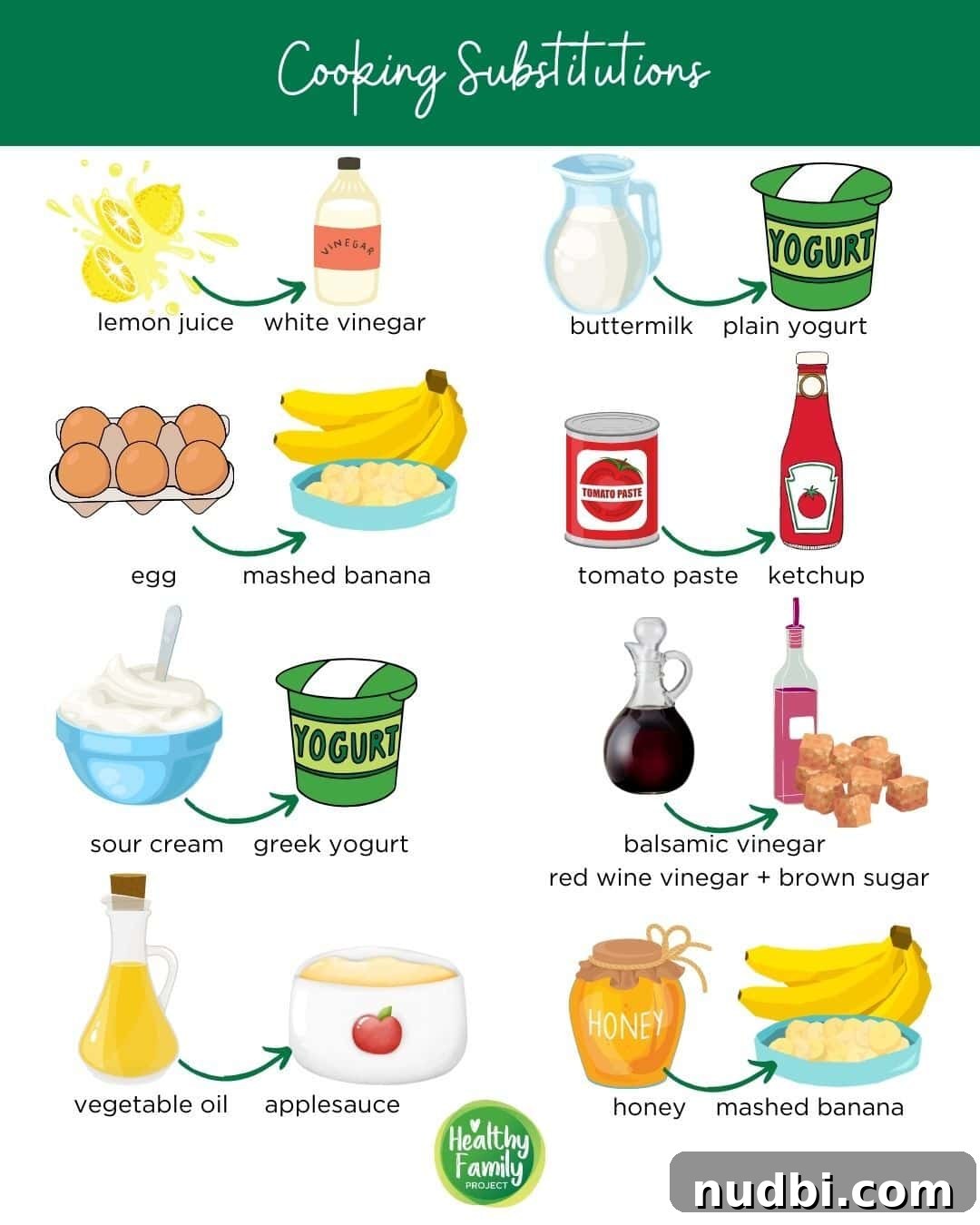
Essential Kitchen Hacks: Easy Swaps for Common Ingredients
Even the most experienced home cooks run out of essential ingredients from time to time. Don’t let a missing item derail your dinner plans! This handy list provides quick, effective, and often healthier substitutions for some of the most frequently used ingredients, ensuring your recipes always come to life.
- Lemon Juice: If you’re fresh out of lemons, don’t fret. Substitute 1 tablespoon of lemon juice with 1½ teaspoons of white vinegar for acidity, or an equal amount of orange or lime juice for a similar citrusy tang in most recipes.
- Vegetable or Beef Broth: No broth on hand? No problem. For every 1 cup of vegetable or beef broth required, use 1 cup of water combined with 1 tablespoon of soy sauce. You can further enhance the flavor by adding a pinch of any desired seasonings like salt, pepper, garlic powder, or onion powder.
- Buttermilk: A common ingredient in baking for its tenderizing properties. To make 1 cup of buttermilk, simply combine 1 tablespoon of white vinegar or lemon juice (or 1¾ teaspoons of cream of tartar) with enough milk to measure 1 cup. Stir gently and let it stand for 5 minutes until it slightly curdles before adding it to your recipe. Alternatively, an equal amount of plain yogurt can also serve as an excellent buttermilk substitute.
- Eggs: For recipes where eggs act as a binder, a “flax egg” is a fantastic plant-based alternative. Mix 1 teaspoon of ground flaxseed with 3 teaspoons of water. Stir well and let it sit for 5 minutes to thicken into a gel-like consistency before incorporating it. For adding moisture and a slight binding, especially in baking, 1 ripe mashed banana can substitute 1 egg, though it will impart a banana flavor.
- Vegetable Oil: In baking, you can significantly reduce fat and add natural moisture by substituting 1 cup of vegetable oil with ½ cup of applesauce or any fruit puree (like pear or prune puree). This swap works especially well in muffins, quick breads, and some cake recipes.
- Tomato Paste: This concentrated flavor booster can be tricky to substitute, but it’s manageable. You can use an equal amount of ketchup for a similar savory-sweet and tangy profile, though ketchup is sweeter. For a less sweet option, substitute 1 tablespoon of tomato paste with 2 tablespoons of tomato puree or tomato sauce, remembering to reduce the overall liquid in your recipe by 2 tablespoons to maintain consistency.
- Balsamic Vinegar: If your balsamic bottle is empty, combine 1 tablespoon of red wine vinegar with ½ teaspoon of brown sugar. The red wine vinegar provides the acidity, and the brown sugar mimics the characteristic sweetness and depth of balsamic.
- White Wine: For savory dishes requiring white wine, 1 cup of chicken broth is a fantastic non-alcoholic substitute, adding depth and umami. For desserts, 1 cup of apple juice can replace white wine, offering a fruity sweetness. You can also dilute a small amount of white wine by using ½ cup white wine + ½ cup water if you only have a little on hand.
- Honey: In recipes, honey can often be swapped with equal amounts of maple syrup or agave nectar. These alternatives offer similar sweetness and liquid consistency, making them ideal for both cooking and baking.
- Sour Cream: As mentioned earlier, non-fat Greek yogurt is an almost perfect substitute for sour cream. Use it in equal amounts for dips, toppings, and even in some baked goods to add tanginess and creaminess with a healthier profile.
Other Simple & Quick Substitutions
Beyond the major ingredient swaps, sometimes it’s the little things that can make or break a recipe. Here are some quick, everyday substitutions for common pantry staples:
- Cinnamon = Pumpkin Pie Spice: If a recipe calls for cinnamon and you only have pumpkin pie spice, you’re in luck! Pumpkin pie spice is typically a blend of cinnamon, nutmeg, ginger, and cloves, so it can provide a similar warm, aromatic profile, especially in fall-inspired dishes or baked goods.
- Parsley = Celery Leaves: Fresh parsley is a popular garnish and flavor enhancer. If you’re out, the leafy tops of celery can offer a similar fresh, slightly bitter, and herbaceous note, especially when chopped finely and used as a garnish.
- Vanilla Extract = Maple Syrup or ½ amount Almond Extract: Vanilla extract adds a crucial warm, sweet aroma to many desserts. If you’re missing it, maple syrup can lend a different but pleasant sweetness, while using half the amount of almond extract will provide a stronger, nutty aroma that complements many baked goods.
- Worcestershire Sauce = Soy Sauce: Worcestershire sauce offers a unique umami and savory depth. Soy sauce can serve as a good substitute, especially in marinades or savory dishes, due to its comparable salty and umami characteristics.
- Baking Powder (1 tsp.) = ¼ tsp. Baking Soda + ½ tsp. Cream of Tartar: This is a classic chemistry hack. Baking powder is essentially baking soda mixed with an acid (like cream of tartar) and a starch. If you only have baking soda and cream of tartar, you can create your own leavening agent for 1 teaspoon of baking powder.
- Breadcrumbs = Oats or Crumbled Crackers: As highlighted before, rolled oats are a fantastic choice for binding or coating. Alternatively, crushed plain crackers (like saltines or Ritz) can also work well as a binder or crunchy topping when breadcrumbs are unavailable.
- 1 Tbsp. Fresh Herbs = 1 tsp. Dried Herbs: The general rule of thumb when swapping between fresh and dried herbs is to use one-third the amount of dried herbs compared to fresh, as dried herbs are more concentrated in flavor. So, for every 1 tablespoon of fresh herbs, use 1 teaspoon of dried.
With these flexible substitutions in your culinary arsenal, you’ll be well-equipped to tackle any recipe, even when your pantry isn’t fully stocked. These kitchen hacks not only save time and stress but also open up new possibilities for healthier, more adaptable cooking.
What are some of your go-to cooking substitutions that you rely on in your kitchen? Do you have a clever swap for a specific ingredient that always saves the day? Or perhaps there’s an ingredient you’d love to swap for a healthier alternative but aren’t sure how? Share your insights, questions, and favorite kitchen hacks in the comments below for a healthy suggestion – let’s build an even bigger community resource together!