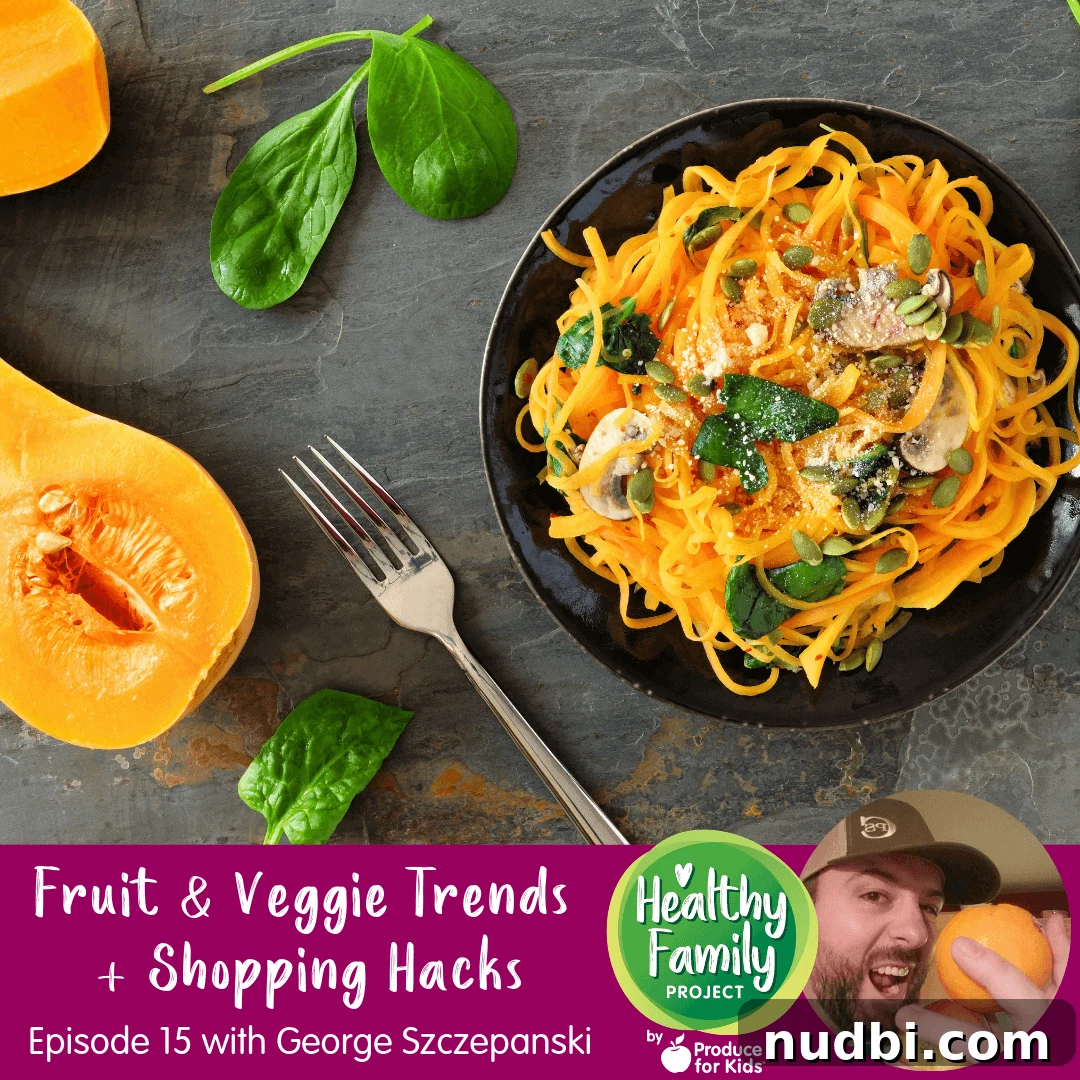
Welcome to an insightful episode of the Healthy Family Project podcast, where we dive deep into the vibrant world of fruits and vegetables. In this special installment, we’re joined by George Szczepanski, the esteemed host of The Prodcast from the Produce Aisle. George brings a wealth of knowledge, offering a captivating look at the top produce trends for the year ahead, alongside practical, insider tips designed to transform your grocery shopping experience and elevate your family’s healthy eating habits. Prepare to discover how to maximize flavor, minimize waste, and even save money in the produce department!
With an impressive fourteen-year tenure in the fresh fruit and vegetable industry, George Szczepanski is a true authority. For eight of those years, he’s been an integral part of the Produce Marketing Association (PMA), an organization at the forefront of connecting the global produce and floral supply chain. His role at PMA involves orchestrating North America’s largest fresh produce and floral convention, a monumental event where industry leaders showcase innovations and shape the future of healthy eating. This extensive background positions George perfectly to shed light on what’s new and exciting in the world of fresh produce, making him an invaluable guide for families seeking to incorporate more wholesome options into their daily lives. Beyond his professional expertise, George also shares a personal glimpse into his life as a new dad, offering relatable perspectives on fostering healthy eating habits from an early age, demonstrating that healthy choices are indeed a family affair.
Shape Our Future: Take Our Listener Survey!
Your voice matters! The Healthy Family Project Podcast is committed to delivering the most relevant and engaging content for our listeners. We would be incredibly grateful if you could spare just 5 minutes to complete our quick listener survey. Your feedback is crucial in helping us understand your needs and preferences, ensuring we continue to bring you the best possible discussions and guests in upcoming episodes. By sharing your thoughts, you directly contribute to the evolution of our podcast and help us create content that truly resonates with the challenges and aspirations of modern healthy families. Click here to take the survey and make an impact on future content.
Unlock Healthy Recipes & Essential Tips in Your Inbox
Elevate your family’s mealtime with a steady stream of inspiration delivered directly to you. Sign up for the exclusive Healthy Family Project e-newsletter today! Each week, you’ll receive a curated selection of delicious, family-friendly recipes, our latest blog posts brimming with practical advice, expert insights, and much more, all designed to make healthy eating an enjoyable and effortless part of your routine. From quick weeknight dinners packed with nutrients to creative ways to encourage picky eaters, our newsletter is your go-to resource for maintaining a vibrant, healthy lifestyle. Don’t miss out on fresh ideas and valuable resources!
Join Our Thriving Healthy Family Project Facebook Community
Connect, share, and grow with like-minded parents and caregivers! We invite you to become a part of our vibrant Healthy Family Project Facebook group. This dedicated online community serves as a supportive and safe space where you can engage in meaningful conversations about all aspects of raising a healthy family. Whether you’re navigating the challenges of a picky eater, seeking creative tips to incorporate more fruits and vegetables into meals, exploring fun ways to exercise as a family, or looking for resources on mental wellness, our group offers a welcoming environment for discussion and mutual support. Share your successes, ask questions, and learn from the collective wisdom of a community focused on family well-being. We warmly encourage you to join us and contribute to a space dedicated to fostering healthier, happier families!
Want to navigate directly to the topics that interest you most? Here are the key discussion points and their corresponding timestamps from the episode. While we highly recommend listening to the entire conversation for a full understanding and to catch all the valuable nuances, feel free to jump to your preferred segments below:
- 3:23 – Meet George Szczepanski: Get to know our expert guest, his extensive background in the fresh produce industry, and what drives his profound passion for fruits and vegetables.
- 4:48 – Discover The Prodcast from the Produce Aisle: Learn about George’s own fruit and veggie-focused podcast, its unique mission, and how it delivers expert insights straight from the heart of the industry.
- 6:08 – Unpacking 2019 Produce Trends: A deep dive into the exciting innovations, shifts, and consumer-driven developments families can expect to see in their local produce department, including an emphasis on convenience and new product forms.
- 12:40 – What’s In Season During Winter Months: Expert guidance on the best fruits and vegetables to enjoy for peak flavor, nutritional value, and cost-efficiency during the colder parts of the year, featuring specific recommendations like robust root vegetables and vibrant citrus.
- 18:33 – Essential Tips for Shopping the Produce Department Smarter: Practical, insider advice on how to select the freshest produce, understand pricing strategies, make informed choices, and maximize both flavor and your grocery budget.
- 25:39 – Tackling Food Waste: Industry Efforts & Consumer Actions: An important discussion on what companies are doing to prevent food waste at every stage of the supply chain and actionable steps individuals can take to contribute to this critical global effort.
- 30:59 – A New Parent’s Strategy: Introducing Fruits & Veggies to Little Ones: George shares his personal approach and insights as a new father on encouraging young children to embrace healthy eating habits from the very beginning, highlighting the importance of early exposure and role modeling.
2019 Produce Trends: What’s New and Exciting for Your Family’s Plate?
George Szczepanski, with his finger firmly on the pulse of the fresh produce industry, offers a compelling look at the trends set to redefine our produce aisles in 2019. Drawing from his extensive experience at the Produce Marketing Association’s conventions and direct interactions with growers and shippers, George highlights themes that cater directly to the needs of modern families. While specific products might vary by region, the overarching themes of convenience, creativity, and new varieties are universal drivers in the industry, all aimed at making healthy eating more accessible and enjoyable for everyone.
Convenience Takes Center Stage: Beyond the Basics
The demand for convenience has long been a significant factor in the produce industry, but it’s evolving beyond simple pre-cut vegetables. In 2019, expect to see an explosion of ready-to-cook meal solutions that are both innovative and delicious. George notes that growers are keenly listening to what busy parents and shoppers desire: quick, healthy, and easy options. This means more than just pre-chopped broccoli; we’re talking about pre-packaged cauliflower fried rice kits, complete with various ingredients ready for a quick sauce, or even vegetable breakfast bowls designed for microwave heating, perhaps with an added egg or protein. These offerings are strategically designed to integrate a wider array of vegetables into more parts of the day, making healthy eating accessible even on the busiest mornings. Imagine fresh, flavorful vegetable blends that reduce your prep time significantly, allowing you to enjoy nutritious meals without sacrificing precious family moments.
Leveraging Kitchen Gadgets: Instant Pot Ready Kits
The rise of popular kitchen appliances like the Instant Pot hasn’t gone unnoticed by the savvy innovators in the produce industry. George reveals an exciting trend: Instant Pot ready vegetable kits. This demonstrates how farmers and producers are actively engaging with current culinary trends, striving to provide healthy and easy meal solutions that align with how people are cooking at home. These kits directly compete with meal kit delivery services by offering fresh, prepped ingredients that streamline the cooking process, making it simpler than ever to prepare a nutritious, home-cooked meal without the extensive prep work. This trend is a testament to the industry’s adaptability, ensuring that fresh produce remains a central component of modern, convenient cooking.
Exciting New Varieties: Tiny Cucumbers and More
Beyond the realm of convenience, 2019 promises delightful new varieties that are bred for enhanced flavor, unique characteristics, and family-friendliness. George expresses particular excitement about the emergence of “itty bitty cucumbers” – perfectly portioned, snackable cucumbers that require no peeling or chopping. Imagine these mini wonders ready to be dipped in ranch or hummus, offering a satisfying crunch that makes them a fantastic alternative to less healthy snacks. This trend towards grab-and-go mini versions of popular produce items echoes the enduring popularity of convenient fruits like bananas, providing easy, nutritious options for busy lifestyles and lunchboxes. These innovations cater to a snacking-focused culture, providing healthy alternatives on the go. Furthermore, ongoing breeding efforts are continually bringing forth new apple varieties, unique berries, and specialty greens, ensuring there’s always something new and exciting to discover in the produce aisle, inspiring culinary creativity for the whole family.
Seasonal Eating: Maximizing Flavor and Value in Winter
Understanding what’s in season is a game-changer for smart produce shopping, offering undeniable benefits in both taste and cost-efficiency. As George emphasizes, embracing seasonal produce means experiencing fruits and vegetables at their peak ripeness and flavor, a difference that even picky eaters can appreciate. Eating seasonally often translates to better prices, as abundance naturally drives costs down. It also supports local economies and reduces the environmental footprint associated with long-distance transportation. The Healthy Family Project frequently shares seasonal guides, and for the winter months of December and January, George highlights some fantastic options that should be on every family’s plate.
Embrace Winter Warmth: Hearty Root Vegetables and Crisp Apples
During the colder months, there’s a natural inclination towards hearty, warming foods, and the produce department delivers. Root vegetables like potatoes, parsnips, and carrots shine this time of year, offering both comfort and robust nutrition. George particularly advocates for parsnips, describing their unique flavor as a delightful blend between a potato’s creamy texture and a carrot’s sweet, earthy notes. Roasting these vegetables together not only fills your home with comforting aromas but also creates a simple yet elevated side dish that pairs beautifully with any winter meal. Apples, another winter staple, are incredibly abundant and versatile. Beyond the classic Gala, Granny Smith, and Pink Lady, the success of varieties like Honeycrisp has paved the way for even more exciting new apple varieties to discover, each offering a distinct texture and flavor profile perfect for snacking, baking, or adding a crisp element to salads. This season invites you to experiment with warming, wholesome produce.
Brighten Your Plate: The Abundance of Vibrant Winter Citrus
January marks the vibrant peak of the California citrus season, bringing a burst of color and tangy sweetness to winter tables. It’s a prime time to explore beyond traditional oranges and clementines. George is particularly enthusiastic about Sumo Citrus, a large, easy-to-peel mandarin orange known for its incredible flavor, juicy segments, and distinctive top knot. Its sweetness and convenience make it an instant family favorite. Another winter gem is the blood orange, with its striking ruby flesh and unique, slightly berry-like taste. George even suggests innovative uses, like adding blood orange chunks or grapefruit segments to guacamole for an unexpected burst of color and flavor, transforming a traditional dip into a refreshing avocado salad. These bright, vitamin C-rich fruits are perfect for warding off winter blues, boosting immunity, and adding a delightful zing to both sweet and savory dishes, proving that winter produce is anything but dull.
Smart Shopping Strategies for the Produce Department
Becoming a smarter produce shopper can significantly impact your family’s health and budget. George, often consulted by friends for his expertise, shares invaluable tips for selecting the best produce every time. One golden rule for fruits is to “pick something that’s heavy.” This simple trick indicates freshness; a heavier fruit typically means it retains more of its natural water content, signifying it’s juicy and hasn’t lost moisture due to evaporation. This applies to everything from large watermelons, which can actually lose significant weight over time, to smaller stone fruits, ensuring you get the most delectable selections. This fundamental tip helps guarantee you’re bringing home quality produce that will taste its best.
Beyond the Sale Price: Understanding Abundance and Value
Don’t shy away from produce sales! Contrary to popular belief that sale items are past their prime, George clarifies that sales often signal peak abundance. Simple economics dictates that when a fruit or vegetable is plentiful, its price naturally decreases. This is often when produce is at its most flavorful and perfectly ripe, making it an ideal time to stock up and enjoy. Far from being a sign of inferior quality, a sale in the produce aisle often represents Mother Nature’s bounty. Engaging with your local produce manager can also be incredibly helpful; they are a fantastic, often overlooked, resource for understanding what’s truly in season, at its best, and how to properly store it to extend its shelf life. Don’t hesitate to ask questions and tap into their expertise.
Embrace Impulse Buys and Involve the Family
To keep healthy eating exciting and adventurous, George encourages shoppers to occasionally make an “impulse buy” in the produce aisle. Pick up something new or unusual that catches your eye, even if you don’t have a recipe in mind. This fosters curiosity, expands your culinary repertoire, and can lead to delightful culinary discoveries. This kind of spontaneous exploration makes grocery shopping more engaging. Furthermore, involving children in this process, perhaps by taking them to a farmer’s market or letting them choose a “special” vegetable at the store, creates engagement and a sense of ownership, making them more likely to try new foods. George fondly recalls his own experience with his baby at the farm stand, seeing it as a valuable tradition to foster a love for fresh produce from an early age. When kids have “skin in the game,” they are often more willing to experiment and enjoy what they eat.
Tackling Food Waste: Industry Innovations and Consumer Action
The issue of food waste is gaining significant traction, both within the produce industry and among conscious consumers, recognizing its environmental, economic, and ethical implications. George provides an insider’s perspective on how companies are addressing this global challenge and how individuals can contribute meaningfully to reducing waste in their own homes and communities. One of the simplest yet most impactful approaches has been the embrace of “ugly fruit” or “misfit produce,” challenging conventional beauty standards for food.
The “Ugly” Produce Movement: Beauty Beyond Aesthetics
Programs focused on “ugly fruit” recognize that appearance has no bearing on taste or nutritional value. Supermarkets and even home delivery services are increasingly offering fruits and vegetables that might have been discarded simply for not meeting stringent aesthetic standards – perhaps a strangely shaped carrot, a lemon with a blemish, or a slightly bruised apple. These products are often sold at a discount, providing excellent value to consumers and significantly reducing waste that would otherwise end up in landfills. Originating with pioneers like France, this movement is gaining global momentum, encouraging consumers to look beyond superficial imperfections and appreciate the inherent goodness of all produce. These initiatives not only reduce landfill waste but also educate consumers on the true essence of fresh food, proving that deliciousness doesn’t always come in a perfect package.
Innovative Solutions: From Imperfect Produce to Valuable Products
Beyond simply selling “ugly” produce, the industry is also exploring innovative ways to repurpose it, turning potential waste into valuable new products. George highlights a remarkable example: companies like Glean (founded by former sweet potato saleswoman Laura Hearn) are rescuing imperfect sweet potatoes and other vegetables and transforming them into gluten-free flours. These versatile flours can then be used in a variety of applications, from pasta to baked goods, addressing multiple trends simultaneously: catering to gluten-free diets, significantly reducing waste, and utilizing wholesome, on-trend ingredients. Such out-of-the-box thinking showcases the industry’s commitment to sustainability and maximizing the value of every harvest. This creative approach tackles food waste at its root, preventing discards from ever reaching the landfill and instead giving them a new, useful life, benefiting both consumers and the environment.
A New Dad’s Guide: Introducing Fruits and Veggies to Little Ones
As a new father, George offers a heartfelt and practical perspective on the journey of introducing fruits and vegetables to infants. Drawing on valuable resources like the Healthy Family Project’s “First Foods” episode, he’s navigating the exciting yet sometimes nerve-wracking world of baby-led weaning and purees. His strategy involves a blended approach, ensuring his baby experiences a variety of textures and flavors from the start. Beyond specific feeding methods, George emphasizes the profound importance of setting a good example and integrating food into the very fabric of family life, recognizing that early exposure and positive associations are key to fostering lifelong healthy eating habits.
Making Food a Central Family Experience
George’s plan is rooted in making food a central and positive part of family interactions. This includes talking about ingredients while chopping them, even if the baby can’t understand yet, and creating traditions around food, such as visiting a local farmer’s market or farm stand. He shares the joy of his first family dinners with his wife and baby, underscoring the deep cultural and emotional significance of shared meals. By involving children in the cooking and shopping process, and by consistently modeling healthy eating, parents can cultivate a lifelong appreciation for fruits and vegetables. Even if a child is a “selective eater,” consistent exposure and positive experiences lay crucial groundwork for future healthy choices, as demonstrated by the host’s own daughter who, at eight, is now more open to trying new things. It’s about building a foundation of mindful eating and joyful family food experiences, making health an integral part of daily life.
Explore More: Relevant Resources & Links
Dive deeper into the topics discussed and discover more ways to enrich your family’s healthy lifestyle with these valuable resources:
- The Prodcast from the Produce Aisle: Tune into George Szczepanski’s own podcast for more expert discussions and behind-the-scenes insights on fresh produce.
- What’s in Season Guides: Access comprehensive, month-by-month guides to help you identify and enjoy peak-season produce throughout the year, maximizing flavor and value.
- Produce Tips: A treasure trove of expert advice on how to expertly pick, prepare, and store over 50 different fruits and vegetables to ensure maximum freshness, extend shelf life, and preserve flavor.
- 7 Tips to Reduce Food Waste and Save Money: Practical, actionable strategies to minimize waste in your kitchen, make your grocery budget go further, and contribute to a more sustainable planet.
- New Products & Trends from PMA’s Fresh Summit: Stay informed about the latest innovations, groundbreaking products, and emerging trends showcased at the industry’s premier fresh produce and floral event.
- Sumo Citrus: Learn more about this uniquely delicious, easy-to-peel, and wonderfully sweet winter citrus that has captured the hearts of many.
Continue Your Journey: Other Recommended Podcast Episodes
Expand your knowledge and gain further inspiration with these related Healthy Family Project podcast episodes, offering valuable insights into various aspects of family health and nutrition:
- Episode 5: Navigating First Foods: Essential guidance for new parents on safely and effectively introducing solids to infants and fostering positive eating habits from the very beginning.
- Episode 10: Shopping Tips from a Grocery Store Dietitian: Expert advice to help you make healthier, more informed choices and confidently navigate the aisles of your local supermarket.
- Episode 14: Tips for Grocery Shopping with Kids: Discover creative and engaging ways to involve your children in grocery shopping, transforming it into a positive, educational, and fun experience for the whole family.
The Healthy Family Project Podcast: Your Guide to a Fresh & Healthy Lifestyle
Join us for engaging conversations covering the most important topics in the world of health, food, and family, always infused with a dose of fun and practicality. The Healthy Family Project podcast is dedicated to empowering families to smoothly transition into a fresh, wholesome, and healthy way of life. We aim to inspire and equip you with the knowledge and tools needed to nurture a thriving family environment, making healthy choices a joyful and sustainable part of your daily routine.
Be sure to look out for our new bi-weekly episodes, packed with fresh insights and expert interviews. Don’t miss a single one – subscribe today on Apple Podcasts, Google Podcasts, Spotify, or your favorite podcasting platform. If you find an episode particularly helpful or enjoyable, please take a moment to leave a rating and comment. Your support helps us reach more families seeking to embrace a healthier lifestyle, contributing to a broader movement of wellness.
Are you an expert with a compelling topic idea related to health, food, or family that aligns with our mission? We’re always seeking inspiring guests to share their knowledge on the Healthy Family Project podcast. If you’re interested in being featured and have a valuable perspective to offer our community, please reach out to [email protected] with your proposed topic for consideration. We look forward to hearing from you and collaborating to spread the message of healthy living!
Transcript for Episode 15: Enhancing Accessibility
For enhanced accessibility and to provide a convenient reference, a full transcript of this enlightening Episode 15 is provided below. Please note that this transcript was generated by Otter.Ai, and while efforts are made for accuracy, we kindly ask for your understanding regarding any potential misspellings or grammatical errors.
00:13
Welcome to the healthy family project by produce for kids, covering the hot topics in the world of health,
food and family with a dose of fun. Today’s the last episode in Season One of the healthy family project, I
really can’t believe it. I feel like we just got this thing going. And here we are already at episode 15.
Thank you to everyone listening, who has listened, and hopefully you’ll continue to listen, I promise we
will continue to grow this project and have great topics and conversations into 2019 and beyond. So
today we welcome George suspence ski to the podcast. George is a new dad, he’s the host of a podcast
has himself. It’s a fruit and veggie packed podcast. Now here comes the tongue twister, the podcast from
the produce aisle. So let’s say that five times fast and see what happens. We got to make sure we all
subscribe to his podcast, I’m sure he’ll be sharing some information on that for us when we start our chat.
So George has an extensive background working in the fruit and vegetable industry. He he’s an insider,
over the last 14 years, he’s been in the mix of things and then has spent the last eight years with the
Produce Marketing Association, helping to put on the largest fresh produce and floral convention in North
America. It’s a pretty big deal. Our team attends this convention every year so we can scope out what’s
new, meet with like minded brands, who we may be able to partner with, you’ll see a lot of those folks
featured on our website over at produce for kids.com. Just really, really well done really well. Well put
together show, we’re excited to chat with George today about trends for 2019 in the world of fruits and
veggies, what’s to come what we can keep in kind of keep an eye out for in our produce department, as
well as learning how we can all shop the produce department smarter, sometimes we tend to just grab,
grab and not pay too much attention to things like what’s in season and price and, and all of those those
tips. So he’s going to share some of those with us. And then you know, shop smarter, maximize flavor
and save a few dollars. Because you know, that’s something we all we all want to do especially moving
through this holiday season and into the new year. Let’s get started with our chat with George. Welcome,
George, we’re so excited to have you today. So New Year New us season is right around the corner and
we felt like it was the perfect time to get you on the show to help us get set up for 2019. Before we get
started, I always like to have whoever we’re talking to told us a little bit about themselves and what
inspired them to do what they do. So if you could tell us what inspired your love for fruits and veggies
and kind of that career path that you’ve chosen.
03:19
Well, thanks, Amanda. I’m so excited to be here. My love for fruits and vegetables. I grew up in a
household where family dinner was the most important thing. And I have an Italian mama who was really
into feeding her her family. But in college, I was a food marketing major. And when I was given you know
the opportunity to work in the food industry. Fruits and vegetables are really the the part of the food
industry where you can feel really good about what you’re sending home. You know, we accomplish our
mission in the produce industry. At the end of the day, it means when we sell produce, that people are
eating healthy things that they’re eating whole wholesome fruits and vegetables. So really, I’ve been
excited about that for I started in the produce industry, depending on where you count about 10 or 15
years ago, and got to spend some time promoting local vegetables with the state of New Jersey and
selling imports. And now working for PMA, the large trade association that puts on a big fruit and
vegetable convention every year. You know, I get to be a part of that industry every day. And it’s
something that I really love.
04:30
And now and also parlaying that into your new podcasts. We can’t We can’t not talk about that.
04:37
Oh, absolutely. Well, the podcast from the produce aisle is a project that I started with my wife because
when it comes to fruits and vegetables, my friends always think of me as being the guy who knows it but
I’m really a jack of all trades and a master of none. And at the end of the day, I thought it would be a
great Great opportunity to bring all the experts in the industry that I’ve met along the way, and have them
tell a little bit about their story. You know, in my own journey with eating, I want to continue to find ways to
eat more fruits and vegetables, I know I can be eating healthier. And I think a big part of the way that we
can get there is by making it a topic of conversation, making it something that we highlight, and we
spend time on. So I’ve been really excited, we just wrapped up Season One of the broadcast. And I think
we’ve been able to bring some really cool stories to light and looking forward for what we can do next.
05:33
Awesome. Well love hearing inspiring stories from all of our guests as to how they got where they are.
Alright, so let’s hear from you, the expert on what’s coming for us in 2019. What are we as shoppers
going to see in the produce department next year, you know those things, what’s going to blow our minds
or change the way we eat or shop?
05:57
Well, glad you asked that. There’s some really cool things coming. And as being a part of industry trade
shows and seeing what’s coming on and talking with the growers and shippers of fruits and vegetables. I
see a lot of specific products, but they don’t always make it to each of our grocery stores. So they might
not make it to all parts of the country. But there’s some really cool themes that I see coming down the
pike. One that has been important for you know, for the whole time that I’ve been paying attention in the
industry is convenience. And it really drives what we see as coming into the produce aisle. The growers
like to listen to what moms and dads and shoppers want. And that’s always something. But what I’m
seeing now is that they’re the ready to cook meals, some of the Fresh Cut the already, you know,
partially prepared fruits and vegetables are getting more creative. So I mean, we buy the already cut
broccoli all the time. And that’s been around for a long time. But now just this week, we made the
cauliflower fried rice. So you’re starting to see some of the favorite, oh my gosh, and it’s just like there’s
nothing to it. But it’s got all the different ingredients in there, it’s ready for me to make a sauce around it
or pour something in with it. I think we’re gonna see a lot more of that where it’s, it’s blends of vegetables
that are ready and maybe already a little recipe inspired. So it’s not that you have to figure out what to do
with it. It’s already getting close. One of the cool products I saw was vegetable breakfast bowl, where it
goes into the microwave, and maybe you add an egg or protein or maybe you don’t but trying to get
vegetables in the more parts of the day. So I thought that was something really cool as a fresh cut.
Vegetable offering. Also looking and I I’ve been listening to the healthy family project a lot. I’ve heard you
guys talk about the Instant Pot. I don’t have one yet. But I saw an instant pot ready vegetable kit. So the
farmers are listening and they’re seeing what’s cool and trying to hit as many trends as they can at once.
So they’re competing with with the meal kit delivery and trying to see Alright, well how can we keep up
with that trend. And if people are looking for a healthy and easy meal solution, they want to be able to
offer that too. So something like that, that meets that Instant Pot trend and is capturing that ready to cook
meal solution trend. We’re gonna see more like that coming down the pike. The The other thing not to
change gears completely but it’s not only about what you’ll see in the produce section that’s cut up
already. And I’m excited about some of the new varieties that are going to come out too and yes, from
breeding and different kinds of heirloom seeds that are discovered are kind of brought back to to the
forefront there are new varieties that come out and one that I think is cool and going to be really family
friendly are these itty bitty cucumbers that are just ready to be dipped in some ranch and eaten just as
they are no peeling no chopping needed. And I love that kind of thing.
09:19
Yeah, that’s great. It’s kind of like you know, bananas are off forever. People are gonna buy bananas so
it’s kind of like that. They’re so easy, throw it in your bag grab and go like now we’re going to have some
new grab and go like these mini cucumbers that you could just kind of tote around with you or whatever
else is coming out and those mini form that are easy to just throw in your bag on the go.
09:42
Oh yeah, I love the I like I said I haven’t seen the mini cucumbers at my story yet. You know we have
some of the smaller ones that are ready but I’m a big cucumber guy and just that’s for me if I have have
that I have that satisfied crunch of cucumbers and debit keeps me from going to the chips.
10:03
I agree. Well, and it’s fun, it’s like, you know, you wouldn’t you talked about breakfast and trying to
incorporate those fruits and vegetables into, you know, these certain these meals that may not
necessarily be thought of as a meal that you eat a lot of fruits and vegetables with, I think that that’s
that’s going to be a really cool trend for people to kind of start incorporating those vegetables in with their
egg or whatever else they might, you know, be making making for their morning meal.
10:34
Yeah, absolutely. It’s like if you can’t be a bigger part of the plate. And we certainly still hope to be a
bigger and bigger part of the plate. But why not be on more plates. So I think that that’s something the
vegetable guys are looking at that fruits are already a pretty big part in breakfast. I think those
cucumbers show where the growers are thinking to because as much as those traditional meals are
important, Americans are spending more and more time eating and snacks and getting more of their food
through snacking occasions. And I mean it’s it’s not surprising with our busy lives and you know, like I
don’t know if we mentioned or not yet, but I’m a new dad. So I’m starting to see how much more can
come with that even now that I don’t have to drive the baby around to soccer practice or anything yet. It’s
it’s being able to eat healthy when you’re on the go is more and more important.
11:27
It is it’s it’s great to have some new options. Well, it sounds like 2019 is going to be a great year in the
produce department. I know I’m excited. In past conversations you and I we’ve talked about making fruit
and vegetable purchases and kind of meal planning and and looking at what your your family is going to
be eating for the week based around what’s actually in season. And I know if you follow produce for kids
on our Instagram or any really any of our social media you can I can guarantee you on the first of every
month we put out a little graphic or a chart that shows you what’s in season for the month. So definitely
take a look at that. But can you tell us what should we be taking advantage of right now? I guess like the
December January, what’s in season? What are what what should we have on our plate?
12:18
Absolutely, I and I love the idea of sharing those, those guides to what’s coming up because I think
thinking about it that way. And putting a little theme behind your plate of what’s in season is a great way
to get excited about it. You know it November in December, you can’t help but in December in January,
but be excited about the things that feel like winter and like the fall, we have some fruits and vegetables
from all around the world. But it’s fun to embrace the things that would be growing if we could only eat
local like for me, potatoes and root vegetables and apples. And it doesn’t have to feel boring and like the
same old beyond just finding new recipes. I like with root vegetables and especially it’s snowing where I
am right now and in Delaware. You know I like to warm up the house and roast everything this time of
year. So swapping out some of those roasted vegetables and putting parts of roasted potatoes and
putting parsnips and carrots and having a mix like that I think kind of brings it up a level without making it
really any more complicated. So I do I really like parsnips. If you’re looking for something a little different,
I always find parsnip is kind of like in between a potato and a carrot flavor as some of that like I want to
say kind of a sweet but almost minerally earthy flavor of a carrot and some of the almost a little bit
creamier like a like a potato. So I like doing some of those things that feel like winter at this time of year
but looking at how we can stay creative and keeping it fresh and a little different with apples. There’s so
many cool apple varieties right there. I feel like Honeycrisp and its success and popularity is kind of
kicking off a lot of new varieties but I still go back to my tried and true galas Royal Galas and Granny
Smith Pink Lady apples so it’s a great time for for apples and root vegetables, but one of the little bit
brighter and maybe doesn’t feel so wintery items that I’m getting really excited about is that January is a
great time for citrus. It’s when the citrus season from California comes in real strong, and you can get so
many different varieties. Now it’s not just clementines that are easy to peel and seedless or close to
seedless. One of the really popular brands is sumo which is more like the size of a regular mandarin
orange, but still easy to peel and just has an amazing flavor. I get really excited about blood oranges in
that same timeline. Also, I like to put blood oranges put little chunks into guacamole. And I think it’s, it
makes it like a little little surprise and a little colorful and making that kind of an avocado salad. If it
doesn’t look like a regular traditional guacamole there’s a lot of different ways you can put some of that I
like grapefruit and guacamole to to you know, try something, keep it a little different, but still keep it pretty
simple.
15:28
Yeah, that’s great. And I actually just had the opportunity to try one of the sumo oranges, or sumo citrus
here, I guess, back a couple months ago or one month ago, and, uh, let me tell you, I am hooked. They I
had that’s my first time trying it. And I mean, if you can find those in stores, wherever you are, I highly
recommend those. And they are kind of a quirky looking citrus.
15:57
Yeah, they’re big. Yeah, yeah. They’re big. And like an Audi. Yeah. navel orange department.
16:05
Yeah. And they’re easy to appeal to. And I think in our brains, we’re so trained to think like, the smaller
the, you know, the easier is funny that, you know, I was like, wow, these are so big, and they’re easy to
build. Yeah, so good stuff there. And I have to add to if from a parent, and I’m sure parenting standpoint,
and I’m sure you’ll be heading down this road soon. I feel like I have found with my pickier eater, that
when I purchase things that are in season and the taste is you know, there, it’s season’s peak, I guess, if
you will, the taste for them, it’s easier for me to introduce new things at that point in time, rather than at
other times of the year, whenever you know that things are available, but maybe they’re not right at
season’s peak. So I would recommend as a parent, if you have if you’re introducing new things to your
kids to definitely take advantage of that what’s in season because sometimes you don’t get a second
chance.
17:07
And I’ll say even for even for adults, so i i for a few years out of college, I sold imported fruits, mostly
from Chile. And I think that the peaches and stone fruit, peaches, plums, nectarines, from Chile really get
a bad rap. Because they don’t have as much flavor as what people say. And that I think is a little bit true
at the very beginning and the end of the season when you’re trying to pick early and pick real late. But in
that prime middle of the season, you know you can’t beat it. And getting that ripeness when when mother
nature wants you to have that is when naturally when fruits are going to be their sweetest and most
delectable. It’s also when they’re the most abundant. And that’s something that I’ve always found
interesting, people are looking for kind of a general tip for shopping the produce aisle. You know, I say
don’t always be afraid of a sale, I think people get afraid that when they see a sale in the produce
department, it means something’s about to go bad. And a lot of times the opposite is true. It’s you know,
simple economics, if there’s more of it, the price goes down. So when mother nature wants something to
be really abundant, even a Chilean peach, that’ll be when it’s the cheapest and when it’s the most
flavorful. So that’s something you know, it might require talking to your produce manager, if it’s an item
you’re not really familiar with, but usually they’re they’re a great resource to let you know what what, what
should be good.
18:44
Right? Well, good segue, talking about produce shopping tips. So along the lines with what a lot of what
you talked about in your podcast. Do you have any tips for our listeners how we can be smarter
shoppers in the produce department?
19:00
Always have some tips, man. You know, everybody I do get questions. I my my best friend will text me
from the produce department. Shout out to Paul, episode two we are talking he’s a Greek and we talked
about Greek oregano together, but he’ll call me and say you know, how do I know if this is right? How do
I know if that’s right? How do I pick the best one right one of the best generic tips for a lot of different
kinds specifically for fruit I might be a little better with fruit since I sold for try to pick something that’s
heavy. So when you think about a fruit that is fresh, it’s it’s juicy and it really has a very high water
content. The fresher is less time it’s had to lose some of that water due to evaporation. So something
really big and heavy like a watermelon can actually change weight so that if the grocery store buys it by
the pound and sells it by the pound they could be losing money. So that sometimes while you’ll see that
priced by a price per melon, because it loses so much weight due to evaporation, the longer it it stays off
the vine. So I always say if you’re looking for fruits, try and pick one that’s heavy, there’s tips for the
specific ones when it gets more towards meal planning, and that’s something that I both get excited
about. But I’m challenged by and as I start trying to feed more mouths and my family, it’s something that
I’m actually excited to get the tips from some of the people in the healthy family practice, but you know,
remember your staple items, and try something new. So I mean, we always go back, you know, every
week, we’re going to be eating broccoli, we do broccoli with just a vinegar set of lemon juice, olive oil and
chop garlic. And that’s pretty much it. And my wife and I both happen to love it. I hope baby Maddie loves
it too. Because we probably have it twice a week. But I really think if you want to keep getting excited
about it, about what vegetables are out there, trying something new. And I think the produce aisle is one
of those places where it feels okay to indulge in an impulse buy, you know, to just see something that
catches your eye and throw it in the cart. And it can be something that you try out or use to look up a
recipe or get to talk around the table about a little bit. And I think that that’s for shopping, that’s something
that I suggest. The last thing that I really will push towards is talking to your project manager if you feel
like there’s a lot you don’t know about yet and use other resources. You guys have awesome tips. You
know, I’m constantly looking for recipes on online. I use See, I’m like you can tell that I’m not not cooking
for a family all the time. I spent a lot of time with Bon Appetit online and blog called The spruce. I got
really into trying to learn how to cook Korean for a little while. So there’s a blog called Korean Bob
saying, which is a Korean American mom who posts all of her authentic recipes. So looking for those
recipes, finding things that get you excited to keep vegetables in there, a lot of Asian diets happen to
include a lot of vegetables. And that’s why for me, getting into cooking some Korean food helped me
learn how to make a lot of vegetable side dishes that are just simple presentations of vegetables. So
yeah, just finding ways to keep getting excited. I think that’s for me, not everybody thinks of vegetables
as the most exciting thing. And if we can keep that conversation up even within our families and saying,
you know, this is something we’re trying out it’s in season right now. When you can local stuff, saying,
you know, I got this, take the kids, I bring the baby to the farm Stan, that just happens to be right next to
daycare and she, you know, still learning what’s going on and everything. But we make that a tradition
and we say okay, let’s pick out something special involving her and that I know is going to be a way to
get her excited about trying something that might look a little bit less exciting than, you know, the
Halloween candy that we’re still putting.
23:22
Yes, I love the idea of trying you know, just picking out something new to try. Like you said that impulse
buy doesn’t you don’t feel as guilty if you’re in the produce department I try when the girls are with me, I
try to do that and say what? What don’t you know, like what’s in here, although they’re my kids, so they
they’re very versed with the different Virtus items, but there’s always something new, you know that
they’re like, Oh, look at this. This is so weird. I’ve never seen it before. You know, I want to try it. And
then when we go home i i I’m never it’s never like oh, your need to finish all of that. Sometimes they’re
like, oh, this was really, really good. Here’s what I think. Or they’re like, oh, no, like maybe that could go
into a smoothie. But I’m not gonna be when you
24:08
when you have some skin in the game, you’re more excited about it. I wasn’t really picky eater and
probably probably because I was so spoiled by how good my mom cooks but went off to college and
started cooking for myself and found you know, when I was preparing it myself and I when I put some
love into it, it made me more willing to try something even the vegetables that I didn’t like as much
suddenly tastes a little bit better when I had some involvement with them. And I think that that can be
true too for when you’re when you’re cooking and shopping with your with your kids and trying to get
them involved in the process.
24:40
Yes, for sure. Okay, so talking about what’s new and these trends and everything else. So we’re reading
and hearing a lot about the rising focus on food waste as Americans as a society in general. We do a lot
of food wasting So what you know, from your insider, I guess, perspective, what are companies doing
right now that you’ve seen? Or even maybe what can we be doing as consumers to join in the effort on
dealing with this problem of food waste?
25:15
Well, it’s getting more important to shoppers, and to the industry to address this, it seems like it’s
something that there’s finally more of a focus on and is becoming important to people. And really, like I
said, it’s part partly very important to the shoppers. And that’s the industry takes cues from what the
shoppers want. So one of the simplest ways that people have started to take a look at food waste, and
just approach it very simply is by embracing some of the ugly fruit. It’s called ugly fruits. It’s called misfits.
But there are more programs at supermarkets, with the growers, even home delivery programs that are
focusing on fruits and vegetables that otherwise may have been discarded, because they don’t meet the
high standards that we have for, for beauty and having that perfect apple or that, you know, just perfectly
straight carrot. So that’s one way. And like I said, there are a lot of different programs that are going on
with different supermarkets around the country. And actually around the world. I think the Europeans
might have had a year or two on us with this one, specifically, the French in this case, that was some
some of the first programs I heard about, were at supermarkets in France, everything from providing
them at a discount at the market, to purposefully buying some of the less beautiful product to make into
soups, juices, smoothies. So that’s one way that the industry has responded. And it’s it’s providing
opportunities, my mom the other day ordered a delivery of ugly produce. And I think to her eyes, she still
thought it looked pretty good, pretty beautiful. But there are things when you see, you know, when you go
to the market, it’s not your fault that when you see a beautiful display, and you think I’m going to get the
best looking lemon one with a big scar, and it doesn’t get picked up. But you know, with a lot of items with
a lemon with a big scar in it that may make no impact on the juice. So it’s about being accepting of that and,
and sometimes taking advantage of a real value if you can get that at a deep discount. So that’s
where it pays off.
27:27
Yeah, that’s great. I was I was just thinking back to Paris, what was the year? No, I truly I was thinking
back to Paris a couple years ago, I was thinking was it three years ago. And that was the first time that I
saw the ugly fruit in the market. We were my daughter and I were running in to grab something. And
there was the produce. And then there was a bin and it said, I think it even said ugly, or something like
that. And it was like 10, you know, 10 cents or whatever that equates to. But yeah, it was deeply
discounted. And I thought, what an amazing concept. Like, I’m so glad that thinking back to that point in
time that now we’re you know, starting to embrace it and hopefully, being able to eliminate a lot of that
food waste.
28:20
Absolutely. And the other program that goes a little bit further into doing something different, apparently a
mutual friend of ours. Our friend Laura Hearn has a company, she’s a former former sweet potato
saleswoman, and has started a company where they rescue some of those ugly sweet potatoes and
other vegetables and turn them into gluten free flowers. So flour like baking flour, but made from from
sweet potatoes for making all sorts of things pasta, baked goods, actually hoping to have her on the
podcast to talk about it we’ve talked about but we both have new babies. So it’s been a little hard to
coordinate. But, you know, looking at really out of the box ideas for how to make use of those things that
would have been never consumed. Otherwise, like I said, it’s always really cool when a company can
take advantage of couple different trends. So they’re getting the gluten free trend. There needs to be
more options for people who have celiac or diet that that restricts gluten. It’s eliminating waste. So it’s got
that kind of philanthropic feel. And you know, sweet potatoes are cool right now, you know, they’re
they’re, they’re a good ingredient that’s wholesome and delicious and happens to be on trend on menus
too.
29:43
Exactly. And, and like we always do, we’ll link up to a lot of anything that we’re talking about that has a
link to direct you guys, the listeners to will will link up to because they are definitely doing a great job
because called glean. So yeah, we’ll definitely link up to them. Okay, so lastly, as a new dad, and I know
you’re not at this point yet, but you know, I wasn’t gonna let you go without throwing one of these
questions in there. So as a new dad, do you have are you thinking like not to put too much stress on you
right now? But do you have a strategy in place for this one, this little one to be surrounded by all the fruits
and veggies? Have you been referencing sites besides produce for kids calm, of course.
30:27
Produce for kids calm and healthy family projects have been some of the real beginning for it. I loved
your first foods episode, it was time perfect for me. I listened to it like as we were starting the beginning.
And we’re doing purees right now. And the baby has been really good about starting to get excited about
her cereals with purees mixed in. But it is a little nerve racking. So it was it was cool to listen to that
show. I feel like it was like episode five, maybe. But yeah, it was great to listen to that and hear the other
people going through the same thing. Again, tips, I think in the real near term, I think we’re going to kind
of try and blend a little bit of the baby led weaning and the purees. But really, we’ve been checking out
you guys and otherwise it’s been the advice of of our friends and family and the doctor. But I was pretty
excited the other day where the baby has her second teeth coming in second tooth and we gave her a
big slice of cucumber to chew on when that was like cut it real, get real fancy and cut it on the bias. So
that you know she had a long piece that she couldn’t like swallow or choke on. We’re still figuring out how
what what kind of stuff is risky, right? But it was it was really fun to do that. And I think that that’s honestly
I think I’m gonna wind up starting eating even more fruits and vegetables to make sure I’m setting a good
example and have it available with her. But as soon as I can I want to have her, you know, part of the
process. And I already talked to her about what I’m chopping on the cutting board even though, you
know, we’re still at this early, she can’t talk back about it yet. But I think that that’s I think that’s it, you
know, I grew up watching my mom in the kitchen, and my dad, but but my mom is really this exceptional
chef and spending time with her. It’s it’s a good memory. For me, it was a bonding experience. It helped
me learn how to cook. Although I think I didn’t realize until I started cooking with like Blue Apron and
reading other recipes that there were more ways to cook than Italian Yeah. But you know, haven’t making
that part of a family experience. And we just started the baby is just highchair ready, and starting to do
family dinners together. And that was such an important part of growing up. And I’m, you know, I’m I’m
Italian a little bit, don’t let the name fool you. And I don’t want to get like all emotional. But it really meant
a lot to sit down my wife and the baby and have some our first family dinners just this week. So spending
that time together around food and making it part of our lives. And something that’s important, something
where we’re mindful of is really the basis of the plan for me
33:11
well, and I think I can tell you, I think that’s a great plan. Because just basing it on and what you’re eating
is important. But that time spent in that family meal and the involvement in the kitchen. And you know,
my youngest daughter is I like to call her selective eater. She doesn’t eat completely, you know, she
doesn’t go towards all of the unhealthy foods, but she’s just there’s like, she has her list. And so I always
say, You know what, someday, when she’s out on her own, she’s going to she may not be eating this
today, but she’s seeing it and she’s watching us eat it and she’s trying things and so just setting that
groundwork for her you know to to understand and like you said setting an example is I felt like just
instrumental and and she’s going to be eight and she this past couple months she’s been let me try that.
Let me try this. Let me try that I think it makes her feel a little bit more grown up now instead of like, Oh,
I’m not you know, the little one anymore refusing to eat my broccoli. You know, like, I’m fancy now like I’m
mature. Whatever it takes, she’s eating them. So that makes me happy. But well thank you for taking the
time to talk to us today. This has been great. And I’m sure our listeners are ready to get out there and
and see what’s new and take some of these tips and implement those. So now everyone needs to go
subscribe to the podcast from the produce aisle. To hear more expert talk from George on all of the fruits
and veggies we just thank you so much for chatting with us today.
34:53
Oh my gosh man. Thanks for having me. This was a total blast. And for people who are listening, you
can always Find us. It’s at produce podcast on Facebook, Instagram and Twitter. I’ll say probably most
active on on Facebook. And if you’re looking for the show, it’s the podcast from the produce aisle. And it’s
on Spotify, iTunes, Google podcasts. And if it’s somewhere that you’re looking for it, find me on social
and I’ll make sure it gets at it.
35:21
Awesome. Thank you so much. All right. Thanks, Amanda.
35:23
Take care.
35:24
Thanks for listening in today. I hope this conversation was helpful for you. It certainly was for me. If
you’re looking for links, you know where to find them. Over at the show notes we have, we’ll have all of
those for you there. And then the holidays are truly upon us. It’s it’s a busy time. Hopefully, people aren’t
seeing facing too much stress and remembering to take some time to to just enjoy the moment and enjoy
the season. So don’t forget to download we have a free festive flavors e cookbook available now at
produce for kids.com/festive flavors. I’ll also link to that in the show notes. If you want to grab that over
there. We do have lots of amazing festive recipes in that ebook that have a healthy spin on them. So
perfect for lightening up the holidays, just a tad. And then in two weeks, we’ll be kicking off season two,
whoo, I can’t believe it. So make sure to subscribe to the healthy family projects so you can get
notifications when new episodes are live. Our schedule right now is every other Friday. If you can, please
leave us a rating in the app store that would certainly help to elevate awareness of the podcast, the
healthy family project and get more families listening. And really, you know, the bigger we make this
project, the bigger difference we can make in the health of our families and in future in the future
generations to come. And then you can find produce for kids on social media. We’re sharing lots of
holiday recipes and ideas and crafts and tips. So now’s a really great time to tap into our Facebook,
Twitter, Pinterest and Instagram as well as YouTube. And then I’ve had a few people tweet me directly
and I don’t think I’ve ever actually given my Twitter handle but if you’d like to tweet with me or at me or
however that goes. I’m at Amanda M Kiefer on Twitter. Be sure to subscribe Talk soon