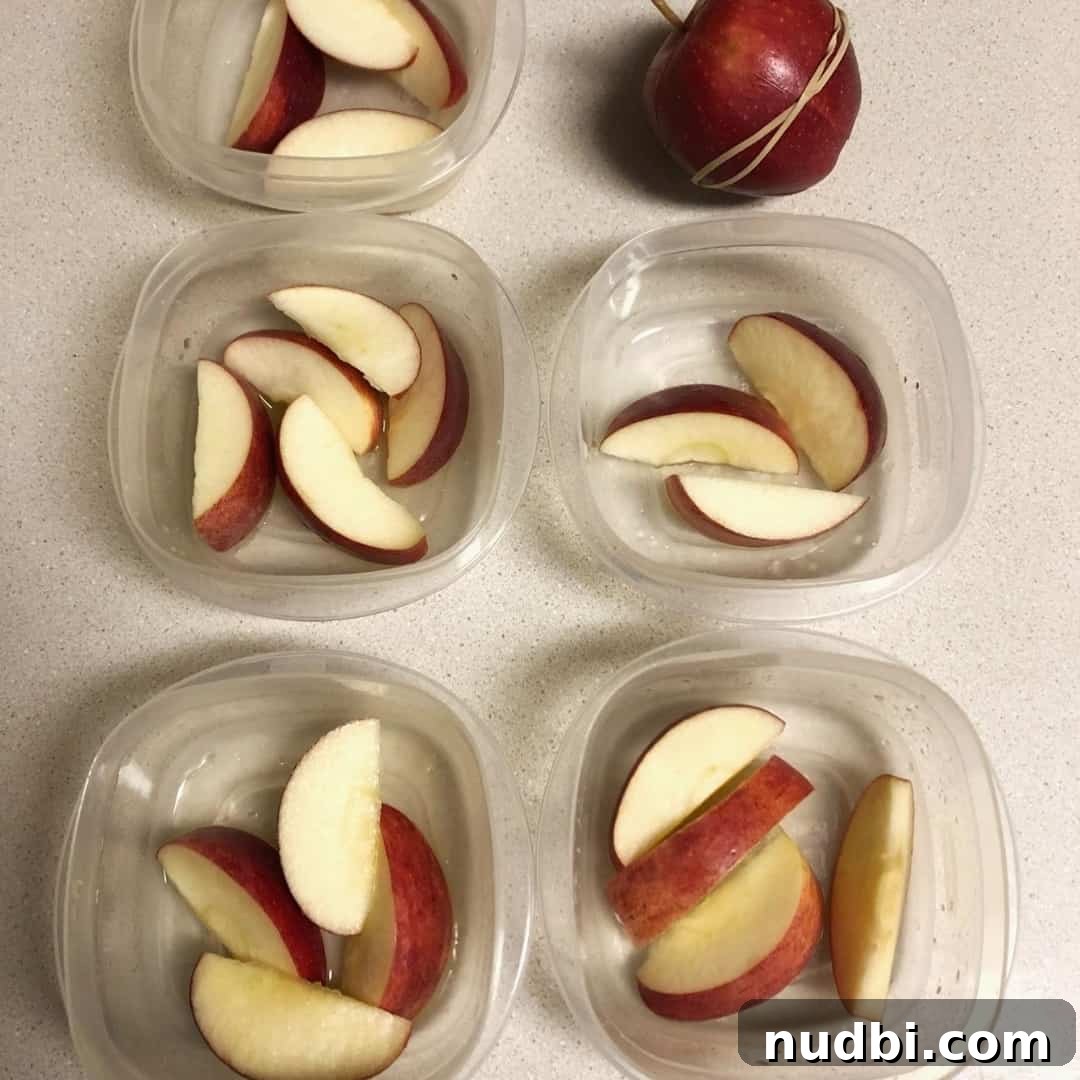
Are you constantly battling with browning apple slices in your kids’ lunchboxes? You’re not alone! Many parents face the challenge of keeping fruit looking fresh and appealing until lunchtime. We understand the frustration of packed apples returning home untouched because of discoloration. That’s why we embarked on a comprehensive experiment, rigorously testing 6 of the most popular and often-recommended methods to prevent apple browning. Our goal? To uncover the truly effective solutions that busy families can rely on. Read on to discover our findings and equip yourself with the best strategies for perfectly fresh apple slices every time!
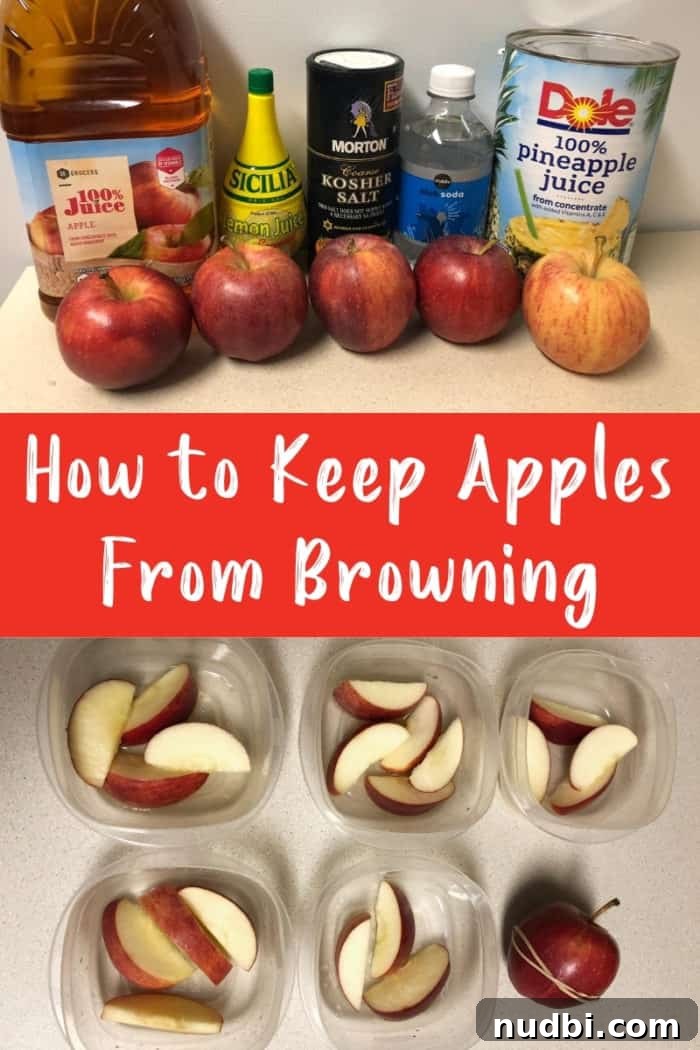
Ultimate Guide: How to Keep Apple Slices from Browning for Fresh Lunchboxes
Apples are a nutritional powerhouse and a perennial favorite for school lunches. They’re crunchy, sweet, and packed with vitamins and fiber – an ideal healthy snack. However, the moment an apple is sliced, a race against time begins. The pristine white flesh quickly turns an unappetizing brown, often leading to untouched fruit and wasted effort. In our household, while my eldest happily munches on a whole apple, my youngest insists on sliced apples. But even a hint of discoloration means those slices are coming right back home.
This common dilemma prompted countless inquiries from our Healthy Family Project community: “How do I effectively prevent apple slices from browning in lunchboxes?” It’s a question we, as parents, desperately needed an answer to ourselves!
Driven by this shared challenge, our team committed to finding definitive solutions. We carefully selected six of the most widely suggested methods for keeping apples fresh – techniques often lauded on social media platforms like Instagram and Pinterest. Our experiment involved slicing apples, applying each method, letting the treated apples sit overnight, and then meticulously evaluating their appearance, taste, and texture at lunchtime. The results were surprising, with some viral trends failing to live up to their hype, while a few simple approaches truly shone.
Curious to see the real-time reactions and taste tests? You can watch our exclusive Facebook Live broadcast where we unveiled the full results and shared our honest opinions on each method!
The Science Behind Apple Browning: Understanding Oxidation
Before diving into the methods, let’s understand why apples turn brown. This phenomenon, known as enzymatic browning, is a natural chemical reaction. When an apple is cut or bruised, its cells are damaged, exposing compounds called polyphenols to an enzyme called polyphenol oxidase (PPO). In the presence of oxygen from the air, PPO acts as a catalyst, converting these colorless polyphenols into pigmented compounds (melanins), which give the apple its characteristic brown color. This reaction doesn’t make the apple unsafe to eat, but it significantly impacts its visual appeal and can alter its flavor and texture, especially for picky eaters.
Effective browning prevention methods work by interfering with one or more aspects of this reaction: either by reducing oxygen exposure, deactivating the PPO enzyme, or changing the pH level to make the environment less favorable for the enzyme to function.
Why Preventing Apple Browning Matters for Busy Families
Beyond aesthetics, keeping apple slices fresh offers several practical benefits for parents and kids:
- Encourages Healthy Eating: Visually appealing fruit is more likely to be eaten, ensuring children get their essential vitamins and fiber.
- Reduces Food Waste: Unappetizing brown apples often end up in the trash, leading to unnecessary food waste and expense.
- Saves Time and Money: When fruit is eaten, you spend less time packing alternative snacks and less money replacing uneaten items.
- Boosts Confidence: Packing a lunchbox that looks great and comes back empty is a small win for any parent!
For more invaluable tips on how to select, prepare, and store a variety of fresh produce, be sure to explore our extensive Produce Tips section. It’s a fantastic resource for all your healthy eating questions!
Our Comprehensive Apple Browning Experiment: Methodology & Insights
To provide reliable and practical answers, we designed our experiment with real-world scenarios in mind. We used a common apple variety (Gala, known for moderate browning) and ensured all slices were uniform in size. For each method, apples were sliced and immediately treated according to the instructions. A “control” group of untreated apple slices was also prepared to serve as a baseline for browning comparison.
All treated and control apple slices were then stored in identical airtight containers and refrigerated overnight, simulating the typical preparation and storage for a school lunch. The next day, at what would be lunchtime, we meticulously assessed each batch. Our evaluation criteria included:
- Visual Appeal: How much browning occurred? Was the color consistent?
- Taste: Did the treatment alter the apple’s natural flavor? Was it pleasant or off-putting?
- Texture: Did the apple slices retain their crispness, or did they become soggy?
This thorough approach allowed us to identify not just which methods prevent browning, but also which ones maintain the apple’s desirable qualities for a child’s lunchbox.
Tested Methods: A Deep Dive into Keeping Apples Fresh
Method 1: Soda Water
Theory: The carbonation and slight acidity in soda water are thought to create an environment less conducive to oxidation, potentially forming a barrier against oxygen.
The Test
- Slice apples into desired pieces, then place them immediately into an airtight container.
- Pour enough plain soda water (club soda) over the apple slices to fully submerge them.
- Allow the apples to soak in the soda water for 1-2 minutes.
- Carefully drain all the excess liquid, ensuring the apples are not swimming in soda water.
- Seal the container with a lid and refrigerate until ready to eat or pack into lunchboxes.
The Results
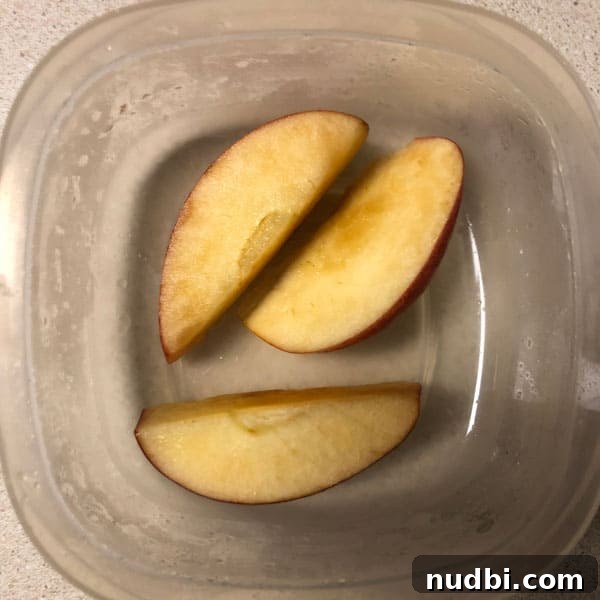
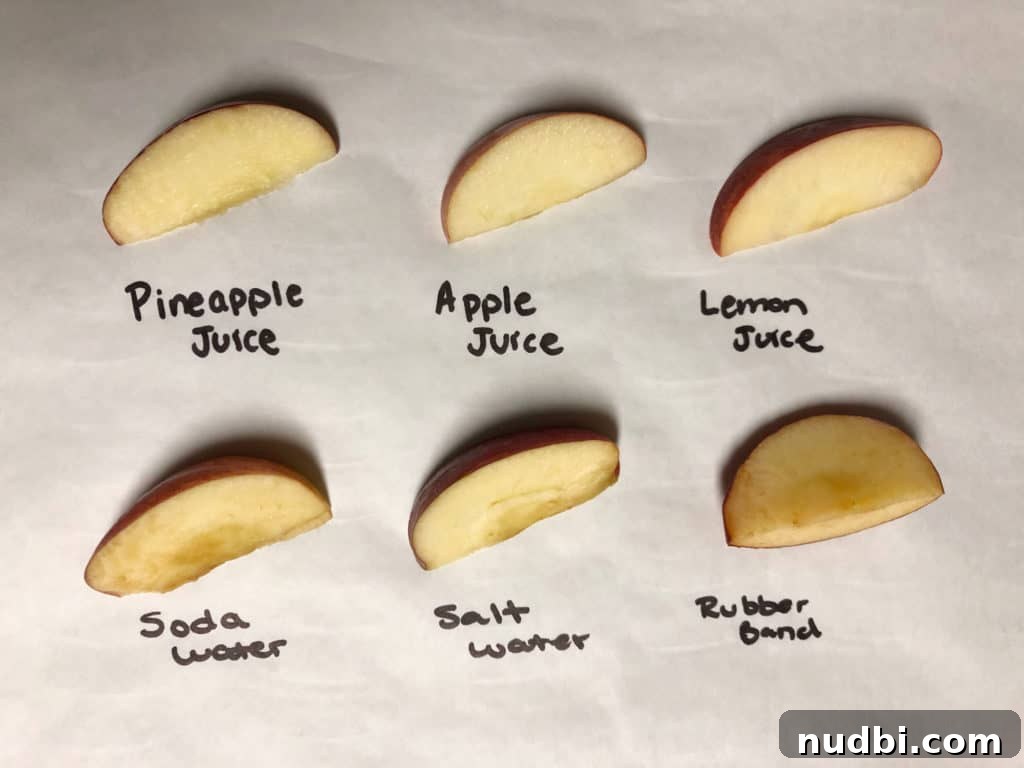
Unfortunately, the soda water method did not perform well in our experiment. While the apples weren’t as intensely browned as our untreated control apples, they still showed significant discoloration. The appearance was far from fresh, and we quickly concluded that these slices would not pass the picky-eater test. My daughter, for one, would undoubtedly refuse to touch them. The method offered minimal protection against oxidation and left the apples looking rather unappetizing. We observed no noticeable change in texture, but the lack of browning prevention made this method a clear thumbs-down.
Pros:
- Easy to access ingredient.
- Quick preparation.
Cons:
- Ineffective at preventing significant browning.
- Apples still look unappealing.
Method 2: Lemon Juice
Theory: Lemon juice is highly acidic and rich in ascorbic acid (Vitamin C), a powerful antioxidant. The acidity denatures the PPO enzyme, while the Vitamin C directly reacts with oxygen, preventing it from interacting with the apple’s polyphenols.
The Test
- Slice apples and immediately place them into an airtight container.
- Prepare a diluted lemon juice solution by mixing 1 part fresh lemon juice with 1 part water.
- Pour this solution over the apple slices, ensuring they are fully covered, and let them soak for 1-2 minutes.
- Drain off the excess liquid thoroughly.
- Place the lid on the container and refrigerate until they are ready to be eaten or packed.
The Results
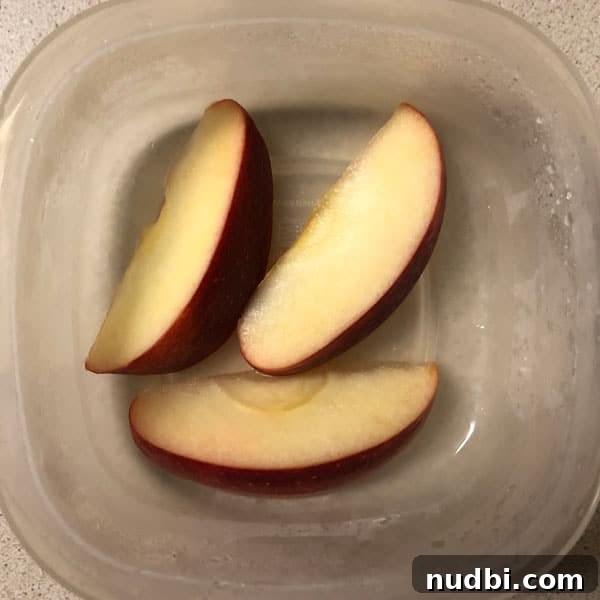
Visually, the lemon juice-treated apples looked exceptionally fresh, with almost no browning detected. This method effectively preserved the vibrant color of the apple slices, making them highly appealing. However, the strong acidity of the lemon juice imparted a distinct lemony flavor to the apples. While not unpleasant to an adult palate, this subtle taste alteration might be a deal-breaker for children who are sensitive to flavor changes. For kids who don’t mind a tangy twist or enjoy lemon, this is an excellent and effective method. The texture remained crisp, which was a definite plus.
Pros:
- Highly effective at preventing browning.
- Apples retain fresh appearance and crisp texture.
- Common household ingredient.
Cons:
- Can impart a noticeable lemon flavor, which some children might dislike.
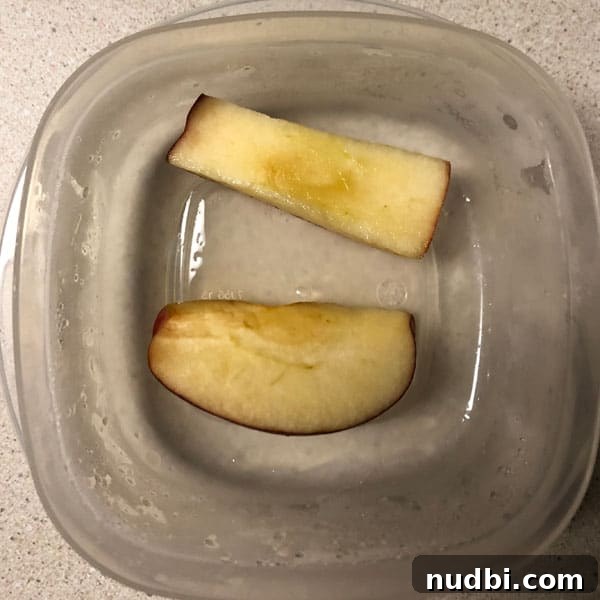
Method 3: Salt Water
Theory: A mild salt solution is believed to interfere with the PPO enzyme’s activity, similar to how it’s used in some food preservation techniques. It can also draw out some moisture, potentially creating a less oxygen-rich surface.
The Test
- Slice apples and place them promptly into an airtight container.
- Prepare a very mild salt solution by mixing 1 teaspoon of salt with 1 cup of water.
- Pour the salt water over the apple slices, ensuring complete coverage, and let them soak for 1-2 minutes.
- Thoroughly drain all the liquid from the container.
- Secure the lid on the container and refrigerate until ready to pack or eat.
The Results
Our salt water experiment yielded results that were only marginally better than the soda water and still far from ideal. While the browning wasn’t as severe as the untreated control, the apples still showed noticeable discoloration that would likely deter most children. Interestingly, we couldn’t detect any salty taste on the apples, which was a positive. However, the primary goal of preventing browning was not sufficiently met. Given the underwhelming visual results, this method didn’t prove to be a reliable solution for maintaining fresh-looking apple slices. My daughter would definitely be returning these apple slices in her lunchbox.
Pros:
- Inexpensive and readily available ingredients.
- No discernible salty taste.
Cons:
- Limited effectiveness in preventing browning.
- Apples still look somewhat unappetizing.
Method 4: Pineapple Juice
Theory: Pineapple juice, like lemon juice, is acidic and contains ascorbic acid. Additionally, it contains bromelain, an enzyme that can break down proteins, potentially disrupting the PPO enzyme’s structure and function.
The Test
- Slice apples and place them into an airtight container immediately.
- Pour enough pineapple juice over the apple slices to fully cover them.
- Allow the apples to soak for 1-2 minutes.
- Drain the excess pineapple juice thoroughly from the container.
- Seal the container with its lid and refrigerate until serving or packing.
The Results
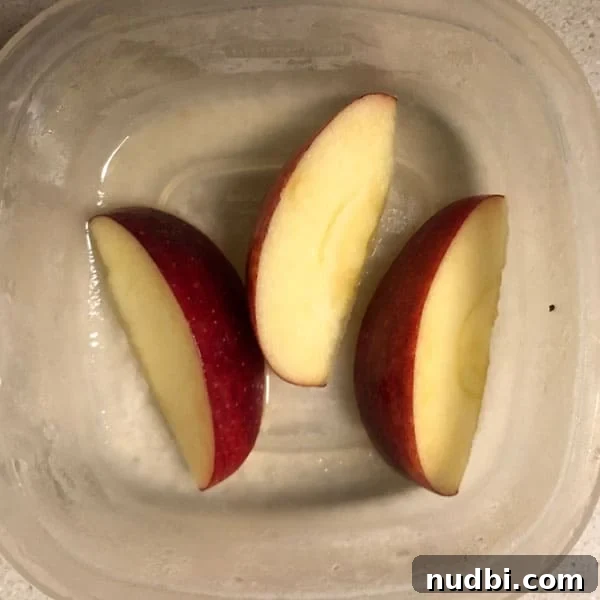
This method was a resounding success and quickly became a favorite among our team! The apple slices treated with pineapple juice showed absolutely no browning; they looked as fresh as if they were just cut. Beyond preventing oxidation, the pineapple juice imparted a pleasant, slightly sweeter taste to the apples, which was a delightful bonus. This makes it an excellent option for children who enjoy tropical flavors or prefer their fruit a bit sweeter. My daughter, however, isn’t a fan of pineapple, so the altered taste wasn’t a hit for her personally. But for kids who love pineapple, this method is an absolute winner, delivering perfectly fresh, sweet-tasting apple slices every time.
Pros:
- Highly effective at preventing browning.
- Adds a pleasant sweetness, appealing to many children.
- Easy to use with common juice.
Cons:
- Alters the apple’s natural flavor, which might not be preferred by all kids.
Method 5: Apple Juice
Theory: While not as acidic as lemon or pineapple juice, apple juice contains natural acids and sugars that can create a mild protective barrier and slightly inhibit PPO activity. Its mild flavor also makes it an appealing choice.
The Test
- Slice apples and place them immediately into an airtight container.
- Pour enough 100% apple juice over the apple slices to ensure they are completely submerged.
- Allow the apples to soak in the juice for 1-2 minutes.
- Drain off all the excess apple juice.
- Place the lid on the container and refrigerate until ready to enjoy or pack for lunch.
The Results
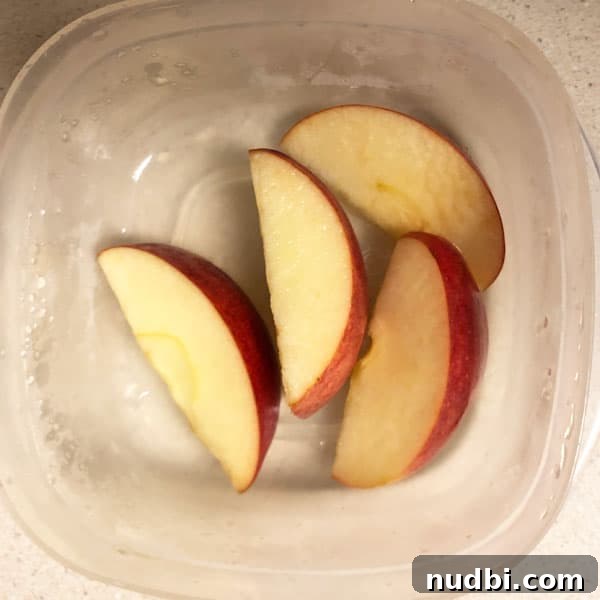
Another triumph! The apple juice method proved to be incredibly effective. The treated apple slices exhibited absolutely no browning, remaining perfectly fresh and appealing. The best part? Since we used apple juice, the natural flavor of the apples remained true and unaltered, making this a universally appealing option. This method is particularly convenient as apple juice is a common staple in many refrigerators. Its simplicity, effectiveness, and flavor neutrality make it a top contender for keeping apple slices fresh in lunchboxes.
Pros:
- Highly effective at preventing browning.
- Preserves the natural apple flavor.
- Uses a readily available and child-friendly ingredient.
- Simple and quick preparation.
Cons:
- None observed.
Method 6: The Rubber Band Method
Theory: This popular hack suggests that by reassembling the apple slices around the core and securing them with a rubber band, you minimize the surface area exposed to oxygen, thus preventing browning.
The Test
- Carefully slice the apple around its core, ensuring the core remains intact.
- Immediately reassemble the individual apple slices back around the central core.
- Secure the reassembled apple tightly with a rubber band, creating a compact, whole-apple shape.
The Results
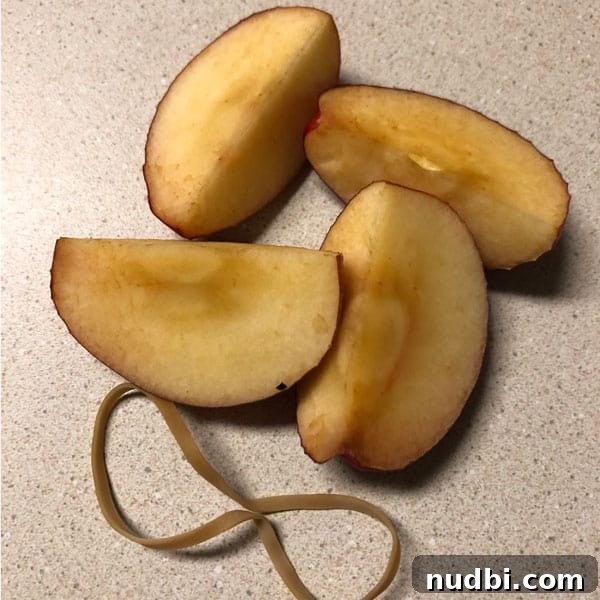
This method has gained immense popularity across social media platforms like Instagram, Buzzfeed, and Pinterest, often showcased as a miraculous hack. Unfortunately, in our rigorous testing, it performed very poorly. The “rubber band apple” showed even more browning than our untreated control apple! Despite the theory of reducing oxygen exposure, the small gaps between the slices were apparently enough for significant oxidation to occur. The areas where the rubber band pressed also seemed to exacerbate browning in some instances. This method was a complete failure for us, and we definitely recommend sticking to other, more effective solutions.
Pros:
- No additional ingredients required.
Cons:
- Highly ineffective; apples browned significantly, often worse than untreated slices.
- Doesn’t live up to its social media hype.
Our Top Recommendations for Brown-Free Apple Slices
Based on our comprehensive testing, two methods stand out as clear winners for effectively preventing apple browning while maintaining a desirable taste and texture:
- Apple Juice Soak: This method delivered perfectly fresh, unbrowned apple slices with absolutely no alteration to their natural flavor. It’s incredibly easy, uses a common household ingredient, and is universally appealing to children. If your child is a “stickler for taste,” this is your go-to solution.
- Pineapple Juice Soak: Also highly effective at preventing browning, this method adds a pleasant, sweeter taste to the apple slices. It’s a fantastic choice if your children enjoy pineapple or prefer their fruit with a little extra sweetness.
Lemon juice also performed exceptionally well in terms of browning prevention. While it does impart a distinct tangy flavor, it’s a solid third option, especially if your child doesn’t mind a slight lemony zest or if you’re in a pinch and only have lemons on hand.
Beyond the Soak: Additional Tips for Fresh Apple Slices
While soaking methods are highly effective, you can further enhance the freshness of your apple slices with these complementary tips:
- Choose the Right Apple Variety: Some apples brown slower than others. Varieties like Granny Smith, Honeycrisp, and Pink Lady tend to be more resistant to browning due to their higher acidity. Consider these types if browning is a persistent issue.
- Minimize Air Exposure: After treatment, always store apple slices in an airtight container or a resealable bag with as much air removed as possible. Less oxygen means less opportunity for oxidation.
- Keep Them Chilled: Refrigeration significantly slows down the enzymatic browning process. Always store pre-cut apples in the coldest part of your fridge until packing, and consider an insulated lunch bag with an ice pack for school.
- Cut Just Before Eating (If Possible): While not always practical for lunchboxes, cutting apples immediately before consumption is the ultimate way to prevent browning.
- Utilize Specialized Products: For those looking for an extra layer of protection, commercial anti-browning products (often containing ascorbic acid or citric acid) like Fruit-Fresh can be used. Follow package instructions carefully.
Frequently Asked Questions About Preventing Apple Browning
Q: Why do apples turn brown so quickly after being cut?
A: Apples brown due to a natural chemical reaction called enzymatic browning. When an apple’s cells are exposed to oxygen (after being cut or bruised), an enzyme called polyphenol oxidase (PPO) reacts with compounds called polyphenols, turning them brown. This is a natural protective mechanism for the plant.
Q: Is it safe to eat browned apples?
A: Yes, browned apples are perfectly safe to eat. The browning process is purely an aesthetic and minor flavor change, not an indication of spoilage. However, most people, especially children, find them less appealing.
Q: Can I use lime juice instead of lemon juice?
A: Absolutely! Lime juice has similar acidic properties and ascorbic acid content as lemon juice, making it just as effective at preventing browning. It will, however, impart a distinct lime flavor to the apples.
Q: Does chilling apples help prevent browning?
A: Yes, refrigeration helps! Lower temperatures slow down the enzymatic reactions responsible for browning. Keeping cut apples in the fridge in an airtight container is crucial for maintaining their freshness.
Q: What if my child doesn’t like the taste of juice-soaked apples?
A: If juice-soaking alters the taste too much for your child, consider using a very diluted lemon or lime juice solution (e.g., 1 tablespoon juice to 1 cup water for a very brief soak), or focus on methods that minimize air exposure, like tightly packing them in a container or even trying the “reassembled whole apple” hack (though our test showed it was ineffective for browning, some kids might just prefer the presentation).
Final Thoughts on Keeping Apples Fresh
The quest to keep apple slices from browning in lunchboxes is a common parental challenge, but it’s one that can be easily overcome with the right techniques. Our in-depth testing revealed that simple and accessible methods like soaking in apple juice or pineapple juice are remarkably effective, offering both visual appeal and a great taste experience for your children.
No more wasted apples or untouched lunchbox snacks! By understanding the science behind browning and implementing these proven strategies, you can ensure your kids enjoy perfectly fresh, crisp, and delicious apple slices every single time. Try our recommended methods and see the difference for yourself!
Do you have a favorite method for keeping apples from browning that we didn’t cover, or another tricky produce dilemma that you need help solving? We’d love to hear your insights! Share your tips and questions in the comments section below!