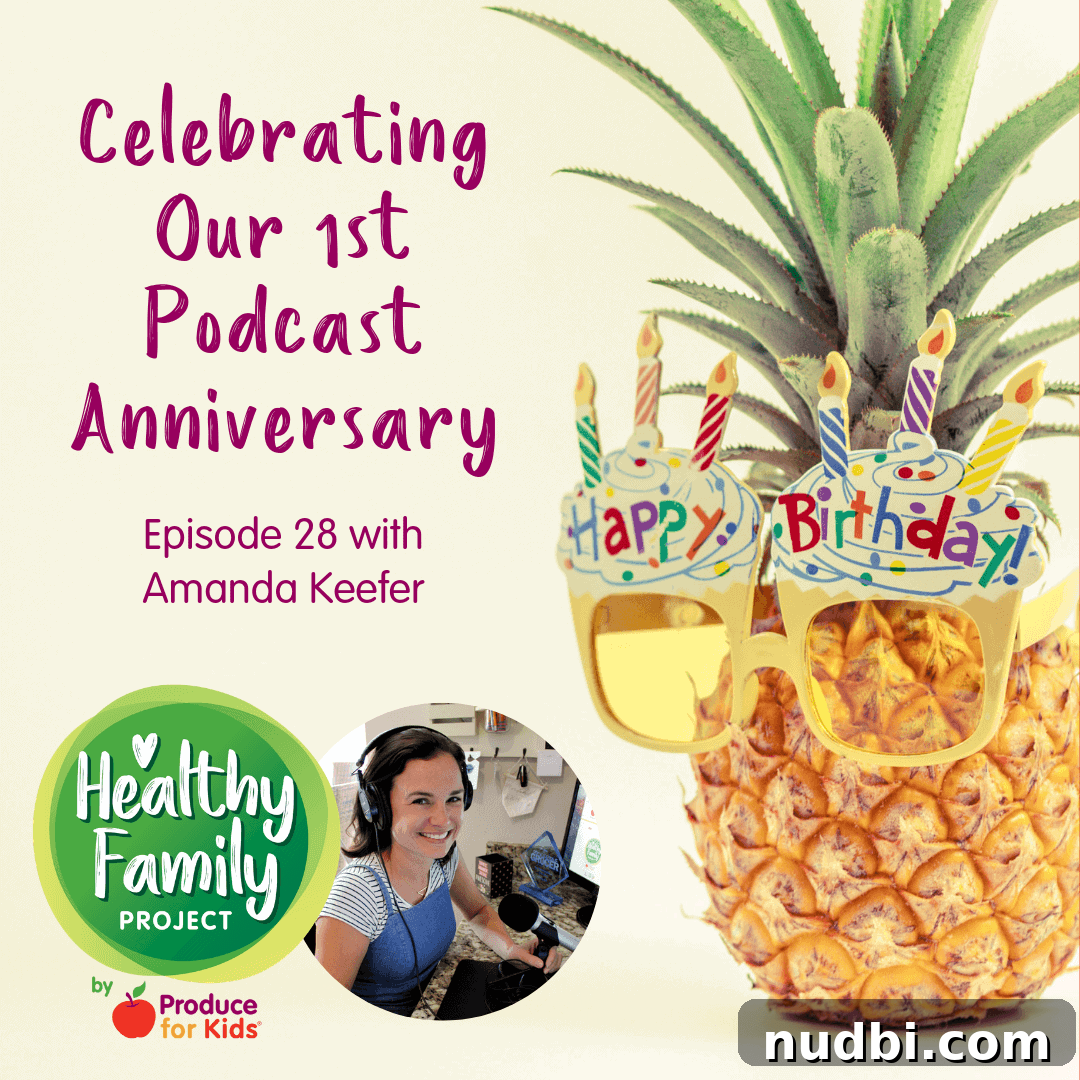
Welcome to a special milestone episode of the Healthy Family Project Podcast! We are thrilled to celebrate our first anniversary, looking back at a year filled with invaluable insights, practical tips, and heartwarming conversations designed to empower families everywhere. Over the past twelve months, we’ve had the immense privilege of connecting with you, our amazing listeners, exploring diverse topics from nutrition and screen time to meal planning and environmental responsibility. To commemorate this journey, we’re revisiting some of our most beloved and impactful episodes that have resonated deeply with parents striving for a healthier, happier family life.
Join us as we highlight key moments and actionable advice from expert guests who have helped us navigate the everyday challenges of raising a healthy family. These handpicked segments offer a fantastic opportunity for new listeners to discover the heart of our podcast and for our loyal community to relive some of the most popular and relevant discussions. Let’s dive into the wisdom shared by our incredible guests and celebrate a year of growth, learning, and fresh ideas!
Revisiting Our Most Popular Episodes: A Year of Healthy Family Growth
Episode 2: Dealing with Picky Eaters – Nurturing Adventurous Eaters
One of the most persistent challenges for parents is undoubtedly navigating the world of selective or picky eaters. In this highly acclaimed episode, Registered Dietitian and super mom of two, Holley Grainger, from Clever for Living, shared her expert advice and personal experiences on how to encourage children to embrace a wider variety of foods. Holley emphasized that getting kids involved in the kitchen can be a game-changer. Allowing children to wash vegetables, stir ingredients, or even pick out what goes into a meal fosters a sense of ownership and curiosity, often leading to them trying new items they might otherwise reject. She humorously recounted an instance where her daughter happily ate black beans straight from the can after rinsing them, highlighting the unexpected joy of hands-on involvement.
Another invaluable tip from Holley involved the strategic use of dips. Ranch dressing, guacamole, and hummus can act as fantastic “vehicle foods,” making raw vegetables and other healthy options more appealing. Instead of viewing dips as a compromise, Holley encouraged parents to embrace them as tools to increase vegetable intake, even if it means using full-fat versions. Her real-talk approach provided comfort and practical strategies for countless parents struggling to expand their children’s palates. This episode remains a cornerstone for anyone looking to transform mealtime battles into opportunities for culinary exploration and healthier eating habits.
Episode 3: Managing Screen Time – Finding Balance in a Digital World
In our increasingly digital age, managing screen time for children is a constant concern for parents. Psychologist Dr. Stephanie Smith offered profound insights into setting healthy boundaries and modeling responsible technology use in Episode 3. Dr. Smith, a mother of three herself, provided actionable strategies on how to establish screen time limits, maintain consistent guidelines, and, crucially, how parents can set a positive example for their kids. One of her most impactful recommendations was for parents to honestly assess their own screen habits. She shared her personal revelation after using an app to monitor her phone usage, admitting it was a “sobering” experience. This self-awareness, she explained, is the vital first step.
By understanding our own behaviors, we can better align our actions with the expectations we set for our children. If parents are constantly glued to their phones, it becomes challenging to enforce limits for kids. Dr. Smith advocated for challenging ourselves to make “tweaks” to our own habits first, ensuring consistency between our words and our deeds. This holistic approach to screen time management emphasizes that technology, while amazing, requires balance and mindful usage from the entire family. Her advice remains incredibly timely as families continue to navigate the complexities of digital engagement, especially during unstructured periods like summer breaks.
Episode 18: How Families Can Reduce Food Waste – Making a Positive Impact from Home
Food waste is a global issue with significant environmental and economic implications, and in Episode 18, Pamela Riemenschneider from Produce with Pamela provided families with practical ways to make a difference right from their own kitchens. Pamela highlighted a crucial point: while much of the discussion around food waste focuses on grocery stores and large organizations, the most impactful change can come from consumer behavior at home. Drawing on data from organizations like ReFED, she emphasized that a significant portion of food waste occurs in households, making consumer education paramount.
Pamela introduced her memorable phrase, “Don’t turn your crisper drawer into an ‘oublie-ette’,” referring to a French term for a place to forget. She painted a vivid picture of sad, wilted produce at the bottom of the fridge, often the result of good intentions gone awry, especially after New Year’s resolutions. Her primary solution: “buy with a purpose.” She advised creating a flexible shopping list, allowing for spontaneous purchases of in-season or on-sale produce, but always with a plan to use it. This strategy helps prevent over-buying and ensures that delicious produce doesn’t end up forgotten. Pamela also shared tips on proper storage techniques to extend the shelf life of fruits and vegetables, reducing the likelihood of spoilage. This episode serves as a powerful reminder that every family can contribute to reducing food waste, fostering a more sustainable and resourceful home environment.
Episode 23: Make-Ahead Meal Ideas – Streamlining Your Week with Smart Prep
For busy parents, the quest for efficient and healthy meal solutions is perpetual. In Episode 23, Brierley Horton, a registered dietitian, single mom of two, and a contributor to leading health magazines, shared her ingenious strategies for make-ahead meals. She addressed the age-old question: “How do we really make time for meal planning?” Brierley’s core philosophy is to “start small.” There’s no need to plan every single meal for an entire week or month right away. She suggested beginning with just dinners three nights a week, or focusing on breakfasts and lunches if those are bigger pain points for your family. For most families, dinner is where structured planning yields the greatest benefits.
Brierley also emphasized the importance of scheduling at least one night off from cooking, whether it’s for leftovers, takeout, or a convenient freezer meal from the store. Her practical tips included leveraging small, often overlooked chunks of time for meal prep. This could be a “lazy weekend morning” where you chop vegetables for the week, or a quiet evening after the kids are asleep, where you mix dry ingredients for muffins or a quick bread. She encouraged listeners to identify tasks that are “mindless” and relaxing for them – whether it’s baking, chopping, or assembling – and integrate these short bursts of prep into their routines. By adopting this approach, meal planning becomes less daunting and more rewarding, helping families eat healthier and reduce stress throughout the week.
Episode 9: Quick & Easy Dinner Hacks – Smart Strategies for Busy Weeknights
In Episode 9, Aggie Goodman, author of AggiesKitchen.com and a valuable recipe developer for Produce for Kids, brought her wealth of experience to the table, sharing an array of quick and easy dinner hacks. Her practical tips are designed to simplify meal preparation, ensuring busy families can still enjoy nutritious and delicious meals without succumbing to stress. Aggie highlighted the undeniable power of planning ahead, emphasizing that a little foresight can dramatically smooth out the dinner routine. She specifically recommended looking out for pre-cut vegetables at the grocery store. While she enjoys chopping her own veggies, she acknowledged that reality often dictates the need for time-saving shortcuts, and pre-cut options are a fantastic solution for stir-fries, pasta dishes, or adding to proteins.
Another cornerstone of Aggie’s dinner philosophy is maintaining a well-stocked pantry. She considers her pantry her “saving grace” on many chaotic nights. Staples like various types of pasta, rice, couscous, quinoa, canned tomatoes, and beans are essential for quickly assembling meals or augmenting existing dishes. She offered a classic “no-brainer” combination: pasta, canned tomatoes, and a bag of broccoli florets, to which you can easily add ground turkey, beef, or chicken for a complete, satisfying meal. Aggie’s insights empower parents to identify their own pantry staples and develop a repertoire of reliable, go-to meals that minimize decision fatigue and maximize healthy eating, even on the busiest of weeknights.
***
A Sweet Interlude: Story Time with Charli and Grace
Midway through our anniversary celebration, we were delighted to share a charming and unexpected treat: a “quick strawberry podcast” from Charli and Grace! This special segment featured our host’s daughter, Charli (known to listeners as the selective eater who signs off each episode), and Grace from our team (a self-proclaimed former picky eater). This heartwarming interlude showcased the family spirit of the podcast as they narrated “The Scared Strawberry.”
The story followed Iris, a strawberry living happily in the fridge with her friends, accustomed to smoothies and yogurt. When asked to join a salsa, Iris felt a wave of fear and uncertainty. She worried about the unusual combination of tomatoes, onions, basil, salt, and pepper – flavors she wasn’t used to being paired with. After two days of contemplation, Iris decided to be brave and try something new. When Mia, the chef, finally added Iris to the salsa, Iris discovered that despite the unconventional mix, it made the family happy. They loved the sweet and savory blend, and Iris realized she had nothing to worry about. This delightful tale, brimming with innocence and a valuable lesson about acceptance and bravery in trying new things, perfectly encapsulates the Healthy Family Project’s mission to encourage positive relationships with food and family.
***
Power Your Summer with Healthy Family Project!
As we bask in the sunshine and embrace the joyous spirit of summer, the Healthy Family Project is excited to kick off our #PowerYourSummer Sweepstakes! We’re making summer even more fun with incredible weekly prizes, ranging from whimsical watermelon pool floats perfect for poolside relaxation to vibrant pineapple beach towels and many more sunny surprises. Don’t miss your chance to add a splash of fun to your summer. Enter weekly for your chance to win fantastic goodies that will help you make the most of the season!
Unlock Healthy Recipes & Tips Directly in Your Inbox
Stay connected with the latest in healthy eating and family wellness by signing up for the Produce for Kids e-newsletter. Each week, our newsletter delivers a curated selection of healthy recipe inspiration, our newest blog posts, and timely tips directly to your inbox. It’s the perfect way to keep your meal plans fresh, discover new ingredients, and stay informed about practical strategies for nurturing a healthier family lifestyle. Subscribe now to ensure you never miss out on delicious ideas and valuable advice!
Listen to the Healthy Family Project Podcast
To dive into these insightful conversations and more, you can listen to the Healthy Family Project Podcast on your favorite platform. Our episodes are designed to cover hot topics in the world of health, food, and family with a dose of fun, helping families ease their way into a fresh and healthy world. New bi-weekly episodes are released regularly, so be sure to subscribe to stay up-to-date.
Want to skip straight to a hot topic? Use these timestamps to navigate:
- 1:55 Dealing with Picky Eaters
- 4:31 Managing Screen Time
- 7:42 How Families Can Reduce Food Waste
- 11:53 Story Time with Charli and Grace
- 13:58 Make-Ahead Meal Ideas
- 18:14 Quick & Easy Dinner Hacks
Relevant Links from Produce for Kids
Explore more resources from Produce for Kids to complement your healthy family journey:
- What’s in Season for June
- Tips for Transitioning into Summer
- 10 Fun Summer Cookout Ideas
- Mini Mediterranean Chopped Salad Flatbreads (No-Cook!)
- Homemade Ranch Hummus
About the Healthy Family Project Podcast
The Healthy Family Project Podcast, brought to you by Produce for Kids, offers engaging conversations covering hot topics in the world of health, food, and family. With a dose of fun and practical advice, our mission is to help families seamlessly integrate fresh and healthy choices into their daily lives. We aim to inspire and equip parents with the knowledge and tools needed to foster vibrant, well-nourished households.
Be on the lookout for new bi-weekly episodes that feature leading experts, dietitians, and fellow parents sharing their insights and experiences. Don’t forget to subscribe on iTunes, Spotify, Google Play, or your favorite podcasting platform to ensure you never miss an episode. If you enjoy our content, please consider leaving a rating and a comment; your feedback helps us reach more families and continue creating valuable discussions.
If you are interested in being a guest on the Healthy Family Project podcast and have a compelling topic idea to share with our audience, please contact us at [email protected] for consideration. We look forward to hearing from you!
Transcript for Episode 28
This transcript was produced by Otter.Ai and is provided for accessibility. Please note that it may contain minor misspellings and grammatical errors.
00:13
Welcome to the Healthy Family Project by Produce for Kids, covering the hot topics in the world of health, food, and family with a dose of fun. Welcome to our anniversary episode! Happy Birthday, Healthy Family Project! Yay! It’s truly hard to believe that we’ve been producing the Healthy Family Project for an entire year. I can remember back when our team was sitting around talking about potentially starting this podcast, and now we’re a year in. I’m so grateful for this experience and the chance to connect with all of you. We are going to do something really fun today. While it’s hard to pick favorite snippets from all 26 episodes in the past year, we did pull several that stood out for one reason or another to share today. So, if you haven’t listened to all of the previous episodes, these snippets might inspire you to go back and listen, or even re-listen, because I know it’s been a while. And then, in celebration of our year, I’m also including a fun surprise from my daughter, Chef Charlie, who you guys hear a lot about—she’s my selective eater—and Grace from our team, who you know from our healthy bite segments. And then also, Charlie is the one that signs off at the end of each episode, saying, “Be sure to subscribe,” so keeping it in the family. So, like I said, Charlie is a selective eater, and Grace is a former picky eater, reformed. And then Charlie recently wanted to record her own podcast when it was “Take Your Child to Work Day”—she came along with me. So when I share that later in this episode, that’s going to be her quick stab at the job of podcasting host, and I will share that midway through today’s episode. Our first clip comes from my friend Holley Grainger, from Clever for Living with Holley Grainger. She is a mom of two wonderful little girls, a registered dietitian, and a wife. And I’ve known Holley for several years now, and we always have the best conversations around picky eaters, usually lots of laughs and real, real talk. She is real, that’s for sure, when it comes to dealing with the kiddos and their selectiveness. So we had a great conversation about picky eaters in Episode Two. This clip talks about how bringing kids into the kitchen encourages trying new foods and her love for dips.
02:35
I found that with the girls, they’ve had the best luck, and I’ve had the best luck getting them to try new things when they actually have their hands on it, and they are… they’re right there in the trenches with me. So whether it’s trying to figure out what we’re going to eat, and that may be, you know, meal planning on a Sunday, which always sounds great, but many times it’s 5:30 and we’re standing in the pantry and the refrigerator trying to figure out what leftovers we can bring back to life or what’s in the fridge that, you know, we can kind of think, ‘Alright, this is like a version of Chopped, where what…’ Yes, what are we going to create? So but bringing them in is good. I mean, I’ll never forget, it’s the funny little things that stand out with the girls, that I had Frances rinsing a can of black beans in the sink for me, just in the colander once, and she stood there at the sink and just ate black bean after black bean after black bean! I was like, I am not going to say a word, no, because who knows if she’ll eat them again. But it was just that like, ‘Oh, these are… these are good!’ I mean, it was straight out of the can. They weren’t warm, they’d been rinsed off, you know, some of the stuff on them. But she just did their happiest could be and ate them. So, you know, just bringing them in is good. And then we have lots of luck with things like dip. Dip! Ranch dressing, yeah, guacamole, are certainly vehicle foods in our family. And, you know, I don’t… I don’t bat an eye at pulling out ranch dressing, full fat, in the bottle, whatever it is, you know, if it means that they will dip carrots into it. So that’s… that’s certainly one thing that… that we try to do.
04:13
Be sure to listen to Episode Two with Holly to get the full scoop on how to deal with your picky eater. And when the holidays are rolling back around in the fall, you’ll have to listen to our holiday two-part series focusing on balance around Halloween, Thanksgiving, and more. And those are Episodes 12 and 13 with Holly Grainger. Now with summer nearly upon us, it’s probably a good time to revisit Episode Three with psychologist Dr. Stephanie Smith. You can find her over at DrStephanieSmith.com. She’s a mom of three and had great input when it comes to managing screen time. I know that this is a hot topic for… it was a hot topic entering into summer last year, and it still continues to be a hot topic. This clip resonated with me as a mom who tends to be on the phone quite a bit myself.
05:00
So, you know, this is… this is a tough one for sure. And as I was thinking about having this conversation with you today, I tried to be honest with myself about how much I’m on my phone in particular, and decided to download an app that monitors my use of my phone, and sort of compared my version of what I thought to the reality of like, how much I’m actually logging into my phone, how much time I’m actually looking at different apps and things. And it was sobering, to say the least. So I think that would be my first tip for folks. All of us are… are generally pretty bad reporters of what we do in reality, you know, like, ‘Oh, I only have one small cup of coffee a day.’ ‘Five large!’ Exactly, we just kind of all are that way. So I think it can be useful, again, to use the resources that are available to us to maybe use one of these monitoring apps, even, you know, for a few days or a couple of weeks, to really understand our own behavior, online or on screens. And then if… if we don’t feel like what we’re doing is consistent with what we’re asking our kids to do, you know, maybe we need to make some tweaks on our own, before we dive into changing our kids’ behavior. So if that means, you know, ‘Oh my gosh, I’m like on the screen 90% of the time between 5 PM and 9 PM.’ Yikes! That’s not really consistent with what I’m asking the kids to do. I’d like to get that down to 10% of the time, or whatever. So I think that can be a good initial step in creating this larger change within a family system is challenging ourselves to be really in line with our overall goals. I love Dr. Stephanie’s
07:19
recommendation of being honest with ourselves. I know it can be hard sometimes, but being aware of our own actions can really help us guide the kids and lead a great example for them. Technology is an amazing thing, but like everything, balance and being aware of your usage is key. When I recorded Episode 18, which is up next, the food waste episode with my friend Pamela Riemenschneider, from Produce with Pamela and Produce Blue Book Services, I knew food waste was going to be a hot topic in 2019. It was a hot topic in 2018, but it has really just far exceeded my assumption here in 2019. I’m so glad because all we all need to be concerned and take action when it comes to cutting back food waste. In this clip, Pamela talks about easy ways families can reduce food waste; it’s not just grocery stores and big organizations who can make a difference.
08:17
A lot of what I see when it’s talked about when it comes to food waste revolves around what grocery stores can do or… or farmers can do harvesting more seconds or imperfect or ugly produce. But and then of course, those are some big numbers. But what I like to emphasize with consumers is that according to ReFED, which is an organization dedicated to reducing food waste, and in the greatest impact, the most impactful thing that we can do to reduce food waste is consumer education, and changing consumer behavior because most food is wasted at home. I have a little saying and you know it kind of sends me off on a tangent, but I say, I call it, ‘Don’t turn your crisper… don’t turn your crisper drawer into an oubliette.’ An oubliette is what they used to have in a French castle; it was a… literally means a place to forget. So, you know, you see, I get it. Yes, it’s right. Yeah, you go on the internet and people, you know, do take a picture of their crisper drawer and it’s like all sad, wilted produce. And it’s where good intentions go to die sometimes, especially when people are doing New Year’s resolutions, they go out and they buy a ton of fruits and vegetables because they’re going to eat healthy now. But you need to be able to plan ahead, and I want to try to make it easy for people because I don’t want to overwhelm people with all these things that you need to do to make sure you don’t waste food. So step one is just buy with a purpose shopping list. To a degree, I’m not saying you have to have a regimented list though, so you have a plan of what you’re going to buy. But that doesn’t mean you can’t look around in the store. So because I’m really bad about walking through the store and finding this beautiful display of produce, and it’s something maybe I didn’t plan, and groceries do… grocery stores do this on purpose, and that’s okay. It’s okay to be lured away by one of these beautiful displays. Because it’s usually something that’s either, you know, at the peak of its season or on sale. So maybe you had planned to buy carrots and have carrot sticks as a snack on your grocery list. And you see they’re sampling something like jicama. So sub out your carrot sticks and do jicama, and that way, you try something different, and you got it at a good deal because it was on sale that week. So, you know, if something’s out, don’t necessarily go into the store, see a beautiful display and add that on top of it. I know the grocery store would love it if you would just buy extra. But when you get home and you have 10 different snacks, maybe that’s too much for one grocery.
11:05
And we just talked about this today, our team here at Produce for Kids. So we’re talking a lot about meal planning. And we all agreed, as you know, personally, that when we… when we do—there’s weeks that we do and we don’t—but the weeks that we do create a meal plan, however simple it may be, we recognize that there’s less waste than if we don’t have a plan, however simple that may be. Don’t let those good intentions die, folks. Buy food with a purpose and a plan. To hear more from Pamela, I highly recommend listening to the entire Episode 18, or heading to Produce with Pamela on YouTube. I’ll link up in the show notes. Now, before we jump into more meal planning clips—we have a couple meal planning clips coming up—let’s pause because I know you’re all dying to hear this quick strawberry podcast from Charlie and Grace.
12:01
Today, we’ll be telling the story about the scared strawberry.
12:05
Hi, friends. I’m joining Charlie, my name is Grace, and I will be helping to tell the story. Alright, Charlie, let’s start.
12:11
Okay. So once upon a time, there was a strawberry named Iris.
12:18
Okay, and Iris was in the fridge living happily with her strawberry friends, going about life.
12:26
And then someone asked her, ‘Maybe you should go join the salsa?’
12:31
Iris was a little scared. She’s never been in a salsa. She’s used to being in smoothies, over yogurt parfaits, in yummy summer drinks. She’s never been in a salsa, and she was scared, like, ‘What does that mean for her?’ This is very different.
12:47
So she decided to think about it. She thought for two whole days.
12:52
She wasn’t ready to join the salsa. Would the tomatoes be nice? Would the onions and basil, the salt and pepper? She doesn’t usually get paired up with those guys, and she was pretty worried.
13:03
Then she knows what to do. She decided to be brave and tried it out.
13:08
The day came, and Mia opened the fridge, getting ready to make a delicious salsa for her and her family to enjoy. And she grabbed the basket that Iris was inside.
13:19
And then when Iris was put with the salsa, she decided that even though it was a weird combination, that people liked it a lot more.
13:31
Iris could see that the salsa was making the family happy. They enjoyed the flavors. They liked that combination, a little sweet and savory. And she decided she was happy. She didn’t have anything to worry about.
13:41
And they all lived happily ever after.
13:45
Gotta love it! A podcast about strawberries and acceptance. Two of my favorite things. We did a meal planning series if you’d like to go back and listen. They were Episodes 21 to 23. I learned a lot from three amazing meal planners in that series: Jessica Levinson of The 52-Week Meal Planner, Heather England of Fit Mama Real Food Radio—another awesome podcast you need to go subscribe to—and Brierley Horton, a mom, registered dietitian, and a contributor to some of your favorite health and food magazines. Talking with these ladies, we were able to share lots of laughs and easy tricks and tips, definitely must-listen-to episodes in my perspective. And then one of my favorite clips was with Brierley when she talked about how exactly to make time for meal planning. I know that’s… that’s the age-old question. We know meal planning will take some stress out of our week. It’ll make just make life easier, healthier. But how do we really make time to meal plan? Let’s listen in. But what
14:48
I always tell people is to start small. You don’t have to plan every single meal for every single day of the week or even a month. You can start by planning just dinners three nights a week, or just two full days if that’s what, you know, breakfast and lunch is more important for you to plan. I personally find that for families, dinner is usually where they need the most structure, because breakfast, you tend to eat the same couple things. Lunch, they, you know, either, I don’t know, if it’s parents or, you know, adults, they’re eating out maybe if they’re at the office, or if they’re taking maybe it’s leftovers for school lunch, you know, they maybe use things that are on hand. But when it comes to dinner, that’s the part that they really need to focus on when it comes to planning. But really, it’s not necessary to start with planning everything at one time. And I also highly recommend scheduling at least one night off from cooking. I totally rely on making enough food for leftovers at least once a week. And sometimes that one night off a week from cooking is takeout or, you know, a freezer meal that I got at Trader Joe’s. And that’s okay, it doesn’t have to be freshly cooked, every single night of the week. Instead, I
16:07
kind of have tried to shift my mindset and say, ‘Okay, I’m not going to get everything done. But let me just do a little bit.’ And it makes, you know, and it makes it enough of a difference that it’s kind of rewarding. So I would say take advantage of like, either a lazy weekend morning, or a lazy weekend afternoon where maybe your kids are off at a playdate or visiting grandparents, or they’re having a sleepover, if they’re old enough to have a sleepover, or they’re going to a birthday party and you’ve, you know, planned to carpool with another parent in the neighborhood or something along those lines. And so maybe you only have, you know, half an hour, 45 minutes, and you just take a little bit of time to prep your veggies or mix together the, you know, the dry ingredients for a muffin recipe or a quick bread. I’m also a night owl. And I know everybody is not a night owl. So I… but I think this can apply to our early morning people as well. But, you know, after I get my kids to bed and I’ve cleaned up from dinner, I don’t necessarily always have the energy to sit down and do a little bit more work or read a book because I’ll fall asleep quickly. And, you know, maybe I’ve worn out my TV shows or whatever that I want to watch. So instead, for me, baking is very relaxing. And so I’ll take that… that time to… to bake something, or even to just prep the ingredients to then mix it together and bake it in the morning or something along those lines. And that’s kind of like, I think if you just take little chunks of time or times where maybe you won’t be super productive at something else. But you can pick some type of prep that is fairly mindless for you. And I think that it varies, like maybe somebody else might find making a soup mindless, and baking stressful. Like just… just kind of ID what works for you and try and squeeze in a little bit here or there. And then the more you do it, and I say this about meal planning in general, like the more you do it, the more rewarding it is. And so then the more likely you are to continue to repeat that habit.
18:09
We’re going to round out this anniversary episode with a dinner hack clip from Episode Nine where we talked to Aggie Goodman. She lives near me here in Florida, and Aggie helps us at Produce for Kids in developing some of our recipes that you find on the Produce for Kids website, and she’s also the author of AggiesKitchen.com. Now, here’s a quick dinner hack clip from Aggie.
18:35
If I plan ahead, obviously like everyone else, if you plan ahead, things just run a little bit smoother. So what I like to do is see what’s on sale as far as pre-cut veggies, because they are definitely a time-saver no matter what. So if I see some of those bagged veggies, the mixed ones, the broccoli, you know, I… I definitely like to pick those up and then kind of plan meals around them, like whether it’s a stir-fry or throwing it in with pasta and like a protein. So I definitely like am all about the pre-cut veggies. I like cutting my own veggies. But reality is, I just don’t have the time all the time. And you know, if I can get a shortcut that way, that there’s… I have nothing… there’s no problem with that at all. So I definitely try to play around like sales. Salad has become my friendly… you know, three out of five of us in our family love to eat salad. So it’s been fun to try different salads. And like just add them on as a quick side or to add like protein to it. And then you mentioned pantry, and pantry is always a big deal for me too, because I have like a nice stocked pantry, and it’s definitely been my saving grace for many, many, many nights. Pasta, I always have like, you know, a ton of different kinds of pasta, rice, and like couscous and quinoa, like things that, you know, can last for a long time. And like canned tomatoes, beans. So the all that kind of stuff. Definitely, if you need to just throw something together or, you know, just for a quick meal, or add to a meal, like all that stuff comes in handy.
20:28
Yes, I’ve found over the years I have definitely identified a lot of those staples myself where I’m like, ‘I know if I have these things in my pantry, when the time comes, I can whip something up.’
20:42
Pots and tomatoes. And then like a bag of broccoli florets is like my staple pasta, and then you just add like ground turkey or ground beef, you know, just add to the sauce or chicken. I mean, it’s like it doesn’t get any easier than that. Sadly, yeah, it’s like a no-brainer. You come up with a few no-brainers.
21:05
It was really hard to pull just a few clips from 26 episodes. There are so many great tips and thoughts and ideas that have been shared over the year. If you’re feeling overwhelmed with all the episode mentions—I know I’ve mentioned a lot—don’t freak out, we have those linked up in the show notes, you can head over there and navigate. And then remember, we have lots of new summer content available on ProduceforKids.com from recipe inspiration to blog posts to help you nail your… your upcoming potluck cookout. I know there’s going to be a lot of those going on. As always, all of our… our recipes are approved by a registered dietitian and tested by our families over here at Produce for Kids. So if you… if you tweet with me direct, I can… can usually have some feedback on a lot of those different recipes. We’ve tried most all of them in our home over the years. Thank you for listening and supporting the Healthy Family Project over our first year. It’s truly humbling to look at the journey and all of the amazing people who have been part of the Healthy Family Project. We have lots of exciting things lined up for the upcoming year, so be sure to subscribe if you haven’t already. If you like the Healthy Family Project, please tell a friend and leave us a rating. It will only help our visibility so we can continue to create a healthier generation together. If you want to tweet direct with me, I’m at Amanda M Kiefer on Twitter. I love to hear what you think of episodes, if you have questions, or a topic idea for the show. And you can find Produce for Kids on Facebook, Twitter, Instagram, Pinterest, and YouTube.
22:42
Be sure to subscribe! Talk soon!
***
Join the Healthy Family Project Community!
Thank you for being an integral part of the Healthy Family Project’s incredible first year. It has been a truly humbling experience to share this journey with you and to feature so many amazing individuals dedicated to family health and wellness. We are already planning a host of exciting new content and engaging discussions for the year ahead, so be sure to stay tuned!
Your support is invaluable. If you’ve enjoyed the Healthy Family Project podcast, please consider telling a friend or leaving us a rating and review on your preferred podcast platform. Your feedback and shares significantly boost our visibility, allowing us to reach even more families and work together towards building a healthier generation. We believe that by sharing knowledge and fostering community, we can make a lasting positive impact.
We love connecting with our listeners! You can tweet directly with me, Amanda M Kiefer, on Twitter to share your thoughts on episodes, ask questions, or even suggest a topic idea for future shows. Additionally, you can find Produce for Kids and the Healthy Family Project across various social media platforms, including Facebook, Twitter, Instagram, Pinterest, and YouTube, where we regularly share fresh recipes, practical tips, and behind-the-scenes glimpses. Join our vibrant community and let’s continue to grow healthier, happier families together!