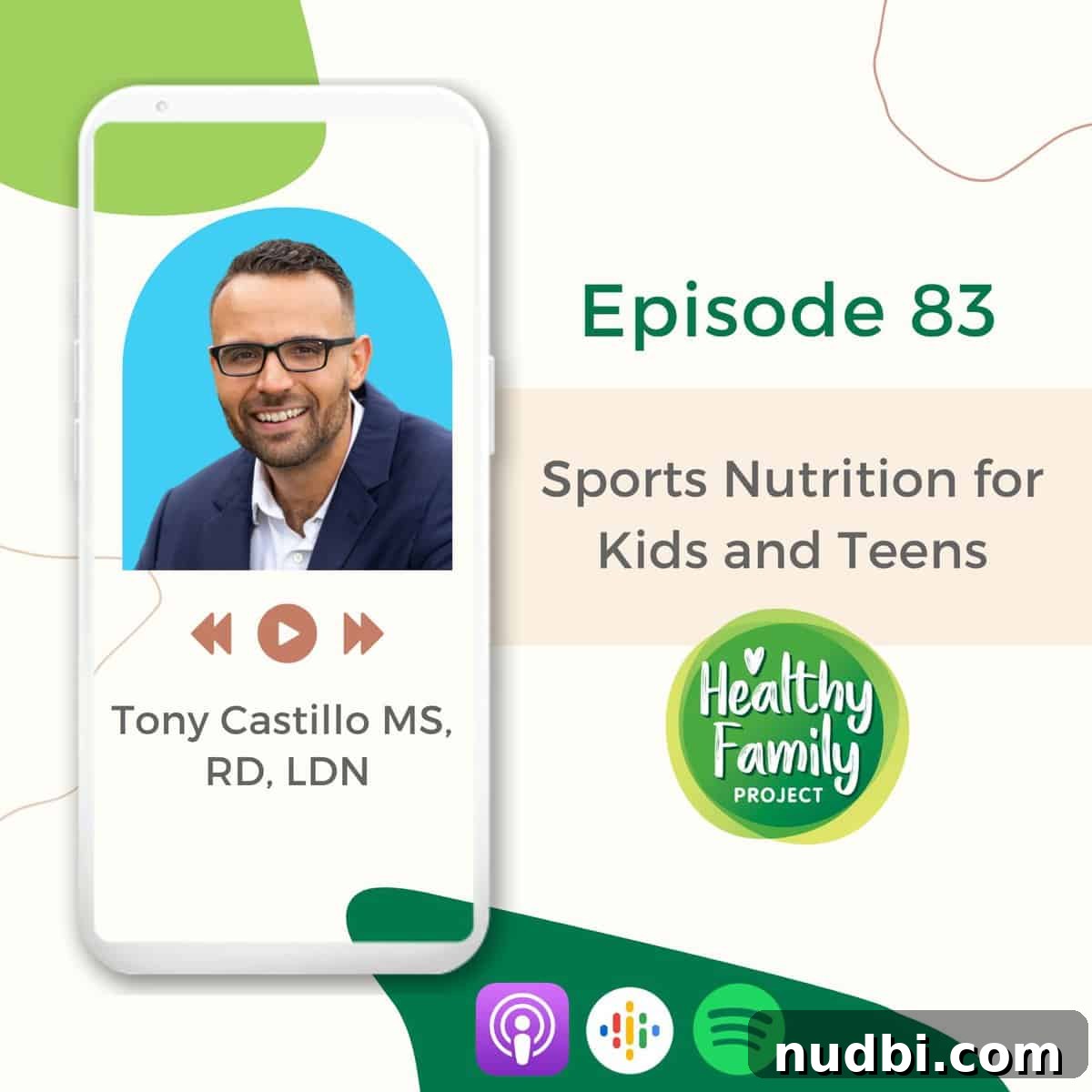
Fueling Peak Performance: Essential Sports Nutrition for Kids & Teens
Welcome to a special episode of the Healthy Family Project Podcast, where we dive deep into the crucial world of sports nutrition for kids and teens. We are thrilled to host Tony Castillo RD, a distinguished sports and performance dietitian. Tony specializes in empowering athletes to reach their full potential, emphasizing sustainable nutrition practices over fleeting fad diets and unnecessary supplements. In this insightful discussion, Tony shares his extensive expertise, demystifying common misconceptions about youth sports nutrition, offering actionable advice on pre- and post-game eating, and guiding parents on how to navigate the complex landscape of dietary supplements for young athletes.
This episode continues our ongoing series dedicated to supporting young athletes. Last month, we explored the vital topic of mental health in sports with Dr. Rick Neff, a sports psychologist who provided invaluable tips for nurturing the psychological well-being of young competitors. Building on that foundation, this month, we shift our focus to the physical fuel that powers their journey: nutrition.
For any young athlete, proper nutrition is not merely about staying healthy; it’s the bedrock of improved performance and a powerful safeguard against burnout. Just as a high-performance vehicle requires premium fuel, a young, active body needs optimal nourishment to sustain energy levels through demanding practices and intense game days. Good nutrition ensures kids remain energized, focused, and resilient.
One of Tony’s most valuable contributions to the discussion is his ability to dissect and debunk prevalent nutrition myths. In an era dominated by social media, misinformation often masquerades as fact, leading parents and young athletes astray. We are particularly grateful to feature experts like Tony, who ground their advice in scientific evidence, factual accuracy, and professional insight, especially when tackling critical subjects such as nutrition and mental wellness.

About Our Guest: Tony Castillo RD, Sports & Performance Dietitian
Tony Castillo is a highly respected Sports Dietitian and Nutrition Coach dedicated to helping athletes and active individuals optimize their physique and enhance performance. His unique approach avoids restrictive diets, the endless cycle of unnecessary supplements, and radical lifestyle overhauls, focusing instead on sustainable and effective strategies.
Tony’s personal journey into nutrition began during his own struggles with weight in middle and high school. A “diet” he tried resulted in unsustainable weight loss, leading to weight fluctuations throughout college due to a lack of proper nutrition knowledge. This challenging experience ignited his passion to understand the profound role of nutrition in the human body.
His academic pursuits led him to Florida International University in Miami, where he earned a B.S. in Biology, a B.A. in Chemistry, and an M.S. in Nutrition and Dietetics. Tony is proudly credentialed as a Registered Dietitian by the Academy of Nutrition and Dietetics, solidifying his expertise and commitment to evidence-based practice.
Today, Tony’s mission is to educate others on how healthy lifestyle modifications can significantly optimize performance across all facets of life. His impressive career includes working with elite athletes at the University of Florida and with professional sports teams like the Toronto Blue Jays. Now, through his private practice, Tony empowers individuals, whether they are aspiring professional athletes striving for MVP status or recreational athletes looking to improve their personal best, to become elite performers in their chosen fields.
Tony champions a philosophy that helps clients achieve and maintain their weight goals for life, without the constant stress of calorie counting or the disruption of their entire routine. His focus is on practical, effective, and lasting change.
Listen to the “Sports Nutrition for Kids and Teens” Episode
Don’t miss the full conversation with Tony Castillo to get all the nuanced advice and myth-busting wisdom. Listen here:
Key Discussion Points & Expert Advice
This episode is packed with essential information for parents and guardians of young athletes. Here’s a summary of the valuable insights Tony shared, covering common questions and critical strategies for optimal athletic development and well-being:
- Early Nutrition Practices (5:20): Tony highlights fundamental nutrition principles to establish when children first engage in sports, emphasizing consistency and a balanced approach rather than quick fixes.
- Common Misconceptions (8:00): We tackle widespread myths in sports nutrition, including the pitfalls of low-carb diets for growing bodies and the often-misunderstood role of supplements. Tony uses compelling analogies like the “car and gas” and “donut” to simplify complex nutritional concepts.
- Game Day Fueling Strategies (13:46): Learn precise tips for what young athletes should eat before and during competitive events to maximize energy and performance. Tony introduces the “funnel” approach for timing meals and snacks.
- Understanding Supplement Certification (17:30): A critical discussion on why third-party certification (like NSF for Sport and Informed Choice) is non-negotiable for any supplement, detailing the shocking risks of uncertified products.
- Post-Game Recovery (20:82): Tony outlines the “3 Rs” of recovery: Refuel, Repair, and Rehydrate, offering practical and accessible solutions like the universally loved chocolate milk.
- Mental Health and Nutrition Connection (23:13): Exploring the synergistic relationship between a child’s diet and their mental well-being, including emotional eating patterns and the broader impact of food choices on mood and focus.
- Defining a Healthy Family (31:35): Tony shares his personal philosophy on what constitutes a healthy family, emphasizing honesty, balanced eating without guilt, and open communication.
- Connecting with Tony (33:35): Find out how to reach Tony Castillo for more expert guidance and resources, including a complimentary nutrition optimization guide.
Hydration: The Unsung Hero of Youth Sports
Tony emphasizes that hydration is paramount, famously stating, “Hydrate or die.” He illustrates this with a vivid analogy: imagine your muscles as a piece of steak. Well-hydrated muscles are like a fresh, juicy steak – flexible and resilient. Dehydrated muscles, however, are akin to beef jerky – dry and prone to tearing. For young athletes, whose bodies regulate heat differently than adults, consistent hydration is crucial to prevent injuries and maintain peak performance, especially in hot climates.
The general guideline is for children to drink at least half their body weight in ounces of water daily, *before* accounting for any physical activity. After intense exercise, rehydration is even more critical. Tony advises that for every pound of body weight lost during activity, an athlete needs to replenish with 24 ounces of water. This highlights the substantial fluid requirements for active kids and the often-underestimated effort needed to recover effectively.
Debunking Common Myths in Young Athlete Nutrition
Social media abounds with misinformation, making it challenging for parents to discern sound advice. Tony sheds light on three pervasive myths that can hinder a young athlete’s progress:
Myth 1: Low-Carb Diets Enhance Performance
Tony eloquently refutes the idea that low-carb diets are beneficial for young athletes. He uses the analogy of a car: “Carbohydrates are the gas in your car.” Without sufficient carbohydrates, a child’s body lacks the primary fuel source needed for intense physical activity. Attempting to perform on a low-carb diet is like trying to drive a car with an empty fuel tank – it simply won’t run efficiently, leading to diminished performance and increased fatigue. Carbohydrates are vital for energy, endurance, and proper recovery in growing, active bodies.
Myth 2: Supplements are Essential for Young Athletes
Many parents, seeing professional athletes or social media influencers use supplements, might believe them to be a shortcut to performance. Tony offers a powerful “donut” analogy: Supplements are merely the “sprinkles” on the donut, accounting for a mere 1-3% of overall nutritional impact. The “donut itself” – meaning whole, nutritious foods – forms the foundational 97-99%. Parents should prioritize a well-balanced diet before considering any supplements.
Furthermore, Tony issues a stern warning about supplement safety. Unlike food, supplements are not strictly regulated by the FDA. This means many products may contain undisclosed ingredients, banned substances, or harmful contaminants. Tony shares alarming examples of supplements found to contain amphetamines, SARMs (which can disrupt hormone development in children), or even cocaine. To ensure safety, he urges parents to look for third-party certifications such as NSF for Sport or Informed Choice. These certifications rigorously test each batch of a product to guarantee it contains only what’s listed on the label and is free from harmful substances.
Myth 3: Avoiding Fruits and Vegetables
While not explicitly discussed as a myth in the transcript’s summary, the broader context of promoting whole foods implies that avoiding nutrient-dense fruits and vegetables is a misstep. These natural foods are packed with essential vitamins, minerals, and fiber, crucial for overall health, immune function, and sustained energy, which are all vital for an athlete’s development.
Strategic Game Day Nutrition for Young Athletes
Proper fueling around game time is a finely tuned process, not a one-size-fits-all meal. Tony introduces the “funnel” concept for pre-game nutrition:
- 3-4 Hours Before: The Wide Opening
This is the ideal time for a balanced meal, rich in carbohydrates for sustained energy, moderate protein for muscle support, and some healthy fats. This allows ample time for digestion without causing discomfort during activity. Examples include pasta with lean protein, rice and chicken, or a sandwich with whole grain bread and turkey.
- 1-2 Hours Before: The Narrowing Funnel
As game time approaches, focus shifts to easily digestible carbohydrates and protein, with minimal fat and fiber to prevent stomach upset. Think Greek yogurt with berries, a banana with a small amount of peanut butter, or a small portion of oatmeal.
- 30-60 Minutes Before: The Narrowest Point
Right before activity, the goal is quick, fast-acting carbohydrates for an immediate energy boost. Tony recommends options like fresh fruit (e.g., orange slices, applesauce pouches), granola bars (check ingredients for low fiber), or fruit gummies. These provide instant glucose to power muscles without weighing the athlete down.
- During the Game: Sustaining Energy
For longer events, easy-to-consume carbohydrates like orange slices and applesauce pouches remain excellent choices to replenish energy stores and prevent fatigue. These are quick to absorb and less likely to cause digestive issues.
The 3 Rs of Post-Game Recovery
After intense physical exertion, recovery is just as crucial as performance. Tony outlines the “3 Rs” for effective post-game nutrition:
- Refuel: Replenish depleted carbohydrate stores, which act as the primary “gas” for muscles. Fast-acting carbs are ideal immediately after exercise.
- Repair: Provide protein to help repair muscle tissue that has been broken down during activity. This aids in muscle growth and reduces soreness.
- Rehydrate: Restore fluid and electrolyte balance lost through sweat. This ties back to Tony’s core message on hydration.
Tony’s favorite recommendation for recovery is classic chocolate milk. It’s readily available, affordable, and provides the perfect blend of carbohydrates (for refueling), protein (for muscle repair), and fluids/electrolytes (for rehydration). Plus, most kids (and adults!) enjoy it, making it an easy and effective choice.
The Interplay of Nutrition and Mental Health in Young Athletes
The conversation extends beyond physical performance to the profound connection between nutrition and mental well-being. Tony underscores the importance of mental performance coaches in professional and collegiate sports, recognizing how mental stressors can impact an athlete’s ability to perform. When athletes face mental challenges like depression or anxiety, emotional eating can become a prevalent coping mechanism. Nutritionists and mental health professionals often work in conjunction to address these issues holistically, supporting athletes in coping with emotions while maintaining their performance goals.
For parents, understanding the link between gut health and brain function is vital. A diet rich in fiber (from fruits and vegetables) supports a healthy gut microbiome, which in turn influences mood and cognitive function. Tony cautions against the allure of “gut health” supplements often seen on social media, emphasizing that real, whole foods are typically the best and safest approach to support both physical and mental well-being.
The importance of fostering a positive body image and a healthy relationship with food is also highlighted. Tony recalls stories, like that of Nike runner Mary Kane, who faced detrimental health consequences due to pressure to be excessively thin, ultimately hindering her performance. The focus should always be on fueling for health and strength, not on restrictive or unhealthy weight goals.
Building Sustainable Healthy Habits
Tony advocates for a long-term approach to nutrition, focusing on building sustainable habits rather than restrictive rules. He emphasizes that food should not be labeled as “good” or “bad.” Enjoying treats like an Oreo in moderation, without guilt, is part of a balanced diet and prevents the cycle of restriction and overconsumption that often fuels fad diet industries. Parents play a crucial role in modeling this balanced approach, encouraging children to try new foods without pressure, and allowing them to understand how different foods make their bodies feel.
Relevant Links & Resources
- Follow Tony on Instagram and check out his Facebook group
- Explore Tony’s expertise on Tony’s website
- Learn about certified supplements: Informed Choice Certified Supplements
- More on certification: Supplement and Vitamin Certification
- Healthy snack ideas: Healthy Sports Snacks for Kids
- Understanding sports drinks: Do Kids Need Sports Drinks?
- The power of water: The Importance of Hydration
Continue the Conversation: Other Podcast Episodes
- Episode 82: Sports Psychologist Tips For Supporting Your Teen Athlete’s Mental Health
- Episode 35: Helping Kids Make Good Choices
- Episode 40: Meditation Benefits for Kids
Episode 83: Sports Nutrition for Kids and Teens – Key Takeaways
This episode provided a comprehensive overview of sports nutrition tailored for children and teenagers. Host Amanda and guest Tony Castillo RD covered essential topics ranging from the foundational importance of proper hydration to debunking common dietary myths like low-carb approaches and the over-reliance on unverified supplements. Tony shared practical advice on structuring pre- and post-game meals using easy-to-understand analogies, highlighted the critical need for third-party supplement certification due to potential contamination, and discussed accessible recovery foods like chocolate milk. The conversation also touched upon the significant link between nutrition and mental health, underscoring how balanced eating contributes to emotional well-being and performance resilience. Tony’s personal journey and professional philosophy advocate for fostering a guilt-free and positive relationship with food, emphasizing whole foods and mindful choices for sustainable athletic development and overall family health. For the full, verbatim dialogue, please refer to the episode’s original transcript available via the podcast platform.