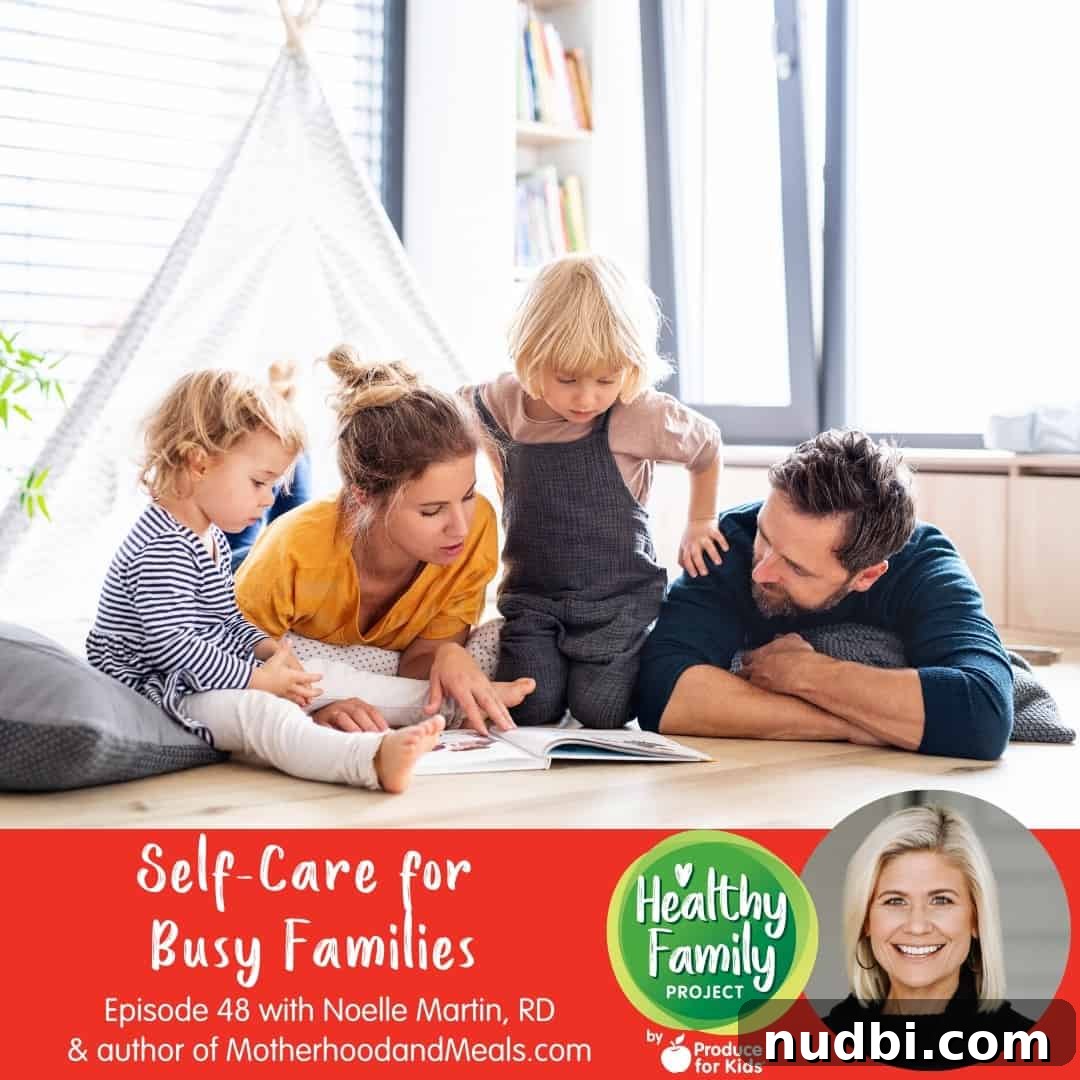
Unlocking Self-Care for Busy Parents: Essential Tips from a Registered Dietitian and Mom of Three

In today’s fast-paced world, parents often find themselves juggling endless responsibilities, leaving little to no time for themselves. This critical episode of the Healthy Family Project podcast dives deep into the often-overlooked yet vital topic of self-care, especially for those managing hectic family schedules. We’re thrilled to feature Noelle Martin, a highly respected Registered Dietitian, author, and the driving force behind MotherhoodAndMeals.com. Noelle brings a unique blend of professional expertise and real-life experience as a busy mom of three young boys, offering invaluable insights into prioritizing personal well-being amidst the beautiful chaos of family life.
Noelle Martin holds a Master of Science in Foods and Nutrition and is the founder and president of Motherhood and Meals Inc. She is also the co-founder of Nourished Beginnings, an initiative focused on supporting mothers and young children with practical nutrition advice. Noelle’s passion shines through her work: educating, inspiring, and empowering women to make informed, healthy choices for themselves and their families. Her mission is to help integrate consistent, healthy habits into daily routines, transforming life’s challenges into opportunities for growth and well-being. Whether working with individuals, families, or groups through one-on-one sessions, workshops, or virtual courses, Noelle’s approachable guidance resonates deeply. She also shares her knowledge as a university instructor at Brescia University College and recently published “Superfoods and Super Kids Cookbook,” a resource designed to make healthy eating fun and accessible for children.
Noelle’s dedication extends to her active online presence, where she regularly shares candid, real-life insights on food, family, and friendship. You can connect with her vibrant community and discover practical strategies for healthy living by visiting www.motherhoodandmeals.com and following her on Instagram.
Stay Connected: Healthy Recipes & Tips in Your Inbox
Don’t miss out on essential tips and inspiration for nurturing a healthy family! Sign up for the Produce for Kids e-newsletter to receive a weekly dose of healthy recipe ideas, our latest blog posts, and exclusive content directly to your inbox. It’s a simple way to keep fresh ideas flowing and stay motivated on your healthy living journey.
Join Our Community: The Healthy Family Project Facebook Group
Looking for a supportive space to connect with other parents and caregivers who are navigating the joys and challenges of raising a healthy family? Join our new Healthy Family Project Facebook group! This private group serves as a safe and engaging forum to discuss everything from tackling picky eaters and creative ways to incorporate more fruits and vegetables into meals, to family fitness routines and crucial mental health discussions. We warmly invite you to become a part of our growing community, share your experiences, ask questions, and discover new strategies to foster a thriving family environment.
Listen to the Episode: Prioritizing Self-Care as a Parent
This enlightening podcast episode, hosted by Amanda M. Kiefer, features an in-depth conversation with Noelle Martin on the profound impact of self-care on parental well-being and, by extension, the entire family. Noelle shares her personal journey and professional insights, offering actionable advice for integrating self-care into even the most demanding schedules. The discussion covers a wide range of topics, from defining self-care in a practical sense to strategies for teaching children its importance. We encourage you to listen to the full episode for a comprehensive understanding, but if you wish to jump directly to specific topics, the timestamps below will guide you.
Key Discussion Points from the Episode:
- 2:55 Welcome, Noelle!: Introduction to Noelle Martin and her background as a Registered Dietitian and a busy mom, setting the stage for an authentic discussion on self-care.
- 5:07 Self-care defined: Noelle demystifies self-care, moving beyond indulgent stereotypes to present it as intentional actions that enable parents to be their best selves for their families and responsibilities.
- 10:17 How to make time for self-care: Practical strategies for carving out self-care moments, regardless of how packed a schedule might seem, emphasizing flexibility and prioritization across different stages of motherhood.
- 20:30 How to teach our kids about self-care: Insights into modeling self-care for children, helping them understand balance, and equipping them with strategies to manage their own stress and activities.
- 27:40 How can families disconnect from the to-do list?: Creative ways for families to deliberately step away from obligations, fostering joy, connection, and relaxation through shared activities.
- 36:17 How to ask for help? How to build your ‘village’?: Essential advice on overcoming the hesitation to ask for assistance and proactive steps for creating a supportive community network, especially for those without immediate family nearby.
Understanding Self-Care: More Than Just a Spa Day
Noelle Martin articulates that self-care is not about extravagance or guilt-inducing indulgences, but rather about finding practical ways to ensure you can be the best version of yourself in all your roles—as a parent, spouse, friend, and professional. For Noelle, this realization hit profoundly after having three children in a short span. The seemingly simple act of using grilled cheese crusts as croutons on her salad became a revelation: a small, creative tweak that made healthy eating for herself enjoyable amidst caring for her children. This anecdote perfectly illustrates her philosophy that self-care can be integrated into everyday moments, proving that children learn by watching us. Whether it’s taking a deep breath, engaging in physical activity, or nourishing oneself, children observe and absorb these habits, making parental self-care a powerful tool for teaching healthy living.
The conversation highlights a crucial point: a parent’s mental state directly impacts the entire household. Host Amanda candidly shares how her own stress levels can lead to irritability, affecting her daughters’ moods and the overall family dynamic. Noelle echoes this, noting how even babies can sense parental stress, often reacting by resisting sleep when parents are under pressure. This underscores why self-care isn’t selfish; it’s a foundational element for maintaining family harmony and resilience.
Practical Strategies for Integrating Self-Care into a Busy Schedule
Making Time for Yourself: Even Just a Few Minutes Can Make a Difference
The perennial challenge for busy parents is finding time. Noelle offers stage-specific advice, acknowledging that self-care looks different when caring for infants versus school-aged children. When babies are young and naps are precious, prioritizing what serves you best—a quick shower, a nap, or a healthy meal—is key. As children grow, strategies evolve. For Noelle, physical activity is a significant component of her self-care. Early on, this meant stroller walks or runs, providing a moment for herself while setting a healthy example for her children. Now, with older children who sleep through the night, she often engages in morning activity, sometimes with her kids joining in.
Amanda shares how she leverages her daughters’ extracurricular activities for her own well-being. Instead of simply waiting, she takes adult dance classes at their studio or tennis lessons during their tennis practice. This creative use of “waiting time” transforms passive observation into active self-care. For those without formal classes, a simple walk and chat with another parent during an activity can provide both physical activity and social connection, reinforcing the idea that self-care doesn’t require grand gestures or long blocks of uninterrupted time. It can be as simple as playing with new pets for 15 minutes, as Amanda discovered with her tortoises.
Building Your “Village” and Asking for Help
A significant barrier to self-care is the reluctance to ask for help. Noelle emphasizes the importance of admitting that it’s okay to have a “village” and to ask for assistance with things you truly need. This might involve hiring a teenager for an hour or two to allow you to shower, meal prep, or simply take a walk. Amanda highlights the affordability and accessibility of asking younger teens in the neighborhood for short childcare stints, easing the guilt often associated with “hiring a babysitter.”
For those without immediate family or an established network, building a village requires proactive effort. Noelle suggests exploring local community centers, libraries, and churches for moms’ groups, baby book readings, or stroller boot camps. These venues offer opportunities to connect with other parents who might be in a similar life stage. Once a connection is made, reciprocal arrangements can be incredibly effective: meal swaps (making extra dinner for another family in exchange for the same) or childcare exchanges (watching each other’s kids for a few hours) can create invaluable support systems without financial burden. These relationships provide not only practical help but also crucial adult interaction, which can be a lifeline for new or isolated parents.
Nurturing Your Family’s Well-being: Teaching Kids Self-Care and Disconnecting
Leading by Example: Empowering Children with Self-Care Skills
Teaching children about self-care is fundamentally about leading by example and open communication. Noelle stresses the importance of scheduling dedicated time for various activities, including homework, chores, and relaxation. By setting a timer for homework, for instance, children learn to focus for a set period and then understand the importance of taking a break, rather than feeling overwhelmed by an endless task. This structured approach helps them grasp balance and the concept of “start and finish” for tasks.
Involving children in household activities, such as grocery shopping and meal preparation, exposes them to the effort required to organize a healthy life. This exposure, Noelle believes, helps them internalize the value of physical activity, work, meal prep, and relaxation. Establishing clear winding-down routines, like silent reading time before bed, also teaches children the importance of de-stressing and transitioning from busy days. These routines not only promote better sleep but also create opportunities for calm, open conversations where children might articulate worries they couldn’t express during the day.
Recognizing and respecting children’s limits is another critical aspect of teaching self-care. Not every child thrives with multiple extracurriculars. Parents should observe their children’s responses to activities and consider whether they might be introverted or simply overscheduled. Involving kids in these decisions as they get older fosters autonomy and helps them learn to advocate for their own well-being.
Disconnecting and Embracing Family Fun
In a world dominated by to-do lists, Noelle champions the power of disconnecting and prioritizing family fun. Family game nights are a big hit in her household, fostering laughter and connection regardless of the children’s ages. From Mega Bloks with toddlers to board games and card games with older kids, these shared moments create lasting memories and relieve stress. Noelle even schedules two designated game nights a week to ensure they happen consistently.
One-on-one “dates” with each child, like a special lunch where the child chooses the restaurant and leads the conversation, build individual bonds and make each child feel valued. Involving children in kitchen tasks not only teaches life skills but also creates opportunities for conversation and connection while being productive. Noelle references research suggesting that even 10-15 minutes of directed, child-led play daily can significantly impact a child’s demeanor and sense of autonomy. By scheduling these moments—whether with alarms or calendar appointments—parents can intentionally cultivate joy and relaxation, ensuring that precious family time doesn’t get lost in the hustle.
Navigating Social Media and the Comparison Trap
Both Noelle and Amanda emphasize a crucial caveat: while seeking inspiration from others is valuable, it’s vital to avoid falling into the comparison trap often fueled by social media. Noelle candidly shares her own experience of feeling “less than” during the early years of her twins’ lives, leading her to temporarily step away from social media. It’s easy to view others’ highlight reels and feel inadequate, but it’s important to remember that these curated glimpses rarely show the full reality of everyday struggles. This podcast and Noelle’s platform aim to offer real, relatable solutions, fostering a sense of solidarity rather than competition among parents. The key is to be inspired, gather ideas, but always walk your own journey, confident that what you are doing is best for your unique family.
Healthy Family Project Podcast: Your Resource for Family Well-being
The Healthy Family Project Podcast offers engaging conversations on hot topics in the world of health, food, and family, all delivered with a refreshing dose of fun. Produced by Produce for Kids, our mission is to help families smoothly transition into a fresh and healthy lifestyle. We explore a wide array of subjects, from nutrition and meal planning to mental health and effective parenting strategies, ensuring a holistic approach to family well-being.
New episodes are released bi-weekly, providing consistent inspiration and actionable advice. Don’t miss out—be sure to subscribe on Apple Podcasts, Google Podcasts, Spotify, or your favorite podcasting platform. If you enjoy an episode, please take a moment to leave a rating and comment; your feedback helps us reach more families and continue creating valuable content.
We are always eager to feature diverse voices and expertise! If you are interested in being a guest on the Healthy Family Project podcast, please reach out to [email protected] with your topic idea for consideration. We believe in the power of shared experiences and collective knowledge to build healthier generations.
Relevant Links and Resources
- Follow MotherhoodandMeals and Nourished_Beginnings on Instagram for daily inspiration and real-life tips from Noelle.
- Explore Noelle’s insightful articles and recipes on her blog.
- Read Noelle’s heartfelt blog post that inspired this episode: A Mama’s Heart.
Other Recommended Podcast Episodes from Healthy Family Project:
If you enjoyed this conversation, you might also find these related episodes helpful for building a balanced and healthy family life:
- Ep. 40: Meditation Benefits for Kids
- Ep. 35: Helping Kids Make Good Choices
- Ep. 31: Balancing Career & Family
Transcript for Episode 48
This transcript was produced by Otter.Ai. Please forgive any misspellings and grammatical errors.