The Ultimate Guide to Regrowing Fruits and Vegetables from Kitchen Scraps
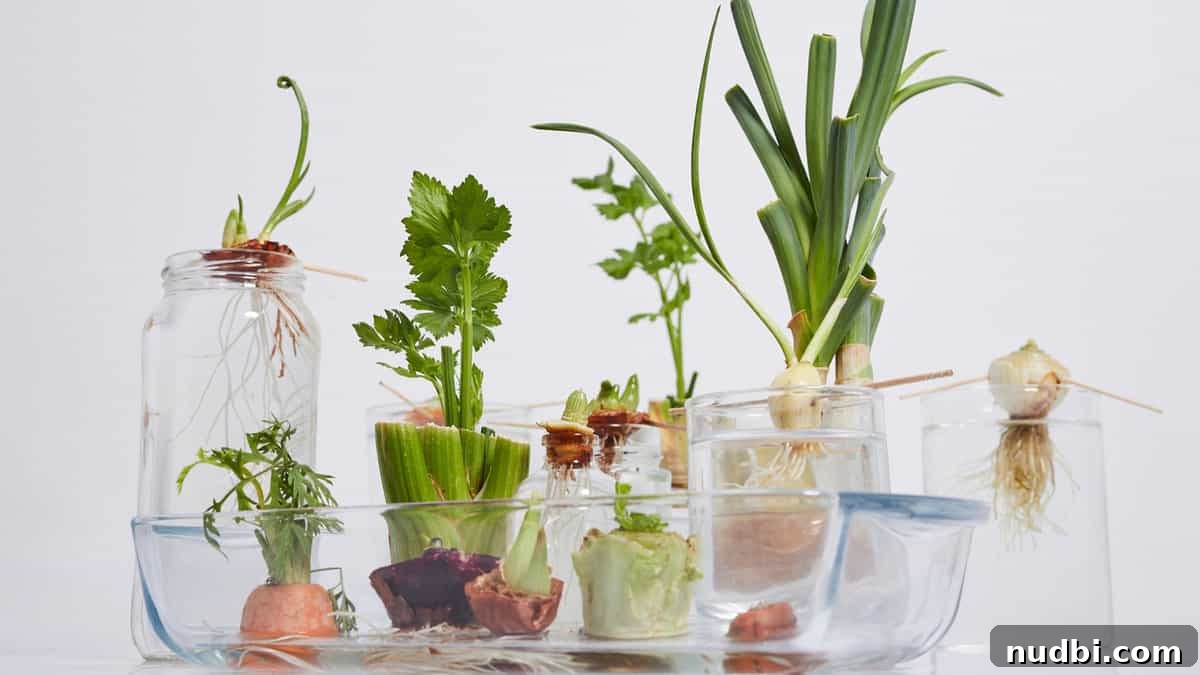
Imagine transforming your kitchen waste into a thriving indoor garden, reducing food waste, saving money, and enjoying fresh produce year-round. Regrowing fruits and vegetables from scraps isn’t just a fun and eco-friendly activity; it’s a rewarding journey into sustainable living. This comprehensive guide will show you how to give new life to common kitchen scraps, turning them into edible plants right in your home. It’s also an excellent educational project for families, teaching children about plant life cycles and the importance of sustainability.
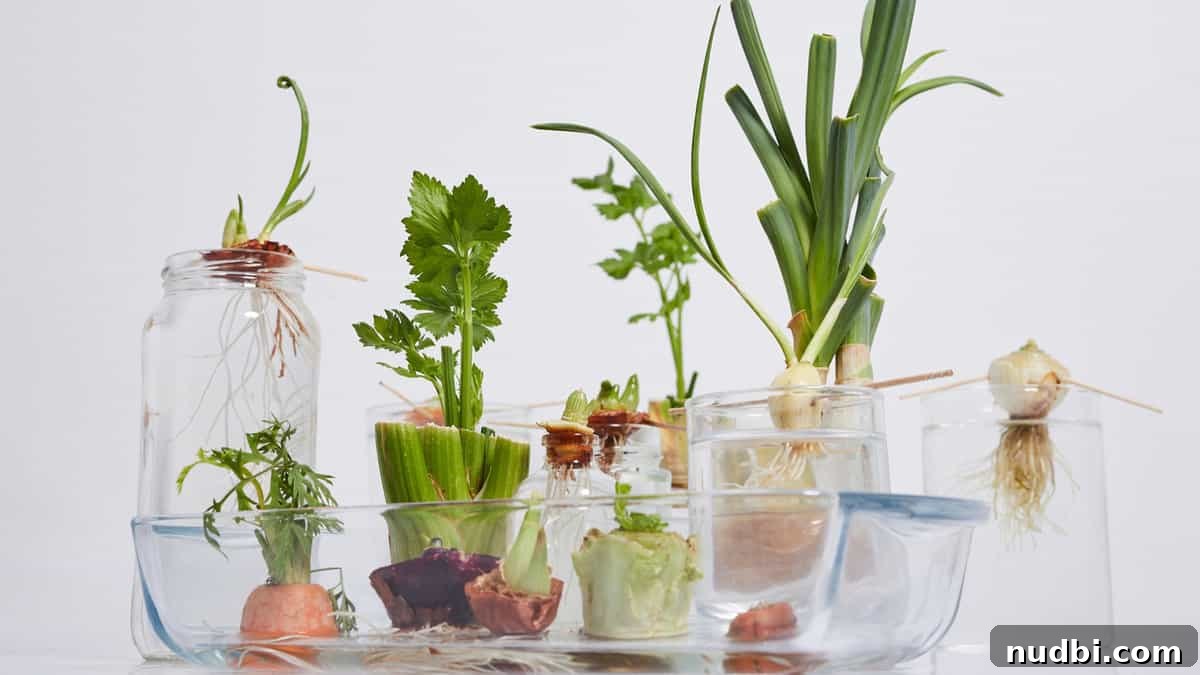
Our journey into kitchen gardening aligns perfectly with principles of sustainability and hands-on learning. We’ve even explored this topic in our podcast Episode 51, where educator Tanya Acosta shared insights into mastering distance learning and provided a free downloadable resource to help families turn this into a genuine science experiment. We’ve personally had great success with regrowing green onions (often the easiest starting point!) and celery in our own home.
General Tips for Successful Regrowing
Before diving into specific plants, here are some universal tips to maximize your chances of success:
- Use Fresh Scraps: The fresher the scrap, the better its chances of rooting and sprouting.
- Cleanliness is Key: Wash your scraps thoroughly to remove any clinging soil or contaminants that could lead to mold.
- Adequate Sunlight: Most regrowing projects thrive in a bright, sunny spot, such as a windowsill. Aim for at least 4-6 hours of indirect sunlight daily.
- Regular Water Changes: For water-based methods, changing the water every 1-2 days prevents stagnation and the growth of harmful bacteria.
- Patience: Some plants sprout quickly, while others take weeks or even months. Don’t get discouraged if you don’t see immediate results.
- Transition to Soil: Once roots and significant green growth appear, most plants will benefit from being transferred to soil for sustained growth.
Popular Fruits and Vegetables You Can Easily Regrow
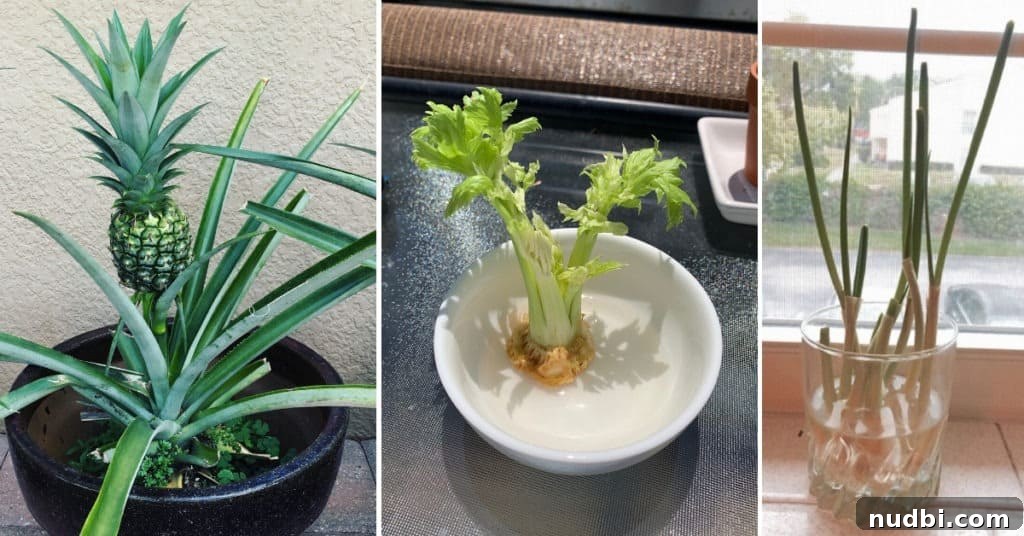
How To Regrow Green Onions (Scallions)
Green onions are perhaps the simplest and most satisfying vegetable to regrow. They offer quick results, making them perfect for beginners and children.
- Prepare the Scraps: When you use green onions, cut off the white and light green root ends, leaving about 1-2 inches intact.
- Place in Water: Stand the root ends upright in a small glass or jar. Add just enough water to cover the roots, about an inch deep.
- Provide Sunlight & Refresh Water: Place the glass on a sunny windowsill. Change the water every 1-2 days to keep it fresh and prevent mold.
- Watch Them Grow: Within just a few days, you’ll see new green shoots emerging from the tops. You can trim off the new growth as needed, and the green onions will continue to regrow multiple times from the same base.
- Optional: Plant in Soil: Once roots are well-established (after 1-2 weeks), you can transfer them to a small pot filled with soil for more robust growth and potentially more harvests. Bury the white part of the onion, leaving the green shoots exposed.
This method allows for continuous harvesting, providing a constant supply of fresh green onions for your culinary needs.
Learn How to Regrow Celery
Regrowing celery is another incredibly easy and visible project. Watching a full head of celery emerge from a small base is truly impressive.
- Prepare the Base: After using the stalks, chop off the very bottom base of the celery head, ensuring about 1-2 inches remains. Rinse it thoroughly.
- Submerge in Water: Place the celery base in a shallow bowl or cup with about an inch of warm water. The base should be submerged, but the top should be exposed.
- Sunny Spot & Water Changes: Position the container in a well-lit area, like a sunny windowsill. Change the water every couple of days to keep it clean.
- Observe Growth: Within five days, you should start to see significant signs of growth: small leaves emerging from the center and possibly tiny roots forming at the base. The amount of sunlight will influence the speed of growth.
- Transfer to Soil: Once a good amount of leaves and roots have formed (typically after 1-2 weeks), transfer the celery base to a pot with good potting soil or directly into your garden. Plant it so only the new green growth is visible above the soil.
With proper care, your celery will continue to grow, producing new stalks that can be harvested as needed. Keep the soil consistently moist.
How to Regrow Pineapple
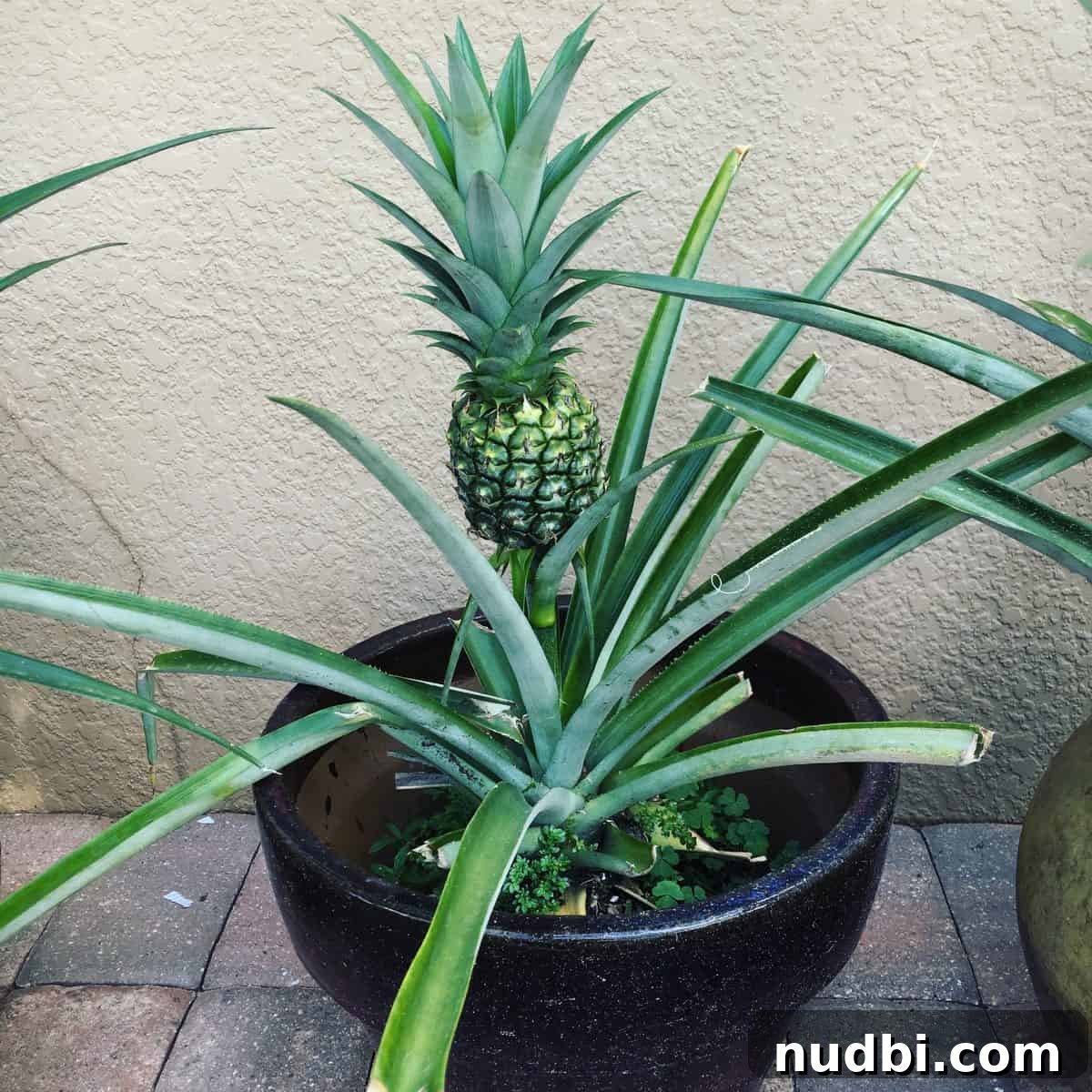
Growing a pineapple from its crown is a long-term project that requires patience, but the tropical reward is well worth the wait. Pineapples are hardy plants that thrive in warm weather and well-composted, rich soil.
Planting a Pineapple Crown
The crown is the leafy top of a store-bought pineapple. Here’s how to prepare and plant it:
- Remove the Crown: Grip the pineapple body firmly with one hand and the leafy crown with the other. Twist the crown firmly until it separates from the fruit, leaving a cone-shaped base. Be careful, as the leaves can be sharp; wearing gloves is recommended.
- Clean the Base: Carefully cut away any remaining fruit flesh from the bottom of the crown. Any excess fruit can rot and damage the developing roots.
- Strip Lower Leaves: Peel off the bottom 1-2 inches of leaves to expose the stem and the small bumps, which are the root primordial cells. Do this gently to avoid tearing the stem.
- Allow to Dry (Cure): This crucial step prevents rot. Set the pineapple crown aside in a dry, well-ventilated area for a day or two, or even up to a week, until the base is calloused and dry.
- Planting:
- Water Rooting (Optional but Recommended): For faster root development, place the dried crown in a glass of water, ensuring the base is submerged but the leaves are above the waterline. Change the water every other day. Roots should appear in 2-4 weeks.
- Direct Soil Planting: Once roots have formed (or if planting directly after curing), plant the crown in a pot (at least 6-8 inches in diameter) filled with well-draining potting mix. Bury the stem up to the base of the lowest leaves. If you live in a warm climate, you can plant it directly into the ground.
- Care and Sunlight: Pineapple plants require about six hours of direct sunlight daily. If growing indoors, place it in your brightest window. Keep the soil consistently moist but not waterlogged.
A pineapple plant grown from a crown can take 2-3 years to produce fruit, and each plant usually produces only one pineapple per cycle, followed by “suckers” or “pups” that can be replanted for future harvests. For more detailed tips, explore our Pineapple growing guide.
How To Regrow Tomatoes
Regrowing tomatoes from seeds is a rewarding project, allowing you to cultivate your favorite varieties and enjoy fresh, homegrown flavor.
- Extract and Prepare Seeds: Cut open a ripe tomato and scoop out the seeds, along with their jelly-like coating. Place them in a small container with a little water.
- Fermentation (Optional but Recommended): Allow the seeds to ferment for 1-3 days. This process helps to break down the germination-inhibiting gel and kills off potential diseases. Stir daily. You’ll see a layer of mold on top; this is normal.
- Clean and Dry Seeds: After fermentation, rinse the seeds thoroughly under running water to remove any pulp and mold. Spread them out on a paper plate or parchment paper to dry completely. This can take several days.
- Planting Seeds: Once fully dry, the seeds are ready to plant. Sow them about 1/4 inch deep in seed-starting mix in small pots or an old egg carton. If it’s not yet spring, you can start your seeds indoors.
- Care and Transplanting: Keep the soil moist and provide plenty of light. Once seedlings develop a few sets of true leaves and outdoor temperatures are consistently warm, transplant them to larger pots or directly into your garden.
Watching a tiny seed grow into a plant that produces delicious tomatoes is a truly astonishing experience for gardeners of all ages!
Let’s Regrow Potatoes
Potatoes are simple to regrow, especially if you have an old potato that has started to sprout “eyes.”
- Prepare “Seed Potatoes”: Cut your potato into pieces, ensuring each piece has at least one or two “eyes” (the small indentations where sprouts emerge) and a bit of flesh attached.
- Cure the Cuttings: Allow the cut potato pieces to sit out at room temperature overnight, or for a day or two, until the cut surfaces dry and form a protective skin. This prevents rot when planted.
- Planting: Plant the cured potato pieces in well-draining soil, about 6-8 inches deep and spaced approximately 1 foot apart. Plant them with the “eyes” facing upwards.
- Hilling and Harvesting: As the potato plants grow, “hill” them by mounding soil around the base of the stems, leaving only the top leaves exposed. This encourages more potato growth along the buried stem. Harvest potatoes when the foliage begins to yellow and die back, typically 70-120 days after planting.
Regrowing potatoes is an excellent way to turn seemingly expired produce into a bountiful harvest.
How To Regrow Avocado
Growing an avocado tree from a pit is a classic, long-term project that requires patience and consistent care. While it might take years to produce fruit (and sometimes never indoors), it makes for a beautiful houseplant.
- Clean the Pit: Carefully clean the avocado pit, removing all avocado flesh. Towel dry it thoroughly.
- Prepare for Sprouting: Push 3-4 toothpicks into the sides of the pit, evenly spaced around the middle. These will act as a support system.
- Water Submersion: Suspend the pit over a small glass or jar filled with water, using the toothpicks to rest it on the rim. The broad, flatter end of the pit should be submerged about halfway into the water, with the pointy side facing up.
- Sunny Spot & Water Changes: Place the glass in a warm, sunny location. Change the water every 1-2 days to prevent mold and keep it fresh.
- Observe Sprouting: This is where patience is key. It can take anywhere from 3 to 8 weeks (sometimes longer!) for the pit to crack open and for a taproot to emerge from the bottom and a sprout from the top.
- Planting in Soil: Once the stem is about 6-7 inches tall and has a few leaves, and the root system is well-developed, it’s time to plant. Transfer the avocado tree to a pot (at least 8-10 inches in diameter) with good potting soil. Plant it so that the top half of the pit is still exposed above the soil.
- Ongoing Care: Keep the soil consistently moist but not waterlogged. Provide plenty of sunlight. Pinch back the top leaves once the plant reaches about 12 inches to encourage bushier growth.
While fruiting can be rare indoors, the lush green foliage makes for a stunning houseplant.
Regrow Romaine Lettuce
Romaine lettuce is one of the fastest and easiest leafy greens to regrow, providing a quick harvest of fresh leaves.
- Prepare the Base: After you’ve enjoyed your romaine lettuce, cut off the bottom of the heart, leaving about 2-3 inches of the base.
- Submerge in Water: Place the romaine base in a shallow bowl or dish with about half an inch of water. Ensure the cut surface is submerged and the top is exposed.
- Sunny Spot & Water Changes: Keep the bowl in a sunny spot, such as a windowsill. Change the water daily to prevent stagnation and mold.
- Observe Growth: Within just a few days, you’ll notice small roots beginning to form at the bottom, and new, tiny green leaves emerging from the center of the base.
- Plant in Soil: Once the roots are well-developed and the sprouts are a few inches tall (typically after 7-10 days), transfer the plant directly into your garden or a pot filled with potting soil. Bury the original base, leaving the new growth exposed.
- Harvesting: Harvest the new leaves when they are about 6-8 inches tall. You can often get multiple harvests from the same plant.
This quick-growing project is fantastic for instant gratification and a continuous supply of salad greens!
How To Regrow Carrots
While you won’t regrow a full carrot root from a top, you can easily grow lush carrot greens, which are edible and delicious in salads, pesto, or as a garnish.
- Prepare Carrot Tops: Cut off the top inch of your carrots, ensuring it includes the green leafy part where the new greens will sprout.
- Water Setup: Insert 3-4 toothpicks around the sides of the carrot top. Place the carrot top on top of a small glass or jar, using the toothpicks to suspend it. Fill the glass with just enough water to barely touch the very bottom of the carrot top.
- Sunny Spot & Water Maintenance: Position the glass in a sunny spot. Add water daily to maintain contact with the bottom of the carrot top.
- Observe Growth: Within about a week, you’ll start to see roots forming at the bottom and fresh green shoots emerging from the top.
- Harvesting: Once the greens are a few inches tall, snip them off as needed. You can continue to harvest the greens for some time.
This is a fantastic way to utilize a part of the carrot that usually goes to waste, adding a peppery, carrot-flavored touch to your dishes.
Beyond the Basics: Tips for Advanced Regrowing & Troubleshooting
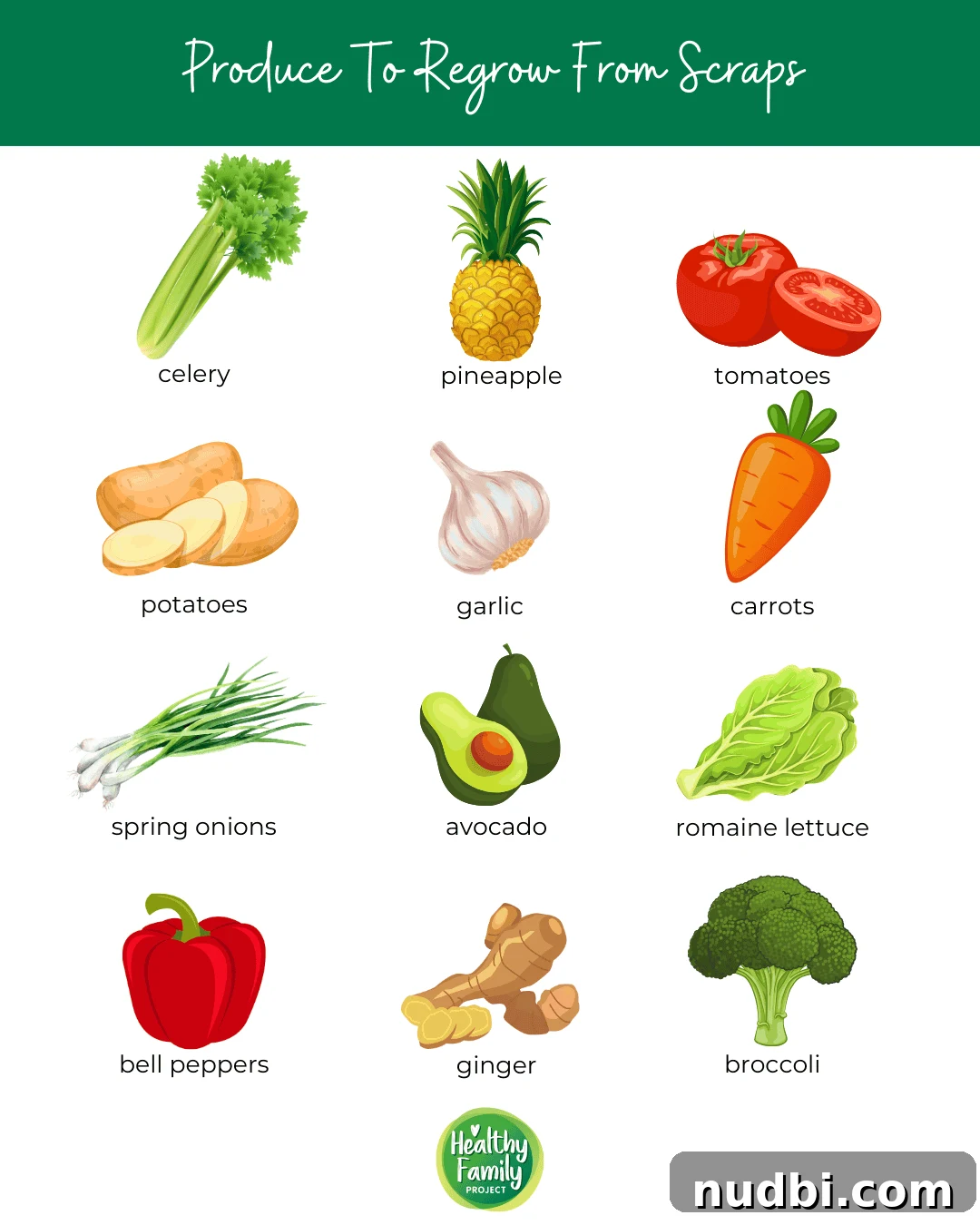
Once you’ve mastered these basics, you might consider experimenting with other produce like garlic, ginger, or even mushrooms. Remember that successful regrowing often depends on a combination of factors: suitable light, consistent moisture, and appropriate temperature.
Common Challenges and Solutions:
- Mold/Rot: This is usually caused by stagnant water or too much fruit flesh left on the scrap. Change water daily, ensure good airflow, and remove all fruit residue.
- No Growth: Lack of sufficient light, incorrect temperature, or an old/non-viable scrap can be reasons. Try a fresher scrap and ensure optimal conditions.
- Leggy Growth: If sprouts are long and weak, it indicates they are stretching for light. Move your plant to a brighter location.
Don’t be afraid to experiment and learn from your attempts. Every green thumb started somewhere!
Join Our Community and Share Your Success!
Regrowing fruits and vegetables from scraps is more than just a gardening hack; it’s a step towards a more sustainable and mindful lifestyle. It’s a wonderful way to connect with your food, reduce your environmental footprint, and enjoy the freshest possible ingredients.
Are you actively regrowing fruits and veggies from scraps in your kitchen? We’d absolutely love to see your progress and celebrate your green achievements! Join us in the Healthy Family Project Facebook Group to share your photos, ask questions, and connect with fellow kitchen gardeners. You can also leave us a comment here on the blog. Don’t forget to tag us on social media using #healthyfamilyproject or by tagging @healthy.family.project. Let’s inspire each other to grow a greener future, one kitchen scrap at a time!