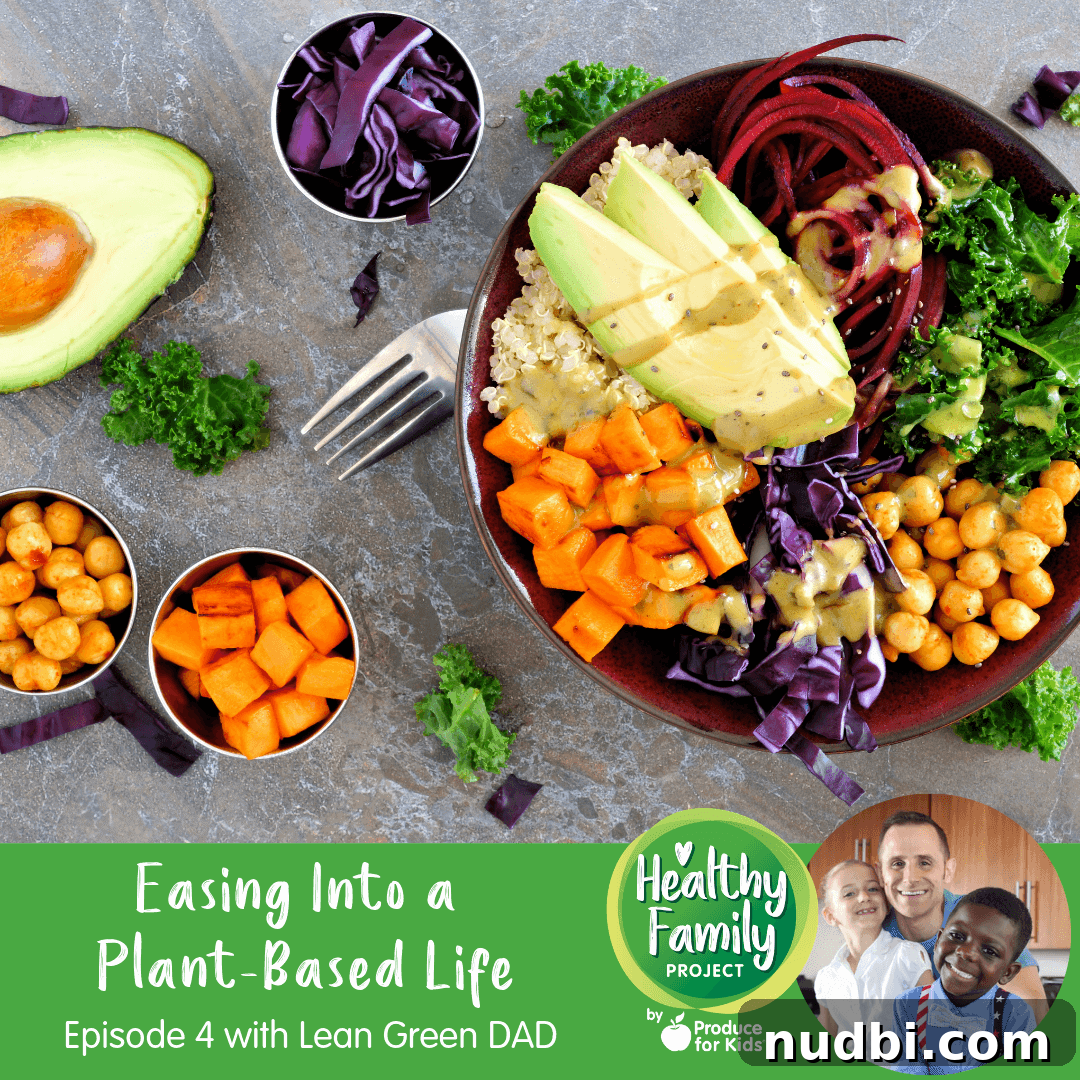
Embarking on a plant-based journey for your family can feel overwhelming, but what if it could be simple, affordable, and incredibly rewarding? In this comprehensive guide, inspired by an insightful conversation with Cory Warren of LeanGreenDad.com on the Healthy Family Project podcast, we delve into why a plant-based lifestyle genuinely works for his family and how you can seamlessly integrate this nourishing approach into your own home.
Cory Warren is much more than just a vegan dad and podcast host; he’s a passionate advocate for plant-based living, creating practical and delicious meal plans that demystify healthy eating for families. Through his platform, Lean Green Dad, Cory demonstrates that quick and easy vegan meals are not only possible but can also make a plant-based diet for kids a joy, not a chore. His mission resonates deeply with parents seeking to fuel their families with vibrant, wholesome foods.
Lean Green DAD™ is a dynamic lifestyle blog brimming with creative and inspiring content centered around food, family, and fun. Cory’s heartfelt desire is to empower you and your loved ones to thrive. He fosters a community where individuals, including moms and dads, connect over a shared passion for living life to the fullest through solid, plant-based nutrition, strong family bonds, and, most importantly, having an abundance of fun and enjoyment along the way. His philosophy is all about making health accessible and enjoyable, transforming what might seem like a daunting dietary shift into an exciting family adventure.
Embracing a Plant-Based Family Lifestyle: Insights from Lean Green Dad
The transition to a plant-based diet might seem like a monumental task, but with the right guidance, it can be a smooth and incredibly beneficial experience for the entire family. Our discussion with Cory Warren revealed that the core of successful plant-based living lies in understanding its principles, debunking common myths, and making gradual, sustainable changes. This isn’t about rigid rules, but about discovering a flexible and fulfilling way to nourish your body and mind.
The Personal Journey: Why Plant-Based Works for Cory Warren’s Family
For many, the shift to a plant-based diet is deeply personal, often driven by health concerns or a desire for greater well-being. Cory’s family journey began with his wife’s diagnosis of ulcerative colitis, a challenging bowel disorder. Faced with limited conclusive research on flare-ups and a desire to proactively manage their children’s genetic predisposition, Cory and his wife explored dietary changes. A pivotal moment came after watching the documentary “Forks Over Knives,” which highlights the profound impact of whole-food, plant-based nutrition on health without focusing on animal cruelty. This led them to experiment, gradually transitioning their family over seven years to a fully plant-based lifestyle, which they now credit for significant improvements in health and vitality. Cory, an Ironman triathlete, also experienced enhanced recovery and performance, echoing the success stories of many athletes who adopt plant-based diets for optimal physical conditioning. This personal testimony underscores the powerful, life-altering benefits that can come from embracing plants as the primary source of nutrition.
Demystifying Plant-Based: Vegan vs. Whole Food Plant-Based
The terminology surrounding plant-based diets can often lead to confusion. Cory clarifies that while he identifies as both “plant-based” and “vegan,” these terms carry distinct connotations. Veganism is traditionally tied to animal rights, abstaining from all animal products (meat, dairy, eggs, honey) due to ethical concerns about animal welfare. While many excellent farmers treat their animals humanely, vegans fundamentally disagree with the consumption of animal products for survival. Cory aligns with this, believing animal protein isn’t essential for human health, but he emphasizes an inclusive, non-judgmental approach, focusing on sharing what has worked for his family rather than shaming others.
Plant-based, particularly “whole food plant-based,” typically refers to a diet centered around fruits, vegetables, nuts, seeds, whole grains, and legumes – foods that are minimally processed and retain their natural integrity. It prioritizes foods that don’t come with a lengthy ingredient list, focusing instead on the inherent nutrients of natural produce. This approach often avoids oils, which are highly caloric and stripped of fiber during processing, favoring whole foods like olives over olive oil. While some plant-based adherents strictly avoid oil, Cory admits to using it occasionally and advocating for balance. The key takeaway is that you can be “vegan” and unhealthy (Oreos are vegan!), but a whole food plant-based diet, which Cory champions, is generally considered the most optimal way to eat for maximum nutrient intake and overall health, emphasizing food as it’s meant to be eaten.
Debunking Myths: Plant-Based Living Isn’t Hard, Expensive, or Time-Consuming
One of the most persistent misconceptions about adopting a plant-based diet is that it’s inherently difficult, expensive, or overly time-consuming for busy families. Cory vehemently challenges this, explaining that while it *can* be pricey if you only seek out specialty vegan substitutes, a whole-food approach is often quite economical. Furthermore, with a strategic mindset and a few simple shifts, plant-based cooking can be both quick and incredibly rewarding.
Smart Shopping: Making Plant-Based Affordable
The idea that plant-based eating is expensive often stems from comparing gourmet vegan products to their conventional counterparts. However, the core components of a plant-based diet—fruits, vegetables, legumes, and grains—are typically very affordable, especially when purchased strategically. Cory advises consumers to:
- Shop in Bulk: Stores like Sam’s Club or Costco offer significant savings on staples like bananas, oats, and dried beans.
- Prioritize Local and Seasonal: Visiting farmers’ markets can yield fresh, high-quality produce that hasn’t incurred significant shipping costs, often making it more affordable than supermarket options. Engage with farmers to understand their practices regarding pesticides, recognizing that some treatments are necessary for fruit survival.
- Balance Conventional & Organic: While organic produce is often preferred, it’s not always necessary for every item. The Environmental Working Group’s “Dirty Dozen” and “Clean Fifteen” lists can guide decisions on which fruits and vegetables are most important to buy organic to minimize pesticide exposure.
By focusing on whole, unprocessed foods and mindful shopping habits, families can easily manage the cost of a plant-based diet, proving that healthy eating doesn’t have to break the bank.
Easing In: A Gradual Transition, Not Cold Turkey (or Cold Kale!)
The notion of going “cold turkey” (or as Cory playfully rephrases it, “cold kale”) into a plant-based diet can be intimidating and often unsustainable. Cory and his family opted for a gradual transition, slowly integrating plant-based foods and phasing out animal products. This allows for a smoother mental and culinary adjustment, rather than an abrupt and potentially frustrating overhaul. The “mental shift” is crucial; it involves re-educating yourself and your family about food, moving away from long-held dietary norms to embrace new possibilities. While this change can be challenging, especially when dealing with differing generational views on food, Cory emphasizes that it doesn’t have to be overly complex. The goal is not perfection overnight, but consistent, achievable steps toward a healthier lifestyle. Starting with simple substitutions can pave the way for more significant changes.
Time-Saving & Delicious Substitutions for Everyday Meals
Making plant-based eating simple for families often comes down to clever substitutions that don’t compromise on flavor or convenience. Cory recommends looking for plant-based alternatives that can easily replace conventional items in your pantry. This strategy helps maintain familiarity while upgrading the nutritional profile of your meals.
- Bread: Swap white bread for whole-grain options like Dave’s Killer Bread. Check ingredient lists for 100% whole grains and minimal added sugars. For gluten-free needs, many excellent alternatives exist.
- Pasta: Instead of white flour pasta, opt for brown rice pasta like Tinkyada Pasta. It’s naturally gluten-free, often higher in protein, and holds its texture well, making it perfect for various dishes from spaghetti to elbow macaroni.
- Plant-Based Meats: For those transitioning or occasionally craving a meat-like experience, plant-based alternatives can be incredibly helpful. Brands like Beyond Burger and Impossible Burger offer realistic burger experiences (the Impossible Burger even “bleeds” due to beet juice!). Gardein is another fantastic brand offering chicken fingers, black bean burgers, sliders, and skillet-ready mixtures for quick, protein-rich meals. While these processed options aren’t for everyday consumption, they serve as excellent stepping stones.
- Dairy Alternatives (Cheese & Pizza): Plant-based cheeses have come a long way. Cory’s top picks include Chao Cheese, known for its incredible melt, and Heidi Ho Cheese, a cashew-based delight (as seen on Shark Tank!). For a quick dinner, Daiya Plant-based pizza offers a convenient option. It’s important to manage expectations; plant-based cheese won’t taste identical to dairy cheese due to different ingredients and fat content, but many varieties are genuinely delicious in their own right.
- Cereal & Oatmeal: Replace sugary cereals with options higher in fiber and lower in sugar (aim for fiber content at least twice the sugar). Even better, opt for wholesome rolled oats. Cory and his daughter Izzy demonstrated how to make the “ultimate morning oatmeal” on the Produce for Kids Facebook page, a simple microwave recipe that can be customized with frozen fruit, plant-based cream, and nuts or seeds for a hearty, nutritious breakfast.
These simple swaps can make a significant difference in nutrient intake without requiring a complete overhaul of your family’s favorite meals.
Navigating Nutritional Concerns on a Plant-Based Diet
Families considering a plant-based diet frequently voice concerns about meeting essential nutritional needs, particularly protein. Cory addresses these head-on, offering reassurance and practical advice for ensuring a well-rounded diet.
The Protein Question: Abundant Plant-Based Sources
The “where do you get your protein?” question is almost a rite of passage for vegans and plant-based eaters. Cory confidently asserts that protein deficiency is rarely an issue on a varied plant-based diet. He highlights that official recommendations for protein intake are often around 40-50 grams per day for a typical adult, which is easily achievable through plants. Crucially, he points out that medical history shows no record of isolated protein deficiency; any individual experiencing protein issues likely has broader health problems affecting their entire system. This underscores that focusing on consuming a diverse array of whole plant foods will naturally provide adequate protein.
Excellent plant-based protein sources include:
- Legumes: Beans (black beans, kidney beans, lentils), chickpeas (Cory even uses them in incredible chocolate chip cookies!).
- Whole Grains: Brown rice, oats, quinoa.
- Nuts and Seeds: Almonds, walnuts, chia seeds, flax seeds, hemp seeds.
- Soy Products: Tofu, tempeh, edamame.
- Vegetables: Even vegetables contribute to protein intake, especially leafy greens like spinach and kale.
- Protein Powders: For those with higher protein needs, such as individuals engaged in heavy lifting or athletic training, plant-based protein powders (often made from pea, rice, or hemp) offer a convenient and delicious boost. Cory uses his own favorite blend and notes several other fantastic options available.
By incorporating these diverse plant-based foods, families can easily meet and often exceed their protein requirements, demonstrating that strength and vitality thrive on a diet rich in plants.
Beyond Protein: Iron, Calcium, and Essential Nutrients
Beyond protein, other common concerns for plant-based diets include iron and calcium. Cory emphasizes that plant-based sources for these nutrients are plentiful and effective. For iron, leafy green vegetables are excellent sources. To maximize absorption, pairing iron-rich plant foods with vitamin C-rich foods (like bell peppers, citrus, or strawberries) is key. Similarly, calcium is abundant in fortified plant milks, leafy greens, broccoli, and sesame seeds (tahini). By ensuring a varied diet and understanding simple food pairings, families can confidently meet all their essential nutrient needs through plant-based eating.
Addressing Nut Allergies: Safe & Delicious Alternatives
Navigating nut allergies in a plant-based household, or even just preparing nut-free meals for school, is a significant consideration for many families. While nuts are often a staple in plant-based recipes, Cory acknowledges the very real and serious nature of nut allergies. Fortunately, there are many fantastic nut-free alternatives available. Sunbutter, made from sunflower seeds, is a popular choice, free from the top seven allergens and a delicious substitute for peanut butter. Many of Cory’s own Lean Green Dad recipes are coincidentally nut-free, making them accessible to a broader audience. As more schools implement nut-free policies, understanding these alternatives becomes increasingly vital for all families, ensuring safe and inclusive mealtimes for everyone.
Quick & Easy Plant-Based Meals for Busy Families
One of Cory Warren’s signature contributions to the plant-based community is his focus on creating delicious, family-friendly meals that can be prepared in 15 minutes or less. This approach directly tackles the “time-consuming” myth of healthy eating, proving that plant-based doesn’t mean spending hours in the kitchen. For parents juggling work, school, and extracurricular activities, Cory’s quick meal solutions are invaluable, providing nutritious options for those inevitable “what’s for dinner?” moments when exhaustion sets in. His practical recipes often utilize readily available ingredients and simple cooking methods, making them perfect for everyday family life. To see these creations in action, check out the “Cooking with Lean Green Dad” series on the Healthy Family Project Facebook page.
Videos You Might Like: Quick & Delicious Plant-Based Inspiration
Looking for visual inspiration and easy-to-follow instructions for plant-based meals? These videos, featuring Cory Warren and the Healthy Family Project, offer fantastic ideas for wholesome, family-friendly dishes:
- Vegan Oatmeal: The Ultimate Morning Oatmeal – Learn how to whip up a nutritious and customizable oatmeal base in minutes, perfect for busy school mornings.
- Plant-based Homemade Vegan Minestrone Soup with Lean Green Dad – Discover how to create a hearty and comforting minestrone soup, packed with vegetables and flavor, making it an ideal family dinner.
- 5 Minute Vegan Chili – Yes, you read that right! This video shows you how to make a robust and satisfying vegan chili in just five minutes, perfect for those super busy weeknights.
Want to skip straight to a hot topic? See time stamps below. But of course, we recommend listening all the way through!
- 3:47 – Definition of a plant-based diet
- 9:03 – Debunking the common misconception that plant-based living is hard and products to help you on the way
- 26:10 – Protein sources
- 28:51 – Nut allergies
- 31:06 – Plant-based Summit details
Lean Green Dad Approved Products: Fueling Your Plant-Based Journey
To further support your plant-based transition, Cory Warren has curated a list of family-friendly products that make healthy eating both easy and delicious. These are staples in his own kitchen and come highly recommended for their quality and taste:
- Dave’s Killer Bread: A favorite for its whole grain goodness and rich flavor. It’s a nutrient-dense alternative to conventional white bread, perfect for sandwiches or toast.
- Tinkyada Pasta: This brown rice pasta is an excellent gluten-free option that maintains a fantastic texture, unlike some other gluten-free pastas that can become mushy. It’s available in various shapes for all your pasta dishes.
- Beyond Burger: A leading plant-based burger that delivers on taste and texture, making it an ideal substitute for traditional beef burgers. Great for grilling or pan-frying.
- Chao Cheese: Known for its superior melt and savory flavor, Chao cheese is a fantastic dairy-free option that performs exceptionally well in cooked dishes, closely mimicking the experience of real cheese.
- Impossible Burger: Another popular plant-based burger, notable for its beet juice “bleed” that adds to its realistic meat-like experience. A great choice for satisfying burger cravings.
- Daiya Plant-based pizza: For quick and easy meal solutions, Daiya offers a range of delicious plant-based pizzas, perfect for busy weeknights when you need a convenient and satisfying option.
- Heidi Ho Cheese (Cashew Cheese): A high-quality, gourmet cashew-based cheese that was even featured on Shark Tank. It’s praised for its exceptional taste and creamy texture, making it a luxurious treat.
Healthy Family Project Podcast: Your Source for Healthy Family Living
The Healthy Family Project Podcast brings you engaging conversations covering the hottest topics in the world of health, food, and family, always delivered with a dose of fun. Our mission is to help families smoothly transition into a fresh, healthier lifestyle, providing practical tips and expert insights that make a real difference.
Be sure to stay tuned for new bi-weekly episodes that promise to inspire and inform. Don’t miss out – subscribe now on Apple Podcasts, Google Podcasts, Spotify, or your favorite podcasting platform. If you enjoy an episode, please take a moment to leave a rating and a comment; your feedback helps us reach more families seeking healthier lives.
If you have an insightful topic idea and are interested in being a guest on the Healthy Family Project podcast, please contact [email protected] for consideration. We welcome diverse perspectives and expert contributions to our show.
Share Your Feedback: Healthy Family Project Listener Survey!
Your support for the Healthy Family Project Podcast is incredibly valuable, and we are always striving to deliver the best possible content for future episodes. We would be immensely grateful if you could take just 5 minutes of your time to complete our listener survey. Your insights will help us understand your needs and preferences, allowing us to tailor future topics and discussions that resonate most with you and your family. Take the survey here and help us grow!
Stay Connected: Healthy Recipes & Tips in Your Inbox
Never miss out on delicious inspiration and valuable health advice! Sign up for the Healthy Family Project e-newsletter today. Each week, you’ll receive a fresh dose of healthy recipe ideas, our latest blog posts, important family health tips, and exclusive content delivered directly to your inbox. It’s the perfect way to keep your family’s healthy journey on track with minimal effort!
Join Our Community: Healthy Family Project Facebook Group
Become a part of our thriving and supportive community! Join the Healthy Family Project Facebook group. This group is designed to be a safe and welcoming space where parents and caregivers can connect, share experiences, and discuss all aspects of raising a healthy family. Whether you’re navigating the challenges of picky eaters, seeking creative tips to boost fruit and veggie intake, looking for ideas to exercise as a family, or discussing mental well-being, this community is for you. We warmly invite all of you to join in the conversation and grow together!
Transcript for Episode 4
This transcript was produced by Otter.Ai. Please forgive any misspellings and grammatical errors.
00:13
Welcome to the healthy family project by produce for kids, covering the hot topics in the world of health,
food and family with a dose of fun at produce for kids, we’re always curious about what nutrition paths
work for different families, there’s definitely not a one size fits all when it comes to diet. Today, we
welcome Cory Warren of Lean Green dad to talk to us about easing into a plant based diet and why this
way of living works for his family. Cory is a husband, vegan dad and podcast host who creates plant
based meals for free, we’ll be hosting a new regular Facebook Live series with us on our produce for kids
Facebook page called Cooking with Lean Green Dad, you can always all already find a couple of those
videos live on our Facebook page. And these will feature plant based meals that you can whip up in 15
minutes or less. So it is important that we remind all of you to definitely check in with your family doctor
before making any major dietary changes. This little disclaimer there for everyone. And then now let’s get
on the line and chat with Cory. Hi, Cory. Welcome to the healthy family project.
01:24
Thank you, I’m so glad to be here. Holy cow, I mean this, this is a big deal. We’re helping families get
healthy and make better choices in the kitchen. So thanks. Thanks for thinking of me.
01:36
Wonderful. So before we dive into tips for families looking to ease their way into a plant based diet, can
you tell us a little bit about you? And the inspiration behind Lean Green dad?
01:46
I can I can you know it? It all started for us, I think with with ulcerative colitis, you know, sadly, there,
there’s multiple reasons why people kind of think about this plant based journey, right? It’s either, you
know, maybe it’s for the animals or for the planets to lower their carbon footprint, or it’s for themselves.
And for us, it was for my wife, you know, prior to us getting married, she was diagnosed with ulcerative
colitis, which is a bowel disorder, as most people know. And you know, not something people really like
to talk about a lot, and not a lot of, you know, conclusive research on why it flares itself. So, you know,
over the course of a couple years, we we started to think about the way we were eating and by the time
our first daughter was three years old, believe it or not, we we said, hey, we just saw this documentary,
it’s called Forks Over Knives, which I highly recommend for folks that are looking to just kind of learn
more about this lifestyle without the the animal cruelty side of things and kind of seeing the gory details,
right, um, I think that it’s really, it has something to do with the food that we eat, you know, the ulcerative
colitis. And so we experimented with our own family, and, you know, my wife will be dealing with this
condition for the rest of her life. And, you know, you want to make sure that you control the genetics with
your kids and try to help them have the the best situation possible. So this plant based journey for us has
been really great. It’s evolved. And, and here, we are now, a fully plant based family, it’s been seven
years and just really going strong. So things are great.
03:25
Wonderful, it’s miraculous, the, the, you know, the way nutrition affects all aspects of our lives. It’s not
just about weight loss, it’s not just about a certain thing. It’s, it’s overall, you know, the longevity of your
life, the quality of your life. So, okay, so talk to us about defining the plant based diet. I think there’s,
there’s some confusion, does this mean vegan? Does this mean vegetarian? You know, and what are the
God I hate to use the word guidelines? Because that kind of makes it sound like rules? But But what did
it what are the kind of things that you need to think of when you’re evolving into this life? And what does
it really mean?
04:00
Yes, well, there are, you know, there is no right way to do it. Let me say first of all, right, there is no right
way. There are a lot of different plans out there. And there are specific diets, there’s, there’s plans that
say you can’t drink smoothies because of the calories and you have to chew the food and it’s your whole
form. There’s raw food diets, there’s vegan diets, there’s whole food plant based then there’s plant based
and then there’s people that are leaving in gluten free dairy. You know,
04:29
it can be overwhelming
04:30
pescetarian I mean, you name it, right. So if I were to be labeled something, I guess you would just call
me plant based or vegan. Both of those work for me. And those have two different kind of definitions in in
the world as we kind of see it right vegan didn’t really come about until like, I don’t know this, the 60s 70s
and vegan the word vegan is strictly tied to the animal rights side of So if you are not eating meat
because you believe that animals are mistreated in the farming industry, you know, and there’s great
farmers out there, okay? There’s amazing farmers that treat their animals just fine. But if you still, even if
they are treated humanely disagree, that eating animals is something that we need to survive, then you
are vegan. And that that does fit me. I mean, that fits my bill, I don’t, I don’t feel that we need animal
protein to survive. But at the same time, I’m not judgmental of other people. And I’m not in your face
about it, and I don’t want to shame people, I want to welcome them right into talking about what’s worked
for our family. And if that works for you, awesome. And then kind of go from there. Now, plant based is
usually talking about whole food, plant based food. And those are fruits, veggies, nuts, seeds, whole
grains, legumes, food, that is food, food that doesn’t have a list of ingredients with it, right. And it produce
I mean, like we produce for kids, it’s produce, it’s, it’s, it’s apples, it’s bananas, it’s carrots, it’s greens, and
all of these types of foods. And we’ll talk about you know, the kind of the specific foods we eat a little bit
later. But it’s, it’s truly doing things to get the most nutrients in your body as possible. And, and eating in a
way that doesn’t really think about, you know, calories, unless you have a very specific, you know, goal
that you’re trying to reach. If you’re trying to lose weight, you want to stay away from things that have a
natural, you know, high amount of fat like cashews and nuts and stuff like that, right? Avocados, you
want to stay away from those if you have a very specific goal in mind, but I put avocados on everything. I
love avocado. And I love all types of fruits. So those are the two I guess if you could say definitions, there
is no right or wrong. You can be a vegan and not be healthy. Oreos are vegan, right? You know, but if
you are whole food plant based, typically, and this is what I kind of champion, that is the best, the best
possible way you can eat because you’re just eating food, the way that it’s supposed to be eaten. And,
you know, it’s there’s no rules tied to like, oh, it has to be cooked at a certain temperature or it has to be
this or that. The only real rules are you don’t eat like, you know, animals. And you don’t eat oil on a whole
food plant based diet. And, you know, why is that right? Oil is very, very high in calories to to make olive
oil, you have to squish 1000s of olives. And you’re taking out all of the fiber that actually is in the olive
itself, you’re you’re just discarding that. So it’s much better to eat an actual olive and let the oil kind of go
into your system that way. But in my opinion, you do not need olive oil to cook. You you could use veg
broth or something like that. So, you know, again, we don’t need to go like too deep into it. And if you use
oil, it’s okay. Guess what? I use oil too. Just not all the time.
08:26
Right? Right. Balance bound? Yeah,
08:28
not all the time I use it every now and then. And suddenly a little bit you know, do I eat desserts? Heck
yes, I eat desserts. I love desserts. I have a sweet tooth. But those those are few and far between. And
when I have a treat, I try to make it the best possible treat I can. If it’s a birthday, forget it. Like all bets
are off. I’m eating birthday cake. It’s a vegan cake, but it’s it’s good, you know? And so I think having that
balance, like you said is very important.
08:55
Awesome. So okay, so there’s a common misconception that plant based living is hard, timely, maybe
expensive cuz you have to buy certain things just not feasible for families. So can you talk about what
first steps of family looking to make the switch over to a plant based diet could take and also question for
you. Did you just go cold turkey and just one day just said okay, we’re we’re just gonna do this or was it
gradual?
09:24
Well, I have to coin the term. It’s not cold turkey. It’s cold kale in Macau? Yes. Okay. And that is from my
buddy rip Esselstyn. He he actually came up with that, so I have to give him some love. But um, okay, so
did we go cold kale? The answer is no, we did not. We slowly transitioned. Right. So at the beginning, we
were like, Oh, we’re gonna buy organic grass fed beef and only organic everything. As long as it’s
organic meat, like it’s totally fine. And then, you know, we started thinking a little bit more and I was doing
Ironman triathlons at the time. So I’m like, you know, I’m going to cut this meat thing and see what
happens. And you hear a lot of like NBA players cutting meat and like optimizing their performance and
their blood is better oxygenated, and they can just perform better on the court and stuff. Well, I was
actually recovering a lot faster from my training. I mean, I had two kids, one and three, when I did the
Ironman, and holy cow, I was training three hours a day, every single morning between like four and
7am. And so I needed all the help I could get. And so, the winningest Ironman of all time. They’ve Scott
he, he is vegan, totally vegan. And, you know, this guy regenerated his muscles every day to go out and
train again. So that worked for me. And, and it was really great. But to so to know, it wasn’t, it wasn’t
overnight, but it was a gradual approach. And the more education we got, the the more we love to doing
what we’re doing. So let’s talk about the the price Enos and the difficulty of it, right. So, yeah, it can get
super expensive. Like if you’re looking for, like when you go to parties, Amanda, and there’s like a
cheese ball there and you’re like, oh my god, that cheese balls. So crackers in that cheese ball, right?
Like, if you’re looking for a substitute for a cheese ball. The first of all, it’ll never taste like the cheese ball
exactly like the cheese ball. But I’m going to tell you a product that comes darn close. It’s called Hidey ho
cheese. Have you seen this? No. Okay, Hidey ho is cashew cheese. And she was on Shark Tank, and
she was funded, you know, by Mark Cuban. And it’s like the most incredible tasting, plant based cheese
I’ve ever had. And it’s made from cashews. So, you know, that’s like, but that’s like, $7, right? It’s like $7
for a little container. But you get what you pay for. And so if you’re looking at buying products like that, if
you’re comparing, like, you know, dairy based yogurt, to a plant based yogurt that’s made from almonds,
and like really fancy and they cost like 50 cents more. Yeah, if you perceive that as expensive, then yes,
but again, I feel like you get what you pay for. Right? Look at the ingredients list on the back of both of
those and compare them, right? Just kind of see. So it can be expensive, if you let it be but produce in
general, not very expensive guys. You know, look at your bananas like per pound. You get them at a
Whole Foods or you know Whole Foods, if you go get Whole Foods, organic bananas, you’re gonna pay
like what I don’t know, 89 cents a pound or something. But if you go to a Publix or Sam’s or Costco even,
you’re looking at different prices, I mean, Sam’s you can buy in bulk and get them for like, I don’t know,
6069 59 cents a pound. And that’s amazing. So just like keep an eye on where you shop. But ultimately
produce is going to be relatively the same. If you’re looking at conventional versus organic. That’s a
different story. There’s going to be different prices, because again, you get what you pay for. But I think
the biggest thing with with produce in general, since this is produce for kids is like, have a conversation
with your farmers. If you go to the farmers market, ask them, ask them about pesticides, ask him about
things because there’s some pesticides that are actually necessary for the survival of the fruit. Exactly,
you know. So I don’t think you could say a blanket statement like all pesticides are bad. And do you want
to put pesticides in your body will kill you? I mean, the World Health Organization talks about,
13:38
actually, ew G. I think the Environmental Working Group talks about the Dirty Dozen, right? Yeah. So
which fruits and veggies have the highest concentration of pesticides, you need to make this decision for
yourself? I’m not telling you that answer. Okay. I’m just giving you info families that are listening right
now. So you can make your own decision as a family what matters to you? I can tell you, you know, for
us, local is a big deal for us, right? We we want local tomatoes, because we don’t want them driving in a
truck for hundreds of miles. We want oranges from Florida. It’s never made sense to me. Like why would
we grab oranges from California in Florida, those oranges had to travel across the country to make it into
our grocery store. So that was always something that might but you know, local is super important. So
come up with your family’s rules. isn’t organic, important to you? You know, all of those kind of things.
And then I know I’m talking a lot here, Amanda, but let’s talk about how it’s difficult, right? Yeah. So the
mental shift that you have to have from understanding food the way you understood it in the past, to the
way you will think of food in the In the present and future, are very different things. You’ve been taught by
your mom, and by your family as you’re growing up what food is, the food has changed the way we make
food has changed. We’re cutting corners. In some places, we’re doing a lot of lot more additives. So it’s
very difficult for like, my grandma does not understand what I eat, how I eat. What can I give your kids
like, it’s just a cracker. What are you talking about, you know, right. And then you’ve got my mom who’s
like, slightly open to it in her generation, but she’s still like six to like four things. Like if my kids go to her
house, they’re having like a Daya mac and cheese, which is like a plant based cheese, diet mac and
cheese in a box, or they’re having spaghetti with noodles, like noodles and pasta sauce. And that’s it. It’s
like, oh, man, but it’s okay. It’s okay. But that mental shift for you is is going to be difficult. But the good
thing is, you don’t have to think about it that much. Because I want you to make substitutes. So I’m going
to talk about a couple of the substitutes you can do right now. If you’re eating white bread, go get another
bread like Dave’s Killer Bread. Look at the ingredients. It is in the store. It’s right next to your normal
bread. Maybe it’s 50 cents more. Maybe it’s 25 cents more spend the money, you’re getting 100% whole
grain bread that is really great for you. If you’re looking for gluten free, get gluten free, you can find that
too. If you are eating pasta, and you are eating a white flour based pasta, and you’re gluten free, there’s
tons of gluten free pastas out there. In fact, there’s a pasta with protein, and it’s made from brown rice
and it’s not mushy and it’s not nasty. It’s called Tink Jada ti n KY ADA. And it comes in multiple different
shapes. Right? So you’ve got the elbow and the shells and the long you know what do you call that stuff?
Z naught z naught zucchini. What am I trying to say? The long pasta noodles. What do you call those
things? Now, fettuccine noodles,
17:19
spaghetti. Yeah, yeah, spaghetti. ZD ha, that’s what it was there. Yeah. Yeah. So like Dizzy style noodles.
So brown rice noodle? I mean, come on. Yeah, just make that simple adjustment. You don’t have to do
anything. As far as like skipping the meat goes, Listen, a lot of people in my space to like don’t eat any
fake meat. It’s garbage, right? Here’s the deal, if you are used to eating ate an eight ounce steak, okay.
And you think that you are getting an incredible amount of protein from that eight ounce steak. That’s
correct, you are getting a lot of protein, but you’re also getting a lot of saturated fat. And that fat is
detrimental to your heart, right. So if you’re eating that, and it’s not about like, you eat one eight ounce
steak, like you’re gonna die. That’s not what I’m talking about, folks, I am talking about 75% of our plates
being meat. And that just doesn’t work. We need to make you know, 25 to 50% of that. Fresh veggies,
fresh fruits. And then we can have another source of protein if you choose to eat meat for you know, that
small percentage of your plate, let’s say it’s like 25% of your plate like do we really need more than that?
No. So 25% of your plate is protein. If it’s meat for you, then great. It’s not for me, and that’s fine. And
maybe it’s beans, maybe it’s just a host of other things that you can have that are you know, sources
plant based protein. But going back to the fake meats, right, so if you’re used to eating eating an eight
ounce steak or eating a burger, there are black bean burgers out there that you can sub in for your
burger, and it will taste great. I promise you, you got to get the right brand, right. I know. There’s a couple
out there. The beyond burger is big. The Impossible Burger is big. Has beet juice in it. It bleeds like a
burger, which is hilarious. Oh my goodness. Yeah. And then you’ve Gardein which is one of my go to
brands and I love them. You know Gardein has chicken fingers that are substitutes. They have black
bean burgers, they have sliders. They have the frozen mixtures that you can throw in the skillet and just
like make them really quick like a skillet sensation type of thing. Anyways, you have to make your own
decision. But if you’re transitioning, and you’re missing meat and you really need to stay on this lifestyle,
then give give these you know fake meats a try. Ultimately you want to transition away from those right
most of the time. I don’t have those every single day. But I’ll I’ll try roasted, grilled, you know, fake chicken
on top of my salad and just make it awesome. It’s great. It’s a great source of protein. And it tastes great.
And so that’s fine. So what other subs can we do? I’ll talk about one or two more. So one cereal, holy
cow, I love cereal. So cereal is awesome. But when you look at the label, if you’re eating Lucky Charms
every day, you know, you can do better, right? So let’s say you, you look at the ingredients, you want to
make sure that your fiber is at least twice the sugar content, right. So if you got to like a four sugar
content, you want to make sure you have at least eight, eight fiber. And that’s kind of the rule that I kind
of try to follow. And that works really well. But guess what you can do sub it out for some oatmeal. And
I’m not talking about the ones in the packet that you have the sugar in this sugar, shot strawberries and
cream and that kind of stuff. I’m not talking about those. I’m talking about actual whole rolled oats. And
just a while ago on the produce for kids channel, me and my daughter Izzy made the ultimate morning
oatmeal. And get out go check it out. Check it out on the Facebook page videos, she was a little host
because she was out of school and was cool. But I got to use microwave oven for like a minute minute
30 Right in water, you’ve got a nice soft oatmeal base, then you can add some frozen fruit to cool it down
because it’s always too hot for the kids and you. And then you’ve got maybe some like, I’ve got this plant
based coconut cream that I put on top, sprinkle on some cashews or something, you can rock that out
and and replace that. So we’re place what you’re doing with something else, sub it out, and, and get on a
healthier track without even thinking about it.
21:51
You know, as far as pizzas go, there are some great plant based pizzas out there. Daya has a good one.
It’s going to look weird. I mean, look, honestly, if you’re a meat eater, and you’re used to eating a western
standard American diet, you’re going to go to the frozen section and be like, what vegan cheese like that
sounds disgusting, right? I feel you, I totally feel you. And if you are expecting vegan cheese to taste like
real cheese, not going to happen, it’s just not going to happen. And you have to know that going in. It’s
made from different things like almonds, you know, and cashews and stuff. So it’s not going to taste the
same. It doesn’t have the fat content either, right? So it’s just not going to be the same. But there are
some great tasting cheeses out there. My favorite cheese is called Chow cheese Cha Oh, check it out. It
smells like real cheese. It’s absolutely incredible. Man, just so good. And you can find it you know any of
your local grocery stores. So that’s a lot. But that is kind of the the answer to your questions that you
asked Amanda.
22:51
Well, that’s great. And I’m glad that you talked about some of those substitutes, because I will actually
add those links up on the show notes and over on our website. So that you know in case you need to if
you’re listening, you need to reference back to those I’ll just plug those in. So you can you can pull those
easily to make your shopping list. And I have to add back in episode one of the healthy family project.
We talked to Brenda Thompson from meal planning magic. And I think a lot of what she says can be
applied to this common misconception that plant based living is hard, where we talk just generally about
healthy living is hard. You know, the healthy diet is hard in general. And so I think you can save money
by planning by looking at what you know, reading your weekly ads. I know that sounds old school, but I
swear they’re online, there’s digital coupons for things. So I think there’s definitely ways if you can plan
out your meals ahead of time and you’re not you know, 5pm you’re off of work and trying to say like what
kind of plant based meal can I create, although, although Cory has plant based meals in 15 minutes or
less, so you could refer to those. But yeah, you know, as far as what those staples that are in your fridge
or your pantry you know, I think that those are things that you can really plan ahead and and save some
money in that regard to so yep.
24:16
And then you know, iron two, same thing. It’s like holy cow eat the green stuff. Pair it with a vitamin C rich
thing and it’s just is just as good as the the normal animal based heme iron, there’s heme and nonheme
and you got to make sure that you’re getting you know a good, a good little bit of iron so you can do that
very easily on a plant based diet. So also in the fridge, you know, get your get your produce in there, get
some great apples. I mean honey crisps are my fav. I love jazz apples too. You got to have those snacks
just standing by just cut them up eating with some peanut butter. You got to have your bananas for your
smoothies in the morning. I’m a huge fan of smoothies. I have a protein powder that I sell that’s, you
know my favorite And then there’s other great plant based proteins out there that just tastes amazing. I
mean, there’s like four or five that I just love. You just gotta find the right one. Right. So,
25:10
so that’s good. That’s a good segue to my next question. So you just you hit on the calcium, you hit on
the iron. So I know families, this is the question, you know, the million dollar dollar question you hear all
the time? Well, what about your protein? Where are you getting your protein from? So what are your
thoughts on that? I know, we touched on that a little bit. So you know, I guess you you touched on a
couple of substitutes. But maybe what are those plants out there that are are the protein sources and
outside of meat where we can we can pull that protein from?
25:43
Yeah, I think the biggest thing for me is like, how much protein do you need? Do you actually know how
much protein you need? I don’t have the, you know, I didn’t have the I don’t have my scientific numbers
here. But I think it’s like, point eight per kilogram or something like that. There’s like a mathematical
equation that you can figure out. But, I mean, typically, like, what 4050 grams of protein for like a normal
human being. I mean, that’s for the entire day. That’s more than enough. You know, the bottom line for
me with the protein conversation, and it is the number one question that vegans get asked, is, I don’t
know where I get my protein from? I don’t know. But guess what, when I go to the doctor, there’s never a
problem with protein. I’ve never had a protein deficiency. And furthermore, never in the history of the
world has there been an isolated protein deficiency, any medical journal, anyone that has a protein
deficiency is also having a major problem with something else in their system. Okay. And so, um, you
don’t have to worry about protein, in my opinion, you know, 10% of your calories can come from protein,
and you can be more than okay, where do I get my protein from? Well, I get it from the meat substitutes
every now and then. I get it from you know, things like brown rice. Things like beans, all types of goons,
there’s like kidney beans and chickpeas. Holy cow. I make these like chocolate chip cookies with
chickpeas that are just incredible. I think I did. Did I do that one for you guys to on the Facebook Live?
27:23
You did? I believe so. And that’s another link we’ll put up when I when I add all of my links at the end of
the podcast.
27:29
Yeah, like, and that’s one of those things where you’re like, Okay, chickpeas for cookies, that’s
disgusting. But then when you try it, your mind is blown. Like they’re so so good that they taste like
chocolate chips. But you can also you can also use a protein powder if you want to, like for me, like I’m in
the gym three days a week doing heavy lifting, and just trying to get muscle especially because like right
now, when we record this, it’s a summer. So you know, you want to look at whatever is Yeah, so like, you
know, if you are lifting super heavy, and you need to repair your muscles, you might want to do a little bit
more. But you don’t have to worry about it too much. You really you really don’t in my opinion. Because
like I said, there’s never been an isolated protein case. And I’m sure there’s, you know, I’ll have to give
you a list of some of the, you know, top sources for protein. And you can kind of include that in the show
notes on a plant based diet. That will be huge.
28:21
Awesome. So and I guess my next question was going to be about nut allergies. Because this is another
question that we we get a lot of produce for kids, you know about alternatives to different kinds of nuts.
So in thinking, you know, this plant based diet, it has to include a lot of nuts, but I think you just talked
about a lot of things that are not nuts.
28:43
Yeah. Yeah. I mean, I’m not. No, but I’m for peanut butter. Have you guys tried son butter? Or have you
heard of Sun butter? Yes, it’s that we love some butter. So good. It’s like free from all the top seven
allergens. So those are really wonderful. Yeah, I’m not I’m not our family, you know, luckily does not have
any nut allergies. So our recipes don’t necessarily take that into consideration. But by mistake, most of
them don’t include nuts. So I think that that’s something that is is good. You know, my my recipes are all
15 minutes or less. And it’s it’s the answer to the question of what’s for dinner with your kids always ask
at the time when you’re completely exhausted. From a full day of work. Yes. So. So that takes care of
that. As far as the nut allergies go, all I can say is that if you have a nut allergy, my heart goes out to you
because we have a low cousin that is just so deathly allergic to nuts. And it’s very real and you know,
much love to you. I’m so sorry I have to go through that if you’re listening and you have a nut allergy, but
like I said, a lot of the recipes that I do are just not free by mistake. But it might be something that I can
do You know, take into consideration especially for those families and even the school systems that are
seeing this is that this is a net free zone, we got to have no nuts in the school. So those are those are my
thoughts on nuts not I’m not I’m not specialists, I’m just in that myself.
30:16
And you are you’re very right. Many schools are going nut free just to avoid you know, those chances. So
even families who do not have nut allergies are looking how can I make this lunch? That’s not free or this
send this snack, you know, to to follow those guidelines through the schools? Yeah. Well, awesome.
Okay. So before we wrap up, I have to ask you about your plant based parenting summit that’s coming
up, which is very exciting. So I think that after maybe someone listening to the podcast, is okay, I kind of
got my wheels spinning here. And I think, you know, that this is this is coming up, and it’s probably a
great next step to, you know, listening to the podcast.
30:59
Yeah. Thanks. Well, you know, produce for kids is a huge supporter of plant based parenting Summit.
And that’s what it is, it is a summit, all centered around being a plant based parent, it is a welcoming,
inclusive environment where you can come and learn from over 30 experts in the plant based space. So
you know that that question of like, where do I go? What do I do? What do I follow? We’ve got the
answer to that you’re going to hear from from the top 30 people that I know, in this space that are just
absolutely incredible. There’s free little handouts and resources and cheat sheets and stuff like that, that
all come along with our our VIP package. It is totally free. I will say it is totally free. It is July 10 through
the 16th. But there’s an upgrade option. You know, like most most summits, there’s an upgrade option for
VIP status that I think it’s like $67. And that’s like less than $2 per interview. But these interviews will give
you just a wealth of information on topics, everything from you know, is it safe to have a vegan
pregnancy or a plant based pregnancy? Where do I start? What kind of supplements do I take? What’s
the problem with oil? How do I talk to my kids about this plant based lifestyle? What happens if a kid
comes to you and they’re vegan? And they’re like, I want to be vegan? What do you do? Do you freak
out as a parent? Like how do you talk to them so all of these subjects all centered around being a plant
based parent are going to be happening July 10 through the 16th plant based parenting summit com
and of course Lean Green dad calm but plant based parenting Summit. I know that’s a long url.com is
where you go to find out information about that
32:40
great that sounds great and we will also include that link in the show notes as well. So if you want to
head over there and grab all your all your your tips and your links and everything else you can check out
the show notes are also go to healthy family project podcast.com also a long URL so well so I can’t thank
you enough I’m so excited for what’s to come with our partnership with purchase for kids and Lingering
Dad and bringing you all of this wealth of information that Corey has to share. Thank you for being part of
the healthy family project and all of your expert contribution so besides finding you over on the produce
for kids Facebook page and on our blog, can you tell listeners where they can find you?
33:23
Yes, they can find me on lean green dad calm that is the hub and then we’ve got a Facebook, Twitter,
Pinterest, Instagram, and a YouTube channel that whatever social media medium you enjoy other than
Snapchat we don’t I mean I have a Snapchat account but I don’t use it because I’m 30 you know seven,
but if I was 20 and under I’d for sure would use Snapchat but but yet you can find us on on those
channels. So again, that’s Facebook, Twitter, Instagram, Pinterest, and, and YouTube.
33:54
Well thank you so much Corey for chatting with us today and we look forward to what’s to come.
33:59
You got it. Thank you so much healthy family project rocks.
34:03
Thanks for listening in today. As we mentioned, Corey appears regularly on our produce for kids
Facebook page in our new cooking with Lean Green dad series. Be sure to tune in. Check the show
notes for Korea’s most recent videos, product recommendations and a direct link to the Plant B summit
information. Stay tuned for new episodes of the healthy family project releasing every other Friday and
visit our website produce for kids.com for more than 400, registered dietitian and family approved
recipes, tips and more. Check out new content on our social media outlets Facebook, Twitter, Pinterest,
and Instagram as well as YouTube. And any questions comments or episode ideas can be posted on
healthy family project podcast.com Be sure to subscribe Talk soon