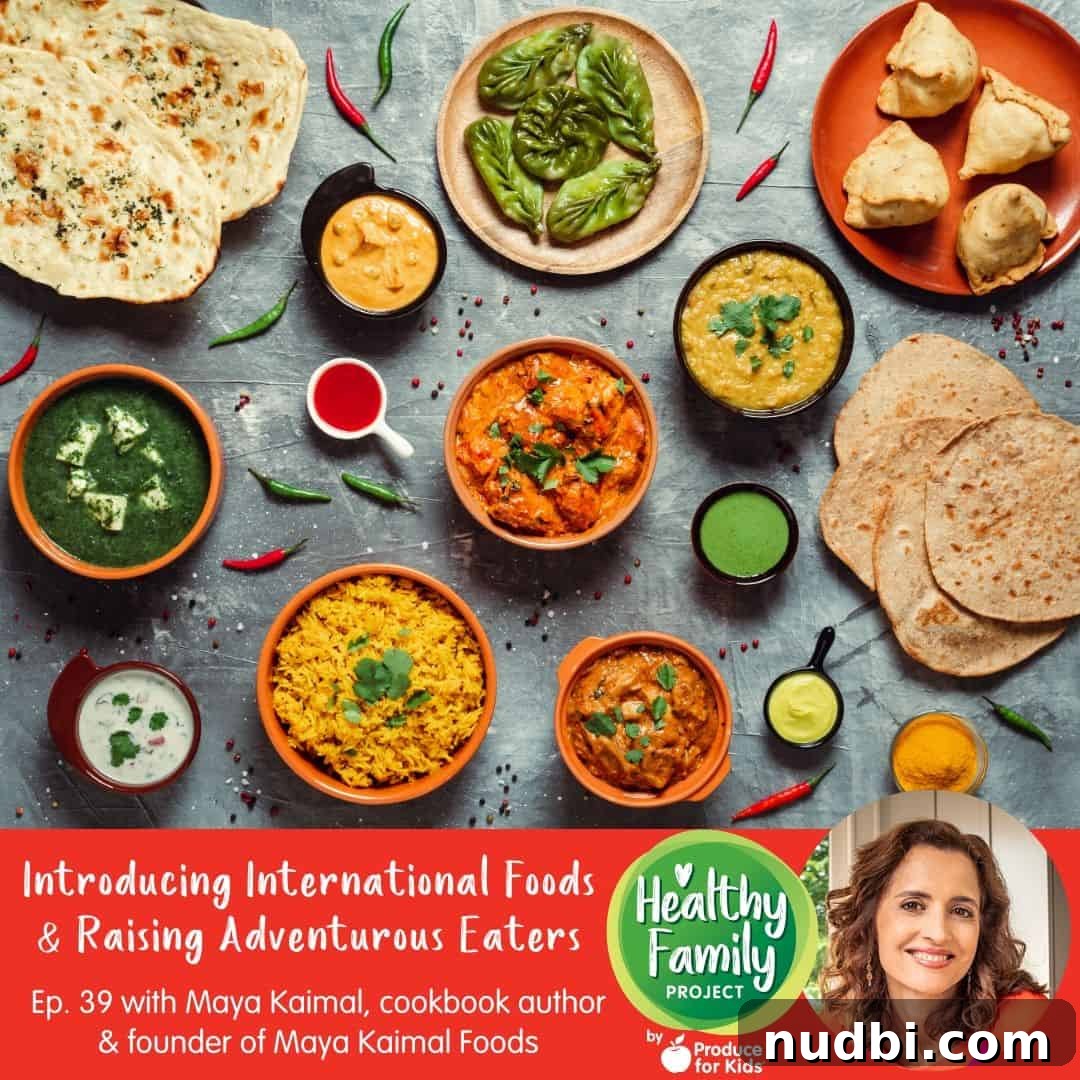
In today’s dynamic culinary landscape, families are increasingly seeking ways to broaden their palates and introduce diverse, global flavors into their homes. The “Healthy Family Project” podcast recently delved into this exciting world, featuring an insightful conversation with Maya Kaimal, the visionary founder of Maya Kaimal Foods and an award-winning cookbook author. This episode explores practical, kid-friendly strategies for incorporating international cuisines, particularly authentic Indian flavors, into daily meals. Maya Kaimal shares invaluable tips on making global cooking approachable for even the most selective eaters, transforming mealtime into a rich cultural learning experience.
Maya Kaimal’s culinary journey began in a vibrant, multicultural household in Boston. With a South Indian father and a mother from New England, she was immersed in a diverse tapestry of tastes and traditions from a young age. Regular trips to visit family in India further deepened her appreciation and understanding of her heritage cuisine, sparking a lifelong passion for authentic Indian cooking that would eventually lead her to redefine how American families experience these rich flavors.
Meet Maya Kaimal: Culinary Innovator and Entrepreneur
After graduating from Pomona College, Maya initially pursued a career in publishing in New York. Her inherent talent and deep knowledge of Indian cuisine, however, soon led her down a different path. Her debut cookbook, Curried Favors, quickly earned critical acclaim, winning the prestigious Julia Child Best First Book Award from the International Association of Culinary Professionals. This early success underscored her unique ability to articulate and share complex culinary traditions with a wider audience.
Driven by a desire to bring the authentic, homestyle Indian flavors she grew up with to more kitchens, Maya made a pivotal career shift in 2003. In partnership with her husband, journalist Guy Lawson, she launched Maya Kaimal Foods from their Brooklyn apartment. Her initial venture focused on fresh, refrigerated Indian sauces, quickly gaining traction and becoming available in specialty stores and Whole Foods Market.
Since its inception, Maya Kaimal Foods has garnered numerous industry accolades and expanded its product line to include shelf-stable sauces, versatile condiments, and convenient Everyday Dal pouches. These award-winning products are now widely available nationwide at major retailers such as Whole Foods Market, Safeway-Albertsons, Target, and Costco, making genuine Indian cuisine more accessible than ever before. Maya Kaimal Foods stands out for its commitment to traditional family recipes, transforming vibrant Indian flavors into modern, easy-to-prepare culinary experiences for busy families.
Demystifying International Cuisine: Accessible Flavors for Every Kitchen
Many families harbor a misconception that exploring international cuisines demands specialized ingredients found only in obscure international markets. Maya Kaimal passionately debunks this myth, emphasizing that the culinary landscape has dramatically shifted. What was once relegated to the “ethnic aisle” (or, as Maya prefers, the “global aisle”) of grocery stores, is now a prominent and frequently visited section, thanks in large part to a growing appetite for diverse flavors, especially among millennials. Consumers are increasingly discovering that a wealth of global ingredients and ready-to-use products can be found in their local supermarkets.
Maya highlights how major grocery chains have revolutionized their approach to global foods, integrating them throughout the store. From intriguing frozen appetizers like samosas and potstickers to an array of international sauces and spice blends, the options for culinary exploration are vast and convenient. For Indian cuisine, in particular, Maya Kaimal Foods offers a perfect entry point. Her simmer sauces significantly reduce the complexity of preparing an authentic Indian curry, which traditionally involves numerous steps and a long list of ingredients. By simply adding chicken or vegetables to her sauces, families can enjoy rich, layered flavors without extensive preparation.
Beyond ready-made sauces, Maya suggests other easily accessible Indian star ingredients. Garam Masala, a fragrant blend of spices like cinnamon, clove, cardamom, and cumin, can be sprinkled on dishes at the end of cooking to add a subtle burst of flavor, much like a squeeze of lemon. Chutneys, often sweet, tangy, and mildly spicy, make excellent condiments for roasted meats or vegetables. Even gluten-free poppadoms, thin lentil wafers that puff up when roasted or fried, are increasingly found in mainstream stores, offering a delightful crunchy addition to any plate.
It’s crucial to address another common misconception: that all Indian food is inherently spicy. Maya clarifies that while Indian cuisine is rich in flavor and spices, the level of heat varies greatly. Many dishes and sauces, such as korma, are wonderfully mild and creamy, while others, like vindaloo, deliver a significant kick. Labels often indicate the spice level, allowing families to choose according to their preference, making it easy to ease into new flavors without overwhelming delicate palates.
Kid-Friendly Global Flavors: Engaging Even the Pickiest Eaters
Introducing new flavors to children, especially selective eaters, can be a challenge. Maya Kaimal, a mother of twin girls, offers empathetic and practical advice, drawing from her own experience of raising children in a home filled with diverse culinary traditions. She notes that in many cultures, children are exposed to a wide range of flavors, including spices, from a young age, without the apprehension often seen in Western diets. Her approach emphasizes consistent, positive exposure rather than force.
For those with selective eaters who might shy away from full-fledged curries or boldly flavored sauces, Maya suggests a gradual introduction. The “dipping sauce approach” is a fantastic starting point, allowing children to control their engagement with new tastes. Blending strongly flavored sauces with yogurt can create a creamier, milder dip that is more approachable. Subtler methods include brushing full-flavored marinades onto vegetables before roasting or incorporating a small rub under the skin of roast chicken, infusing a gentle layer of exotic flavor without being overpowering.
The host of “Healthy Family Project” echoed these sentiments, sharing her personal success story with her own selective eater. She emphasized the importance of continued exposure – letting children see, smell, and even touch diverse produce items, and involving them in kitchen activities. Even if they don’t eat it immediately, this sensory engagement broadens their minds and palates over time. Mixing a couple of spoonfuls of an international sauce into familiar dishes like soups or stir-fries can also subtly introduce new profiles without demanding a complete shift from their comfort zone.
The conversation highlighted a significant shift in how children perceive diverse foods. What might have been considered “gross” or “unusual” in school lunchboxes a generation ago, like hummus, is now often seen as trendy and interesting. This cultural acceptance creates a more welcoming environment for kids to experiment with different foods, from beet hummus to Indian-style turkey breast (as Maya noted, even Boar’s Head now offers a Madras Masala flavor!). This growing openness signifies an exciting time for families to embrace global flavors, fostering adventurous eaters who are less intimidated by the unfamiliar.
Food as a Cultural Gateway: Beyond the Plate
Beyond its nutritional value and deliciousness, food serves as a powerful conduit for culture and tradition. Maya Kaimal and the “Healthy Family Project” emphasize how incorporating worldly flavors into family menus can become a profound teaching opportunity, helping children learn about different countries and cultures without ever leaving home.
Maya suggests building a routine around culinary exploration, playfully proposing “Masala Mondays” alongside the more familiar “Taco Tuesdays.” By designating specific days or meals for international themes, families can normalize the experience of diverse eating. When children embrace these new flavors, it naturally opens a door to curiosity about the culture itself. Expanding young palates is, in essence, expanding young minds, helping them understand that people across the globe eat differently and that there are myriad ways to connect with these distinct places.
The host shared her family’s experience of how food becomes a central topic during travel, whether internationally or within the US. This highlights how culinary adventures, even at home, can spark engaging conversations about geography, history, and the customs of various societies. Maya reflected on a poignant shift: whereas children from immigrant families might once have felt embarrassed by their traditional home cuisine, today there is a widespread fascination and positive association with cultural foods. There’s a growing celebration of diverse culinary heritage, valuing the uniqueness of a homemade fresh tortilla or an authentic curry.
This evolving appreciation for food also aligns with contemporary dietary trends, particularly the increasing interest in plant-based eating. Global cuisines, rich in vegetable-centric dishes and flavorful sauces, offer incredibly fulfilling options that can enhance a plant-forward diet without feeling like a sacrifice. It allows families to discover vibrant flavors that make meatless meals exciting and satisfying, further broadening their culinary horizons.
The Healthy Family Project Philosophy: Nurturing Health and Community
The “Healthy Family Project” podcast extends beyond just recipes and food, embracing a holistic view of family well-being. Amanda, the host, revealed a core question she poses to all guests: “What does being a healthy family mean to you?” Maya Kaimal’s response beautifully encapsulated this broader philosophy. For her, a healthy family isn’t solely about the food on the table, but also about the shared experience of eating together. Using mealtime as an opportunity to connect, talk, and understand what’s happening in each other’s lives is paramount. Putting screens away and focusing on one another through food fosters deeper bonds and a stronger family unit.
This sentiment resonates deeply with the podcast’s overall mission. The Healthy Family Project aims to create a supportive community for parents and caregivers, offering a safe space to discuss challenges like picky eating, tips for increasing fruit and vegetable intake, family exercise routines, and mental well-being. It’s about easing families into a fresh, healthy world through practical advice, inspiring conversations, and tangible resources.
Beyond individual family health, the Healthy Family Project, powered by Produce for Kids, is deeply committed to giving back. Since 2002, the initiative has donated nearly $7 million to charities benefiting families and children, actively working towards creating a healthier generation and assisting those facing hunger. This powerful mission underscores that healthy living extends beyond personal choices to encompass community support and social impact.
Listeners are encouraged to become part of this thriving community by joining the Healthy Family Project Facebook group, subscribing to the e-newsletter for weekly healthy recipe inspiration, and completing a listener survey to help shape future content. These resources offer continuous support and inspiration for families on their journey to a healthier, more vibrant life.
Want to skip straight to a hot topic? See time stamps below. But of course, we recommend listening all the way through!
- 3:29 Welcome, Maya!
- 4:03 How Maya started her business
- 6:44 Becoming a mom and starting a business at the same time
- 9:32 How to expose kids to new flavors
- 12:21 Easily accessible Indian cuisine ingredients
- 21:27 How to incorporate worldly foods while using it as a teaching opportunity to learn about different cultures
- 28:09 What does a healthy family mean to you?
Relevant Links
- Follow Maya Kaimal on Instagram
- Maya Kaimal Foods on Amazon
- Where to buy Maya Kaimal Products
- Maya Kaimal Recipes
- 5 Ways to Please Picky Eaters
- 5 Tips for Getting Kids Involved in the Kitchen
Other Podcast Episodes to Check Out:
- Episode 36: Dietitian-Approved Healthy Grocery Shopping Tips
- Episode 31: Balancing Career & Family
- Episode 27: Grocery Shopping on a Budget
- Episode 26: Cooking Basics & Kitchen Fundamentals
- Episode 21: Meal Planning & Cooking with Kids
Healthy Family Project Podcast
The Healthy Family Project podcast offers insightful conversations covering hot topics in health, food, and family, delivered with an engaging dose of fun. Our mission is to help families smoothly transition into a fresh and healthy lifestyle, making nutritious eating and active living accessible and enjoyable for everyone.
Tune in for new bi-weekly episodes that promise inspiration and practical tips. Don’t miss out – subscribe now on Apple Podcasts, Google Podcasts, Spotify, or your favorite podcasting platform. If you enjoy an episode, please consider leaving a rating and comment to help us reach more families and continue our mission of fostering a healthier generation.
Interested in sharing your expertise with our audience? If you have a topic idea for consideration as a guest on the Healthy Family Project podcast, please contact [email protected]. We look forward to collaborating with passionate individuals dedicated to family health and wellness.