Unlock Hidden Nutrition: The Ultimate Guide to Blending Vegetables into Family Meals
Every parent knows the age-old challenge: getting kids to eat their fruits and vegetables. In a bustling household like mine, where energetic boys participate in multiple sports, ensuring a diet rich in fruits, vegetables, whole grains, and healthy proteins isn’t just a goal—it’s a necessity. Fueling their bodies with a variety of well-balanced, nutritious foods is paramount for their energy, growth, and overall well-being.
While my children aren’t usually overly picky, they certainly have their favorites and, inevitably, a few foods they’d rather avoid. This is where creative strategies come into play. To bridge the nutritional gap and introduce a wider array of vitamins and minerals, I’ve found an ingenious solution: blending vegetables into their most loved dishes. It’s a fantastic way to ensure they get the goodness they need, often without even realizing it.
The Power of the Blend: Why Sneak Veggies Into Meals?
Blending vegetables isn’t just a trick for picky eaters; it’s a powerful culinary technique that offers numerous benefits for the entire family:
- Nutrient Boost Without the Fuss: This is the primary advantage. By incorporating finely blended vegetables, you can significantly increase the vitamin, mineral, and fiber content of meals without altering the core flavor or texture in an unappealing way.
- Texture Transformation: For children (and adults!) who are sensitive to certain textures, blending can make all the difference. A smooth puree of cauliflower in a cheese sauce, for instance, offers creaminess without the distinct florets.
- Flavor Enhancement: Believe it or not, many vegetables can actually enhance the flavor profile of dishes. Carrots add a subtle sweetness, while mushrooms contribute a rich umami depth, making meals more savory and satisfying.
- Increased Moisture: Blended vegetables, especially those with high water content, can add natural moisture to dishes like meatloaf, meatballs, or baked goods, keeping them from drying out.
- Reduced Food Waste: Have a few wilting veggies in the fridge? Don’t toss them! Blend them into a sauce, soup, or casserole and give them a new lease on life, ensuring nothing goes to waste.
- Cost-Effective Meal Extension: Adding blended vegetables can sometimes help extend the portion size of a meal, making proteins go further and stretching your grocery budget.
- Parental Peace of Mind: Knowing your children are consuming a broader spectrum of nutrients, even when they’re resistant to eating whole vegetables, offers immense relief and confidence to parents.
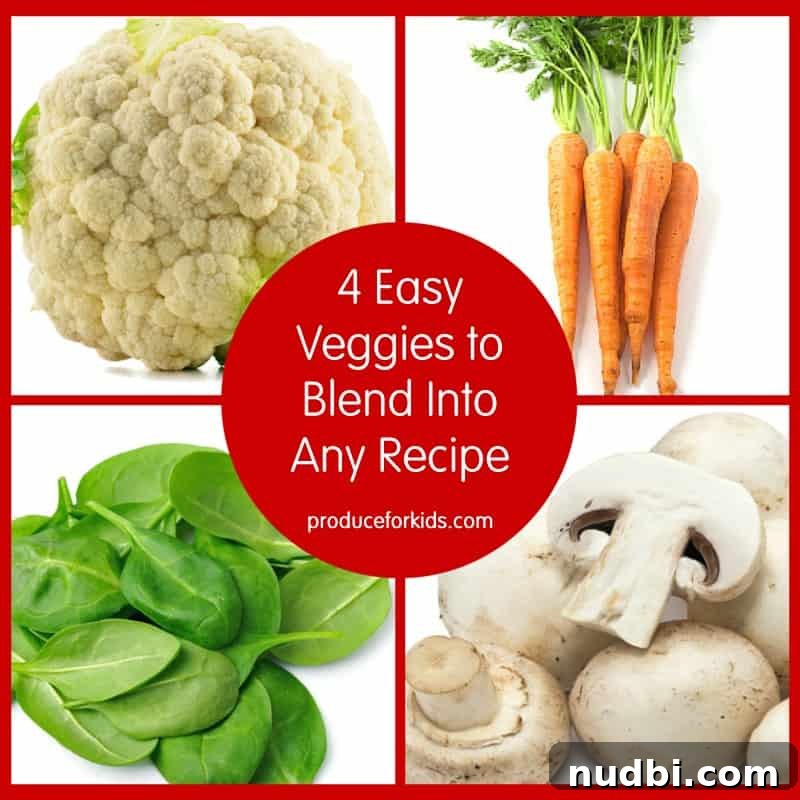
My Top 4 Go-To Veggies for Seamless Blending
Over the years, I’ve experimented with many vegetables, but these four have proven to be consistently effective, versatile, and nearly undetectable in a wide range of family-favorite recipes:
1. Mushrooms: The Umami Powerhouse
- Why they’re great: Mushrooms are an absolute blending superstar. They add a wonderful umami flavor, a rich, savory depth that can make dishes taste more complex and satisfying. Beyond flavor, they also contribute essential B vitamins, selenium, and antioxidants. Crucially, their high water content adds extra moisture to dishes, making them juicier and more tender.
- How we use them: We incorporate blended mushrooms into our ground turkey almost every week. Whether we’re preparing tacos, meatloaf, meatballs, or a hearty bolognese sauce, mushrooms are a staple. The best part? This is an incredibly easy step that my boys love to help with, fostering their involvement in the cooking process.
- Pro Tip: For an even deeper flavor, lightly sauté mushrooms before blending them. This intensifies their umami notes and removes excess moisture, ensuring they blend smoothly into your chosen dish. For a visual guide, check out this video showing how my boys help blend mushrooms into our taco meat. Beyond ground meat dishes, try them in casseroles, pasta fillings, or even as a base for veggie burgers.
2. Carrots: The Sweet & Nutritious Secret
- Why they’re great: Carrots are fantastic for blending due to their natural sweetness and vibrant color. They are packed with beta-carotene (which converts to Vitamin A), essential for vision and immune health, as well as fiber. When blended, they can subtly sweeten a dish without the need for added sugars, making them incredibly versatile.
- How we use them: Their mild flavor and smooth texture when cooked make them easy to blend into a variety of recipes. We frequently add them to our Hidden Veggie Meatballs, which are always a hit. They also work wonderfully in baked goods like our Mac N Cheese Muffins for a boost of nutrition, or savory options like our Savory Carrot & Zucchini Squares.
- Pro Tip: Steamed or boiled carrots blend to a perfectly smooth consistency. They are excellent in tomato sauces, soups, stews, and even fruit smoothies for an extra kick of sweetness and nutrients. Don’t be afraid to add a small amount to pancake batter or quick breads for a touch of natural sweetness and moisture.
3. Cauliflower: The Versatile Chameleon
- Why they’re great: Cauliflower has become my new favorite vegetable to experiment with. Its incredibly mild flavor and creamy texture when cooked and blended make it a true chameleon in the kitchen. It’s rich in Vitamin C, Vitamin K, and fiber, making it a powerful nutritional addition to almost any dish.
- How we use them: You’ve likely seen recipes where cauliflower cleverly replaces potatoes or forms the base of a healthy Alfredo sauce. Its versatility is unmatched. We love blending it into innovative dishes like our Cauliflower Breakfast Pizza, a delicious and nutritious way to start the day. It also transforms into a creamy delight in our Cauliflower and Kale Pesto Pasta, or as a healthier alternative in our Cauliflower Mashed Potatoes.
- Pro Tip: Steam or boil cauliflower florets until very tender before blending to achieve the smoothest, creamiest consistency. It’s fantastic for thickening soups, enriching cheese sauces, or creating a low-carb “rice” alternative. A small amount can even be blended into fruit smoothies without significantly altering the taste, adding creaminess and a nutritional punch.
4. Spinach: The Nutrient-Dense Green Ghost
- Why they’re great: Spinach is a powerhouse of nutrition, packed with iron, Vitamin K, Vitamin A, Vitamin C, and folate, among other vital nutrients. Its flavor is remarkably mild, especially when raw, making it incredibly easy to hide in a multitude of dishes. When blended, it virtually disappears, leaving behind only its vibrant green color and a host of health benefits.
- How we use them: While you can easily add spinach to soups, pasta dishes, and even scrambled eggs (have you tried our fun Green Eggs and Ham Breakfast Sandwich?), our family’s absolute favorite way to blend it is into smoothies. I love the incredible punch of iron and vitamins it provides, and the boys never suspect it’s there!
- Pro Tip: For smoothies, use fresh baby spinach for the mildest flavor and easiest blending. Start with a small handful and gradually increase the amount as your family gets used to the slight color change. Try our refreshing Berry Simple Smoothie, or Kristopher’s beloved Fruity Pumpkin Pie Smoothie. For a fun frozen treat, simply pour your green smoothie into molds to create Green Smoothie Pops. Beyond smoothies, spinach blends beautifully into pesto, tomato sauces, muffins, and even savory pancakes.
General Tips for Blending Success
To maximize your success with hidden veggies, consider these practical tips:
- Start Small and Gradually Increase: When introducing a new blended vegetable, begin with a small amount. As your family becomes accustomed to the subtle change (or lack thereof), you can gradually increase the quantity.
- Pre-Cook for Smoothness: Most harder vegetables like carrots, cauliflower, and squash benefit from being steamed, boiled, or roasted until very tender before blending. This ensures a silky-smooth puree without any grainy texture.
- Blend Thoroughly: A powerful blender is your best friend. Ensure there are no visible chunks or fibers left, especially for those sensitive to texture.
- Balance Flavors: While many blended veggies are neutral, some can subtly alter a dish. Counterbalance with herbs, spices, cheese, or other strong flavors your family already loves.
- Batch Prep and Freeze: Prepare large batches of vegetable purees (e.g., steamed carrot puree, roasted cauliflower puree) and freeze them in ice cube trays or small containers. These “hidden veggie bombs” can then be easily added to sauces, soups, or stews as needed.
- Don’t Be Afraid to Experiment: The kitchen is a lab! Try different combinations and see what works best for your family’s palate. Zucchini in brownies, sweet potato in mac and cheese – the possibilities are endless!
- Maintain Familiarity: Blend vegetables into dishes your family already loves. This makes the introduction of hidden veggies much easier to accept.
Beyond the Blend: Fostering a Love for Veggies
While blending is an incredible tool for boosting nutrition, it’s also important to continue offering whole fruits and vegetables in visible, appealing ways. Help your little ones develop a genuine love for fresh produce at an early age by making it fun and providing plenty of options. Involve them in grocery shopping, let them choose new vegetables to try, or even plant a small garden together. The more exposure they have to fruits and veggies in various forms, the more likely they are to accept and enjoy them.
Remember, parental patience and persistence are key. Don’t give up if a dish isn’t an instant hit. Keep experimenting with different vegetables and recipes. Start by blending them into some of your family’s favorite dishes to get the ball rolling and build confidence in your culinary stealth skills.
Happy blending and happy healthy eating!
Trish