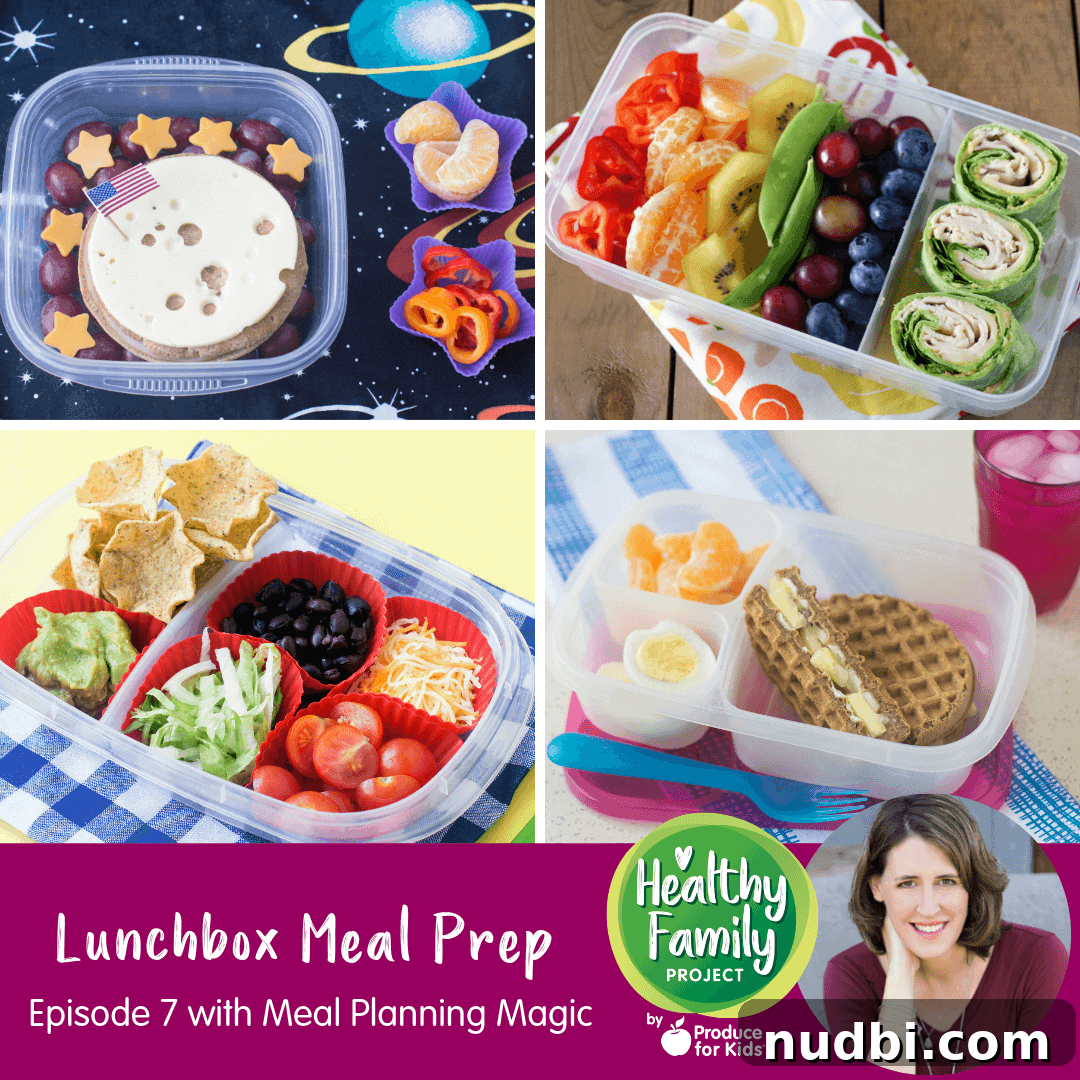
Unlock Stress-Free School Mornings with Expert Lunchbox Meal Prep
The back-to-school season often ushers in a whirlwind of activity, with busy mornings and the daily challenge of packing nutritious lunches. In Episode 7 of the Healthy Family Project podcast, we delve deep into the art of lunchbox meal prepping with renowned meal planning expert, Brenda Thompson. This episode is packed with invaluable tips to transform your frantic mornings into calm, efficient routines, ensuring your kids head to school with healthy, delicious meals every day. From make-ahead strategies to fun ways to involve your children in the process, we cover everything you need to know to master the lunchbox game.
Meet Our Expert: Brenda Thompson from Meal Planning Magic
Brenda Thompson is a dynamic force in the world of family meal management. As a dedicated mom, wife, self-taught meal planner, and freelance writer based in Houston, Texas, Brenda understands the juggling act parents face daily. Her passion for efficient, healthy eating led her to create Meal Planning Magic. Through her blog, she empowers families to embrace healthier eating habits while simultaneously saving precious time and money. Brenda’s approach is all about demystifying meal preparation, proving that eating well doesn’t have to break the bank or consume your entire evening. Her practical advice, shared with thousands, makes healthy living accessible and enjoyable for everyone.
At Healthy Family Project, our core mission revolves around providing actionable solutions for busy families. We know that the school year, with its demanding schedule and chaotic mornings, can be overwhelming. That’s why we’re committed to offering helpful lunchbox recipes, smart meal prep tips, and clever tricks designed to streamline your routine, enabling you and your family to eat better and save time. Our goal is to equip you with the tools and confidence to navigate the school year with ease and nourish your family with wholesome food.
Top 3 Game-Changing Tips for Lunchbox Meal Prep Success
Preparing healthy and appealing school lunches doesn’t have to be a daily struggle. Brenda shares her top three strategies for mastering lunchbox meal prep, ensuring your week starts smoothly and stays that way:
1. Plan Ahead: Integrate Lunches into Your Dinner Planning
The cornerstone of efficient meal prep is comprehensive planning. When you sit down to plan your family’s dinners for the week, make it a point to include lunches in the same session. This integrated approach allows you to create a cohesive grocery list, preventing last-minute supermarket dashes. Brenda emphasizes involving your family in this process. Ask your kids what they’re craving or if there’s a favorite meal they’ve missed. This not only makes them more invested in the food but also ensures a variety of appealing options throughout the week. Leveraging modern planning apps can further simplify this, allowing family members to add items to the grocery list on the go, making collaboration seamless.
2. Prep in Advance: Batch Prepare Ingredients
Dedicate a small portion of time at the beginning of the week, perhaps on a Sunday, to perform essential prep work. This can include washing, chopping, and slicing fruits and vegetables. Once prepared, store these items in smaller, individual containers, making them easily accessible for daily lunch assembly. Think about portioning out dips, preparing pasta salads, or cooking soups that hold up well and can be divided into lunch-sized portions. This upfront effort significantly reduces daily prep time, transforming chaotic mornings into calm, organized sequences. Having these components ready to grab and pack is a sanity-saver for any busy parent.
3. Pack the Night Before: Reclaim Your Mornings
This tip is a true game-changer for many families. Brenda firmly advocates for packing lunches the night before. This simple habit can drastically reduce morning stress, especially for families with early risers or those who struggle with morning routines. By tackling lunch prep while cleaning up dinner, you consolidate kitchen tasks and ensure everything is ready for the next day. This frees up crucial morning minutes, allowing more time for breakfast, getting dressed, and gathering backpacks, contributing to a more peaceful start to the day. An extra 5-10 minutes of effort in the evening translates into a much calmer, less rushed morning, providing a welcome opportunity for a few extra minutes of sleep!
Creative Make-Ahead Lunchbox Ideas and Freshness Hacks
One common concern with meal prepping is maintaining food freshness and preventing sogginess or dryness. Brenda and the Healthy Family Project team have excellent strategies to keep lunches appetizing:
- Separate Components: The key to fresh lunches is keeping moist and dry ingredients separate until lunchtime. Utilizing lunch kits with multiple compartments or a variety of small, individual containers prevents foods from getting squished, transferring moisture, or becoming unappetizingly soggy. This method allows children, especially older ones, to assemble their own lunch at school, adding an element of fun and customization.
- Paper Towel Trick for Salads: For salads, a simple yet effective trick is to place a piece of paper towel at the top of the container. This absorbs excess moisture, keeping lettuce and other greens crisp and fresh, eliminating the dreaded “soggy salad” complaint.
- Portable Assembly Line: Encourage your kids to think of their lunch as a portable assembly line. For instance, if they want a tortilla or bread for a wrap, they can keep it in a separate baggie and assemble it just before eating. This hands-on approach ensures freshness and makes lunch more enjoyable. Recipes like “lunchbox stackers” where components are separate and built at school are particularly popular.
Mastering Food Temperature: Keeping Hot Foods Hot and Cold Foods Cold
Food safety is paramount, and ensuring lunchbox contents remain at the correct temperature is a frequent concern for parents, especially when school facilities like refrigerators or microwaves are unavailable. Brenda offers invaluable advice:
- Invest in Quality Insulated Containers: Modern insulated containers and lunch bags are incredibly effective at maintaining food temperatures for several hours. These are essential for both hot and cold items.
- Boost Cold Retention: For cold foods like meat, cheese, dairy, and cut fruits/vegetables, always add an ice pack or a frozen water bottle to the lunch bag. This extra measure is crucial, particularly in warmer climates, ensuring perishable items stay safely chilled. Foods like whole fruits, crackers, breads, and juice boxes are less temperature-sensitive.
- The Thermos Pre-Heating Hack: For hot foods such as soups or pasta, a thermos is indispensable. To maximize its effectiveness, Brenda shares a fantastic tip: before adding your hot food, pour boiling water into the thermos and let it sit for a minute or two while you heat your meal. Pour out the water, then immediately add the piping hot food and seal the thermos. This simple step pre-warms the container, ensuring the food stays warm until lunchtime, significantly improving the meal experience for your child.
To help you find the best products, the Healthy Family Project frequently rounds up top-rated lunchbox accessories, including high-performance thermoses and bento boxes. We’ll link to these resources in our show notes. A clever shopping tip from Brenda: if you need to replace items outside of the back-to-school season, check the camping section of stores – they often stock excellent insulated containers suitable for lunchboxes!
Navigating Nut-Free Zones: Healthy & Delicious Alternatives
Many schools implement nut-free policies to protect students with severe allergies, which can pose a challenge for parents accustomed to traditional peanut butter and jelly sandwiches. Brenda offers practical solutions for delicious and safe nut-free lunches:
- Educate and Communicate: Brenda highlights that schools often do an excellent job of educating students, parents, and teachers about nut allergies and discouraging food sharing. Understanding these policies helps everyone adhere to the rules effectively.
- Fresh Fruits and Vegetables: These are inherently nut-free and offer a wide range of nutritious, colorful options. They are always a safe and healthy bet.
- Creative Wraps and Sandwiches: Explore alternatives like wraps with lunch meats, hummus, cream cheese, or various spreads combined with fresh vegetables.
- Leftovers and Soups: Last night’s dinner can easily become today’s lunch! Soups, stews, pasta dishes, or other leftovers pack well and can be kept warm using the thermos hack.
It’s easier than you might think to create diverse and appealing nut-free lunches once you start thinking outside the traditional peanut butter box. The Healthy Family Project blog also features extensive resources on nut-free alternatives for kids, which we will ensure are linked in the show notes.
Empowering Kids: Involving Them in the Lunch Packing Process
Getting kids involved in packing their own lunches offers numerous benefits, from fostering independence to reducing parental stress. Brenda, whose children started helping at a young age and now pack their own high school lunches, shares insights on making this a positive experience:
- Just Get Started: The biggest tip is simply to begin. Don’t worry about a little extra mess initially; the long-term benefits of self-sufficient kids far outweigh any minor inconveniences.
- Age-Appropriate Tasks:
- Younger Kids: Can help spread ingredients on bread, wash fruits and vegetables, and cut softer fruits like melons with kid-safe knives (with supervision). Teaching knife safety from an early age is crucial.
- Older Kids: Can get creative with combining ingredients for salads, finding new recipes they want to try, and taking full ownership of the packing process.
- Choice and Ownership: Allowing kids to choose their lunch containers or lunchboxes, and select items from pre-prepped options, increases their excitement and willingness to participate. This sense of ownership encourages them to eat what they’ve packed and reduces food waste.
- The Snack Assembly Line: A fantastic idea for weekend prep is to set up a “snack assembly line.” Kids can create their own trail mix bags or portion out other approved snacks for the week. This not only empowers them with choice but also takes care of a significant portion of daily snack prep. It’s a win-win for portion control and creativity!
Involving children in lunch preparation teaches valuable life skills, promotes healthy eating habits, and alleviates a considerable amount of pressure from parents. It’s a collaborative effort that builds confidence and responsibility.
Listener Survey: Help Us Grow!
Your support for the Healthy Family Project Podcast means the world to us! Please take just 5 minutes to complete our listener survey. Your feedback is vital in helping us curate the best possible content for future episodes. Take the survey here.
Stay Connected: Healthy Recipes & Tips in Your Inbox
Don’t miss out on fresh inspiration! Sign up for the Healthy Family Project e-newsletter. Each week, you’ll receive a dose of healthy recipe ideas, our latest blog posts, and exclusive tips delivered directly to your inbox. Join our community and make healthy living easier!
Join Our Community: Healthy Family Project Facebook Group
Connect with like-minded parents and caregivers! Join our vibrant Healthy Family Project Facebook group. This inclusive space is designed for open discussions on all aspects of raising a healthy family. Whether you’re navigating picky eaters, seeking tips to boost fruit and veggie intake, looking for family exercise ideas, or discussing mental health, you’ll find support and inspiration here. We warmly welcome you to join the conversation!
Listen to Episode 7: Lunchbox Meal Prep
Ready to revolutionize your lunch packing routine? Tune into the full discussion with Brenda Thompson. She shares even more insights and practical advice that you won’t want to miss!
Want to skip straight to a hot topic? See time stamps below. But of course, we recommend listening all the way through for the complete experience!
- 1:15 – Power Your Lunchbox Initiative
- 5:35 – Top tips for effective meal prepping for lunchboxes
- 9:20 – Practical make-ahead lunchbox ideas
- 11:57 – Essential tips for keeping food at the right temperature
- 15:40 – Navigating nut-free zones in schools
- 18:06 – Engaging kids in the lunch packing process
Relevant Links and Resources for Healthy Lunchboxes:
To further support your journey to stress-free, healthy lunch packing, explore these valuable resources from the Healthy Family Project:
- The Ultimate Guide to Packing Healthy Lunchboxes
- 5 Essential Food Safety Tips for Packing Lunchboxes
- 20 Parent-Approved Lunchbox Tips to Help You Power Your Lunchbox
- Build Your Own Healthy Lunchbox: A Fun & Engaging Approach
- Creative and Healthy Lunchbox Ideas for Every Kid
- Delicious Nut-Free Alternatives for Kids’ Lunches
About the Healthy Family Project Podcast
The Healthy Family Project Podcast is your go-to source for insightful and engaging conversations on critical topics in health, food, and family life. With a healthy dose of fun, we aim to inspire and guide families towards a fresh and healthy lifestyle, making the journey enjoyable and achievable. Our bi-weekly episodes cover everything from meal planning and nutrition to physical activity and mental well-being for the entire family.
Be on the lookout for new bi-weekly episodes and don’t forget to subscribe on Apple Podcasts, Google Podcasts, Spotify, or your favorite podcasting platform. If you enjoy an episode, please consider leaving a rating and a comment – your feedback helps us reach more families!
Interested in sharing your expertise with our audience? If you would like to be a guest on the Healthy Family Project podcast, please contact [email protected] with your topic idea for consideration.
Make Sure to Pin It for Later!
Full Transcript for Episode 7: Lunchbox Meal Prep
This transcript was produced by Otter.Ai and has been edited for clarity and conciseness. Please forgive any remaining misspellings or grammatical errors.
00:13
Welcome to the Healthy Family Project by Produce for Kids, covering hot topics in the world of health, food, and family with a dose of fun. Before we get started today, I need to just pause here at the beginning of our seventh episode to say thank you to our community of listeners. We have listeners in more than 10 countries, which is incredible! We’ve had the chance to talk to some pretty awesome people in the last six episodes, and I truly can’t wait to see what the rest of the year holds for the Healthy Family Project. If you can, please leave us a review, drop a few stars, or even tell a friend about the Healthy Family Project; we’d greatly appreciate it. Together, we can create a healthier generation and be the change we need in the world. It’s definitely back-to-school time. My girls start next Monday, and in celebration of back-to-school, we at Produce for Kids are kicking off our fifth annual Power Your Lunchbox Promise. You and your family can head over to poweryourlunchbox.com and make the promise to eat healthier this year as a family. In turn, our partners will donate $1 to Feeding America programs that benefit families and children. We have a huge bank of lunchbox inspiration, lots of ideas, recipes, snacks, and breakfast ideas on the site, as well as tips on everything back-to-school related. So get over there; it is your one-stop resource to get you back on track for back-to-school. We also have a teacher section on the site, so be sure to spread the word to your favorite teachers and let them know that they can download free classroom decor materials, lesson plans, and lots more goodies. They’ll also be entered to win some pretty cool prizes. We must make sure we’re extending that healthy eating message to the classroom, so please help us spread the word there. Today, we are chatting again with Brenda Thompson from mealplanningmagic.com, all about meal prepping for lunchboxes. She’s going to help us better understand how we as parents can meal prep our way to easy lunchboxes every week and just feel successful, getting rid of some of that stress and anxiety that comes with morning routines and getting everyone out the door. We chatted with Brenda back in Episode One, and she gave us tons of great tips for families looking to start meal planning and prepping. If you haven’t listened to that episode yet, I’d definitely suggest going back and giving Episode One a listen. But today, we are talking about meal planning and meal prepping for lunchboxes. So let’s get right into it with Brenda. Hi, Brenda, welcome back to the Healthy Family Project.
02:58
Hi, Amanda. It’s great to be back here with you.
03:01
Wonderful. Well, we’re really excited to chat with you today about meal prepping and school lunches. But before we jump in, can you give everyone a quick overview of who you are and your website, Meal Planning Magic, and really the inspiration behind it? I know we talked in Episode One about meal planning for beginners, but just in case we have listeners today that may not have listened to that episode, can you give them a quick overview about you?
03:31
Yep, sure, no problem. So I started meal planning on my own, self-teaching, over a decade ago, actually, when my kids were little. They’ll both be starting high school this year, so I’ve come a long way. I just started learning different ways to get more organized because at the time, life seemed chaotic, and I knew that getting my meals in order was going to be helpful. As I learned different things, I started teaching workshops locally, and at the request of my friends, just kind of sharing my ideas. At the time, blogging was just starting to become a thing, and I have a journalism background, so it seemed like a natural fit to just start to share those ideas and some of my family’s favorite recipes online. And here we are.
04:16
That’s wonderful. Well, congratulations! It’s so wonderful to start something as a resource, or to kind of keep you organized, and watch it grow authentically into what it has become over the years as a resource for all of us out here.
04:32
Yeah, I had no idea when I started what it would have become, but I’m very thankful for where I am today. So…
04:38
Well, great. So we definitely learned a lot from you in Episode One, which was meal planning for beginners. But now that it’s back-to-school craziness—my kids are heading back next Monday, the summer blew by!—we know that meal planning is important, but what about meal planning for lunchboxes? I think sometimes that’s maybe overlooked, and we find ourselves in the kitchen, trying to get the kids out the door, dealing with someone who doesn’t want to brush their hair and someone who lost their homework. So I think that meal planning for lunchboxes is equally important as planning out your dinner meals. So let’s kick off with an easy question, I’m sure an easy question for you. What are your top three tips when it comes to meal prepping for lunchboxes?
05:32
Yep, well, of course, the first one would be to plan it out, like you kind of mentioned. So when you’re planning your dinners, you want to include lunches at the same time, so that you can add those items to your grocery list. I like to include my family as well, asking them what they’re in the mood for this week, or maybe something that they’ve been wanting that they’ve been missing for a while. So I add all those items to the list. Occasionally, they want to try a new recipe, or I want to, so we add that to the list. We’ve just started using a new planning app that makes it a lot easier to add items on the go, so my kids can actually add grocery list items to the list, which makes it super easy. Then my second tip would be to do a little bit of the prep work at the beginning of the week. That might include washing, chopping, and slicing fruits and vegetables, and then storing them in smaller containers so that they’re easier to add to the lunchboxes each day when you’re getting everything prepped. Things like portioning out dips into smaller containers, or even making pasta salads or other things that hold up well, like soups that can be portioned out throughout the week, help smooth along the process for meal planning for lunches. And then lastly, I would say to pack your lunch the night before. This is really key for us. My kids are not really morning people. All we can do is get the basics down, like breakfast and getting dressed and packing up backpacks and that kind of thing. So we pack our lunches the night before when we’re cleaning up from dinner so that the kitchen gets cleaned up all at one time. We’re ready for the rest of the evening to finish up homework and wind down. So just taking those extra five or 10 minutes at the end of the evening to prep lunch the night before is such a sanity saver in our house.
07:25
So I can imagine! Well, those are really great tips. I’m just really surprised that teenagers aren’t morning people, to tell you the truth, you know. Or adults, I feel like that never ends! So well, those are awesome tips. I feel like, too, like you said, when you wash and chop and slice those fruits and veggies, it’s easier for me to get my younger daughter to help put things into the lunchbox because they’re kind of already portioned out. So I just say, “Okay, go pack your lunch,” and there’s not too much involved. She can grab her ranch dip, she can grab her carrots, or whatever it might be. So that is definitely really helpful. And to do it the night before, always, always a plus. So…
08:33
Yep. And we like our sleep. So, you know, if you take an extra 10 minutes at night, then you get to sleep an extra 10 minutes in the morning.
08:40
Yes, that’s for sure. Okay, so let’s talk about—we’re talking about the night before—but what about prepping at the start of the week? So what meals or lunchbox inspiration have you found that are best for prepping at the start of the week? In my house, there’s always a concern that food will get soggy or dried out. My older daughter is the queen of, “I didn’t eat it because it was soggy,” and the younger one says, “It was old,” which really means dried out. So I’m not really sending old food. So what are your tips on keeping those meals fresh?
09:17
Well, we do, like you mentioned earlier, we do keep most of the items separated in the refrigerator until the night before, and we use the lunch kits that have little separate containers. So that helps out. Sometimes it’s just a mixture of what we might have on hand as far as containers, so things aren’t sitting together, getting squished together, whatever moisture transferring. So just that separation really helps. For one thing, and then my high schooler—well, I guess they’re both high school now—my daughter, she packs her own lunches now because she’ll do like what she said, just grab little bits of everything and then put it all together so that all she has to do is grab a few containers and plop it right into her lunch bag. And she’s good to go. So…
10:07
Right, that’s a good tip, keeping those items kind of separate from each other. I know we do my older daughter, she likes to take salads, but sometimes the moisture, you know, the lettuce or whatever it might be, is soggy if you do it the night before. So I have found if I put just a piece of paper towel at the top of the container, it’s amazing. I mean, it keeps it 100% tight. Like there’s no soggy lettuce.
10:38
For sure. And like, even if my daughter wants to bring like a tortilla or bread or something to separate it, she might put it all in the same container, but maybe she puts it in a baggie so that it’s there. And then she just assembles it pretty much when she’s at school. So, yes, yeah, I just kind of think of it like an assembly line, except for it’s a portable assembly line.
10:59
I was going to say that we have, there’s a recipe, a recipe in our lunchbox recipes on produceforkids.com, and we have it’s like a lunchbox stackers. So everything’s unassembled, and kind of just in those containers, and then once they get to school, they can kind of build their own. Which kit. Yeah, and I feel like they like—the kids just—they like to build their own stuff anyway. So. Yeah, agree. All right. Well, another age-old question. We get this all the time on Produce for Kids social media outlets: parents are really concerned with how do you keep hot foods hot and cold foods cold? So what tips or tricks do you have for keeping food at the right temperature? I know there’s, there’s oftentimes, you know, safety concerns too, as far as how long things can sit out and everything along that line.
11:53
Yeah, that’s for sure; safety is a big concern. I get those questions a lot too. A lot of kids, you know, don’t have access to a refrigerator or microwave at school, so it is super important to keep things at the right temperature so that we don’t get sick. But the technology has come a long way as far as insulated containers, so things will stay hot for several hours or cold for even more hours, it seems like. So that’s a big help, by using an insulated container or insulated lunch bag. Also, for extra measure, I go ahead and add an ice pack or frozen water bottle to help keep things extra cold, especially in our hot Texas heat here. Foods like meat, cheese, dairy, cut fruits, and veggies, those need to stay cold, but you don’t really have to worry about things like whole fruits or crackers, breads, juice boxes, that kind of thing. For hot foods, you’ll definitely want to use some sort of thermos or insulated container to keep food warm. One of the best tips that I actually have gotten, and I’ve utilized myself, is to prep the thermos before adding the hot food by pouring boiling water into the thermos. I usually let it sit there for a minute or two while I’m actually heating up the other item. Then I pour it out and add the heated food and seal it up. My kids say it really does help keep the food warm until lunchtime. So it’s a big, big help for sure.
13:23
That’s a great tip on the hot because I have a wonderful thermos, and my older daughter, she loves to take soups with her, but she still says by the time she has lunch, you know, at 12, 12:30, that it may not be the temperature that she would like, that it’s, it’s not cold, but it’s, you know, not the hot soup that she’s looking for. So I’m going to have to try that, that’s a really great tip.
13:46
It really works. I did not start doing that until probably a couple years ago when I got the tip myself, and it really, really helps.
13:55
Awesome. Well, and I have to mention, we, we just posted out, we did a round up of lunchbox accessories that, you know, some of these thermoses and bento boxes that can help ease parents’ minds on, you know, keeping, making sure things are at the right temperature. So in the show notes, I will definitely link up to, to some of those in case any of you listeners out there are wondering, you know, where to go because I know that sometimes just a challenge to figure out what, what products will do the trick.
14:29
Yes, but I will say if you know, throughout the year, of course, you can always shop online, but I’m just buying throughout the year. The camping section has. Yep, that’s what I’ve discovered. So if you need to replace something throughout the year, check the camping section.
14:46
Yes, that, that’s a really great tip because I’m telling you, it’s like when those back-to-school months go over, the stores and everybody’s like, “All right, we’re done. You got all your stuff. Got to wait till next year before we start promoting it again.” So, good tips. So check out the camping section if you, if you pass up that back-to-school craziness. So, well, awesome. So let’s shift gears just a bit. I know there are a lot of schools who have gone nut-free and don’t allow students to bring nuts or nut butter in their lunches. Do you have any advice on how parents can, you know, adhere to these policies and have those substitutions?
15:32
Well, I will say that in our elementary school, they, the whole school really worked to educate students, parents, and teachers to be aware of nut allergies. They discouraged students from sharing foods. So I think that really helps everyone in the loop understand why there are restrictions and how to kind of just help everyone follow those rules. But that said, there are a lot of great substitutes to avoid nuts. Of course, fresh fruits and vegetables are always a safe bet. They’re nut-free, I guess. But yeah, but we also like to make wraps with lunch meats or with a spread and adding some vegetables, or soups, like we’ve mentioned before. Other leftovers are really easy to take in a lunchbox as well. So if you just stop and kind of think about it, it’s pretty easy to come up with a lot of alternatives that don’t include nuts or nut butters.
16:26
It is. I think we’re just—and I know, I was raised in a PB&J world. So I think just mentally it’s hard to—and in our family, we’re fortunate, we don’t have nut allergies. But, you know, several of our close friends do, our Vice President here at Produce for Kids, Trisha, she has nut allergies. And so, you know, it’s just, it’s out there, and we just have to be cognizant of it. So all good stuff. And I believe I just, I feel like we just had something on our blog. And I will include in the show notes, as I always say, I will pull all the links. So that if you are looking for substitutes for nuts, you know, for the peanut butter and things like that, then we’ll include a link up so you can kind of take a look at those. All right, so let’s see, both of my girls are at the age where they want to be involved in packing their lunchbox. They’re really just at the age where they want to have a say in everything, really. But so sometimes it can lead to a bit of a mess. I know I mentioned that we portioned things out, which for my younger daughter will make it a little easier. But do you have tips for parents looking to get their kids involved in the packing process? So, you know, maybe that’s the meal prepping on a Sunday helping to portion things out? What steps can they take? And what are your thoughts? I know you have two older ones, but what are your thoughts on different tasks that kids can do at different ages?
17:58
My biggest tip, just like any kind of meal planning or packing, is to just get started and do it. So, like I mentioned earlier, we make our lunches as we’re cleaning up from dinner. So a little bit of extra mess is not going to make that big of a difference. But even if you’re prepping, you know, at the beginning of the week, you can make a mess. And excuse me, I need to start over, I guess. No, no, because of my voice. Okay, fine. So my biggest tip is just to get started, just like with meal planning. Including your kids in packing their lunches, just get it started and see where it goes. You’ll be happier in the end. So, like I mentioned earlier, we make our lunches as we’re cleaning up from dinner. So a little bit of extra mess is not going to make that big of a difference. But even if you’re prepping the ingredients at the beginning of the week, just getting everything out and getting it all chopped up or washed up is one time. And so the way I like to look at it is that I’m doing it on that one day, and I’m not doing it the rest of the week. So it’s one, you know, several less pure messes, I guess I should say. And so, yeah, even though my kids are in high school now, they started when they were very young helping to make their lunches, and so now they can do it all on their own. They pretty much ask me to buy the groceries, so it definitely pays off. Younger kids, there’s a lot of things that they can do. They can help spread ingredients on bread or tortillas to assemble ingredients or assemble sandwiches or wraps. They can also help wash the fruits and vegetables and cut up easier fruits like melons or softer fruits for the really younger children. You know, I always took the time to teach my kids about knife safety. So as they’ve grown, they’ve gotten, you know, kind of upgraded on what they can do. So it does take time, but it really, like I said, has paid off in the end. And then older kids, they like to get creative with adding different things to, say, salads, or even finding recipes on their own that they want to try. The other thing is that when they get to choose their containers or lunchboxes, it makes them a little bit more excited about packing their lunch. So they might want to be more involved in the process. So there’s a lot of ways to include kids in packing lunches.
20:25
That’s great, because I think a lot of times, we were, we were just having the conversation over here at our, in our office about, you know, kids have anxiety about back-to-school, but so do parents. And I think that, you know, while many of us working parents, we don’t have the summer off, but at the same time, we kind of have off from, you know, maybe packing lunches a week here or there. You know, there’s camps, but still. So I think that there’s a lot of pressure on parents when they’re packing lunches to make sure, you know, they’re getting the right foods in there. So having the kids help out, I think takes the pressure off. And it also gives, you know, gives them that responsibility and ownership to, to put that together. We did, at the end of last year, I started doing, because the girls, they have their lunch, but then they have a snack because one has a later lunch, one has an earlier lunch. So they did a trail mix, I did a little assembly line of on a Sunday, and I said, “All right, make up your trail mix, five, five bags of trail mix for the week,” so then your lunches or your snacks are taken care of. And they were really excited, they wanted to do it the next week, they wanted to know where the setup was because they could, you know, make their own combo and and have that, and that took care of our snacks for the whole week. It’s magical.
21:44
Yeah, it allows them to be a little creative too. And it also helps with portion control. So they can kind of decide, “Oh, I want a little bit more of this, but I don’t want so much of that.” But if you provide the, you know, the ingredients that are approved by you, and then they can choose from that, then it’s really kind of a win-win for everybody.
22:03
It really is, it was. I was surprised. I thought this is going to be a hurdle having them, you know, get involved in this. And I was pleasantly surprised that both of them, even my middle schooler, was like, “Yes, I’m all about this, making my own choices.” So, yes. Well, great. This has been a great conversation today. All great advice. Thank you for coming back on to the Healthy Family Project and sharing all of your meal planning wisdom, especially as it relates to lunchboxes, because we’re in that zone. And I know that you’ll have a lot more to share in the world of meal planning in upcoming episodes. So we look, we look forward to that. So you’ll be back, you’re in this. So before we jump off, can you tell our listeners where they can find you and connect with you?
22:55
Of course, you can find me on my website at mealplanningmagic.com or on pretty much all social media: Facebook, Twitter, Instagram, and Pinterest.
23:05
Thank you so much, Brenda, and good luck with all your, your back-to-school fun.
23:11
Thanks, same to you.
23:17
Thanks for listening in today. I have a lot of links to share, and all of those will be in the show notes. I have everything from links to the ultimate lunchbox packing guide to simple safety tips for the lunchbox, and also those nut-free alternatives that we mentioned. We also have several video links that will take you to easy make-ahead lunchbox ideas to help get you started. Please be sure to head over to poweryourlunchbox.com to make the promise and check out everything we have going on over there for back-to-school. Power Your Lunchbox is part of what we do here at Produce for Kids and is a really important initiative for us as we help families start the year on the right foot. As an added incentive to check out Power Your Lunchbox, Ninja has so kindly given us a Ninja blender system that we’ll be able to give away to one lucky family who makes the promise. So head over there to be entered for that. As usual, you can check out new content on our social media outlets: Facebook, Twitter, Pinterest, and Instagram, as well as YouTube. And like I mentioned at the beginning of the show, we are so, so grateful for you all, and we are all in this together, so let’s create a healthier generation together. Questions and comments and episode ideas can be posted on healthyfamilyprojectpodcast.com. Be sure to subscribe. Talk soon!