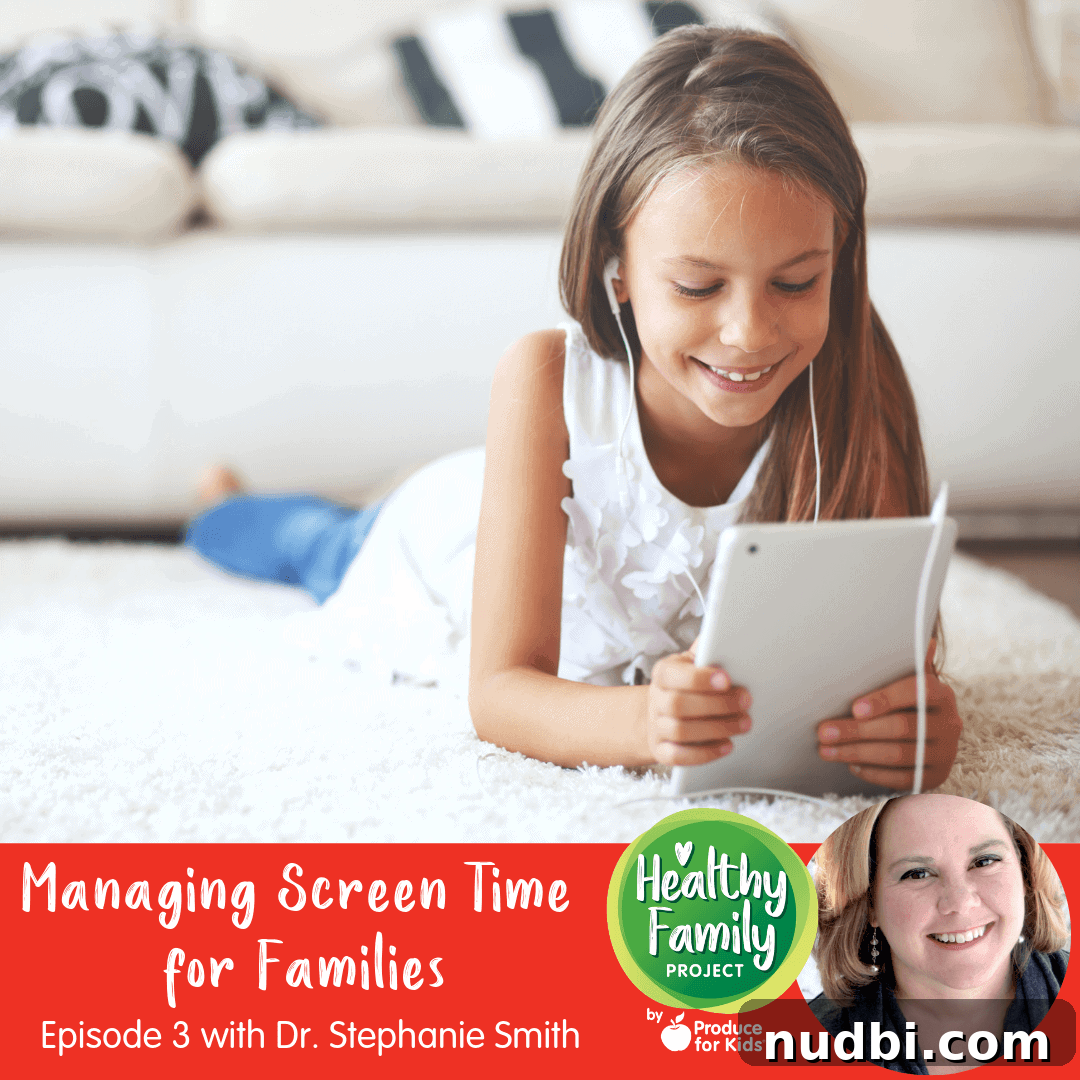
Mastering Screen Time: Expert Strategies for Healthy Family Habits
In today’s hyper-connected world, managing screen time for children and families has become a top parenting challenge. From educational apps to entertainment, digital devices are an undeniable part of daily life. Yet, finding a healthy balance is crucial for well-being. In this comprehensive guide, we delve into effective strategies for setting screen time limits, maintaining consistent guidelines, and ensuring parents lead by example. We draw insights from Dr. Stephanie Smith, a renowned clinical psychologist and expert in family mental health, offering practical advice to navigate the digital landscape with confidence.
Dr. Stephanie Smith is a highly respected clinical psychologist, a devoted mother, and the insightful author behind Dr. Stephanie. Residing in a vibrant suburb of Denver, Colorado, Dr. Smith dedicates her professional life to supporting families. In her thriving practice, she expertly guides mothers, fathers, teens, and tweens through various challenges, helping them build stronger, healthier lives.
Known for her unique blend of humor, profound compassion, and unwavering common sense, Dr. Smith empowers individuals to initiate positive and lasting changes. She has a particular passion for working with parents, assisting them in cultivating robust family dynamics from the inside out. Her expertise extends to the intersection of technology, parenting, friendship, and pop culture, all viewed through a mental health lens, which she explores in depth on her popular blog, Dr. Stephanie. Additionally, her insights are regularly featured on the American Psychological Association’s official blog, Your Mind, Your Body, further cementing her status as a leading voice in mental health. Dr. Smith firmly believes that fostering healthy eating environments, making nutritious food choices, and finding joy in every stage of food preparation and consumption are vital components of a thriving family life.
The Digital Dilemma: Setting Effective Screen Time Limits for Kids
The ubiquity of screens means that children are interacting with electronic devices from an increasingly young age. Whether it’s an iPad, tablet, computer, or gaming console, these interactions shape their daily experiences. The critical question for parents is: how much is too much? And how do we establish clear, healthy boundaries?
Understanding Expert Recommendations: AAP Guidelines
The American Academy of Pediatrics (AAP) provides the gold standard for screen time recommendations, which are regularly updated based on the latest research on how digital media impacts mental and physical health. Their guidelines offer a valuable starting point for families:
- **Children Under 2 Years:** The AAP strongly recommends absolutely no screen time for this age group, excluding video-chatting with family. This is a critical period for brain development, requiring hands-on exploration and direct human interaction.
- **Children Ages 2 to 5 Years:** Screen time should be limited to one hour per day or less. Quality content is key, and co-viewing with a parent is encouraged to facilitate learning and interaction.
- **Children Ages 6 and Older:** The AAP suggests consistent limits, ideally two hours or less per day of recreational screen time. It’s important to distinguish between recreational use and screen time for schoolwork or educational purposes, which does not count towards this limit.
Dr. Smith emphasizes that while these recommendations are backed by robust research, each family must adapt them to their unique circumstances and priorities. The first crucial step is an open and honest conversation among all caregivers—parents, grandparents, or guardians—involved in the children’s daily lives. This “family meeting” should focus on what parents envision for their family’s lifestyle and how screens fit into that picture.
Developing Family-Specific Screen Time Strategies
Beyond the general guidelines, tailoring a screen time plan to your family’s specific needs is essential. Consider the ages and developmental stages of your children, their individual interests, and your family’s values. Some families might choose to be stricter, especially if academic screen time is already substantial, opting for minimal or no recreational screen time at home. Others might incorporate devices as part of a reward system or for specific educational apps.
A practical approach is to designate specific locations for devices. As one parent shared, devices are “checked out” like library books, teaching children that access is not constant and requires intention. This method helps kids understand that while devices may be “theirs,” their usage is still governed by family rules regarding time and place.
Strategies for Consistency: Keeping Screen Time Guidelines in Place
Establishing screen time rules is one thing; consistently enforcing them is another. The temptation to use screens for quiet occupation, especially during challenging moments like waiting in a restaurant, is strong. How do parents stay on track amidst these daily pressures?
The Power of Proactive Planning and Parental Monitoring
Dr. Smith highlights that the “million-dollar question” for parents is how to accurately monitor and consistently manage screen time. The natural tendency is for screen use to gradually escalate and “take over” if not actively managed. She advises parents to give themselves and their children grace, acknowledging that perfection is unattainable. The goal is mindfulness and intentionality, not flawless adherence every single day.
One highly effective strategy, particularly for older children, is the use of parental monitoring apps. These tools allow parents to manually set schedules for screen access, establishing specific “on” and “off” times. Many apps also offer a total daily time limit, automatically shutting down devices once the limit is reached. This removes the constant negotiation and conflict, transforming potential battles into clear, automated boundaries. By leveraging such technology, families can minimize drama and foster a more harmonious environment around device usage.
The “Grace Principle” in Practice
Life happens, and some days will inevitably deviate from the plan. A sick child might watch more movies; a long travel day might warrant extended tablet use. Dr. Smith emphasizes that these exceptions are okay. The key is to return to the established routine as quickly as possible and not let occasional deviations derail the overall strategy. Flexibility within a structured framework prevents burnout for parents and fosters resilience in children.
Fostering Balance: Teaching Kids Media Literacy and Real-World Engagement
In a world saturated with screens, it’s vital to teach children how to navigate their digital environment responsibly and respect the balance between online experiences and their physical surroundings. This involves more than just setting limits; it’s about developing media literacy and critical thinking skills.
Engaging in Open Conversation
The most powerful tool parents possess is open, developmentally appropriate conversation. Instead of lecturing, engage children in dialogue about their online experiences. Ask questions like: “What do you think are the differences between a TV show and an advertisement?” or “How do you feel when you see an ad for a certain product? Does it make you want it?”
This approach helps children:
- **Distinguish Content from Advertising:** In today’s blended media landscape, it’s increasingly difficult for anyone, let alone children, to differentiate between genuine content and sponsored material. Teaching kids to identify ads, vlogs, and sponsored posts empowers them to be more discerning consumers of digital media.
- **Understand Online Safety and Ramifications:** As children grow, conversations can evolve to include responsible online behavior, the permanence of digital footprints, and discerning truth from fiction on the internet.
- **Develop Critical Thinking:** By discussing what they see and hear online, children learn to question, analyze, and form their own informed opinions, rather than passively accepting information.
These dialogues create a two-way street for information, where children can also teach parents about new trends and platforms, fostering mutual learning and understanding.
Encouraging Offline Engagement
Actively promoting and providing opportunities for offline activities is crucial. This ensures that reduced screen time is replaced with enriching experiences that support holistic development. Encourage:
- **Physical Activity:** Outdoor play, sports, hiking, biking, swimming, or simply walks in nature.
- **Creative Play:** Art projects, building with blocks, imaginative games, musical instruments.
- **Reading and Storytelling:** trips to the library, shared reading time, creating their own stories.
- **Face-to-Face Social Interaction:** Playdates, family meals, board games, community events.
By creating a rich environment of alternative activities, children are less likely to feel deprived when screen time is limited and more likely to discover new passions.
Resetting Habits: Getting Back on Track with Screen Time Management
What if your family has already fallen into screen time habits that are less than ideal? It’s a common scenario, and Dr. Smith offers hope and a clear path to regaining control. Just as it’s challenging to take away a favorite snack after prolonged consumption, changing ingrained screen habits requires a thoughtful, strategic approach.
Achieving Family Alignment: A United Front
The very first step, according to Dr. Smith, is ensuring that all adults involved in parenting are on the same page. This might require several weeks or even a couple of months of discussion to iron out specific rules, agree on the use of monitoring apps, and define what is and isn’t permitted. A united front from caregivers prevents confusion and limits opportunities for children to play one parent against another. Consistency from all authority figures is paramount for success.
The Power of Gradual Transition and Ample Warning
Once adults are aligned, the next step is to communicate the changes to the children. This should always be done at an age-appropriate level, providing plenty of notice. Instead of abruptly shutting off devices one morning, announce the impending changes well in advance. For example, “Hey, we’ve been working on a new family plan for the last few weeks, and starting next Monday, we’ll be making some changes to screen time. We’re doing this because we want to ensure everyone has more time for other fun activities, and this is how it will work…”
This approach mirrors the advice often given to parents of toddlers: “We’re leaving the playground in 10 minutes, then 5 minutes.” Giving children a heads-up helps them process the change, manage their expectations, and feel respected, reducing the likelihood of tantrums and resistance.
Anticipating and Navigating Challenges
Expect some acting out and resistance as children adjust to the new situation. This is a normal part of habit change. Dr. Smith advises parents to anticipate these bumps in the road and not view them as a sign of failure. Stay firm, empathetic, and consistent. Over time, the new guidelines will become the “new norm.” The process requires grace for both parents and children, acknowledging that no one is perfect and that small setbacks are part of the journey toward healthier habits.
Leading by Example: Parents and Their Devices
It’s easy to preach about screen time limits to children, but how often do parents examine their own device usage? Dr. Smith points out that this is often “a tough one.” Children are keen observers, and parental screen habits send powerful messages, whether intentional or not.
Honest Self-Assessment: Using Monitoring Tools
Dr. Smith suggests an honest self-assessment of one’s own screen time. She even admits to downloading an app to monitor her personal phone usage, finding the results “sobering.” Just as we often underestimate our daily coffee intake, we tend to misjudge our screen time. Monitoring apps can provide an objective reality check on:
- Total time spent on devices.
- Time spent on specific applications.
- Frequency of picking up the phone.
If your habits are inconsistent with what you’re asking your children to do—for example, constant scrolling from 5 PM to 9 PM—it might be time to make personal adjustments. This commitment to self-improvement challenges parents to align their actions with their overall family goals, demonstrating integrity and making the rules more credible for children.
Mindful Device Use and Creating Tech-Free Zones
Beyond monitoring, cultivating mindful device use means being intentional about when and where you engage with screens. Parents can:
- **Establish Tech-Free Times:** Designate periods, such as dinner, family playtime, or bedtime, as screen-free zones for everyone.
- **Create Tech-Free Spaces:** Keep bedrooms and meal areas free of screens.
- **Engage in Alternative Activities:** Just as you encourage your children, pick up a book, a magazine, or engage in a hobby instead of mindlessly scrolling. This models alternative forms of leisure and engagement.
Acknowledging that some phone use is necessary for work or communication, parents can explain this to their children when necessary. However, distinguishing between essential and non-essential screen time is crucial. By consciously reducing unnecessary screen use, parents demonstrate respect for real-world interactions and experiences.
Understanding the Long-Term Impact of Excessive Screen Time
In a world where screens are seemingly everywhere, it’s tempting to wonder why even bother limiting them. Is it truly necessary when technology is the “wave of the future,” and children use screens for school? Dr. Smith offers important perspectives on the potential long-term effects of too much screen time.
Knowns and Unknowns: A Developing Field
Firstly, the long-term effects of extensive screen exposure on developing brains are still largely unknown. Modern digital devices haven’t been around long enough for comprehensive longitudinal studies to fully assess the impact. As Dr. Smith notes, “we won’t really know until our kids are grown.” This uncertainty underscores the importance of a cautious approach, leaning towards moderation and balance.
The Opportunity Cost: What Else Could They Be Doing?
Perhaps the most significant and immediate impact of excessive screen time is the “opportunity cost.” Time spent on screens is time not spent on other activities known to be vital for healthy development. This includes:
- **Physical Activity:** Outdoor play, sports, and exercise are critical for physical health, motor skill development, and combating obesity.
- **Reading and Cognitive Development:** Engaging with physical books fosters imagination, critical thinking, and language skills in a different way than digital content.
- **Face-to-Face Social Interaction:** Direct social engagement builds empathy, communication skills, and emotional intelligence, which are foundational for healthy relationships.
- **Creative Play and Exploration:** Unstructured play allows children to develop problem-solving skills, creativity, and self-regulation.
Every hour a child spends passively consuming digital content is an hour taken away from these fundamental, enriching experiences. This displacement of healthy activities can have profound and measurable effects on a child’s development, even if direct harm from screens themselves isn’t fully quantified yet.
Potential Health Implications Beyond Displacement
Beyond just displacing other activities, excessive screen time can also contribute to several direct health concerns:
- **Sleep Disturbances:** The blue light emitted by screens can disrupt melatonin production, leading to difficulties falling asleep and poorer sleep quality.
- **Mental Health Challenges:** Studies suggest a correlation between high screen use and increased rates of anxiety, depression, and attention problems in children and adolescents.
- **Physical Health Issues:** Sedentary screen time contributes to a higher risk of obesity, poor posture, and even eye strain (digital eye strain).
- **Social-Emotional Development:** Over-reliance on digital interaction may hinder the development of face-to-face social skills, empathy, and the ability to read non-verbal cues.
While technology offers undeniable benefits, a mindful and balanced approach to screen time is a proactive measure to safeguard children’s overall well-being in the long run. It’s about ensuring that technology serves us, rather than dominating our lives and development.
Healthy Family Project Resources
Listener Survey!
Thank you so much for supporting the Healthy Family Project Podcast! We’d love it if you could take 5 minutes to let us know how we can bring you the best possible content for future episodes. Your feedback is invaluable in shaping our upcoming discussions and ensuring we address the topics most important to you and your family. Take the survey here.
Healthy Recipes & Tips in Your Inbox
Stay connected with the Healthy Family Project and receive a weekly dose of inspiration directly to your inbox! Sign up for the Healthy Family Project e-newsletter to get delicious and healthy recipe ideas, our latest insightful blog posts, and exclusive tips for nurturing your family’s well-being. It’s the perfect way to keep your family healthy and happy, one email at a time.
Healthy Family Project Facebook Group
Join our vibrant and supportive Healthy Family Project Facebook group! This community is designed as a safe and engaging space for parents and caregivers to share experiences, ask questions, and discuss all aspects of raising a healthy family. Whether you’re navigating challenges with a picky eater, seeking creative ways to boost fruit and veggie intake, looking for family exercise inspiration, or exploring mental health strategies, you’ll find a welcoming environment. We invite all of you to join in the conversation and connect with like-minded individuals!
For a deeper dive into the specific questions addressed in this podcast episode, make sure to read the companion “Ask the Psychologist” blog post: Managing Screen Time.
Want to skip straight to a hot topic? See time stamps below. But of course, we recommend listening all the way through for the full discussion!
- 2:21 – Recommendations for helping families set guidelines for screen time.
- 7:20 – Keeping guidelines in place.
- 11:50 – Teaching kids to respect a balance between surroundings and time spent on devices.
- 15:30 – What happens if you already have bad screen habits going on? How to get back on track.
- 18:40 – Practice what you preach. Setting examples for screen time use.
- 23:00 – Long-term effects of overuse of screens.
Related Links: Essential Resources for Healthy Family Living
Explore more valuable content from the Healthy Family Project and Dr. Stephanie Smith to support your family’s journey towards better health and well-being:
- Ask the Psychologist Series: A collection of insightful articles where Dr. Stephanie Smith answers common parenting questions related to mental health, family dynamics, and child development.
- 12 Fun Indoor Activities for Kids: Discover creative and engaging ideas to keep your children entertained and active indoors, offering wonderful alternatives to screen time, especially on rainy days or during quiet moments.
- Mom Approved Ways to Unplug and Play: Practical tips and strategies from real moms on how to encourage less screen time and more meaningful, interactive play within the family.
The Healthy Family Project Podcast: Your Guide to a Healthier Lifestyle
The Healthy Family Project Podcast offers engaging conversations that tackle the most relevant topics in the world of health, food, and family, always delivered with a dose of fun and practical advice. Our mission is to empower families to gracefully transition into a fresh and healthy lifestyle, making positive changes accessible and enjoyable for everyone.
Be sure to look out for new bi-weekly episodes that bring you the latest insights and expert interviews. Don’t miss a single episode – subscribe today on Apple Podcasts, Google Podcasts, Spotify, or your favorite podcasting platform. If you enjoy an episode and find it helpful, please consider leaving us a rating and a comment. Your feedback helps us reach more families and continue to grow our community.
Are you an expert in health, food, or family-related topics? If you are interested in being a guest on the Healthy Family Project podcast and sharing your valuable insights, please contact [email protected] with your topic idea for consideration. We are always looking for new voices and perspectives to enrich our content and provide diverse solutions to our listeners.
Transcript for Episode 3
This transcript was produced by Otter.Ai. Please forgive any misspellings and grammatical errors.
00:13
Welcome to the healthy family project by produce for kids, covering the hot topics in the world of health,
food and family with a dose of fun. Today we welcome Dr. Stephanie Smith, mom of three psychologist
and founder of Dr. Stephanie smith.com. She has experience working in multiple settings including
Hospital Community Mental Health, long term care school and private practice. Her clients range from
adults and couples to kids and teens. At practice for kids, we have been fortunate to have worked with
Dr. Stephanie as a regular contributor to The produce for kids blog, on produce for kids.com for nearly
six years. We wanted to bring Dr. Stephanie to the show today, just in time for summer to talk to us about
managing screentime in our digitally immersed world. Hi, Dr. Stephanie, welcome to the healthy family
project.
01:04
Hi, thanks for having me.
01:06
It’s great to talk to you today. This is a this is a hot topic as we go into summer. But before we dive into
those tips on managing screentime, can you tell us a little bit about you and the inspiration behind Dr.
Stephanie calm.
01:20
So I just started my blog quite a few years ago, just as a way to hopefully make psychology and mental
health accessible to everybody. I really try to make my articles and tips, easy to understand, and easy for
folks to read and actually take back to their own families and their own lives. Tips that they can
implement right away.
01:51
That’s wonderful. It’s definitely you know, there’s those topics, of course, there is a time where you would
want to seek, you know, out a psychologist to talk to one on one, but I know that there are a lot of
questions that parents and families that we have, and it’s so important to have that accessibility. You
know, right there, right there online. So we thank you for that. And we thank you for all that you’ve been,
you know, the information that you’ve provided to our produce for kids families, as well. So, so we live in
a day and age that our kids from a very young age have interaction with electronic devices, whether that
be an iPad, or you know, a tablet, computers, I know, there are a lot of you know, the Gameboy type of
things out there. So what are your recommendations on helping families set guidelines on screen time?
02:45
Well, you know, I think there’s, there’s actually quite a bit of research going on all the time about screen
time, and kids and adults too. And how much is too much? How much is okay? And the American
Academy of Pediatrics just last year, revised their guidelines. And so what they’re saying is, and they’re
really the gold standard for these types of things, and what they’re saying is, children under two should
really not have any screen time at all. So that’s meaning, you know, television, handheld devices, tablets,
computers, that we should really try to not introduce those to kids under two. And then Okay, kids, ages
two to five. And this is a new guideline just last year, they’re saying they should be limited to one hour per
day, or less, of course, would always be good. And then children over five, you know, up through teenage
years should have to or less, it becomes a little more complicated. With older kiddos once they hit
elementary and middle school and high school because so much of their schoolwork can be on screen.
Yes. So they do make the distinction that those school hours on screens or homework on screens is not
does not count in this overall screen time. Okay? So but of course, you know, families are going to have
to make their own decisions about that they may decide, you know, you get enough in school, we’re not
going to let you do any at home. But anyway, that’s, that’s what the American Academy of Pediatrics
says. So two years and under zero screentime, you know, minutes or hours of screen time per day, two
to five is one hour per day, and over five or six and over two hours or less. Okay, so I think that knowing
those recommendations are important because these are the folks that are doing the research. You know
that they have the most up to date information about screens and how it affects mental and physical
health. But beyond that, of course, each family needs to set their own priorities and guidelines about
what works for them. And I think the best first step with that is to just have a conversation between mom
and dad or grandparents or caregiver, whoever is involved in setting up schedules for the kids in the
house. Those folks need to get together and almost treat it like a meeting as you would at work to talk
about the stuff and, you know, what, what do we want? What do we want our family to look like? What do
we want our kids lives to look like? And kind of go from there?
05:50
Yeah, that’s it, it’s good to hear those the guidelines, you know, that have been set out there. You know,
to it’s, I think it’s would be surprising to a lot of parents because of how much screen time I think our kids,
our kids really get these days, we’ve started a new thing in our house where I know another mom, on our
producer, kids team is doing the same thing, we both have kids the same around the same age seven
and 11. So we say these are these are yours, but they stay here, you know, they have a location. And
essentially, you have to come and sort of check them out. And so it helps them understand, okay, this
isn’t just always accessible to me, it’s in a spot, I have to cut, you know, like a library book or something
like that, like I check it out, I have this amount of time to spend. So do I want to spend my time right now?
Or is there you know, later this evening? Or am I gonna want to, you know, to? So they kind of get it
helps them understand that? While it is is their device, essentially it there’s a time, you know, there’s time
constraints, the place where it belongs. And so that has been helpful in our house, because we were a
little getting a little bit out of out of hand, I think.
07:09
Easy to do.
07:10
Yes. So I think you know, we know these guidelines, but what is your advice on on keeping it keeping
these guidelines in place? So we know an hour for this certain age? And I guess I kind of talked about
what we’ve been doing that that really has been working for us? Do you have any advice to help parents
because I know, you know, you’re in the restaurant, you’re waiting for your meal to come? You have the
toddler? It’s just so easy to pass over that that phone? And you know, kind of occupy them in that way.
So I guess how to how do we parents? How do we stay on track?
07:50
Well, I think that’s that’s the million dollar question, right? Because of everything you just said, it’s, it can
be hard to accurately estimate how much time we’re really letting our kids spend online, or in front of
screens. It can be hard when we’re in like you say, a restaurant or in a meeting, and we just need them
to be quiet. And this is, this is a pretty good way to get them to be engaged so we can focus on
something else. So I guess the first thing I would say is give yourself and your kids some grace, like
none of us is perfect. We’re not going to be perfect, they’re not going to be perfect. And that’s not the
point. The point is just to be mindful and planful about screentime in general. Because the natural
tendency is for it to just sort of take over our lives, like you were saying like, Oh my gosh, all of a sudden,
the kids are spending like way more time on screens than we thought because we’re not being very
planful about how we’re going to monitor them or use them. So, like I said, I think it’s important to work
toward having a little more control and a little more structure, but also giving yourself grace to know that
some days are going to be worse than others. Some writers get the stomach flu and they’re going to
watch five movies, right. I’ve been there. Yeah, I mean, it just, you know, that’s okay. But I one of the
things that’s really helped in my family and my kiddos are a little bit older than yours, almost 14, almost
12 And then I have a six year old. You know, they really need to have their phones a lot of the time
because they’re not with me a lot. I need to know where they are. So we found that one of the things that
helped us eliminate the struggle we were having the fight We were having like, Get off your phone, get
off your iPad, was to look into some of these parental monitoring apps. And I’m not like an owner of any
of these apps or anything, but it really helped us to do some research into what was out there. And then
install one of the apps that lets us manually set a schedule for when our kids can be using screens and
when they can’t. And the one we use, we can also set it up in a way where, you know, maybe they get
two hours a day total. And once they’ve hit that two hours, it just shuts off. So what that allows us to do is
just not engage in that back and forth that I think happens in so many households, like, get off the phone
just a minute, I’m almost done with this right now. Like this, that becomes the big drama, right? It’s not
even so much the screen time after that. It’s just this chaos and yelling. So I do think it’s important to look
into the tools and resources that are out there to see what might fit your family’s needs best.
11:16
That’s great advice, because that it truly makes so much sense to just identify the time everyone’s aware,
this is when it shuts down. So you avoid those interactions that can be not so fun.
11:31
Right? Exactly. Exactly.
11:34
Right. So what are your thoughts has, so I feel like everywhere we turn their screen, so how can we
teach our kids about screen time in a way that they learn to respect a balance between their
surroundings and the time spent on their device. And so they really do understand why we’re saying get
off of your tablet or get off of your phone.
11:56
So I think one of the the best things we can do as parents is just to engage our kids in conversation,
obviously, at a developmentally appropriate level, but just be talking to them about these kinds of things,
and hearing their feedback. So for example, one of the other things the American Academy of Pediatrics
recommends is helping kids understand the difference between an advertisement and just regular
content, like a TV show versus an advertisement or of vlog versus, and, and I don’t know that it’s ever
super useful to just be lecturing our children, but to engage them in conversation, like, what do you think
the differences are? How can how can you know if something’s an ad, or something is, is regular
content? What do you how do you feel when you’re, you see an ad for, you know, cereal? Does that
make you like, want this cereal? Does that make you write twice about having an egg? I mean, so I think
that’s just a little example. But I think those types of conversations can be great for all sorts of tricky
things that come up about, you know, online content, just in general. You know, as our kids get older, we
we want to start having conversations about what they’re posting online, and what the ramifications of
those things are and understanding truth versus fiction online. You know, so I think, again, just opening
up this dialogue, this back and forth, you know, tell me what you think, what are you hearing? What are
you thinking, I think that can be the best way to help them strike a nice balance between there physical
surroundings and what they’re experiencing online.
13:59
Right. That’s an excellent point. And I think in in today’s day and age, it becomes hard even for adults
sometimes to differentiate what is an ad and what is not an ad because it’s just, it’s, it’s hard. It really is
because the content, you know, it’s not a back in the day where it was like, this is advertising and this is
your editorial, or, you know, it’s so intertwined, that it can be difficult for everybody.
14:28
That’s right. And I think that’s why it’s nice to set up that conversational tone. Because, you know, there
going to be times when our kids are going to teach us things and we want the flow of direction to flow of
information to go both ways. And not, you know, just we’re the expert all the time, right? Because we’re
not,
14:50
no and I tell my daughter, my daughter’s that all the time. You know, I’m learning from you too. So I’m not
perfect, although they do think that you know, I’ve never made a mistake in my life. But I say, Listen, I
have promised you I am learning right along with you. But I’ve had more time. Yeah, I can offer a little
more advice to you guys. Absolutely. Okay, so what if you’re a family that’s already in way too deep with
screentime habits that aren’t so great, you know, how do you get back to the start? I had a conversation,
my lat on our last podcast with Holly Granger. And my question, was it I and when I was thinking about
talking to you today, I said, this is essentially the same thing. How do you take that bag of Doritos away
after they’ve been eating it for so long? So how do you say, okay, you’ve been on your screen, for
however long you want to be every day, but now we’re going to go to an hour?
15:46
Well, I think again, the first step in that is making sure that whoever are the adults, whoever are making
the decisions are all on the same page. So that may take a while, a few weeks, a month, a couple
months to really hammer out, okay, what are we going to do? Are we going to use parental monitoring
apps are we going to allow this or that or the other thing, so whatever it is, make sure everybody’s on the
same page and has a good sense of it. And then I think the next step is talking to your kids, again, it is
age appropriate level, but giving them a heads up, like, Hey, we’ve been working on this for the last few
weeks, we’re gonna be cutting back on screen time, this is why, and we’re gonna start next Monday. So I
just want to give you a heads up that this is what’s gonna happen. And this is how it’s gonna work. You
know, giving them plenty of notice, rather than just they wake up one morning and everything’s shut off.
Nobody does well, with that, no, surprise. So again, just talking about it, giving them plenty of warning.
Make sure there’s good structure in place, but also realizing that we may, you may need to tweak the
plan a little bit. And there might be some acting out as kids get used to the situation, but that’s okay. You
know, over time, it will become the norm. So I think that, that can be a good plan. But again,
remembering we’re human, none of us is perfect. There’s going to be bumps in the road. That doesn’t
mean it’s not worth it. But But kind of having the expectation that you’ll need to give yourself and
everyone else a little grace in the process.
17:41
That’s great advice. I know that, you know, parents that and families that I’ve talked to, like, oh my gosh,
I’m at this point, it just needs to stop tomorrow, I’m going to shut everything down. And I’m thinking, Oh,
my gosh, I remember the days being at the playground, where you’d read the parenting books, when
they would say give your kids a 10 minute, okay, we’re gonna leave in 10 minutes, we’re gonna leave in
five minutes, and how much easier it was for us to leave at that point, rather than it’s time to go now.
That’s when the tantrums happen.
18:11
That’s a great way to think about it. Exactly. Right. But yeah, that’s a good thing to keep in mind.
18:19
Yeah, for sure. So okay, so now, we’ve talked a lot about kids, because you know, our us as adults, we
never have too much screen time. So what happens when we’re preaching about screen time and setting
boundaries, but have a problem putting our own devices down? How do we check ourselves to make
sure we’re setting a good example for our families?
18:41
So, you know, this is this is a tough one, for sure. And as I was thinking about having this conversation
with you today, I tried to be honest with myself about how much I’m on my phone, in particular, and
decided to download an app
19:02
that Oh, okay.
19:06
On my use of my phone, and sort of compared my version of what I thought to the reality of like, how
much I’m actually logging into my phone, how much time I’m actually looking at different apps and things.
And it was sobering, to say the least. So I think that would be my first tip for folks. All of us are, are
generally pretty bad reporters of what we do in reality. You know, like, oh, I only have one small cup of
coffee a day. Five large. Exactly. We just kind of all are that way. So I think it can be useful, again, to use
the resources that are available to us to maybe use one of these monitoring apps, even you know, for a
few days or a couple of weeks, to really I understand our own behavior, online or on screens. And then if
if we don’t feel like, what we’re doing is consistent with what we’re asking our kids to do, you know,
maybe we need to make some tweaks on our own, before we dive into changing our kids behavior. So if
that means, you know, oh my gosh, I’m like, on the screen 90% of the time between 5pm and 9pm.
Yikes, that’s not really consistent with what I’m asking the kids to do. I’d like to get that down to 10% of
the time, or whatever. So I think that can be a good initial step in in creating this larger change within a
family system is challenging ourselves to be really in line with our overall goals.
20:59
Right. Yeah, that makes a lot of sense. I think, I think a lot of a lot of adults would be surprised if they
downloaded one of those apps. And, you know, or one of those monitoring and saw, because you know,
you’re on for a couple minutes here, you’re on for a couple minutes there, you’re at the doctor’s office,
you’re, you know, and so that it really makes sense to literally check yourself. And right, look at those
numbers. Again, sometimes it’s hard, because, you know, a lot of us use our phones for work purposes,
too. I know, I do a lot on the go. And so you know, it sometimes I find myself explaining to my kid, you
know, they’ll say, Well, you’re on your phone, and I’m like, Oh, I’m answering an email, you know, like, I
have to, I have to handle this right now. So right, that adds even an extra level, you know, to that, but I
what I’ve tried to do just recently, because we were we spend a lot of time, Pool time. So I thought, You
know what, instead of when we’re out at the pool, I’m going to take a book or a magazine, or something
like that, just so every time I’m out sitting by the pool, I’m not scrolling, scrolling, scrolling, because I want
you know, so that’s my little effort. Yeah, recently, you know, like, if I just make this attempt to, like, stop
myself, and get out there and show, you know, and I do enjoy, you know, I enjoy my book, I enjoy my
magazines, it’s just that when I have my phone, it’s just the easier thing to do. And then you just get lost
in the scrolling.
22:29
Right, right. I think you’re right, a lot of times, it’s just mindless. It’s not necessary. Right? Yeah, there are
times when we have to be on it. But there’s probably many, many more times that we don’t.
22:43
Right. What are your thoughts are there? I mean, I know there’s a lot of information out there. So long
term effects that could result from too much screen time, I think a lot of people feel like screens are
everywhere. So why even try to limit it? It’s the wave of the future. It’s where, you know, they’re learning
things, they’re there on the screens for school? Why, you know, what could it possibly affect for the long
run?
23:09
Well, I think there’s a few things about that. One, we don’t really know what the long term effects are,
because we they haven’t been around for a long time. So I think, unfortunately, we won’t really know until
our kids are grown, right, if there are any long term effects. So so that’s one piece of it. The other piece
of it is, even if there are no long term effects to a lot of screen time in childhood, hopefully that’s the case.
But we do know that we only have so many hours in the day. So if we’re we or our children are spending
a lot of time on screens, that necessarily means we’re not spending time doing other things that we know
for sure are healthy, like engaging in physical activity, or reading a book or engaging in face to face social
interactions. I mean, time is not unlimited. So I think it’s it’s maybe important to kind of think about it in
that way. Like what, what else could we be doing? Or could I be doing with my time that I know for sure is
good for me. And for sure, good for the family, if I were to put my phone down. So I don’t know if that’s
helpful or not. But that’s kind of high how I try to think about it.
24:44
Right? No, I like that point of view because it’s not necessarily well you know, your your brain or you
know, these are the long term effects but because you are taking that time away from doing those other
things being active hiking biking, swimming, you know, whatever else you could be doing, and you’re
choosing to, to be on the screen instead of those things, those could, those could be definite effects on
our society.
25:13
Sure, right, exactly.
25:16
What’s the think about, but I love, you know, the whole mindfulness and you know, balance, and it’s just
not, you know, we aren’t perfect. And, and that’s okay. And we both get it figured out. But I think just
having this conversation, I’m so happy, we’re able to talk to you today, especially with, you know, summer
upon us, because I know so many of my friends have said, you know, you know, kids are in camps, but
there may be done earlier than, than they are usually are there with grandparents or different, you know,
people looking after them during those summer months. And it is a definite concern, you know, that
green time, so, good information. So, I cannot thank you enough for being part of the healthy family
project, and for your expert contributions to the produce for kids audience on our blog. I know, we’ve
been, we’ve we’ve had the pleasure of working with you, I think around it’s been around six years now.
And you know, just the value of the information that you can share with our families, you know, with being
a psychologist and, and helping us along the way in this this wondrous world of parenting so. So besides
finding you on the produce for kids blog, can you tell listeners where they can find you? Are you out there
on social media, so that they can kind of tap into you where you are?
26:42
Yeah, so folks can find me at Dr. Stephanie smith.com. I post regular blogs, articles about lots of different
kinds of things, families, parenting, technology, all how all of that works in with mental health. And then
I’m also on Twitter. And my Twitter handle is Dr. Steph Smith.
27:11
Wonderful. Well, thank you again. And we’ll be sure I’m sure there’ll be other topics coming up with love
to have you back. But thank you for your time today. Hope your summer is off to a great start.
27:23
Thank you so much. I look forward to seeing you soon.
27:27
Thanks for listening in today. Dr. Stephanie does a monthly ask the psychologist blog post for us and we
welcome any questions you’re interested in having her answer. We are really lucky to have her as a
resource and want to be sure we are providing you with the solutions you need. Feel free to send us a
direct message on any of our social outlets or leave a comment on any ask the psychologist blog post on
producer kids.com And we’ll definitely see those I’ll be including links to Dr. Stephanie’s most recent
posts in the show notes, be sure to check those out. And then stay tuned for new episodes we’ll be
releasing every other Friday. You can visit our website produce for kids.com for more than 400
Registered Dietitian family approved recipes, tips and more. We also generate regular content on our
social media outlets, Facebook, Twitter, Pinterest, and Instagram as well as YouTube. And you can find
us on iTunes, Spotify, Google Play and your favorite podcast site. Also visit healthy family project
podcast.com to leave us a comment. Be sure to subscribe talk soon