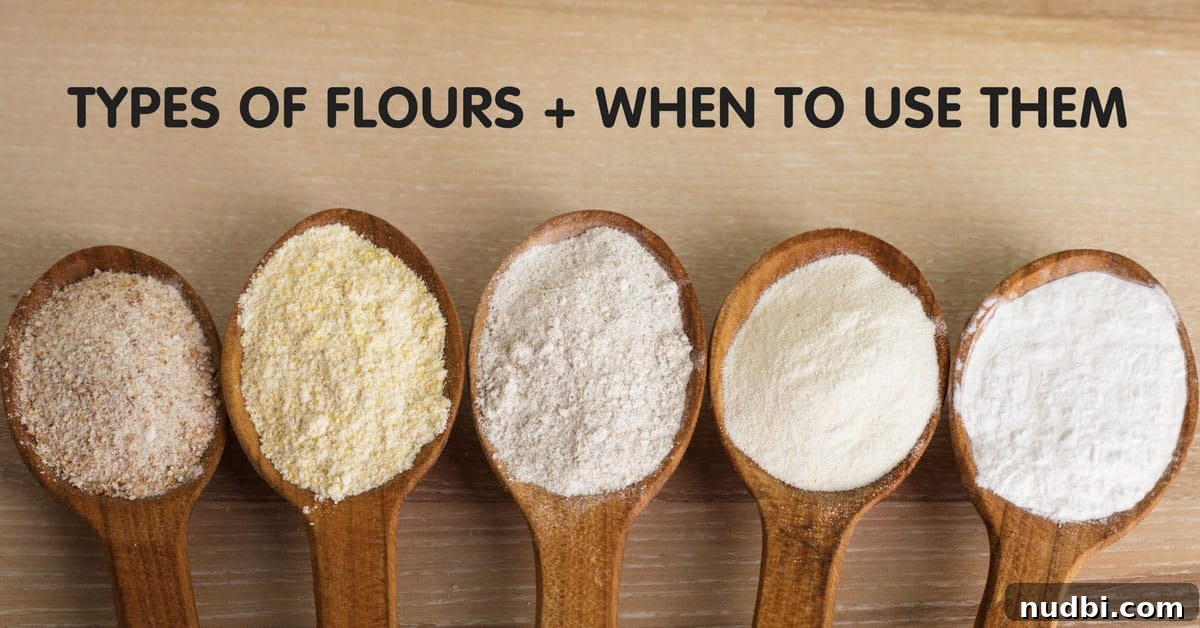
Embark on a culinary journey into the diverse world of flours, each offering unique properties and applications. This comprehensive guide will illuminate the various types of flours available, detailing their optimal uses, distinct characteristics, and valuable nutritional insights to empower your baking and cooking adventures.
Discovering the Versatility of Flours: Your Ultimate Baking and Cooking Guide
For many years, my baking and cooking escapades were solely reliant on a trusty bag of all-purpose flour from the grocery store. It was the universal ingredient, the staple that seemed to fit every recipe. However, as my passion for culinary arts and nutritional science deepened, I began to unravel the vast and exciting spectrum of flours available, each with its own story, texture, and nutritional profile.
The realization that “flour” encompassed far more than just one type was both enlightening and, at times, a little overwhelming. Standing in the baking aisle, confronted by an array of choices – from ancient grains to gluten-free alternatives – the simple act of selecting the right flour for a recipe, let alone for specific health goals, became a thoughtful decision rather than a quick grab. This shift in perspective inspired a deeper dive into the characteristics that make each flour unique.
This guide is designed to demystify the world of flours, providing a clear breakdown of popular and specialty options you’ll encounter. We’ll explore their fundamental differences, optimal applications, and key nutritional information, helping you make informed choices that elevate your culinary creations.
Understanding Flour: The Foundation of Baking
Before delving into specific types, it’s helpful to understand what flour fundamentally is. Flour is a powder made by grinding raw grains, roots, beans, nuts, or seeds. While wheat flour is the most common, the world of flour extends far beyond it. The primary components of a grain — the bran, germ, and endosperm — play a crucial role in defining a flour’s characteristics.
- Bran: The outer layer of the grain, rich in fiber, antioxidants, and B vitamins.
- Germ: The embryo of the grain, containing healthy fats, vitamin E, B vitamins, and minerals.
- Endosperm: The largest part of the grain, primarily composed of carbohydrates (starch) and protein.
The presence or absence of these components significantly impacts the flour’s nutritional value, texture, and how it behaves in recipes.
Exploring Popular Wheat Flours
Wheat flours are the most widely used globally, forming the backbone of countless baked goods and dishes. Their versatility stems from their gluten content, a protein network that provides elasticity and structure to dough. Here’s a closer look at some popular wheat varieties:
100% Whole Wheat Flour
True to its name, 100% whole wheat flour is made from grinding the entire wheat kernel, encompassing the bran, germ, and endosperm. This inclusion makes it a nutritional powerhouse, boasting significantly higher levels of protein, dietary fiber, B vitamins (like niacin, thiamine, and riboflavin), iron, and magnesium compared to refined flours.
Its robust nutritional profile comes with distinct baking characteristics. Whole wheat flour is more absorbent, often requiring additional liquid in recipes to achieve the desired consistency. Its higher fiber content also interferes with gluten development, leading to denser, heavier baked goods with a hearty, nutty flavor and a coarser texture. It’s an excellent choice for rustic breads, muffins, and certain cookies where a chewy texture and wholesome flavor are desired.
White Whole Wheat Flour
For those seeking the nutritional benefits of whole wheat without the pronounced taste or dense texture, white whole wheat flour offers a fantastic compromise. It is indeed 100% whole grain, containing all three parts of the wheat kernel, just like traditional whole wheat flour. The key difference lies in the type of wheat used: it’s milled from a paler, milder-flavored variety of hard white wheat, rather than the red wheat used for standard whole wheat flour.
This results in a flour that is lighter in color, subtly sweeter, and less bitter, making it an ideal substitute for up to 50-100% of all-purpose flour in recipes without drastically altering the flavor or texture. It’s particularly well-suited for lighter baked goods such as pancakes, quick breads, and even some cakes, providing added nutrition discreetly.
All-Purpose Flour
All-purpose (AP) flour remains the undisputed champion of the home kitchen, a versatile staple passed down through generations. When a recipe simply calls for “flour,” it almost invariably refers to enriched all-purpose flour. This white flour is produced by milling only the endosperm of the wheat kernel, after the bran and germ have been removed. This refining process gives it a fine, soft texture and a neutral flavor.
While its versatility is unmatched, allowing it to be used in everything from cakes and cookies to breads and sauces, its nutritional quality is notably lower than whole wheat flours. The removal of the bran and germ strips away much of the fiber, vitamins, and minerals. Most all-purpose flour is enriched, meaning some of these lost nutrients (like iron and B vitamins) are added back, but it still lacks the comprehensive nutritional profile of a whole grain.
Self-Rising Flour
Self-rising flour is a convenient pre-mixed flour that simplifies baking, particularly for quick breads, biscuits, and pancakes. It’s essentially all-purpose flour that has had a leavening agent (typically baking powder) and salt already incorporated into the blend. This eliminates the need to measure these ingredients separately, saving time and reducing the chance of error.
However, its convenience also means less control over the leavening. It’s crucial to avoid adding extra baking powder or salt when using self-rising flour, unless the recipe specifically instructs otherwise. Its primary use is in recipes where a tender, soft crumb is desired, and minimal gluten development is necessary.
Bread Flour
As its name suggests, bread flour is specifically formulated for baking bread. It boasts a higher protein content (typically 12-14%) compared to all-purpose flour. This elevated protein level translates to more gluten formation, which is crucial for developing the strong, elastic structure necessary for yeasted breads. The robust gluten network traps gas produced by yeast, allowing bread to rise significantly and achieve that satisfying chewy texture and crusty exterior.
While you can make bread with all-purpose flour, using bread flour will yield a loaf with superior volume, texture, and chewiness. It’s ideal for artisan breads, baguettes, pizza dough, and any recipe where a strong, developed gluten structure is key.
Cake Flour
At the opposite end of the spectrum from bread flour is cake flour, known for its extremely fine texture and low protein content (around 7-9%). This delicate composition is achieved through a specific milling process and often involves bleaching, which further weakens the protein and helps the flour absorb more liquid. The low protein content minimizes gluten development, resulting in exceptionally tender, soft, and moist baked goods.
Cake flour is the secret to light and airy cakes, delicate pastries, and fluffy cupcakes. Substituting it for all-purpose flour in these recipes will generally yield a more tender result, though it may not be suitable for items requiring more structure.
Pastry Flour
Pastry flour sits comfortably between cake flour and all-purpose flour in terms of protein content (around 9-10%). It’s a refined flour with a fine texture, designed to strike a balance between tenderness and some structural integrity. Its moderate protein level allows for a delicate gluten network to form, producing baked goods that are flaky and tender, but still hold together well.
This flour is perfectly suited for pie crusts, tarts, biscuits, scones, and certain types of breadsticks where a crisp yet tender crumb is desired. There are different varieties, such as white pastry flour and whole wheat pastry flour, with the latter offering enhanced nutritional benefits while maintaining a relatively fine texture compared to 100% whole wheat flour.
Semolina Flour
Semolina flour stands apart from other wheat flours due to its unique origin and coarse texture. It is made from durum wheat, a very hard variety of wheat. The milling process for semolina involves grinding the durum wheat kernels until only the toughest, highest-protein particles are left. This results in a gritty, yellowish flour with an incredibly high protein content, which is essential for its primary use.
Semolina flour is the quintessential ingredient for making authentic pasta, couscous, and gnocchi. Its high protein and strong gluten create a firm, elastic dough that holds its shape beautifully during cooking and provides a satisfying al dente bite. It can also be used for dusting work surfaces when working with sticky doughs or for making traditional Italian breads, adding a distinct texture and subtle flavor.
Embracing Non-Wheat and Gluten-Free Flours
The demand for gluten-free and alternative flours has surged, driven by dietary preferences, health needs, and a desire for diverse flavors and textures. These flours are derived from a wide range of grains, nuts, seeds, and root vegetables, offering exciting possibilities for those looking to expand their culinary repertoire or adhere to specific dietary restrictions.
Almond Flour
A popular choice in gluten-free and low-carb baking, almond flour is made from blanched (skinless) almonds that are finely ground. It’s celebrated for its nutritional profile, being low in carbohydrates and high in protein, healthy unsaturated fats, fiber, and vitamin E. This flour adds a rich, slightly sweet, and nutty flavor to baked goods, along with remarkable moisture and a tender crumb.
Almond flour is excellent for macarons, cakes, cookies, and quick breads. Due to its lack of gluten, it often needs a binding agent (like eggs) or combination with other flours to provide structure. Given its high fat content, almond flour has a shorter shelf life and can go rancid if not stored properly, ideally in the refrigerator or freezer in an airtight container.
Oat Flour
Oat flour is a wonderfully versatile and nutritious gluten-free option (ensure it’s certified gluten-free if necessary, as oats can be cross-contaminated during processing). It’s made by finely grinding rolled oats, resulting in a superfine, fluffy texture. Rich in soluble fiber, particularly beta-glucan, oat flour can contribute to heart health and help regulate blood sugar.
When used in baking, oat flour imparts a rich, nutty flavor and can create a denser, chewier texture than traditional wheat flours. It absorbs a lot of liquid, so recipes may need adjustment. It’s ideal for muffins, cookies, pancakes, and certain quick breads, often lending a wholesome, rustic appeal.
Corn Flour
Distinct from cornstarch (which is a pure starch extract), corn flour is made from finely milling whole dried corn kernels. It retains the nutritional benefits of the whole grain, including fiber, protein, and antioxidants, and has a slightly coarse, powdery texture with a distinct corn flavor and yellowish hue.
Corn flour is a staple in many cuisines, most notably for making authentic tortillas, tamales, and cornbread. It’s often blended with other flours to add flavor, texture, and nutritional value to doughs and batters. It can also be used as a breading for frying, creating a delightfully crisp coating.
Coconut Flour
Coconut flour is a unique, gluten-free, and grain-free flour made from dried, defatted coconut meat. It is exceptionally high in dietary fiber and protein, making it a popular choice in paleo and keto diets. Its most notable characteristic is its incredible absorbency; it can soak up a remarkable amount of liquid, far more than wheat flour.
This high absorbency means that only a small amount of coconut flour is needed in recipes, and it generally requires a significant increase in liquid and eggs to prevent baked goods from becoming too dry and crumbly. It imparts a subtle coconut flavor and yields very dense, moist results. It is best used in recipes specifically formulated for it or in combination with other flours, for items like muffins, cakes, and cookies.
Rice Flour
Rice flour is a fundamental gluten-free flour, widely used in Asian cuisines. It is made by finely grinding rice grains and comes in two main varieties: white rice flour and brown rice flour. White rice flour has a fine, powdery texture and a neutral flavor, while brown rice flour, made from whole grain rice, is slightly coarser, more nutritious, and has a subtly nutty taste.
Both types are versatile in gluten-free baking blends, often contributing lightness and crispness. Rice flour is excellent for thickening sauces, making noodles, mochi, and is a common component in gluten-free baking mixes to provide structure and a delicate crumb. It can make baked goods crumbly if used on its own, so it’s often combined with other gluten-free flours and starches.
Tapioca Flour (Starch)
Tapioca flour, often also referred to as tapioca starch, is extracted from the cassava root. It is a very fine, white, gluten-free starch known for its ability to add chewiness and crispness to baked goods, and act as a superb thickening agent. It has a neutral flavor and quickly dissolves in liquid.
In gluten-free baking, tapioca flour is invaluable for improving the texture of baked goods, lending them elasticity and preventing dryness. It’s commonly used in pie fillings, puddings, and as a binder in gluten-free bread and pizza crust recipes. It creates a glossy finish and a smooth, chewy texture that is highly desirable in many desserts and breads.
Chickpea Flour (Garbanzo Bean Flour)
Also known as besan or gram flour, chickpea flour is made from ground dried chickpeas (garbanzo beans). It is a highly nutritious gluten-free flour, packed with protein and dietary fiber, and has a distinct earthy, slightly nutty flavor. Its dense texture and binding properties make it a staple in Indian and Middle Eastern cooking.
Chickpea flour is excellent for making flatbreads (like socca or farinata), savory pancakes, fritters, and for thickening curries and stews. In gluten-free baking, it can add structure, protein, and a unique flavor profile to breads and savory muffins. Due to its strong flavor, it’s often best used in moderation or in recipes where its taste complements the other ingredients.
Making Informed Choices for Your Culinary Needs
The journey through the world of flours reveals an incredible variety, each with its own character and purpose. From the robust heartiness of 100% whole wheat to the delicate tenderness of cake flour, and the myriad of gluten-free alternatives like almond and oat flour, the possibilities are endless.
Your choice of flour can profoundly impact the texture, flavor, and nutritional value of your final product. Don’t be afraid to experiment! Start by understanding the basic properties of each flour and how it typically behaves. This knowledge will empower you to select the best flour for your specific recipe, whether you’re aiming for a fluffy cake, a chewy artisan bread, or a wholesome gluten-free treat.
So, what type of flour do you typically reach for in your kitchen? Are you an avid explorer of different varieties, or do you have a tried-and-true favorite? The next time you embark on a baking or cooking project, consider venturing beyond your usual and discover how a different flour can transform your culinary creations.