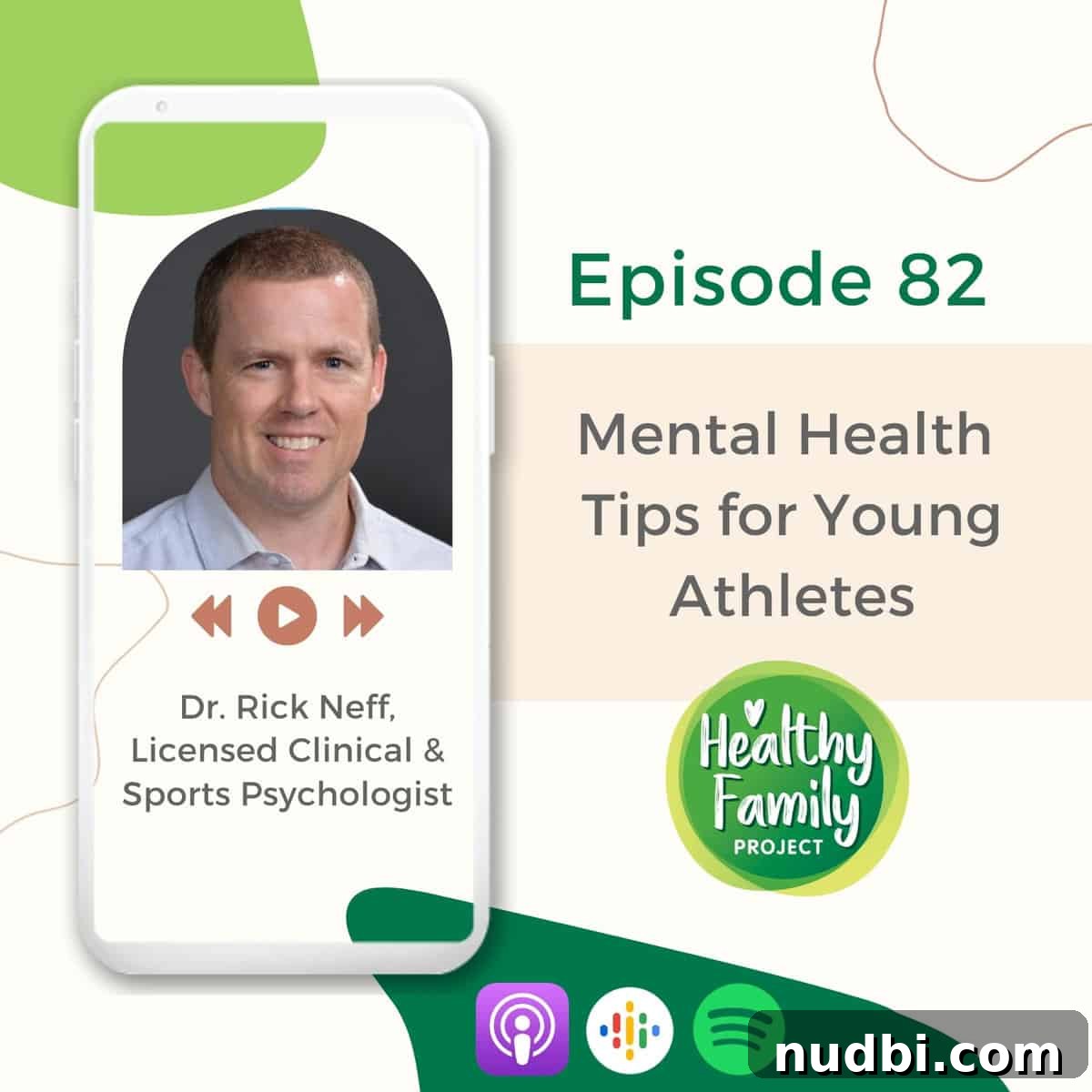
Welcome to an insightful episode of the Healthy Family Project Podcast, where we delve into the critical topic of mental health for young athletes. Sports offer immense joy, camaraderie, and valuable life lessons, but they can also be a significant source of stress and anxiety for children and teenagers. We were honored to host Dr. Rick Neff, a distinguished licensed clinical and sports psychologist, who shared profound wisdom and actionable strategies. His expert guidance empowers parents and caregivers to proactively foster mental fitness in young athletes, creating supportive environments where they feel safe to explore their emotions and effectively manage the unique pressures of competitive sports. This discussion is essential for any family navigating the world of youth athletics.
As a parent of preteen and teen athletes, this subject resonates deeply with me. The challenge lies in finding the delicate balance between encouraging our children to strive for excellence and embrace the dedication sports demand, while simultaneously ensuring we don’t inadvertently create undue pressure that escalates into heightened stress and anxiety. It’s a tightrope walk that many parents experience, seeking to cultivate resilience and a strong work ethic without sacrificing their children’s emotional well-being.
The overwhelming response from parents in our Facebook group underscored the universal need for guidance on this topic. Having an expert like Dr. Neff on the podcast was invaluable, as he provided a clear roadmap for helping our active children cultivate not just physical prowess, but robust mental fitness. He emphasized that mental fitness is as crucial as physical conditioning in the realm of sports, and just as we train our bodies, we must also train our minds.
Proactive Strategies for Youth Athlete Mental Health
Dr. Neff powerfully reinforced the importance of adopting a proactive versus reactive approach to mental health. Rather than waiting for a crisis to emerge, families can build a foundation of mental well-being through consistent effort and open communication. This involves several key practices:
- Being an Active Listener: This goes beyond simply hearing words. Active listening means truly tuning into your child’s feelings, observing their body language, and reflecting what you understand back to them. It creates a space where they feel truly seen and heard, fostering trust and encouraging them to open up. Avoid the “writing reflex”—the instinct to immediately try to fix problems or dismiss feelings with phrases like “It’ll be okay” or “Tomorrow’s another day.” While well-intentioned, this can invalidate their emotions. Instead, acknowledge their feelings first.
- Creating a Safe Space: Establish an environment where your kids feel completely comfortable talking about their feelings without fear of judgment, criticism, or immediate solutions. Let them know you’re there to listen, even if they’re not ready to talk right away. Giving them permission to express vulnerability is a powerful tool for emotional development.
- Guiding to Solutions: Instead of offering immediate fixes, guide your children to brainstorm their own solutions. This empowers them, builds their problem-solving skills, and reinforces their agency in managing their challenges. Positively reinforce their efforts and ideas.
- Keeping an Eye Out for Red Flags: Be vigilant for signs that stress might be escalating beyond a normal level. These subtle indicators are crucial for early intervention. Dr. Neff highlighted several red flags, which we will elaborate on further below.
While the triumphs and big wins in sports bring immense joy, disappointments and setbacks are an inevitable part of the journey. Dr. Neff provided crucial guidance on how to navigate these moments, preventing a negative headspace from taking root after injuries, losses, or other letdowns. Learning to process these experiences in a healthy way is fundamental to an athlete’s long-term mental resilience.
Parents’ Pivotal Role in Athlete Mental Fitness
As parents and caregivers, our influence extends far beyond cheering from the sidelines. Dr. Neff outlined simple yet powerful ways we can be supportive and, critically, avoid our own emotional outbursts that can inadvertently amplify our children’s anxiety. Our reactions, often communicated non-verbally, carry significant weight. Communication is multi-faceted: approximately 70% is conveyed through body language, 25% through tone of voice, and only 5% through the actual words spoken. This means that even with the best intentions, our body language or tone can send a different message than our words.
One particularly insightful tip involves the use of a simple hand gesture from across the field or court. This pre-arranged signal can serve as a powerful, non-verbal reminder to ease anxiety in a stressful moment and help our kids to refocus. For instance, a subtle thumbs-up or a tap on the temple could signify “take a breath” or “find your focal point.” This strategy bypasses verbal communication when emotions are high, which can be less effective, and instead provides a direct, calming cue that the athlete can understand and act upon without additional pressure.
Meet Our Esteemed Guest: Dr. Rick Neff, The “Yoda” of Mental Skills Training
Dr. Rick Neff is a highly respected Licensed Clinical & Sports Psychologist, and the visionary owner and founder of Inner-Edge, LLC. His personal journey as a former college baseball player and a standout three-sport athlete in high school uniquely informs his understanding of the athlete’s mindset. Nationally and internationally recognized, Dr. Neff is a leading authority in developing a healthy performance mindset and addressing clinical concerns within the athletic population.
Through his extensive academic rigor and integrated approach, combining clinical and sports psychology, neuroscience, and mindfulness, Dr. Neff has earned the revered nickname “Yoda” of mental skills training. This moniker speaks volumes about his profound wisdom, calm demeanor, and ability to guide athletes to unlock their full mental potential. His exceptional talent for connecting with players and cultivating deeply trusting relationships truly sets him apart. Dr. Neff has successfully mentored athletes who have gone on to compete at elite institutions such as Duke, Oregon, Kentucky, Florida State, North Carolina, Michigan State, Texas, Georgetown, Florida, Miami, Penn State, LSU, Clemson, Temple, Indiana, Purdue, UConn, Arizona, Pitt, Syracuse, Bucknell, Colgate, Penn, Princeton, Harvard, Yale, USC, Virginia, and many more, helping them achieve peak performance both on and off the field.
Listen to Sports Psychologist Tips For Supporting Your Teen Athlete’s Mental Health
Key Topics and Expert Insights from the Episode
This episode offers a wealth of practical advice for parents and athletes alike. We highly recommend listening to the full discussion to absorb all the valuable tips and tricks shared by Dr. Neff. For those who wish to navigate directly to specific points of interest, here’s a breakdown of the hot topics covered:
- 2:49 Welcome, Dr. Neff!: Introduction to Dr. Rick Neff and his extensive background in sports psychology, including his personal journey that led him to this field.
- 7:36 Proactive Mental Health Strategies for Families: Delving into how families can proactively build mental fitness, differentiating between mental health and mental illness, and avoiding common pitfalls like the “writing reflex.”
- 13:06 Tactics for Building Mental Fitness: Practical, in-the-moment strategies for athletes and parents, including the power of non-verbal communication, hand gestures, focal points, and the “five-second rule” for managing internal dialogue during high-stress situations.
- 19:36 Tips for Transitioning to Different Levels of Sports: Addressing the normal anxiety associated with moving between elementary, middle, high school, and college sports, and how to ease the emotional and logistical challenges of these significant shifts.
- 27:06 Normal Stress vs. Red Flags – What to Look For?: A crucial discussion on distinguishing healthy competitive stress from unhealthy obsession. Dr. Neff details red flags such as social withdrawal, refusal to take rest days, mood swings, and changes in eating/sleeping patterns, emphasizing the importance of diverse hobbies.
- 34:16 Helping Kids Deal with Injuries: Strategies for supporting athletes through the emotional challenges of injury, including remaining connected to the team, processing grief, and leveraging mental tools like visualization to maintain performance pathways.
- 40:27 Helping Kids Accept Disappointment in a Healthy Way: Guidance on navigating setbacks like not making a team. Dr. Neff shares insights on empowering athletes to develop growth mindsets, learn from experiences (like the Michael Jordan story), and create plans for future improvement.
- 44:16 How Can Parents Keep Emotions Under Control?: Essential advice for parents on managing their own emotional responses during games. Learn about separating thoughts from emotions, using breathing techniques (box breathing, parachute breathing), asking if reactions are helpful, and creating physical distance when emotions flare to promote a calmer, more supportive presence.
Diving Deeper: Key Insights and Actionable Advice
The Power of Proactivity in Mental Health
Dr. Neff stressed that addressing mental health should never be a reactive measure taken only during emergencies. Instead, it must be an ongoing, proactive endeavor, much like physical training. Parents are encouraged to initiate normalizing conversations around emotions, teaching coping skills, and providing tools to manage stress from an early age. The “writing reflex,” where parents quickly try to fix or dismiss a child’s negative emotions, can inadvertently invalidate their feelings. Instead, listening, validating, and then guiding them to find their own solutions fosters greater emotional intelligence and self-reliance.
Cultivating Mental Fortitude On and Off the Field
Building mental strength is a continuous process. For athletes, Dr. Neff recommended practical, in-the-moment strategies. He highlighted the significant impact of non-verbal communication, noting that body language and tone of voice convey far more than words. Parents and coaches can utilize pre-agreed hand gestures as simple, non-verbal cues to help athletes recenter during intense moments. These signals can prompt an athlete to take a deep breath, or find a “focal point” – a specific object in the distance – to break a cycle of negative thoughts and regain concentration. He also introduced the “five-second rule,” suggesting that athletes have a brief window (5-16 seconds) to take control of their inner dialogue, influencing their subsequent emotional and physical responses.
Navigating the Challenges of Athletic Transitions
Moving up in sports, whether from youth league to high school or high school to college, is often accompanied by a natural surge of anxiety. Dr. Neff advised parents to normalize these feelings of nervousness and self-doubt. Athletes often derive a significant portion of their identity from their sport, and transitions can challenge this identity, especially when moving from being a top player to a newcomer. Proactive steps include spending time on the new campus or field beforehand and encouraging early connection with new teammates through group chats. This helps reduce the “unknown” and builds a sense of belonging, mitigating the risk of anxiety leading to a negative performance feedback loop.
Identifying and Addressing Unhealthy Stress
Distinguishing between healthy competitive stress and an unhealthy obsession is crucial. Dr. Neff provided clear red flags for parents and coaches: social withdrawal (only wanting to engage in their sport, forsaking other activities), a refusal to take rest days (driven by fear of falling behind), significant mood swings, and changes in eating or sleeping patterns. He emphasized the importance of balance, noting that a lack of other hobbies can indicate an unhealthy focus. Promoting diverse interests helps athletes develop a well-rounded identity and prevents sport from becoming their sole source of self-worth and pressure.
The Mental Toll of Injuries and the Power of Visualization
Injuries are not just physical setbacks; they carry a profound emotional weight. Athletes often experience a grieving process, moving through stages of denial, anger, bargaining, and depression. Dr. Neff strongly advocates for injured athletes to remain connected to their team and sport as much as physically possible, even if it’s just observing practice. This connection helps combat feelings of isolation and loss of identity. Furthermore, he highlighted the powerful role of visualization. Mentally rehearsing movements and performances, even when physically unable, helps keep neural pathways firing, which can aid in recovery and ensure a stronger return to play. The host shared a compelling anecdote about a ballerina who used visualization to learn an entire lead role while injured, demonstrating its incredible efficacy.
Handling Disappointment with a Growth Mindset
Failure to make a team or experiencing a significant loss can be devastating. Dr. Neff used the inspiring story of Michael Jordan being cut from his high school varsity team as a prime example of overcoming disappointment. Parents should provide space for their child to process these emotions, then gently guide them towards developing a “growth mindset.” Instead of allowing “all-or-nothing” thinking (“I didn’t make it, so I’m done”), encourage them to ask: “What did I learn? How can I improve?” Empowering athletes to take ownership of their development plan fosters resilience and a persistent drive for self-improvement.
Parents, Master Your Emotions Too!
Finally, Dr. Neff offered vital advice for parents themselves. Understanding the chain reaction of thought-emotion-physiological response is key. Parents can create a “space” between a triggering thought and an emotional reaction. Techniques like box breathing (inhale, hold, exhale, hold, each for 4 counts) or parachute breathing (inhale for 2, exhale for 4) can engage the parasympathetic nervous system, promoting calm. He urged parents to question their reactions: “Is my reaction helpful to my child, or is it stemming from my own unmanaged emotions?” If emotions begin to flare, physically moving away from the situation for a few minutes can help, as movement naturally releases mood-regulating neurotransmitters like serotonin and dopamine, allowing for a calmer return.
Relevant Links for Mental Health in Sports
- Discover more about Dr. Neff’s work at Inner Edge
- Explore Dr. Neff’s insights on the mind-body connection in sports: Neck-Up Training
- Listen to the fascinating Cuban Ballerina Podcast Episode mentioned in the discussion on visualization.
- Top Nutrition Tips for Young Athletes
- Healthy Sport Snacks for Kids
- Tips to Ease Back to School Anxiety
- Foods That Help Reduce Anxiety
More Healthy Family Project Podcast Episodes on Mental Wellness
- Episode 74: Talking to Your Teen About Mental Health
- Episode 35: Helping Kids Make Good Choices
- Episode 40: Meditation Benefits for Kids
Join Our Thriving Community: Healthy Family Project Facebook Group
Connect with other parents and caregivers in our dedicated Healthy Family Project Facebook group! This supportive community serves as a safe space to discuss all aspects of raising a healthy family. From navigating picky eaters and incorporating more fruits and vegetables, to family exercise routines and crucial mental health topics, we welcome you to join the conversation, share insights, and find invaluable support.
Your Feedback Matters! Take Our Listener Survey
Thank you for your continued support of the Healthy Family Project Podcast! We are committed to bringing you the most relevant and impactful content. Please take just 5 minutes to complete our listener survey and help us shape future episodes. Your input is invaluable: Take the survey here.
About the Healthy Family Project Podcast
The Healthy Family Project Podcast features engaging conversations on hot topics in the world of health, food, and family, always delivered with a dose of fun. Our mission is to help families smoothly transition into a fresh, healthier lifestyle.
Stay tuned for new bi-weekly episodes! Don’t forget to subscribe on Apple Podcasts, Google Podcasts, Spotify, or your favorite podcasting platform. If you enjoy an episode, please consider leaving a rating and a comment to help us reach more families.
Interested in becoming a guest on the Healthy Family Project podcast? Please contact [email protected] with your topic idea for consideration.