
Fueling Growth: The Ultimate Guide to High-Protein Foods for Active Kids and Teens
In the vibrant journey of childhood and adolescence, proper nutrition stands as a cornerstone for optimal development. Among the essential building blocks, protein plays a particularly critical role. High-protein foods are not just vital for building strong muscles; they are fundamental for supporting healthy overall development, bolstering the immune system, aiding in cellular repair, and providing sustained energy for your children’s active lives. Understanding how to seamlessly integrate these powerhouse nutrients into their daily meals doesn’t have to be a daunting task. This comprehensive guide is designed to simplify the process, offering practical advice and delicious options tailored even for the most discerning and selective eaters.

Protein, alongside carbohydrates and fats, forms one of the three crucial macronutrients essential for human health. When consumed and broken down through digestion, these macronutrients supply our bodies with energy in the form of calories. Beyond its energy-providing capabilities, protein performs an astonishing array of functions vital for life. It provides the fundamental structure to virtually all cells within the human body, from skin and hair to muscles and bones. Proteins also act as enzymes, catalyzing countless biochemical reactions; as transport carriers, ferrying substances like oxygen and nutrients throughout the body; and as hormones, acting as chemical messengers. The basic building blocks of protein are called amino acids. Imagine amino acids as the letters of an alphabet; when strung together in specific sequences, they form complex proteins, much like letters form words and sentences.
There are 20 different amino acids commonly found in proteins. Of these, nine are classified as “essential amino acids.” This means our bodies cannot synthesize them on their own and, therefore, they must be obtained through our diet. The remaining eleven are “non-essential amino acids” because our bodies can produce them from other amino acids or precursors.
Generally speaking, proteins derived from animal sources—such as beef, poultry, fish, eggs, and dairy products—are considered “complete” or “high-quality” proteins. This is because they contain all nine essential amino acids in sufficient proportions. In contrast, most plant-based sources of protein tend to lack one or more essential amino acids and are thus categorized as “incomplete” proteins. However, this doesn’t mean plant-based diets can’t provide complete protein. By consuming a variety of plant proteins throughout the day (e.g., combining legumes with grains like rice and beans, or nuts with seeds), vegetarians and vegans can easily obtain all essential amino acids, a concept known as protein complementation.
Understanding Your Child’s Protein Needs for Optimal Growth
Whether you’re navigating the challenges of feeding a picky eater, supporting a child who follows a vegetarian diet, or simply ensuring your meat-loving youngster receives adequate nutrition, there are effective strategies to guarantee your child gets enough protein for optimal growth and development. Protein requirements are not static; they vary significantly based on factors such as age, sex, and physical activity level, much like the needs for other vital nutrients. While it’s generally unnecessary to meticulously count every gram of protein your child consumes daily, understanding these general guidelines can offer peace of mind and help you plan balanced meals. Getting too little protein, though rare in developed nations, can lead to stunted growth, reduced muscle mass, weakened immune function, and fatigue. Conversely, excessive protein intake is also generally not recommended, though healthy kidneys can typically process higher amounts without issues for most individuals.
Here’s a quick reference to help you gauge how much protein your child generally needs each day:
- 2-3-year olds: Approximately 13 grams of protein per day.
- 4-8-year olds: Around 19 grams of protein per day.
- 9-13-year olds: Roughly 34 grams of protein per day.
- 14-18-year olds: Boys typically need about 52 grams, while girls generally require 46 grams of protein per day.

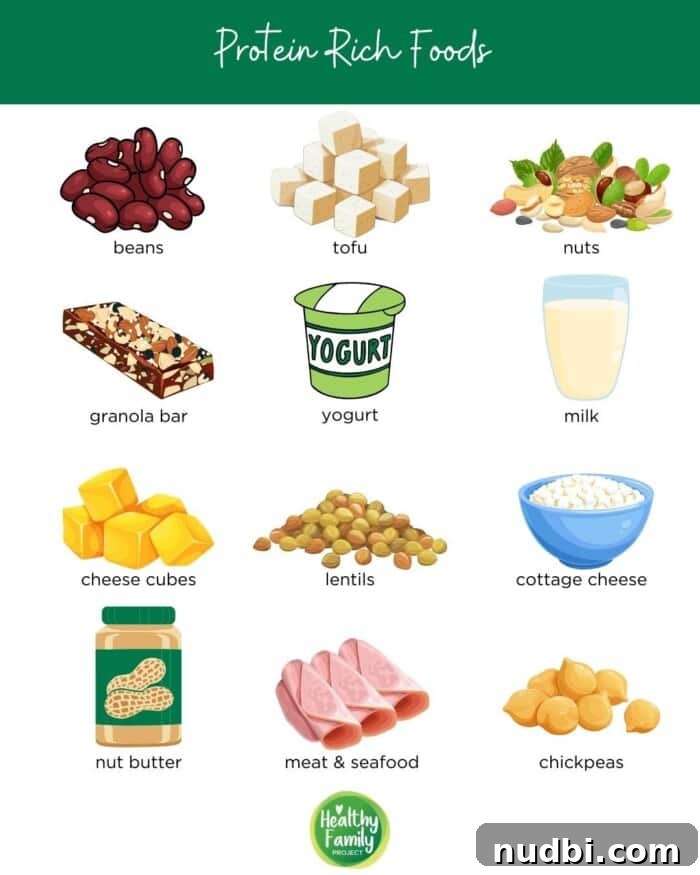
One of the most reassuring aspects of protein is its widespread availability across a diverse range of foods. So, if your child gravitates towards carbohydrates, there’s no need to stress; incorporating protein is often easier than you think. Excellent sources of protein encompass lean meats, poultry, fish, eggs, and a variety of dairy products like milk, cheese, and yogurt. Plant-based protein powerhouses include nuts, seeds, and legumes such as beans, lentils, and peas. Furthermore, certain whole grains like quinoa and oats, along with various vegetables like broccoli and spinach, also contribute valuable amounts of protein to the diet. The key to meeting daily protein requirements, along with obtaining all other essential carbohydrates and healthy fats, lies in serving three well-balanced meals complemented by one or two nutritious snacks throughout the day. Remember, the amount of protein present in food is always clearly listed on the nutrition facts label, making it simple to monitor the grams of protein per serving.
Understanding Protein Content: A Quick Reference Guide
To provide a clearer perspective on the protein punch packed by various common foods, take a moment to review this helpful list. It illustrates how easily small portions can contribute significantly to your child’s daily protein needs:
- 3 oz of lean strip steak: Approximately 19.5 grams of protein – a hearty contribution for a growing appetite.
- 3 oz of chicken breast: About 21 grams of protein – a versatile and lean staple.
- 3 oz of salmon: Roughly 17 grams of protein – plus healthy omega-3 fatty acids!
- 1 large egg: Delivers around 7 grams of protein – an incredibly versatile breakfast or snack.
- 1 cup of 1% milk: Provides about 8 grams of protein – a simple, calcium-rich choice.
- 1 cup of plain nonfat Greek yogurt: A powerful 17 grams of protein – excellent for snacks, smoothies, or dips.
- 1 oz of almonds (about 23 nuts): Contains approximately 6 grams of protein – a crunchy, nutrient-dense snack.
- 2 tbsp of peanut butter: Offers around 7 grams of protein – a kid-friendly favorite for sandwiches or fruit dips.
- ½ cup of black beans (cooked): Provides about 7 grams of protein – a fantastic plant-based option for tacos, salads, or side dishes.
- 1 cup of quinoa (cooked): Contains approximately 8 grams of protein – a complete plant-based protein and a fantastic grain alternative.
When making choices at the grocery store or planning family meals, my steadfast motto is to “go lean with protein.” Prioritizing lean cuts of meat and selecting low-fat or nonfat dairy products are excellent strategies to significantly reduce the overall amount of total and saturated fats consumed by your family. This approach not only ensures adequate protein intake but also promotes heart health and supports a balanced dietary pattern for everyone.
Smart Strategies: Boost Your Family’s Protein Intake Daily
Incorporating more protein into your family’s meals and snacks doesn’t require a complete overhaul of your diet. With a few simple and intentional adjustments, you can significantly enhance protein intake and reap its numerous benefits. Here are some actionable tips to effortlessly add more protein to your daily routine:
- Embrace Variety in Protein Sources: Expand your culinary horizons beyond traditional meats. Make it a goal to eat a diverse array of foods from the Protein Foods Group each week. Experiment with delicious main dishes featuring beans or peas (like black beans, kidney beans, chickpeas, or lentils), nuts, various soy products (tofu, tempeh, edamame, or veggie burgers), and a wider selection of seafood. This variety ensures a broad spectrum of nutrients and essential amino acids.
- Prioritize Lean Protein Choices: When selecting meats, opt for lean or low-fat cuts. Look for options like round or sirloin cuts for beef, and choose ground beef that is at least 92% lean. Always trim visible fat from meat and remove the skin from poultry before cooking or eating to reduce saturated fat content. Consider grilling, baking, or broiling instead of frying to keep meals lean.
- Explore the Power of Plant-Based Proteins: Beans and peas (such as kidney, pinto, black, or white beans; split peas; chickpeas; and hummus) are nutritional powerhouses. So are soy products like firm tofu, flavorful tempeh, and convenient veggie burgers. Don’t forget the goodness of nuts and seeds, which can be easily sprinkled into meals or enjoyed as snacks. These plant-based options are naturally low in saturated fat, cholesterol-free, and remarkably high in dietary fiber, which aids digestion and promotes satiety.
- Unlock the Versatility of Greek Yogurt: Greek yogurt is a protein champion. Try substituting plain Greek yogurt for mayonnaise or sour cream in recipes like dips, salad dressings, and creamy sauces. Not only does this ingenious swap dramatically increase the protein content, but it also often reduces fat and adds beneficial probiotics for gut health. Use it in vegetable dips, as a topping for baked potatoes, or in a creamy chicken salad.
- Craft Your Own Protein-Packed Trail Mix: Ditch store-bought mixes that can be high in sugar and sodium. Create your custom blend with a mix of unsalted nuts (almonds, walnuts, cashews), various seeds (pumpkin, sunflower, chia), and a handful of dried fruits for natural sweetness (in moderation). Remember that nuts and seeds are concentrated sources of calories, so enjoy them in small, controlled portions to keep your family’s calorie intake in check.
- Start the Day with Protein: Integrating protein into breakfast is one of the most effective ways to ensure consistent intake throughout the day. Instead of just toast or sugary cereals, offer scrambled eggs, Greek yogurt with berries, cottage cheese, nut butter on whole-wheat toast, or a protein-rich smoothie. This helps stabilize blood sugar and keeps kids feeling full and focused until lunchtime.
- Sneaky Protein for Picky Eaters: For children who are resistant to new foods, try incorporating protein sources discreetly. Blend cooked lentils or puréed tofu into pasta sauces, soups, or even smoothies. Add finely ground cooked meat to meatballs or casseroles. Mix cottage cheese into pancake batter or mac and cheese. Small, consistent exposures can make a big difference over time.
- Smart Snacking: Snacks offer prime opportunities for protein boosts. Instead of empty calories, offer string cheese, hard-boiled eggs, edamame pods, apple slices with peanut butter, a small handful of almonds, or a mini yogurt parfait. These options prevent hunger pangs and provide sustained energy.
Empowering your children with a diet rich in high-quality protein is one of the most significant investments you can make in their health and future. By understanding the importance of protein, recognizing diverse sources, and applying these practical, family-friendly tips, you can ensure your growing kids and active teens receive the essential nutrients they need to thrive. Remember, it’s about making mindful, sustainable choices that fit seamlessly into your family’s lifestyle, fostering healthy eating habits that will last a lifetime.