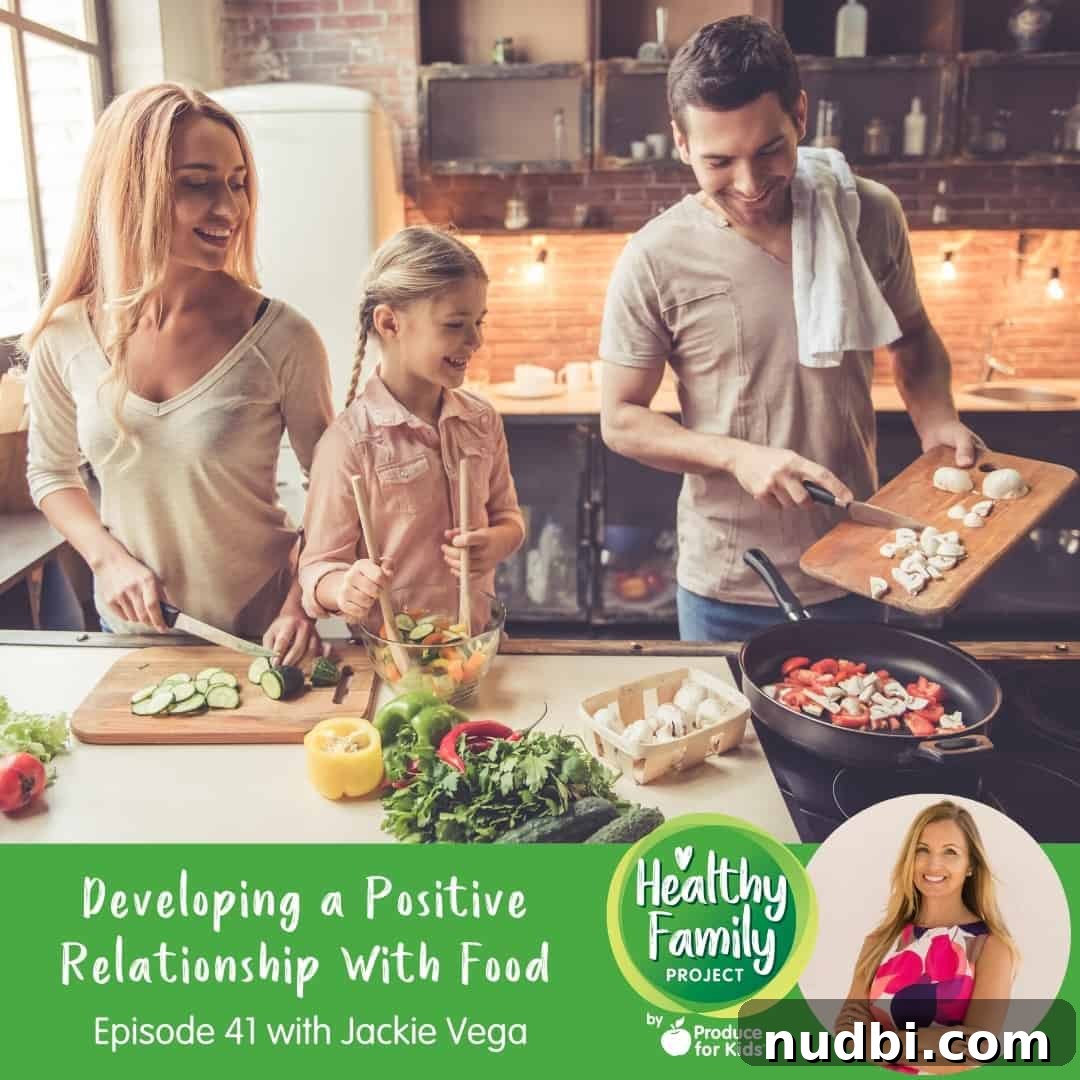
Cultivating a Positive Relationship with Food: Expert Insights for the Whole Family
In an era brimming with conflicting nutritional advice and ever-changing dietary fads, fostering a positive relationship with food has become more crucial than ever. For individuals and families alike, understanding how to approach food with balance, joy, and mindfulness can significantly impact overall well-being. This episode of the Healthy Family Project podcast dives deep into this vital topic, featuring an enlightening conversation with Jackie Vega of The Wellness Solution. Jackie, a highly respected registered dietitian, ACE certified personal trainer, and a busy mom of two, shares invaluable wisdom on developing a healthy perspective on eating, evaluating food trends, and navigating the journey of sustainable weight loss. Her insights are particularly resonant for parents looking to instill good eating habits and a non-anxious relationship with food in their children from a young age.
Jackie Vega, the founder of The Wellness Solution, is a trusted guide for her clients on all matters pertaining to health and fitness. Her comprehensive approach goes beyond mere diets, focusing instead on holistic wellness that integrates seamlessly into real-life schedules. Her dedication to empowering families recently led her to launch the “Busy Moms Kitchen” podcast. In this new venture, Jackie invites listeners into her personal and professional world, sharing candid conversations about the unique challenges and triumphs of balancing motherhood with health and fitness goals. It’s a relatable space where busy moms can find solidarity, practical advice, and a refreshing perspective on nurturing themselves and their families.
This episode serves as an essential resource for anyone striving to redefine their connection with food, moving away from guilt and anxiety towards a place of appreciation and nourishment. We explore what it truly means to have a healthy relationship with food, examining how societal pressures and misinformation can sometimes lead us astray. Jackie provides actionable strategies for evaluating the constant influx of new food trends and fads, helping listeners discern between genuine nutritional advancements and fleeting sensations. Furthermore, she offers a compassionate and sustainable roadmap for those embarking on a weight loss journey, emphasizing long-term lifestyle changes over restrictive, short-lived diets. Her guidance is designed to equip you with the tools to build a lasting, positive food narrative for yourself and to confidently pass that wisdom on to your children, shaping a healthier, happier future for the entire family.
Your Voice Matters: Take Our Listener Survey!
We are incredibly grateful for your continued support of the Healthy Family Project Podcast. Your engagement fuels our mission to bring you the most relevant and impactful content. To ensure we consistently deliver episodes that resonate with your needs and interests, we kindly invite you to participate in our brief listener survey. It takes just 5 minutes of your time, but your feedback is instrumental in shaping the future direction of our podcast. Help us continue to be your go-to resource for family health and wellness. Click here to take the survey.
Stay Connected: Healthy Recipes & Tips Directly to Your Inbox
Never miss out on fresh inspiration for your family’s meals and wellness journey. Sign up for the Healthy Family Project e-newsletter today. Each week, you’ll receive a curated collection of healthy recipe ideas, our latest insightful blog posts, practical tips for family wellness, and exclusive updates, all delivered directly to your inbox. It’s the easiest way to keep your family informed, inspired, and on track for a healthier lifestyle.
Join Our Community: The Healthy Family Project Facebook Group
Elevate your family’s health journey by joining our vibrant Healthy Family Project Facebook group! This private online community is designed to be a supportive and judgment-free space for parents and caregivers to connect, share experiences, and seek advice on all aspects of raising a healthy family. Whether you’re navigating the challenges of picky eaters, seeking creative ways to incorporate more fruits and vegetables, looking for ideas to make exercise a family affair, or exploring mental health strategies for children and adults, this group is for you. We foster open discussions, offer practical solutions, and provide a platform for collective learning. Join us and become part of a growing community dedicated to nurturing healthy, happy families.
For those eager to jump directly to specific points of interest within this insightful conversation, we’ve provided convenient timestamps below. However, for the most comprehensive understanding and a truly enriching listening experience, we wholeheartedly recommend enjoying the episode from start to finish. Each segment builds upon the last, offering a holistic view of cultivating a positive relationship with food and fostering family wellness.
- 3:24 – Discovering Jackie’s New Podcast: Tune in as Jackie shares the exciting details behind her new podcast, “The Busy Moms Kitchen,” and what listeners can expect from her candid conversations about balancing motherhood and wellness.
- 7:39 – Defining a Healthy Relationship with Food: Explore the core concept of what a truly healthy relationship with food entails, moving beyond rigid rules to embrace flexibility, balance, and eating without guilt or stress. Jackie shares her simple definition and insights from the National Eating Disorder Association.
- 9:15 – Nurturing Positive Food Relationships in Children: Learn practical and compassionate strategies for teaching children to have a positive relationship with food. This segment addresses common parental dilemmas, offering advice on mindful portioning, creative serving ideas, and avoiding shame around food choices.
- 12:07 – Navigating Food Trends and Fads: In a world constantly bombarded with new diets and superfoods, Jackie provides an essential framework for evaluating food trends. Discover how to identify reputable sources, rely on personal judgment, and discern sustainable practices from fleeting fads.
- 15:10 – Sustainable Weight Loss: A Holistic Approach: Delve into Jackie’s holistic perspective on starting a weight loss journey. This discussion emphasizes the critical role of factors beyond just diet and exercise, such as hydration, sleep, stress management, and healthy relationships, in achieving sustainable results.
- 20:08 – What Defines a Healthy Family?: Jackie shares her deeply personal definition of a healthy family, highlighting the importance of shared mealtimes and mutual acknowledgment of support. This segment encourages listeners to reflect on their own definitions of family wellness.
Essential Resources & Further Reading
To deepen your understanding and continue your journey towards a healthier lifestyle, explore these valuable resources and connect with Jackie Vega directly:
- The Wellness Solution: Visit Jackie’s official website at The Wellness Solution for comprehensive health and fitness guidance tailored to your needs.
- Connect with Jackie on Instagram: Follow Jackie’s personal insights and daily tips on wellness by connecting with her on Instagram: @jackievega.rdn.
- Follow The Wellness Solution on Instagram: Stay updated with professional advice, client success stories, and motivation from her brand: @thewellnessolution.
- Listen to “The Busy Moms Kitchen” Podcast: Don’t miss out on Jackie’s new podcast, designed specifically for busy mothers seeking practical health and fitness solutions. Find it on Apple Podcasts: The Busy Moms Kitchen.
Expand Your Knowledge: Other Recommended Podcast Episodes
If you found this episode enlightening, we encourage you to explore other relevant discussions from the Healthy Family Project podcast archives. These episodes offer further insights into nurturing a holistic and healthy family environment:
- Episode 35: Helping Kids Make Good Choices – This episode provides practical strategies for empowering children to make smart decisions, particularly concerning their health and well-being.
- Episode 31: Balancing Career & Family – Discover expert advice on managing the demanding act of balancing professional aspirations with family responsibilities, ensuring neither aspect is neglected.
- Episode 24: Making Exercise a Family Affair – Get creative ideas and motivation to integrate physical activity into your family’s routine, turning fitness into a fun and shared experience.
- Episode 19: Promoting Positive Body Image with Kids – Learn essential tips for fostering self-acceptance and a healthy body image in children, a crucial component of overall emotional and physical health.
About the Healthy Family Project Podcast
The Healthy Family Project Podcast is your trusted companion for navigating the complexities of modern family health. We bring you engaging conversations on hot topics in the world of nutrition, food, and family dynamics, always delivered with a dose of fun and practical applicability. Our mission is to empower families to gracefully transition into a fresh, vibrant, and healthy lifestyle, making wellness accessible and enjoyable for everyone.
Be sure to look out for new bi-weekly episodes that offer fresh perspectives and expert advice. To ensure you never miss an episode, subscribe on your preferred podcast platform. You can find us on Apple Podcasts, Google Podcasts, Spotify, or any other major podcasting site. If you enjoy an episode and find it valuable, please take a moment to leave a rating and a comment. Your feedback helps us grow and reach more families in need of our content.
Are you an expert in family health, nutrition, or wellness with a compelling topic idea? We’re always seeking insightful guests to share their knowledge with our audience. If you are interested in being a guest on the Healthy Family Project podcast, please contact [email protected] with your proposed topic for consideration.
Transcript for Episode 41: Cultivating a Positive Relationship with Food
This transcript has been produced by Otter.Ai to provide an accessible reference for our listeners. While every effort has been made for accuracy, please excuse any potential misspellings or grammatical errors.
[00:16] Welcome to the Healthy Family Project by Produce for Kids: Your go-to source for hot topics in health, food, and family, always delivered with a dose of fun. In this episode, we’re honored to speak with Jackie Vega of The Wellness Solution. Jackie, a registered dietitian, ACE certified personal trainer, wife, and mother of two, has recently added “podcast host” to her impressive resume – a new venture we’re thrilled to discuss! As the visionary founder of The Wellness Solution, Jackie is dedicated to guiding her clients through all facets of health and fitness.
Many of you might recall our previous conversation with Jackie in Episode Six, where we delved into the powerful concept of mindful eating. That foundational discussion beautifully complements today’s topic: developing and maintaining a truly positive relationship with food. I firmly believe that this relationship is pivotal at every stage of life, ideally blossoming from a young age. I recently had an “aha!” moment during a discussion about “food as medicine.” While I wholeheartedly endorse the belief that food can prevent and combat disease, I’ve also been pondering a deeper truth: food is fundamentally what nourishes our bodies daily, enabling us to thrive. Our perception of food should be positive, not solely as a medicinal tool. While I staunchly advocate for eating to prevent disease, this dual perspective has sparked a fascinating internal dialogue.
Considering that eating is a daily necessity, cultivating the healthiest possible relationship with food is paramount. Think about it: food is intricately woven into our most cherished memories with family and friends. It’s synonymous with holidays, celebrations, and good times. The comforting aromas from a grandmother’s kitchen, the shared laughter around a dinner table – these experiences are profoundly uplifting. Yet, it’s a challenging balance when food can also be linked to negativity, shame, worry, or guilt. This balance is something I’ve been contemplating deeply for both myself and my family, and I knew Jackie was the perfect expert to help us navigate these complexities. Welcome back, Jackie! It feels like ages since our last chat in Episode Six about mindful eating, and today’s topic truly feels like a natural extension of that vital conversation. I’m excited to dive in with you, especially with the fantastic news of your new podcast! We definitely want all our listeners here to check out your new project. Before we jump into today’s main discussion, please tell us a little about your new podcast and what’s happening at The Wellness Solution.
[03:23] Jackie Vega: Thank you, Amanda! I’m equally thrilled to be back. I’ve always had a passion for educating people, especially when it comes to health and motherhood – bring it on! That passion is truly what inspired me to start the podcast. More importantly, I wanted a platform to connect with other health, wellness, and fitness professionals who are also moms. I believe we navigate our daily schedules and commitments with children in a uniquely different way, which allows us to connect on a deeper level. Often, people view fitness professionals, dietitians, or even doctors as having “perfect” lives, but that’s simply not the reality. My aim with the podcast is to openly share this truth with other moms, creating a space for authentic connection.
[04:15] Amanda: That’s absolutely wonderful, Jackie! And your podcast is called “Busy Moms Kitchen,” isn’t it? Yes, that’s right. So, everyone listening, please head over to Apple Podcasts, search for “Busy Moms Kitchen,” and start subscribing! It sounds like you’re embarking on some fantastic new endeavors, though I honestly never expect anything less from you – you’re always innovating. Now, let’s dive into today’s central topic: fostering a positive relationship with food. Lately, there’s been a significant surge in conversations around “food as medicine,” often framing it as a prescriptive approach. While I fully support the idea that food can combat and prevent diseases, I also recognize a deeper, more emotional connection we have with it. There are the nostalgic scents that transport us back to childhood, our grandmother’s kitchen, the comforting aroma of a fresh-baked pie, and the joy of gathering around a table. My concern is that with so much dialogue focusing on “you must eat this,” and “this is bad,” “this is good,” our society might be inadvertently developing an unhealthy relationship with food.
I recently heard a story, which truly shook me, about a woman who had to be admitted for an eating disorder. Her anxiety surrounding food had become so severe, driven by an overload of health claims and the “rabbit hole” of information about what to put into one’s body, that she eventually reached a point where she felt she could eat nothing at all. When I spoke to you about this, I realized we absolutely needed to address this critical issue.
[06:03] Jackie Vega: Yes, absolutely. And sadly, this isn’t uncommon. Coincidentally, just last week, I heard about an old manager whose daughter, in her twenties, tragically passed away due to an eating disorder. It’s a stark reminder that these issues are prevalent, and unfortunately, they seem to be affecting younger individuals even more. As parents of pre-teens and teenagers, you and I are both acutely aware of this. Sometimes, I even find myself hesitant to have certain conversations about food when my children are present with friends, fearing that the wrong words or thoughts might be exchanged. That’s why I firmly believe this conversation is vital, regardless of our life stage or the time of year.
[07:13] Amanda: Right. So, I know there’s no single textbook definition here, and a healthy relationship with food truly varies from person to person. But from your expert perspective, what exactly does a healthy relationship with food look like? And conversely, what are the indicators of an unhealthy one? It feels like such a loaded question because I think it’s incredibly easy to slip into a negative relationship without even realizing how you got there.
[07:35] Jackie Vega: Oh, Amanda, that question is a tough one! When you sent these thoughts to me last night, I really had to step back and reflect. When I think of it simply, a healthy relationship with food is about eating what you want without feeling guilty. However, I did a quick Google search, and the first result, from the National Eating Disorder Association, articulated it beautifully. The article discussed “relaxed eating,” “preference over position,” “balance,” and “flexibility.” Essentially, it boiled down to eating without stress, not worshipping certain foods or categorizing them as “good,” “bad,” or “super healthy,” and avoiding restrictive food rules like diets. It was a fantastic read, and I’ll definitely be sure to pass the link over to you.
[08:23] Amanda: Sure, yes, I would absolutely love that! We’ll make sure to include it in the show notes so everyone can take a look. As always, we like to relate things back to how they impact families, especially children. And again, here’s another not-so-simple question: How do we encourage our kids to develop a healthy relationship with food, especially when many of us, regardless of age, haven’t quite figured it all out ourselves? I mean, really, how do you tell your child not to eat an entire bag of Cheetos in one sitting without making them feel like they’re a “bad person,” or eating “incorrectly,” or feeling shamed? There’s more to it, of course, but how do you teach them about balance so that food isn’t something stressful for them? Does that make sense? Yeah.
[09:13] Jackie Vega: It’s true, and it’s certainly not easy. When I receive questions like this, I always default back to my own experience as a mom. My kids are 11 and 13, and I like to offer them different, smaller dishes or distinct colored dishes for various foods. For example, for popcorn, I found these little plastic containers at the dollar store that look just like the popcorn bags you get at the movies, and we’ll put the popcorn in there. Ice cream goes into another special dish; we have a couple of different ones. I even found a cute little glass ice cream cone dish in the dollar section at Target, so that’s where their ice cream goes. If they’re having chips, they go on a plate alongside a sandwich, veggie slices, and fruit. The key is simply taking things out of their original container and getting them used to this practice from the beginning. Or, even if it’s not from the beginning, just make it a new routine. From my work with families across different life stages, I know it can be easier to start early. But even with teenagers, or perhaps college students who are home, you can absolutely introduce this new way of eating – using small containers, portioning, and plating food. It can definitely be done.
[10:35] Amanda: I am completely on board with portion control; it’s a strategy I’ve lived by in adulthood, especially since having kids. It’s so easy to grab that tub of mint chocolate chip ice cream, specifically, and completely lose track. You think, “Wait a second, how much was helpful when I started? How many spoonfuls have I actually had?” And I think, yes, it truly goes back to our original conversation about mindful eating. When you have something portioned out, you can be much more mindful about what you’re consuming; you truly recognize the quantity. And using those fun bowls from the Target dollar bin – that dollar section is always full of fun finds – or the dollar store. I mean, we also have ice cream-shaped bowls and things like that, so I’m with you! It seems like every year, there’s some new food fad. I guess as we approach 2020, everyone needs to get prepared for the next big thing, whether it’s keto, Whole30, or the explosion of plant-based alternatives. It’s incredibly easy to feel overwhelmed and think, “I need to completely rethink all my food choices all of a sudden! What have I been doing all this time?” It’s like, “Ugh.” I remember just a few months ago, celery juice was all the rage. Now, I haven’t really heard much about it; it hit so hard and was everywhere, and now, yeah, it’s kind of on to the next thing. So, what’s a good strategy for evaluating these trends and deciding if it’s something worth trying, or if it’s just a trend that will come and go?
[12:04] Jackie Vega: Okay, well, before I delve into that, I also wanted to emphasize one critical point regarding trying out these new serving methods. The other big thing is to not be the person who says, “Oh my gosh, why did you put that much ice cream in a bowl!” And I just had to include that, because I feel how we talk to our kids about food is equally important. So, okay, let me get back to your question. The best line of defense when it comes to navigating all these different diets and trends out there is simply knowledge. Read as much as you can. Listen to what others are saying, but critically. Use reputable websites that end in .edu or .gov. Look at what registered dietitians and other trusted professionals are discussing. And then, armed with this information, you need to make your own informed judgment based on what you’ve learned and the unique needs of yourself and your family.
[12:59] Amanda: I like that – it’s a simple, straightforward way to evaluate those diets, knowing where to find trusted sources and then making a personal decision. It’s not about doing something just because it’s trending all over Pinterest. And I always say, too, for me – and this came with age – it’s about listening to your body. I know there are certain foods I eat that simply don’t agree with me. So, you know, I tell my girls all the time, “Try to listen to what your body is telling you. Your body isn’t going to steer you wrong, but you have to understand and pay attention to what it’s saying to you.” I feel like we’ve had this conversation before, but yeah, that’s my biggest piece of advice. For example, they know if we have a day where we go to a theme park and then to dinner, and they’ve indulged in their soda of choice – usually Sprite when they splurge – we drink so much water normally that when there’s a shift like that, like at a birthday party with “limitless Sprite” at their disposal, you can see both of them say, “Oh, I shouldn’t have had so much of that.” You know, they recognize it, and I’m like, “Okay, I didn’t even have to say anything.” It’s just that they understand, “Okay, there are times for this, but maybe five cups in one sitting wasn’t the best idea.” So, anyway. Well, there’s no denying that discussions about weight gain and weight loss are a significant part, I think, of this overall positive relationship with food. We can talk about positive relationships all day long, but diet culture is a major reason why many people have a negative relationship with food. So, what’s the best approach here, do you think, for people looking to lose weight or change their lifestyle? What’s the starting point that doesn’t send them down the path of yo-yo diets, allowing them to reach their goals in a healthy and truly sustainable way, making it a lifestyle instead of just a temporary diet?
[15:07] Jackie Vega: Mm-hmm. Very true. So, we need to understand that it’s not all about just food and exercise. The first things I would encourage people to consider are proper hydration, ensuring you get plenty of sleep – and I’m definitely guilty on that one right now, blaming it on hormones! – incorporating meditation or some form of personal relaxation, and fostering healthy relationships. You obviously don’t want to tackle all of these at once. The key is to take one at a time. That’s another common pitfall: people will declare, “I’m going to do this, this, and that!” and then a week later, they’re throwing in the towel, saying, “Forget it.” So, take a good look at your life and figure out what would be the simplest thing to tackle first. And I use the word “simple” because no matter what changes we make, they’re not going to feel easy initially. I think that’s a huge point. For many people, a great starting point is simply adding more water, perhaps by consistently carrying around a water bottle. For others, it might be scheduling those 10-minute morning meditations or “morning pages” to clear their minds and get ready to tackle the day. Once you’ve established one of these practices as a habit on most days of the week, for at least a few weeks, then you can confidently move on to the next one. And also, I think, especially for myself, I always revert back to that busy mom life perspective: we need to be forgiving. If you find something really difficult, don’t hesitate to seek the help you need. Don’t beat yourself up about it. Remember, sustainable change definitely takes time.
[16:40] Amanda: Yeah, and I feel like, in life in general, I don’t remember where I first read this strategy, but it said if you have a task that you keep putting off and you’re just like, “Oh, this seems like too much work, I don’t want to work on this project,” break it down into smaller pieces. So, if you’re looking at something and thinking, “This is going to take me five hours to finish this project,” instead, ask, “How can I break it up into 45-minute segments?” You know, break it into these smaller projects. I think that concept can definitely transfer over to this topic, where you’re looking at this huge mountain to climb and thinking, “I will never get to the top of that mountain.” But then, if you can break it down into those little wins, like “I’m going to drink an extra glass of water a day,” those small victories will accumulate and ultimately get you to the top. It’s just about looking at it differently, I think, whenever you’re not seeing it as such a huge task to take care of. For sure. And so, also to add, we have the Healthy Family Project Facebook group going on. I need to add you over into the group, Jackie, because once this podcast goes live, we always ask that people continue the conversation over there. So yeah, we’ll definitely do that. If there are any extra questions or thoughts or anything, we’ll address them there. We’ve been doing several live videos with our registered dietitian, and we just did one last night dealing with picky eaters over the holidays, and how to navigate those family gatherings. Is that the time you should be pushing broccoli, or is it okay if they just have a plate of dinner rolls and that’s it? So, I would encourage anyone to join; it’s the same kind of atmosphere over there – really low-key, no judging. Believe me, we have a rule when you join the group that we are just having an open conversation. Our registered dietitian is active there, offering free tips, and you can ask her questions. We have people posting things all the time. And then we’ll get you, Jackie, in the group too, so you can stay in the mix as well. So definitely come over there and join us because I feel like we’ll have some great advice on tackling a lot of this stuff easily. Alright, so you haven’t had a chance to answer the question. I went to a podcast conference in August, and in one of the sessions, they suggested something interesting: ask every guest the same question to get a diversity of answers. I’m thinking that maybe at the end of the year – spoiler alert – I might pull together all of these answers and kind of put them together, because I think they make up such a beautiful, you know, kind of hodgepodge of what a healthy family means. So, all that said, what do you think it means to be a healthy family? No right or wrong answer there, just looking for that diversity of response.
[20:04] Jackie Vega: Okay, so for me, a healthy family eats as many meals as possible together, no matter what kind of meal it is. And I say that because I recall an experience during my internship back in 2010. I was working with a young mother who was struggling with what to feed her very young child. I made it clear to her, and helped her understand, that sometimes it’s perfectly okay to grab that fast food meal. What’s even more important is that they are sitting down and eating together. So, I always resort back to that: whatever you’re eating, at least sit down together. And fundamentally, a healthy family acknowledges that they are in it all together, forever.
[20:59] Amanda: I like it! That’s a good one. I’m excited – now that I’ve said it, though, I’m probably going to tie myself into doing it, so I better get started! That’s awesome. So, like I said, let’s continue this conversation over on the Healthy Family Project Facebook page. We want everybody to have a positive relationship with food. And lastly, Jackie, can you just let everyone know where they can connect with you?
[21:26] Jackie Vega: Yes! So, the main thing now, of course, and my current passion project, is my podcast. I sincerely hope you all would love to listen. It’s quite new, with only five episodes as of today. The first one will give you a general idea of what the podcast is evolving into. Since it’s new, you will need to search for it exactly word for word: “The Busy Moms Kitchen.” I haven’t included an apostrophe in the “Moms,” so I’m not sure if that makes a difference in the search. It’s currently available on Apple Podcasts and Google Play, and I believe it will eventually be on Spotify and SoundCloud. You can also find me on Instagram and Facebook, and all of those platforms, but Amanda, I’ll have you put the direct links to everything because all that information can get a little confusing.
[22:10] Amanda: Yes, I will, I will definitely link up to all of that – any links that we have from Produce for Kids.com and anything extra from you, Jackie, that we can share out there to just provide more background and context for this topic. It’s been too long, clearly, from the time we spent talking before we started recording, but I always love having you on. I’m excited for your new adventure; we’ll definitely be following along. Thank you so much for taking the time to chat today.
[22:46] Jackie Vega: Thank you, Amanda.
[22:53] Amanda: I am truly glad we had this conversation today. I think it’s such an important topic, especially as we move into 2020. No doubt, we’ll soon see all the new diets for the new year, the latest superfoods, and everything in between. It’s crucial to take a moment and not get overwhelmed by it all. As I mentioned, we’ll be continuing this discussion over in the Healthy Family Project Facebook group, so be sure to request to join the group, and we can add you into the mix. If you have a topic you’d like us to cover, you can share it in the comments here or share it in the Facebook group. We’re always interested in your feedback – please, good or bad suggestions, anything, we like to hear it, so let us know! And don’t miss out on all of our seasonal recipes over on Produce for Kids.com. We’ve got your holiday meals covered, tips on what to do with your leftovers so you’re not wasting food, and tons of fun, kid-friendly snack ideas to create with your family over the holiday season. Of course, if you enjoy the Healthy Family Project podcast, please tell a friend and leave us a rating and a comment. It will only help our visibility, allowing us to continue to create a healthier generation together. If you want to tweet directly with me, I’m @AmandaMKiefer on Twitter and also on Instagram. You can find Produce for Kids on Facebook, Twitter, Instagram, Pinterest, and YouTube. Be sure to subscribe. Talk soon!