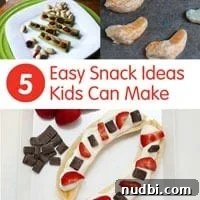
Unleash Culinary Fun: Easy & Healthy Snack Recipes for Kids in the Kitchen
The journey of parenting is filled with countless milestones, and one of the most delightful is watching your children transition from bottles to exploring solid foods. But an even more enriching and rewarding experience awaits when you invite them into the kitchen to become active participants in the food-making process. While the thought of involving toddlers in cooking might conjure images of elaborate messes and increased prep time, the benefits far outweigh these minor inconveniences. There’s an undeniable magic in seeing little hands excitedly stir, pour, and decorate, transforming simple ingredients into delicious creations.
Getting your children involved in the kitchen from an early age is more than just a fun activity; it’s a powerful tool for fostering healthy eating habits, developing crucial life skills, and creating lasting family memories. Studies consistently show that children who participate in meal preparation are significantly more likely to try and accept new foods, including fruits and vegetables they might otherwise shy away from. This hands-on engagement demystifies food, makes it less intimidating, and transforms it into an exciting adventure rather than a chore. It’s about building a positive relationship with food that can last a lifetime, setting the stage for nutritious choices as they grow.
The Unexpected Joys and Lasting Benefits of Cooking with Your Kids
Beyond the immediate satisfaction of a shared culinary project, inviting children into the kitchen offers a multitude of developmental and emotional advantages. While we might jokingly wish it leads to them eagerly doing the dishes (a parent’s dream!), the real gains are far more profound:
- Expanding Palates and Reducing Picky Eating: When children help prepare a meal or snack, they develop a sense of ownership and pride. This psychological investment makes them more adventurous eaters, eager to taste the fruits (and vegetables!) of their labor. The mystery is removed, and familiarity breeds acceptance.
- Developing Fine Motor Skills: Tasks like stirring, pouring, kneading, cutting (with child-safe tools), and decorating enhance hand-eye coordination, dexterity, and fine motor skills – all crucial for their physical development.
- Boosting Cognitive Skills: Cooking involves basic math (measuring, counting), science (understanding how ingredients react to heat or cold), and even reading (following recipe instructions). It’s a practical, engaging way to apply academic concepts in a real-world setting.
- Fostering Creativity and Imagination: Allowing children to choose toppings, arrange ingredients, or even invent their own variations sparks their creativity. Food becomes a canvas for expression, encouraging imaginative play and problem-solving.
- Teaching Responsibility and Life Skills: From washing hands to cleaning up their workspace, cooking teaches children about hygiene, responsibility, and the importance of contributing to household tasks. These are invaluable life skills that will serve them well into adulthood.
- Strengthening Family Bonds: Cooking together creates a shared experience, a dedicated time for conversation, laughter, and connection. These moments in the kitchen forge strong family bonds and create cherished memories that children will recall for years to come.
- Building Self-Confidence: Successfully completing a recipe, even a simple one, gives children a tremendous sense of accomplishment and boosts their self-esteem. They learn that they are capable, contributing members of the family.
Snack Time: The Perfect Entry Point for Young Chefs
While involving kids in dinner prep can sometimes feel overwhelming, snack time offers a low-pressure, high-reward opportunity to introduce them to the joys of cooking. Snacks are typically simpler, require fewer ingredients, and the outcome is often quicker, keeping little ones engaged and preventing boredom. It’s the ideal window to experiment, have fun, and instill confidence without the added stress of a main meal.
So, let’s dive into some easy, delicious, and kid-friendly snack recipes that will get your little ones excited about trying new foods and becoming master chefs in their own right!
Kid-Approved Healthy Snack Recipes to Try Today
These recipes are designed to be interactive, healthy, and incredibly fun. Prepare for some smiles, maybe a little mess, but definitely some wonderful memories.
1. Delightful Frozen Yogurt Popsicles
Perfect for warm weather or any time your child craves a sweet treat, these frozen yogurt popsicles are a healthier alternative to store-bought varieties and a fantastic interactive activity. Forget the messy bowls of yogurt; these neat, icy delights are just as nutritious and utterly delicious. The best part? Your children are the master mixers!
What You’ll Need:
- Plain or vanilla Greek yogurt (for extra protein!)
- Assorted fresh or frozen fruits (berries, bananas, mango, peaches work wonderfully)
- A touch of honey or maple syrup (optional, to taste)
- Popsicle molds
Get Cooking:
- Have your child help you wash and chop any fresh fruit into small pieces.
- In a large bowl, let them stir together the yogurt, fruit, and a little sweetener if desired. This is a great opportunity to talk about textures and colors!
- Carefully, or with your assistance, have them pour the mixture into the popsicle molds. Don’t worry if it’s not perfect – that’s part of the charm!
- Insert the popsicle sticks, cover, and place them in the freezer for at least 3-4 hours, or until solid.
Parent Tip: For an extra boost of nutrition, blend in a handful of spinach (kids won’t taste it!) or add a sprinkle of chia seeds before freezing. Talk about the different colors they are creating.
2. Ants and Friends on a Log
This classic snack is a timeless favorite for a reason: it’s simple, customizable, and incredibly fun for kids to assemble. It’s an excellent way to introduce protein and fiber into their diet in an engaging format, transforming ordinary ingredients into an edible adventure.
What You’ll Need:
- Celery sticks (the “logs”)
- Peanut butter, almond butter, or sun butter (for nut allergies)
- Raisins (the classic “ants”)
- Other small toppings for “friends”: chocolate chips, dried cranberries, blueberries, small pretzel pieces, sunflower seeds
Get Cooking:
- Wash and cut celery sticks into manageable “logs” for your child.
- Let your child use a butter knife or a small spatula to spread their chosen butter into the “log” indentation. This is great for fine motor skills!
- Once the “log” is “muddy,” it’s time for the “ants” and “friends”! Encourage them to sprinkle raisins along the log and then get creative with other “friends” like dried cranberries or blueberries.
Parent Tip: If your kids are hesitant about celery, substitute with banana halves or apple slices as the “logs.” You can also make it a learning opportunity by asking them to count how many “ants” they put on each “log.”
3. Greek Yogurt Banana Split
Take a healthy, delicious twist on a traditionally indulgent dessert with this Greek Yogurt Banana Split. It’s an interactive snack that feels like a treat, allowing children to personalize their creation while packing in essential nutrients like protein and potassium. The possibilities for toppings are truly endless!
What You’ll Need:
- 1 ripe banana per serving
- Plain or flavored Greek yogurt (vanilla, strawberry, or honey are good choices)
- Assorted toppings: fresh berries, sliced kiwi, mini chocolate chips, granola, sprinkles, a drizzle of honey or maple syrup
Get Cooking:
- You can start by peeling the banana and carefully splitting it lengthwise on a plate. This is a simple task for older children, or you can do it for younger ones.
- Now, hand over the reins! Let your child spoon dollops of Greek yogurt over the banana.
- Present a colorful array of toppings and let them go wild! Encourage them to create their own unique “masterpiece” with strawberries, blueberries, a few chocolate chips, or a sprinkle of granola.
Parent Tip: Use small bowls for each topping to give your child clear options and minimize mess. Discuss the different colors and textures they are using. This is a great way to sneak in a variety of fruits.
4. Kid-Friendly Dipped Fruit
Dipping food is inherently fun for kids, and this recipe capitalizes on that natural inclination to make eating fruit even more appealing. It’s incredibly versatile, allowing children to choose their favorite fruits and dips, making every bite an exciting discovery. Plus, the assembly line approach is fantastic for fostering teamwork and a sense of shared activity.
What You’ll Need:
- An assortment of favorite fruits, pre-cut into dipping-friendly pieces: apple slices, banana chunks, strawberries, grapes, melon cubes
- A selection of dips: Greek yogurt (plain or flavored), peanut butter (or sun butter), melted chocolate, cream cheese dip (lightened with a little yogurt)
- Optional sprinkles: shredded coconut, mini chocolate chips, finely chopped nuts (for older kids, no allergies), colorful sugar sprinkles
Get Cooking:
- Arrange the prepared fruit and dips on a platter or a clean work surface.
- Set up an “assembly line” where your child can pick a piece of fruit, dip it into their chosen dip, and then move on to the optional sprinkling station.
- Encourage them to experiment with different fruit and dip combinations. “How does a strawberry taste with yogurt? How about an apple with peanut butter?”
Parent Tip: For younger toddlers, you can pre-dip some fruit and let them do the sprinkling, which is often their favorite part! This activity is also wonderful for discussing concepts like “texture” (smooth dip, crunchy apple) and “taste” (sweet, tangy).
5. The Very Healthy Caterpillar
Inspired by the beloved book, this snack encourages creativity and healthy eating by letting kids design their own vibrant, edible caterpillars. It’s a fantastic way to introduce new fruits and vegetables in a playful, low-pressure environment, fostering both imagination and good nutrition.
What You’ll Need:
- Various colorful fruits and vegetables cut into rounds or small pieces: green grapes, cucumber slices, cherry tomatoes, blueberries, kiwi slices, bell pepper circles
- A long skewer or pretzel stick (for assembling the body)
- A dip for “glue” or “eyes”: hummus, cream cheese, or a small dollop of yogurt
- Small edible decorations for the face: tiny pretzel pieces for antennae, mini chocolate chips for eyes
Get Cooking:
- Lay out all the prepared fruit and veggie pieces on a tray.
- Help your child carefully thread the fruit and vegetable pieces onto the skewer or pretzel stick, forming the body of their caterpillar. Encourage them to create patterns or mix and match colors.
- Once the body is complete, help them create a “face” at one end. They can use a larger fruit slice (like a kiwi or apple round) for the head, then add tiny dots of dip for eyes, and pretzel pieces for antennae.
Parent Tip: This snack is excellent for practicing counting and pattern recognition. “Can you make a pattern with green grape, blueberry, green grape?” It also provides a great source of calcium if using certain fruits and vegetables, contributing to strong bones.
Embrace the Mess, Cherish the Memories
We completely understand that sometimes, it feels much easier and quicker for parents to prepare meals or snacks without the “help” of their little ones. The inevitable extra time, coupled with the potential for a glorious mess, can indeed be daunting. However, it’s essential to remember that these are not just moments of cooking; they are moments of teaching, bonding, and creating. The flour on the floor or the yogurt on their nose will eventually be cleaned up, but the joy, confidence, and connection forged in those kitchen adventures will last a lifetime.
Embrace the chaos, celebrate the small victories, and revel in the precious memories you are making, both in the kitchen and throughout life. These shared culinary experiences are not just about feeding their bodies; they’re about nurturing their minds, spirits, and their future relationship with food and family. So, tie on those tiny aprons, roll up your sleeves, and get ready to cook up some fun!