Welcome to July, the heart of summer! This vibrant month brings with it long, sun-drenched days, perfect for outdoor adventures, family cookouts, and refreshing water activities. As you plan your summer fun, don’t forget to incorporate an abundance of fresh, in-season fruits and vegetables. These natural powerhouses are not only delicious but also essential for keeping you energized and hydrated during the warmer months.
Embracing seasonal eating offers a multitude of benefits. When you choose produce that’s in season, you’re guaranteed to enjoy fruits and vegetables at their peak flavor and nutritional value. This means sweeter berries, juicier melons, and more aromatic herbs. Beyond taste, shopping for seasonal produce can significantly reduce your grocery bill. Farmers’ markets and grocery stores often offer better prices on items that are plentiful and locally grown. It’s a win-win for your palate, your health, and your wallet!
Navigating the produce aisle can sometimes feel overwhelming, but knowing what to look for makes all the difference. This comprehensive guide will help you identify the best seasonal picks for July, ensuring you make informed choices that bring the freshest flavors to your table. We’ll cover everything from selection and storage tips to fantastic recipe ideas, helping you integrate these healthy delights into your daily meals. Dive into the bounty of summer and discover new ways to enjoy the season’s finest offerings.
What’s in Season for July: Embrace Summer’s Freshest Produce
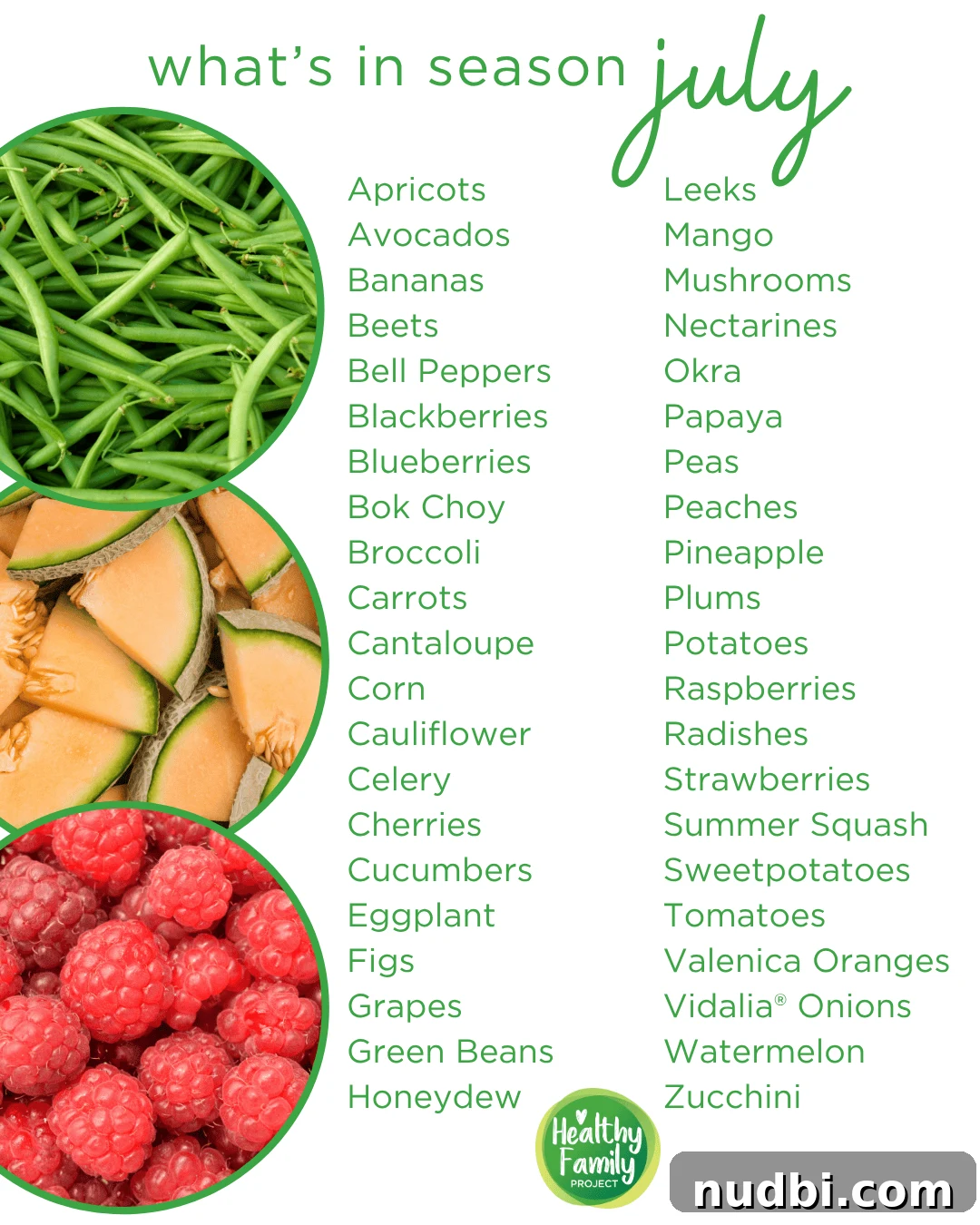
July is a prime month for an incredible variety of fruits and vegetables. From hydrating fruits to crisp, flavorful vegetables, there’s something to satisfy every craving and enhance every meal. Below, explore our top picks for what’s in season this July, complete with tips and inspiration to make the most of each item.

Avocados
Good news for avocado enthusiasts: this versatile fruit is available year-round, making it a constant kitchen staple! In July, their creamy texture and rich, nutty flavor are perfect for lighter summer dishes. Avocados are packed with healthy fats, fiber, and essential vitamins like K, C, B5, B6, and E. When selecting an avocado, look for one that yields gently to pressure. Store unripe avocados on your counter, and once ripe, move them to the refrigerator to extend their freshness. Enjoy them mashed into a vibrant guacamole, sliced on toast, or even surprisingly in sweet treats like Dark Chocolate Avocado Brownies or a healthy chocolate mousse.

Bananas
A perennial favorite, bananas are consistently in season, offering a convenient and nutritious snack any time of year. Rich in potassium, Vitamin B6, and Vitamin C, they are excellent for energy and electrolyte balance, especially during active summer days. Choose bananas based on your immediate need: green for a few days’ wait, yellow for immediate enjoyment, and spotty for baking. Store them at room temperature until ripe, then refrigerate to slow further ripening. Incorporate them into refreshing smoothies, wholesome muffins, or transform overripe ones into delicious “nice” cream. Americans love them so much, consuming an average of 28 pounds per person annually!

Beets
Beets, though often misunderstood for their earthy flavor, are a vibrant and nutritious root vegetable that can be enjoyed throughout the year. Their natural sweetness truly shines when roasted, transforming them into a delightful addition to various dishes. Beets are packed with essential nutrients like folate, manganese, and Vitamin C, and are known for their anti-inflammatory properties. When selecting, choose firm, smooth beets with deep, rich color. Store them in the refrigerator, keeping their greens separate to maintain freshness. Try them roasted and added to a goat cheese and walnut salad for a burst of flavor, or blend them into a colorful smoothie for an extra nutritional boost.
Bell Peppers
July marks the beginning of peak season for bell peppers, which extends through September. While available year-round, their flavor and crispness are exceptional during these summer months. Bell peppers are an outstanding source of Vitamins A and C, and a good source of Vitamin E and B6, making them fantastic for boosting immunity and skin health. Look for firm, brightly colored peppers with smooth, unblemished skin. Store them unwashed in a plastic bag in your refrigerator’s crisper drawer for up to 4-5 days. They are incredibly versatile: perfect for healthy snacking with hummus, ideal for stuffing, stir-fries, or adding a sweet crunch to salads.
Blackberries
Blackberries are in their prime from June to August, making July the perfect time to enjoy these dark, juicy gems at their freshest and most affordable. Did you know blackberries boast one of the highest antioxidant contents of any fruit? They are also rich in fiber, Vitamin C, and Vitamin K. Choose plump, firm berries with a deep, consistent color. Avoid any that are soft, mushy, or moldy. Gently rinse them just before eating and store them in a single layer in the refrigerator. Savor their natural sweetness in a vibrant smoothie bowl, a refreshing summer fruit salad, or as a delightful dessert. They also make excellent jams and pies.
Blueberries
While often available year-round, blueberries are at their peak season from April to September, with July being an optimal time to enjoy them. These small but mighty berries are renowned for their powerful antioxidant properties, which can help improve vision, motor skills, and even reverse age-related short-term memory loss. They are also a great source of Vitamin C, Vitamin K, and fiber. Look for firm, plump berries with a dusty bloom, indicating freshness. Store them unwashed in the refrigerator and rinse just before use. Incorporate these superfruits into an Easy Fruit Salsa, wholesome baked oatmeal, light muffins, revitalizing smoothies, or even add a sweet twist to salads.

Bok Choy
Bok choy, a delightful type of Chinese cabbage, offers a mild, slightly sweet flavor with a satisfying crunch, making it delicious both raw and cooked. Although it’s usually available year-round, bok choy is actually at its peak in colder months. However, it’s still readily available in July and excellent for balancing richer summer dishes. It’s an excellent source of Vitamins A, C, and K. Choose bok choy with crisp, dark green leaves and firm, white stalks. Store it unwashed in a plastic bag in the crisper drawer of your refrigerator for up to 5 days. Try it in a quick stir-fry, a crisp salad, a comforting soup, or this hearty Instant Pot Chicken Ramen.

Broccoli
This nutrient-dense powerhouse is available year-round and consistently provides a wealth of vitamins and minerals your body needs, including Vitamin C, Vitamin K, and fiber. In July, it’s a fantastic choice for grilling or adding a healthy crunch to summer meals. When selecting broccoli, look for tight, dark green florets and firm stalks. Avoid any yellowing or soft spots. Store it unwashed in the refrigerator for up to a week. Enjoy it raw in a salad or as a snack with dip, transform it into a refreshing broccoli slaw, or steam, roast, or grill it for an easy side. It’s also excellent tossed into pasta salads, stir-fries, or even savory cornbread muffins.
Cantaloupe
As summer heats up, cantaloupe enters its peak season, offering a sweet, hydrating treat. This juicy melon is an excellent source of Vitamins A and C, and high in fiber, making it perfect for supporting vision, immunity, and digestive health. To pick a ripe cantaloupe, look for one that feels heavy for its size, has a slightly yellowish or creamy-colored rind, and emits a sweet, musky aroma from the blossom end. Store whole cantaloupes at room temperature for up to two days, then refrigerate. Once cut, store in an airtight container in the fridge for up to 3-4 days. Enjoy it sliced on its own, cubed in a refreshing rainbow fruit salad, or blended into a cool smoothie.

Carrots
Carrots are a year-round staple, and their sweet, earthy flavor and crisp texture make them a fantastic addition to summer meals. Beyond being Bugs Bunny’s favorite, these vibrant veggies are rich in beta-carotene (which converts to Vitamin A), supporting healthy vision and skin. They also provide Vitamin K and fiber. Choose firm, smooth, brightly colored carrots. Store them unwashed in the crisper drawer of your refrigerator, ideally in a plastic bag to retain moisture. Enjoy them simply raw with a side of ranch, roasted to bring out their natural sweetness, steamed, or shredded and incorporated into muffins, hearty soups, cheesy mac n’ cheese, or even hidden veggie meatballs for a nutritional boost.

Cauliflower
Cauliflower has truly made a culinary comeback, appearing in countless innovative dishes as a healthy, low-carb alternative. While available all year, it’s a great choice for lighter summer meals. This versatile cruciferous veggie is an excellent source of Vitamin C, Vitamin K, and fiber. Look for compact, white or off-white heads that feel heavy for their size, with fresh green leaves. Store it unwashed in the refrigerator for up to a week. Its mild flavor makes it incredibly adaptable: use it for pizza crusts, blend into pesto, add to mashed potatoes for a lighter consistency, or turn into savory hashbrown waffles. It’s also perfect for replacing rice in classic casseroles or roasting as a simple side.

Celery
Celery, a year-round favorite, is renowned for its crisp texture and hydrating properties, making it an ideal choice for summer. While kids often know it best as the base for Ants on a Log, this crunchy veggie offers much more. It’s rich in Vitamin K, Vitamin C, potassium, and fiber. When selecting celery, look for firm, bright green stalks that snap easily. Avoid limp or discolored stalks. Store celery in the crisper drawer of your refrigerator, ideally wrapped in foil or submerged in water, to keep it crisp for longer. Chop and add it to a refreshing potato salad, use it as an aromatic base for soups and stews, or add a delightful crunch to pasta salads and stir-fries.
Cherries
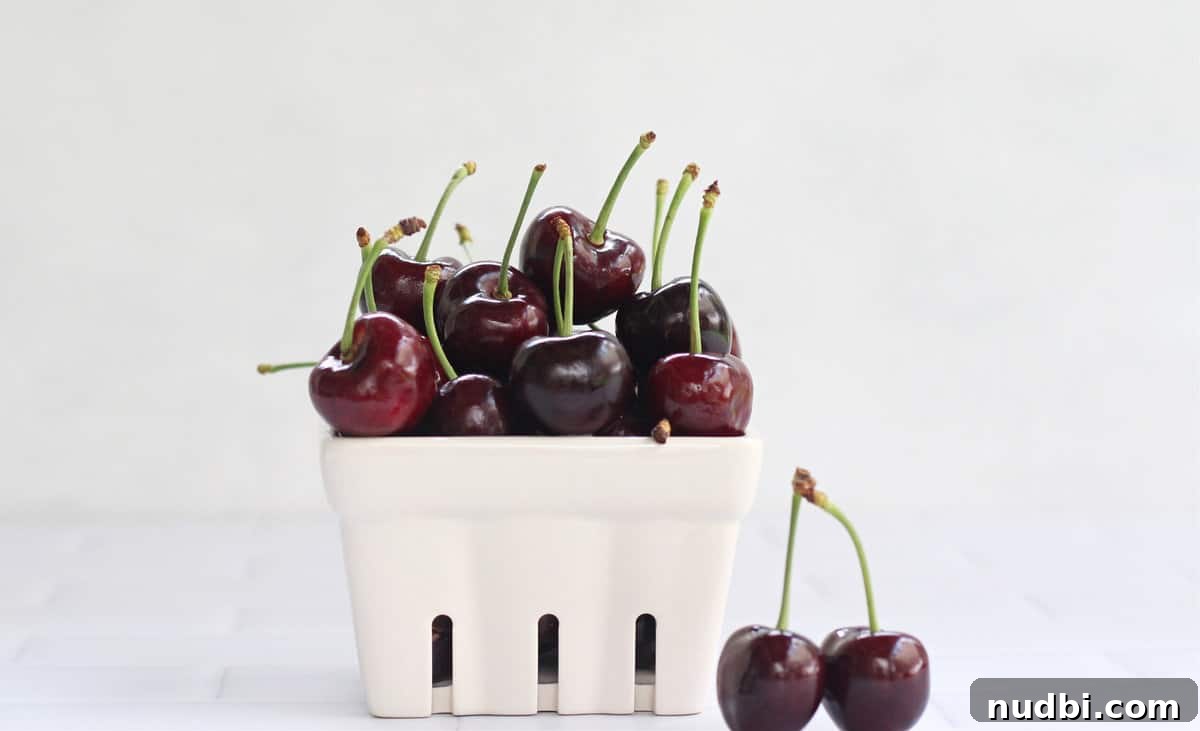
For many, cherry season is one of the most anticipated times of the year! While it typically begins in May, July is prime time for plump, sweet cherries in most regions. Make sure to stock up during these late spring and summer months, as fresh cherries won’t be widely available again until next year. Cherries are packed with antioxidants, Vitamin C, and potassium, making them not only delicious but also incredibly healthy. Look for firm, shiny, dark-colored cherries with their stems still attached. Store them unwashed in the refrigerator and wash just before eating. Enjoy them fresh out of hand, grilled for a smoky sweetness, as a topping for a savory flatbread pizza, baked into oatmeal, or as a naturally sweet dessert.
Corn
Late spring and summer bring an abundance of fresh corn on the cob, and July is undeniably one of its peak months. There’s nothing quite like the sweet, crisp kernels of freshly harvested corn. Corn is a good source of fiber, Vitamin C, and magnesium. When selecting corn, look for husks that are bright green, tightly wrapped, and slightly damp, with plump kernels visible through a small peek. Store unshucked corn in the refrigerator for up to a week, or blanch and freeze kernels for longer storage. Grill it, boil it, or roast it for a classic summer side. It’s a must-have for a flavorful shrimp boil or a delicious grilled corn with lemon basil yogurt sauce. You can also cut the kernels off the cob to add to salads, salsas, and stir-fries.
Cucumbers
While cucumbers are available all year, they truly shine during the summer months, offering a refreshing and hydrating crunch. With 95% water content, they are perfect for cooling down on hot July days. Cucumbers are also a good source of Vitamin K and antioxidants. Choose firm, dark green cucumbers that feel heavy for their size. Avoid any with wrinkles, soft spots, or yellowing. Store them unwashed in the refrigerator for up to a week. Slice them up for a crisp side salad, enjoy them as an easy snack with a creamy Tzatziki dip, or use them to make homemade pickles for a tangy summer treat. Their mild flavor also makes them excellent additions to detox waters.
Eggplant
July is peak season for eggplant, making it the perfect time to grab some for your summer grilling sessions or light Mediterranean-inspired dishes. This glossy, versatile vegetable is rich in fiber, Vitamin K, and manganese, and boasts beneficial antioxidants. Look for firm, glossy eggplants that feel heavy for their size and are free from wrinkled skin, soft spots, or brown patches. Store eggplant in a cool, dark place or in the refrigerator for up to a week. Its spongy texture makes it excellent for absorbing flavors. Throw some slices on the grill, incorporate them into an easy pasta dish, or use them in place of traditional pasta sheets for a healthier ricotta-stuffed rollatini. Eggplant also shines in curries, stews, and roasted vegetable medleys.
Grapes
Grapes are a perfect, refreshing treat for the warmer months, making them a fantastic July snack. Their crisp texture and sweet-tart flavor are light, hydrating, and incredibly easy to pack for picnics, summer lunches, and on-the-go enjoyment. Grapes are an excellent source of Vitamin C, potassium, and Vitamin K, contributing to heart health and bone strength. When selecting grapes, choose plump, firm berries that are still attached to their stems. Avoid any that are shriveled, soft, or moldy. Store them unwashed in the refrigerator and rinse just before eating. Beyond snacking, grapes can be frozen for a refreshing bite, added to fruit salads, or even roasted with savory dishes for a unique flavor profile. Explore some of our favorite grape recipes for more inspiration.
Green Beans
Green beans are a beloved family favorite, and for good reason! Their peak season typically runs from May through October, so July is a fantastic time to enjoy them at their best. Green beans are an excellent source of fiber and Vitamin A, and a good source of folates, Vitamin B6, thiamin, and Vitamin C, all vital for overall health. When choosing green beans, look for firm, bright green pods that snap easily. Avoid limp or discolored beans. Store unwashed green beans in a plastic bag or container in the crisper drawer of your refrigerator for up to 4 days. They are incredibly versatile: steam, sauté, or roast them as a simple side, add them to your favorite sheet pan dinner for an easy meal, incorporate them into comforting soups, or toss them into a fresh summer salad.

Greens
Fresh greens such as kale, spinach, salads, blend into nutrient-packed smoothies, or effortlessly pump up the nutrition in soups, comforting casseroles, and delicious pasta dishes. They are also excellent sautéed or added to wraps and sandwiches.

Leeks
Leeks, related to onions, garlic, shallots, and chives, offer a milder, sweeter onion-like taste that adds a subtle depth to dishes without being overpowering. While generally available year-round, they are particularly fresh in early summer. Leeks are a good source of Vitamin K, Vitamin A, and fiber. When selecting leeks, look for firm, straight stalks with dark green tops and white bottoms. Always remember to thoroughly rinse leeks, especially between their layers, to remove any trapped dirt or grit, then pat them dry with a paper towel before consuming. You can roast them to caramelize their sweetness, add them raw and thinly sliced to a refreshing salad, use them as a delicate garnish for creamy soups, or incorporate them into hearty casseroles and quiches. They are also fantastic sautéed as a base for many recipes.

Lemons & Limes
Both lemons and limes are available year-round, making them essential citrus staples in any kitchen, especially during the summer for their refreshing acidity. They are bursting with Vitamin C, which is crucial for immune health and skin vitality, and their zest and juice are perfect for adding vibrant flavor to a wide array of dishes. Choose firm, heavy fruits with bright, unblemished skin. Store them at room temperature for up to a week or in the refrigerator for longer freshness. Juice them for a fresh, homemade salad dressing, use their zest and juice to season chicken, delicate fish, or summer vegetables. Their bright acidity also adds a delightful zing to dishes like these Baked Avocado Fries, or use them to brighten up your water and beverages.

Mango
Mangoes are a tropical delight that sees peak availability during the summer months, making July an ideal time to savor their sweet, juicy flesh. This “king of fruits” is rich in Vitamins C and A, folate, and fiber, contributing to immunity, vision, and digestion. To select a ripe mango, look for one that gives slightly when squeezed gently and has a fragrant, fruity aroma near the stem. Keep unripe mangoes on the counter at room temperature until they ripen, then transfer them to the refrigerator. Blend them into refreshing smoothie popsicles, add their tropical sweetness to a tangy stir-fry, or enjoy them cubed in a vibrant fresh salad with a honey-lime vinaigrette. Mangoes are also fantastic in salsas, desserts, and fresh juices.

Mushrooms
Mushrooms are available year-round and are a wonderfully versatile addition to almost any meal. Fun fact: they are the only natural food source of Vitamin D, which is essential for bone health and immunity! They also provide B vitamins, selenium, and copper. When selecting mushrooms, look for firm, smooth caps and stems. Avoid any with slimy or bruised spots. Store mushrooms in a paper bag in the refrigerator to allow them to breathe and prevent moisture buildup. Their umami-rich flavor makes them incredibly adaptable: blend them and add to tacos or burgers for a “hidden veggie” boost, use larger caps as a base for delicious Pizza Stuffed Mushrooms, or toss them into easy weeknight dinners like an Asian Chicken Stir Fry. They are also excellent roasted, sautéed, or added to pasta dishes and omelets.

Okra
As we approach the end of summer, July often marks the tail end of okra season in many regions, so grab this unique pod vegetable while you can! Okra is a good source of Vitamin C, Vitamin K, and folate. When choosing okra, look for firm, bright green pods that are small to medium in size, as larger pods can be tough. A common concern with okra is its tendency to become slimy when cooked. To minimize this, a helpful tip is to soak them in vinegar for about 30 minutes before cooking, or cook them whole at high heat. Enjoy okra fried, grilled, roasted, or added to gumbos and stews for a distinctive texture and flavor. It also pairs wonderfully with other summer vegetables.
Papaya
Papaya, though it may seem like an exotic fruit, is readily available throughout the year in most grocery stores, including in July. This tropical fruit offers a sweet, buttery flavor and a vibrant orange flesh, packed with Vitamin C, Vitamin A, and beneficial enzymes like papain, which aids digestion. When choosing a papaya, look for one that is mostly yellow with a few green spots, and yields slightly to gentle pressure. Avoid overly soft or bruised fruit. Store unripe papayas on the counter until they ripen, then refrigerate. Don’t be intimidated by preparing it – it’s quite easy! Just cut it in half lengthwise, scoop out the black seeds, then scoop out the sweet, soft fruit and enjoy it as is. It’s also delicious in fruit salads, smoothies, or savory salsas that complement grilled fish or chicken.
Peaches
Another incredible fruit we can’t get enough of in July is peaches! Their juicy, sweet, and slightly tangy flavor is the epitome of summer. Peaches are rich in Vitamin C, Vitamin A, and fiber. When selecting peaches at the store, be careful not to squeeze them too hard, as they bruise easily. Instead, look for ones that are soft to the touch but not mushy, with a fragrant aroma. Store firm, unripe peaches on the counter until they ripen, then place ripe peaches in the refrigerator to keep them fresh for longer. Enjoy them fresh out of hand, grilled with a hint of cinnamon, baked into pies and crumbles, or sliced into salads for a sweet contrast. Check out some of our favorite ways to enjoy peaches, from cobblers to savory pairings.
Peas
While frozen peas are a convenient year-round option, there’s nothing quite like the delicate sweetness and tender bite of fresh peas, which are in season during late spring and early summer months, making July a good time to find them. Peas are a fantastic source of Vitamin K, Vitamin C, folate, and fiber. When buying fresh peas, look for medium-sized pods with smaller peas inside; these tend to be sweeter and more tender. Avoid pods that are too swollen or too flat. Store fresh peas in their pods in the refrigerator and shell them just before use. Try them in this light and refreshing Quick & Easy Tuna Pasta Salad for the perfect summer dish, or simply steam them and serve with a pat of butter. They are also wonderful in risottos, stir-fries, and pureed into vibrant dips.
Pineapple
Although pineapples are available year-round in most markets, their peak season runs from March through July, ensuring you get the sweetest, juiciest fruit this month. This tropical marvel is bursting with Vitamin C, manganese, copper, and folate, supporting immunity, bone health, and energy. When picking a pineapple, give it a good sniff at the base – you should smell a sweet, distinctive pineapple aroma. It should also feel heavy for its size and have vibrant green leaves that are easy to pull. Store whole pineapples at room temperature for a day or two to fully ripen, then refrigerate. Once cut, store in an airtight container for up to 3 days. Enjoy in a refreshing rainbow fruit salad, a tropical smoothie bowl, or as these fun fruit breakfast skewers. Grilled pineapple is also a fantastic summer treat!
Potatoes
With over 600 types of potatoes sold in the US, the culinary possibilities are truly endless, and they are a staple available year-round. While sometimes getting an unfair reputation, skin-on potatoes are packed with Vitamin C, potassium, and Vitamin B6, making them a nutritious choice. When selecting potatoes, look for firm, smooth skins free of sprouts, green tinges, or soft spots. Store them in a cool, dark, and dry place, away from onions, to prevent sprouting. Whether you’re looking for healthy ways to top a baked potato, different ways to season roasted potatoes, or just generally healthy potato recipes, this versatile vegetable can be mashed, fried, baked, boiled, or grilled. They are perfect for summer potato salads, grilling alongside other vegetables, or creating light, creamy soups.
Raspberries
We simply can’t get enough fresh berries in the summer, and raspberries are no exception! Their delicate sweetness and slight tartness make them a perfect July treat. Raspberries are notably high in fiber and Vitamin C, offering significant benefits for digestive health and immunity. They also contain powerful antioxidants. When selecting raspberries, look for plump, firm berries with a vibrant color. Avoid any that are soft, mushy, or have mold. Store them unwashed in the refrigerator and rinse gently just before serving. Enjoy these individual Raspberry & Peach Crisps for a delightful summer dessert, use them to top your English muffins or yogurt, or add them to your pancakes for a burst of flavor. They’re also excellent in smoothies, salads, and as a garnish for cocktails.
Stone Fruit
Beyond cherries and peaches, July is a fantastic month for other varieties of stone fruit, which are characterized by a large, hard pit or “stone” in their center. This includes juicy apricots, smooth-skinned nectarines, vibrant plums, and unique pluots (a hybrid of plum and apricot). These fruits are all at their peak, offering sweet, succulent flavors and a wealth of vitamins and fiber, particularly Vitamins A and C. When selecting, look for fruits that are fragrant and yield slightly to gentle pressure. Store them at room temperature until ripe, then refrigerate to prolong freshness. Enjoy them fresh, grilled, baked into desserts, or sliced into salads. They make wonderful jams, compotes, and even savory salsas that pair well with grilled meats.

Strawberries
While Florida’s strawberry season might be winding down by July, other regions are still in full swing with these beloved berries, ensuring a continuous supply of fresh, sweet strawberries. This favorite fruit is rich in Vitamin C, manganese, and antioxidants, offering endless possibilities beyond just snacking. Choose plump, firm, bright red berries with green caps. Store them unwashed in the refrigerator and wash just before consumption. Blend them into wholesome muffins, create the perfect refreshing smoothie, add them to a delicious easy fruit salsa, or beautifully top off your pancakes or waffles. Strawberries are also fantastic in summer salads, tarts, and infused water.
Summer Squash
Summer squash, including varieties like zucchini and yellow squash, is readily available year-round in some regions, with its peak season running from June to August, making July an excellent time to enjoy its mild flavor and tender texture. This versatile vegetable is a rich source of Vitamin A, Vitamin C, magnesium, fiber, folate, riboflavin, phosphorus, potassium, and Vitamin B6. When selecting summer squash, look for small to medium-sized squash that are firm and heavy for their size, with shiny, blemish-free skin. Store them unwashed in the crisper drawer of your refrigerator for up to a week. Shred them into a light coleslaw, add to colorful skewers for the grill, or simply sauté for a quick and healthy veggie side. They’re also great in stir-fries, pasta dishes, and even baked goods like muffins and bread.
Tomatoes
There’s truly something special about a fresh, ripe tomato in the summertime. July is peak season for these juicy, flavorful gems, bursting with the taste of sunshine. Tomatoes are an excellent source of Vitamin C, Vitamin K, potassium, and lycopene, a powerful antioxidant. Look for plump, heavy tomatoes with smooth, vibrant skins. They should be free of bruises, significant blemishes, or deep cracks, although fine cracks at the stem ends of ripe tomatoes are natural and do not affect flavor. Store ripe tomatoes at room temperature, away from direct sunlight, to preserve their flavor and texture. There are so many delicious ways to enjoy them: sliced in a caprese salad, diced into a fresh salsa, added to a vibrant pasta dish, or as the star of a simple chopped salad. They are also fantastic roasted or grilled.
Vidalia® Onions
Vidalia® Onions are in season during the summer months, and July is a great time to enjoy their distinctively sweet and mild flavor. Onions, in general, are a staple in kitchens worldwide, adding essential flavor and aroma to countless dishes. Vidalia® onions are particularly cherished for their low sulfur content, which makes them less pungent and perfect for eating raw or lightly cooked. They are a good source of Vitamin C, Vitamin B6, and folate. Choose firm, well-shaped onions with dry, papery outer skins. Store them in a cool, dry, well-ventilated place. While cutting onions might still bring tears to your eyes, their contribution to flavor is undeniable. They are essential for enhancing everything from comforting soups and hearty chili to savory meatballs and convenient make-ahead breakfast burritos. Their sweetness also makes them perfect for caramelizing.
Watermelon
Get ready to hydrate and refresh with fresh watermelon, the quintessential summer fruit! Watermelon is a spectacular choice for hot July days, as it’s composed of approximately 92% water, making it incredibly hydrating. It’s also a good source of Vitamins A and C, and lycopene. To choose a perfectly ripe watermelon, look for one that is firm, symmetrical, and heavy for its size. It should be free of bruises, soft spots, moldy patches, and cracks. Most importantly, check the underside for a creamy yellow spot, known as the “field spot” – this indicates where the watermelon sat on the ground and ripened under the sun. Enjoy it in a vibrant fresh salsa over grilled chicken, blended into a sweet kid-friendly smoothie, cubed in a refreshing summer fruit salad, or frozen into delightful popsicles. It’s also wonderful simply sliced and enjoyed straight from the fridge.
Zucchini
Zucchini, a popular summer squash, is in peak season during July, offering a mild, versatile flavor and tender texture. This healthy vegetable is rich in fiber, Vitamin A, and Vitamin C, which collectively help lower cholesterol, guard against asthma, and strengthen teeth and bones. When choosing zucchini, look for small to medium-sized squash that are firm and heavy for their size, with smooth, shiny, and unblemished skin. Store zucchini unwashed in a perforated plastic bag in the crisper drawer of your refrigerator for up to 5 days. Its versatility shines in countless dishes: enjoy it sliced on a grilled summer vegetable pizza, shredded into wholesome muffins or bread, baked as crispy “fries”, or simply grilled with other summer veggies like Italian grilled chicken and vegetables. It’s also excellent spiraled into “zoodles” as a pasta alternative.
As you can see, July offers an incredible array of fresh, flavorful produce that can transform your meals and boost your health. By choosing seasonal fruits and vegetables, you’re not only enjoying superior taste and nutrition but also supporting sustainable practices and often local farmers. We encourage you to explore these delightful offerings this month, experiment with new recipes, and savor the vibrant flavors that define summer. Happy cooking and happy eating!